The promise of a $25,000 Tesla has circulated since Elon Musk first teased an affordable compact electric vehicle in 2020. As of early 2026, Tesla has not officially launched a standalone sub-$30,000 model, but the company has aggressively cut prices on the Model 3 and introduced a more affordable RWD trim that brings the effective purchase price — after federal tax credits — close to the $25,000 mark. Meanwhile, a next-generation compact Tesla (often referred to as the "Model 2" or "Redwood") built on Tesla's upcoming platform remains in development.
This guide breaks down exactly what Tesla offers near $25,000 today, what's known about the next-gen compact, how tax credits change the math, and whether waiting makes sense versus buying now.
What Tesla Actually Sells Near $25,000 in 2026
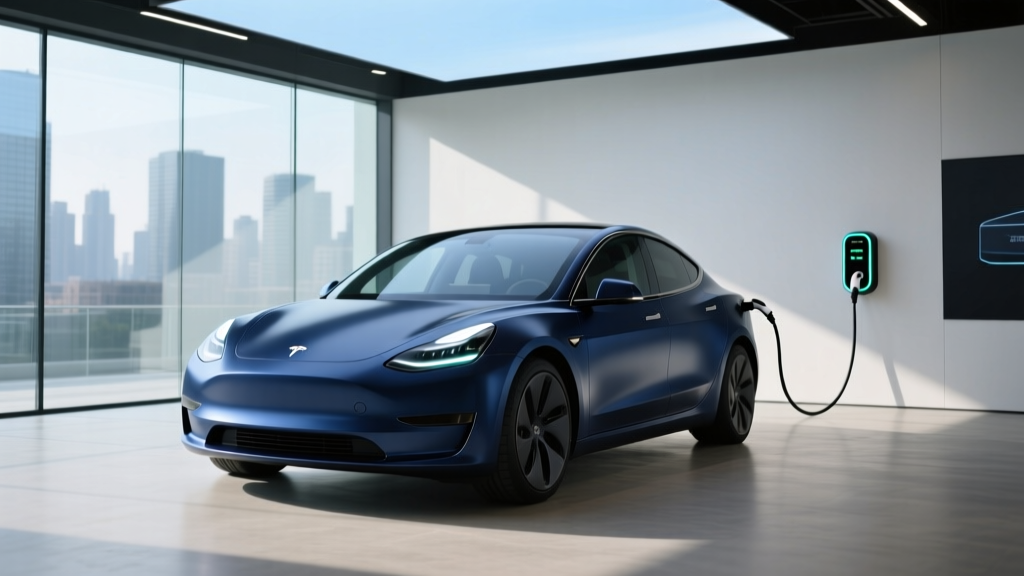
Tesla's most affordable current offering is the Model 3 Rear-Wheel Drive. After multiple price adjustments through 2024 and 2025, the base MSRP sits at approximately $38,990 (before destination). However, the effective out-of-pocket cost drops significantly when you factor in the federal EV tax credit.
| Spec | 2026 Tesla Model 3 RWD |
|---|---|
| Base MSRP | $38,990 |
| EPA Range | 272 miles |
| Battery Capacity | ~57.5 kWh usable (LFP) |
| Drivetrain | Rear-Wheel Drive (single motor) |
| 0-60 mph | 5.8 seconds |
| Horsepower | 271 hp |
| MPGe (combined) | 132 MPGe |
| Efficiency | 25 kWh/100 mi |
| Max DC Fast Charge | 170 kW peak |
| 10-80% DC Charge Time | ~25 minutes |
| Level 2 Home Charge Rate | 11.5 kW (~44 mi/hr) |
| Cargo Volume | 23 cu ft (trunk + frunk) |
| Battery Warranty | 8 years / 100,000 miles |
The Model 3 RWD uses a lithium iron phosphate (LFP) battery supplied primarily by CATL. LFP chemistry trades some energy density for longer cycle life, lower degradation, and the ability to routinely charge to 100% without accelerated wear — a significant daily-ownership advantage over NMC packs.
Real-World Range: What to Actually Expect
Real-World Highway (70-75 mph): ~230-245 miles
Real-World City/Mixed: ~255-270 miles
Cold Weather (below 32°F): ~190-220 miles (20-30% reduction)
The EPA's 272-mile figure for the Model 3 RWD is achievable in moderate city driving where regenerative braking recovers energy frequently. Highway driving at sustained 70-75 mph reduces range by roughly 10-15% due to aerodynamic drag. In freezing temperatures, expect a 20-30% loss depending on cabin heating usage — Tesla's heat pump helps, but LFP batteries are more susceptible to cold-weather range loss than NMC chemistries.
For a daily commuter with home charging, 272 miles is more than sufficient. The real constraint appears on road trips, where you'll plan stops every 200-220 miles to maintain a charging buffer. According to fueleconomy.gov, the Model 3 RWD achieves 132 MPGe combined, making it one of the most efficient EVs in its class.
Charging Speed: DC Fast and Home Level 2
| Charging Level | Power | Miles Added per Hour | Notes |
|---|---|---|---|
| Level 1 (120V household) | ~1.4 kW | ~5 mi/hr | Emergency/trickle only |
| Level 2 (240V home) | 11.5 kW | ~44 mi/hr | Full charge in ~6 hours |
| DC Fast (Tesla Supercharger V3) | 170 kW peak | ~175 mi in 15 min | Peak rate below 50% SoC |
| DC Fast (CCS adapter) | Up to 150 kW | Varies by station | Requires Tesla CCS adapter |
The Model 3 RWD's LFP battery charges at a peak rate of 170 kW on Tesla Superchargers, which is modest compared to the Long Range AWD's 250 kW peak. The charge curve tapers significantly above 80% State of Charge — a 10-80% session takes roughly 25 minutes, but pushing from 80-100% adds another 15-20 minutes. On road trips, plan to charge in the 10-80% sweet spot for the fastest stops.
At home on a Level 2 wall connector (48-amp circuit), the Model 3 RWD accepts up to 11.5 kW, adding about 44 miles of range per hour. A full overnight charge from 10% to 100% takes approximately 6 hours. Tesla recommends charging LFP batteries to 100% at least once per week to maintain battery calibration accuracy.
The Effective $25,000 Price: Federal Tax Credit Math
| Cost Factor | Amount |
|---|---|
| Model 3 RWD Base MSRP | $38,990 |
| Destination Fee | $1,390 |
| Federal §30D Tax Credit (if eligible) | -$7,500 |
| Point-of-Sale Transfer (available since 2024) | Reduces purchase price directly |
| Effective Price (after full credit) | ~$32,880 |
The IRS §30D federal tax credit offers up to $7,500 for qualifying new EVs. Since January 2024, buyers can transfer the credit to the dealer as a point-of-sale discount, reducing the purchase price directly rather than waiting for a tax refund.
Eligibility requirements for the full $7,500:
- Income caps: Modified AGI ≤ $150,000 (single), $225,000 (head of household), $300,000 (joint)
- MSRP cap: Sedans must be ≤ $55,000 (Model 3 qualifies)
- Battery sourcing: Critical minerals and battery components must meet escalating domestic-content thresholds — Tesla's LFP cells from CATL have faced scrutiny under these rules, and partial credit ($3,750) may apply depending on the model year and production batch
- Assembly: Vehicle must undergo final assembly in North America (Model 3 built in Fremont, CA — qualifies)
Depending on sourcing compliance for a given production run, buyers may receive the full $7,500 or a partial $3,750. Tesla's website and the Department of Energy's qualifying vehicle list provide the most current eligibility data. Some states offer additional rebates (California's CVRP, Colorado's state credit) that can push the effective price closer to $25,000-$28,000 for qualifying buyers.
What About the Next-Gen "Model 2" Compact Tesla?
Tesla has discussed a next-generation, smaller, and cheaper EV built on a new platform with a projected $25,000 MSRP. Internally referred to as "Redwood," this compact vehicle is expected to feature:
- A smaller battery pack (estimated 40-50 kWh)
- Targeted EPA range of 200-250 miles
- Unboxed manufacturing process to reduce production costs
- Potential LFP chemistry for cost optimization
- Production start estimated for late 2026 or 2027
Important caveat: As of early 2026, Tesla has not officially unveiled, priced, or opened pre-orders for this vehicle. All specs remain preliminary and unconfirmed. Elon Musk has historically shifted timelines significantly, and Tesla pivoted much of its 2024-2025 investment toward robotaxi development and AI infrastructure. Buyers who need an EV now should evaluate current offerings rather than wait for an unconfirmed model.
Tech, Interior, and Driver Assistance
The refreshed Model 3 ("Highland" redesign launched in late 2023) brought meaningful improvements:
- Infotainment: 15.4-inch center touchscreen with Tesla's latest UI, ventilated front seats, ambient lighting, rear passenger screen, and improved sound insulation
- Driver assist: Tesla Autopilot (SAE Level 2) is standard — includes adaptive cruise control, lane centering, and automatic emergency braking. Full Self-Driving (Supervised) remains a $8,000 add-on or $99/month subscription and is not autonomous driving — the driver must remain fully engaged at all times
- Safety: The Model 3 earned a 5-star overall rating from NHTSA and a Top Safety Pick+ from IIHS
Notable drawbacks include the absence of physical buttons (all controls are touchscreen-based), no traditional instrument cluster, limited rear-seat headroom for taller passengers, and the steering-wheel turn signal stalks removed in the Highland refresh (replaced by capacitive buttons on the wheel — polarizing among owners).
Model 3 RWD vs. Key Competitors Under $40K
| Spec | Tesla Model 3 RWD | Hyundai Ioniq 6 SE | Chevrolet Equinox EV 2LT | BMW i4 eDrive35 |
|---|---|---|---|---|
| MSRP | $38,990 | $37,500 | $33,600 | $52,200 |
| EPA Range | 272 mi | 361 mi | 319 mi | 301 mi |
| Battery (kWh) | ~57.5 (LFP) | 77.4 (NMC) | 85 (NMC) | 81.5 (NMC) |
| Max DC Charge | 170 kW | 240 kW | 150 kW | 205 kW |
| 10-80% Time | ~25 min | ~18 min | ~30 min | ~28 min |
| 0-60 mph | 5.8s | 6.2s | 7.9s | 5.6s |
| Federal Credit | Up to $7,500 | $3,750-$7,500 | $7,500 | $7,500 |
The Hyundai Ioniq 6 SE offers substantially more EPA range (361 miles) and faster DC charging (240 kW) at a slightly lower MSRP, though its tax credit eligibility has fluctuated based on battery sourcing. The Chevrolet Equinox EV undercuts on price and qualifies for the full credit, making it a strong budget option, though it charges slower. The Model 3 RWD's advantages are Tesla's Supercharger network (now open to other brands but still the most reliable), over-the-air updates, and resale value.
- Best-in-class Supercharger network access
- LFP battery allows routine 100% charging
- Strong OTA update cadence and feature additions
- Excellent safety ratings (NHTSA 5-star, IIHS TSP+)
- Low running costs (~$0.04-$0.08/mi home charging)
- High resale value relative to competitors
- 170 kW peak DC charge is slower than rivals
- LFP battery loses more range in cold weather
- Touchscreen-only controls frustrate some drivers
- FSD subscription adds cost without delivering autonomy
- Turn-signal buttons on steering wheel are divisive
- Tax credit amount depends on battery sourcing batch
Who Should Buy the Model 3 RWD?
Best for: Solo commuters and couples who drive under 60 miles daily, have access to home Level 2 charging, and value Tesla's software ecosystem and Supercharger reliability for occasional road trips. The LFP battery's longevity makes it ideal for owners planning to keep the car 8-10 years.
Skip it if: You regularly drive in sub-freezing climates (LFP cold-weather loss is significant), need more than 272 miles of range without stopping, or prioritize the fastest possible DC charging for frequent long-distance travel. The Ioniq 6 or a Long Range AWD Model 3 better serve those needs.
Frequently Asked Questions
Is there a $25,000 Tesla I can buy today?
Not at a $25,000 MSRP. The cheapest new Tesla is the Model 3 RWD at ~$38,990. After the $7,500 federal tax credit (if you qualify), the effective price drops to approximately $32,880. Some state incentives and dealer discounts can push the total closer to $25,000-$28,000 for eligible buyers, but no Tesla currently stickers at $25,000.
When will the $25,000 Tesla "Model 2" be available?
Tesla has not confirmed a launch date. Industry estimates place production start in late 2026 or 2027, but Tesla has a history of delaying new model timelines. All specs remain unconfirmed and preliminary.
Does the Model 3 RWD qualify for the full $7,500 federal tax credit?
It depends on the specific battery sourcing of your vehicle's production batch. The Model 3 is assembled in Fremont, CA (qualifies), and its MSRP is under the $55,000 sedan cap. However, the LFP battery cells are sourced from CATL (China), which may reduce the credit to $3,750 depending on current critical-mineral and battery-component thresholds. Always verify eligibility at the point of sale and consult IRS guidance or a tax professional.
How does the LFP battery affect ownership?
LFP batteries degrade more slowly over time and can be charged to 100% daily without harm — unlike NMC batteries, which Tesla recommends keeping between 20-80%. The trade-off is lower energy density (fewer miles per kWh) and greater range loss in cold weather. For most commuters, LFP is a net positive for long-term ownership.
What does it cost to charge a Model 3 RWD at home?
At the US average electricity rate of ~$0.16/kWh, fully charging the 57.5 kWh battery costs about $9.20, translating to roughly $0.04-$0.05 per mile. Compare this to a 30 MPG gas car at $3.50/gallon: approximately $0.12 per mile. Home charging saves most owners $800-$1,200 annually in fuel costs.