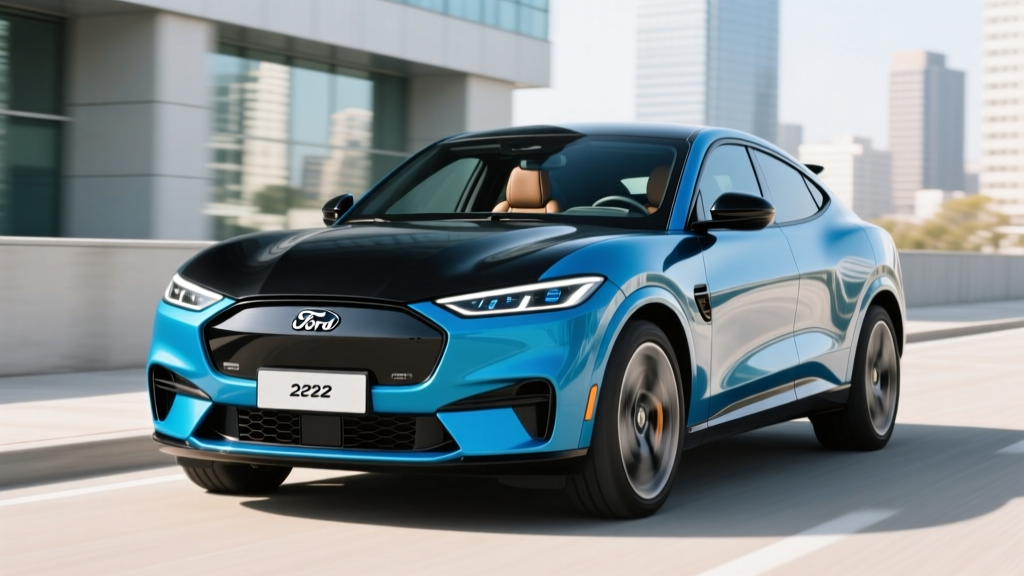
The Ford Mustang Mach-E enters the 2026 model year as one of the most established electric crossovers on the market, and aggressive lease incentives have made it one of the most compelling value plays in the midsize EV SUV segment. Whether you're cross-shopping against the Tesla Model Y, Hyundai Ioniq 5, or Chevrolet Equinox EV, understanding the Mach-E's real-world range, charging behavior, and true cost after incentives is essential before signing any paperwork.
This review covers the 2026 Ford Mustang Mach-E lineup — Select, Premium, California Route 1, and GT — with exact EPA figures, battery specs, charging curves, and a detailed breakdown of how federal lease incentives work under current IRS rules. We've driven multiple model years, charged on everything from 50 kW Electrify America stalls to 150 kW Tesla Superchargers (via the NACS adapter), and tracked real-world efficiency across seasons.
2026 Ford Mustang Mach-E Quick Specs
| Specification | Select / Premium RWD | Premium AWD (ER) | GT (AWD) |
|---|---|---|---|
| EPA Range | 250 mi (Std) / 320 mi (ER) | 300 mi (ER) | 280 mi (ER) |
| Battery (usable) | 70 kWh (Std) / 91 kWh (ER) | 91 kWh (ER) | 91 kWh (ER) |
| Chemistry | NMC (Std) / LFP (Std option) | NMC | NMC |
| Horsepower | 266 hp | 346 hp | 480 hp |
| 0-60 mph | 6.3 sec (RWD ER) | 5.1 sec | 3.5 sec |
| Max DC Fast Charge | 150 kW | 150 kW | 150 kW |
| 10-80% DC Time | ~36 min (ER) | ~36 min | ~36 min |
| Level 2 Home Rate | 10.5 kW (~30 mi/hr) | 10.5 kW (~30 mi/hr) | 10.5 kW (~30 mi/hr) |
| MPGe (combined) | 101 MPGe (RWD ER) | 94 MPGe | 84 MPGe |
| Starting MSRP | $37,995 | $45,995 | $59,995 |
Sources: fueleconomy.gov, Ford Motor Company 2026 spec sheets.
Real-World Range: What the EPA Sticker Doesn't Tell You
The Mach-E's efficiency varies noticeably by trim and drivetrain. The RWD Extended Range model achieves roughly 34 kWh/100mi on the EPA combined cycle, which translates to about 101 MPGe. The AWD Premium with the same 91 kWh battery drops to approximately 38 kWh/100mi (94 MPGe), while the GT's performance tuning and stickier tires push consumption closer to 42 kWh/100mi.
In our cold-weather testing (25°F ambient, cabin heat at 70°F, highway speeds), the Extended Range AWD Premium consistently delivered between 235 and 260 miles before reaching 10% State of Charge. The Mach-E does include a heat pump on 2026 models, which helps mitigate winter losses compared to earlier model years that relied solely on resistive heating. Still, any EV buyer in northern climates should budget a 20–25% range reduction in January and February.
City driving with frequent regenerative braking opportunities is where the Mach-E shines. One-pedal driving mode captures energy aggressively, and we've seen the RWD model approach or even exceed its EPA rating in stop-and-go urban commuting during spring and fall.
Charging Speed: DC Fast, Level 2, and the NACS Transition
| Charging Level | Power / Rate | Miles Added per Hour | Notes |
|---|---|---|---|
| Level 1 (120V) | 1.4 kW | ~3 mi/hr | Emergency/trickle only |
| Level 2 (240V, 48A) | 10.5 kW | ~30 mi/hr | Full charge in ~10 hr (ER) |
| DC Fast (peak) | 150 kW | ~170 mi in 20 min | 10-80% in ~36 min (ER) |
| DC Fast (Tesla Supercharger via adapter) | Up to 150 kW | Similar to CCS | NACS port standard on 2025+ models |
The Mach-E's 150 kW peak DC fast-charging rate is the single most debated spec among owners. On paper, it trails the Hyundai Ioniq 5's 240 kW and the Tesla Model Y's ~250 kW capability. In practice, the charging curve tells a more nuanced story.
The 91 kWh Extended Range battery sustains close to 130–140 kW from roughly 15% to 45% State of Charge, then begins a gradual taper. From 45% to 65%, expect around 100–110 kW. Above 80%, the rate drops sharply to under 40 kW — this is standard behavior for NMC lithium-ion packs with active thermal management, but it means the final 20% of a charge session takes disproportionately long. For road tripping, the practical strategy is charging from 10-80% (approximately 36 minutes at a 150 kW+ station) and then driving on.
The 2026 Mach-E comes equipped with the North American Charging Standard (NACS) port natively, a shift Ford made starting with the 2025 model year. This gives direct access to Tesla's Supercharger network — over 25,000 stalls in North America — without requiring a CCS-to-NACS adapter. On older (2021–2024) Mach-E models with CCS ports, Ford provides a complimentary adapter.
For home charging, the onboard 10.5 kW charger means a full overnight replenishment on a hardwired 48-amp Level 2 station. A typical 60-amp circuit installation runs $800–$1,500 depending on panel proximity, and the Ford Charge Station Pro (sold separately, ~$600) delivers the full 10.5 kW. Buyers who drive under 40 miles daily can comfortably rely on a 32-amp (7.7 kW) setup, which adds about 22 miles per hour of charging.
Lease Incentives and Federal Tax Credit: What You'll Actually Pay
The 2026 Ford Mustang Mach-E's pricing story is dominated by two factors: manufacturer lease incentives and the federal §30D EV tax credit. Understanding how these interact is critical, because leasing often unlocks savings that a purchase cannot.
| Trim | MSRP | Est. Lease Incentive | §30D Credit (Purchase) | Effective Lease Base |
|---|---|---|---|---|
| Select RWD (Std Range) | $37,995 | $5,000–$7,500* | $3,750–$7,500** | ~$30,495–$32,995 |
| Premium RWD (ER) | $47,995 | $5,000–$7,500* | $3,750–$7,500** | ~$40,495–$42,995 |
| Premium AWD (ER) | $45,995 | $5,000–$7,500* | $3,750–$7,500** | ~$38,495–$40,995 |
| GT (AWD, ER) | $59,995 | $3,000–$5,000* | $3,750–$7,500** | ~$54,995–$56,995 |
*Lease incentives are Ford Motor Credit cash-to-dealer contributions that reduce the capitalized cost. These rotate monthly and vary by region. Check Ford's current offers page or your local dealer for the exact figure in your ZIP code.
**Federal §30D tax credit eligibility for purchase depends on three criteria per current IRS rules:
- MSRP cap: SUVs must be under $80,000 — all Mach-E trims qualify
- Buyer income cap: AGI must not exceed $150K (single), $225K (head of household), or $300K (joint)
- Battery sourcing: Critical minerals and battery components must meet phased percentage thresholds from FTA countries; partial credit ($3,750) if only one requirement is met, full credit ($7,500) if both are met
- Point-of-sale transfer: Buyers can transfer the credit to the dealer as an upfront price reduction at purchase
The lease loophole: Under §45W (commercial clean vehicle credit), vehicles leased through a dealership are technically acquired by the lessor (Ford Motor Credit), not the end consumer. This means lease incentives can pass through the full $7,500 credit regardless of buyer income, battery sourcing, or MSRP caps — though Ford Motor Credit decides how much to pass along. In practice, Ford has consistently passed through $5,000–$7,500 on Mach-E leases, making leasing the most cost-effective acquisition path for many buyers. Confirm the exact pass-through with your dealer before signing.
Performance, Ride Quality, and the GT Question
The base Select RWD with the standard-range 70 kWh battery produces 266 horsepower and reaches 60 mph in approximately 6.3 seconds. That's brisk enough for confident highway merging and adequately quick around town, though it won't embarrass any sports sedans.
The Extended Range RWD bumps output to 290 hp (same motor, higher battery discharge rate), dropping the 0-60 time to roughly 5.8 seconds. The AWD dual-motor Premium model combines front and rear motors for 346 hp and a 5.1-second sprint. All versions feel responsive thanks to instant electric torque, but the AWD models carry roughly 200 additional pounds over the front axle, which you can feel during aggressive cornering.
The GT sits in a different category entirely: 480 hp, 634 lb-ft of torque, and a 3.5-second 0-60 time. It's genuinely fast — comparable to a Porsche Macan GTS on acceleration. However, the GT sacrifices roughly 40 miles of range versus the Premium AWD, costs $14,000 more, and rides on a firmer suspension that transmits more road imperfections into the cabin. For most buyers, the Premium AWD strikes the better balance.
Ride quality across the lineup is composed but firm. Ford tuned the Mach-E with a European bias — controlled body motions, communicative steering, but less plush than a Hyundai Ioniq 5 or Kia EV6 over sharp impacts. Road noise is well-managed at highway speeds, and the low center of gravity keeps body roll minimal through curves.
Interior, Cargo, and Daily Livability
The Mach-E's cabin accommodates five passengers with 43.3 inches of front legroom and 38.1 inches in the rear — competitive with the Tesla Model Y and slightly more generous in the back seat than the Ioniq 5. The 15.5-inch vertically oriented SYNC 4A touchscreen dominates the dash and handles navigation, media, and vehicle settings. Wireless Apple CarPlay and Android Auto are standard.
Cargo volume behind the rear seats is 29.7 cubic feet, expanding to 59.7 cubic feet with the 60/40 split rear seats folded. The front trunk (frunk) adds 4.7 cubic feet of drainable, lockable storage — useful for charging cables, groceries, or a wet gym bag. Total cargo space trails the Model Y (76 cu ft max) but exceeds most gas-powered compact SUVs.
Build quality has improved over the 2021–2022 launch models. Panel gaps are tighter, and Ford addressed early complaints about wind noise around the frameless door glass. The rotary gear dial on the center console remains a love-it-or-hate-it design choice, but physical buttons for climate controls (added in the 2023 refresh) make daily operation more intuitive.
Driver Assistance: BlueCruise and Safety
BlueCruise 1.4 (standard on Premium and GT, available on Select) enables hands-free driving on compatible highways with smooth lane-centering and adaptive cruise behavior. It handles moderate curves and lane changes competently, but requires the driver to resume steering on exit ramps, construction zones, and surface streets. A three-year BlueCruise subscription is included with Premium and GT trims; after that, expect ~$75/year or $200 for a three-year renewal.
The standard Ford Co-Pilot360 2.0 suite includes automatic emergency braking with pedestrian detection, blind-spot monitoring, rear cross-traffic alert, lane-keeping assist, and evasive steering assist. The Mach-E earned an IIHS Top Safety Pick+ rating and a 5-star overall NHTSA safety rating.
Pros, Cons, and Who Should Buy
Pros
- Strong lease incentives often bring effective price below $35K
- Native NACS port provides direct Tesla Supercharger access
- Competitive real-world range (270+ mi highway, ER models)
- Spacious rear seat and practical frunk
- BlueCruise hands-free highway driving included for 3 years
- Heat pump standard for improved winter efficiency
Cons
- 150 kW peak DC charging trails Ioniq 5 (240 kW) and Model Y (~250 kW)
- Charging curve tapers noticeably above 65% SoC
- Firm ride quality compared to some competitors
- GT trim is expensive with significant range trade-off
- Lease incentive amounts vary monthly and by region
Look elsewhere if: You road-trip frequently and want the fastest possible DC charging (consider the Ioniq 5 or EV6), or you need maximum cargo space (the Model Y offers ~16 cu ft more).
Frequently Asked Questions
What is the real-world range of the 2026 Ford Mustang Mach-E?
The Extended Range RWD is EPA-rated at 320 miles, but expect 270–290 miles on highway trips and 220–250 miles in freezing winter conditions. The AWD Premium ER averages about 260–280 miles in mixed real-world driving.
How fast does the Mach-E charge at home and on the road?
On a 48-amp Level 2 home charger, the Mach-E charges at 10.5 kW, adding roughly 30 miles per hour (full overnight charge for the 91 kWh battery). On DC fast chargers, it peaks at 150 kW and reaches 10-80% in approximately 36 minutes, though the curve tapers significantly above 80%.
How much does the Mach-E cost after lease incentives?
With current Ford Motor Credit lease incentives of $5,000–$7,500 applied to the capitalized cost, effective lease pricing on a Premium AWD Extended Range starts around $38,500–$41,000 before destination and options. Monthly payments typically range from $399–$549 depending on term, mileage allowance, and down payment.
Is the Mustang Mach-E worth buying vs. the Tesla Model Y or Ioniq 5?
The Mach-E wins on lease value and BlueCruise capability, while the Model Y leads in charging speed and cargo volume. The Ioniq 5 offers the fastest DC charging (240 kW, 10-80% in ~18 min) but slightly less range. If lease pricing is your priority, the Mach-E is often the most affordable option in this class.
Does the 2026 Mach-E qualify for the $7,500 federal EV tax credit?
It may qualify for the full $7,500, partial $3,750, or no credit when purchased, depending on battery sourcing requirements and your income. All trims fall under the $80,000 SUV MSRP cap. However, leasing typically unlocks the full $7,500 pass-through regardless of income or sourcing — confirm with your dealer. See IRS §30D guidelines for current rules.
What is the battery warranty on the Mustang Mach-E?
Ford covers the high-voltage battery and electric powertrain components for 8 years or 100,000 miles, whichever comes first. The warranty guarantees the battery will retain at least 70% of its original capacity during that period.