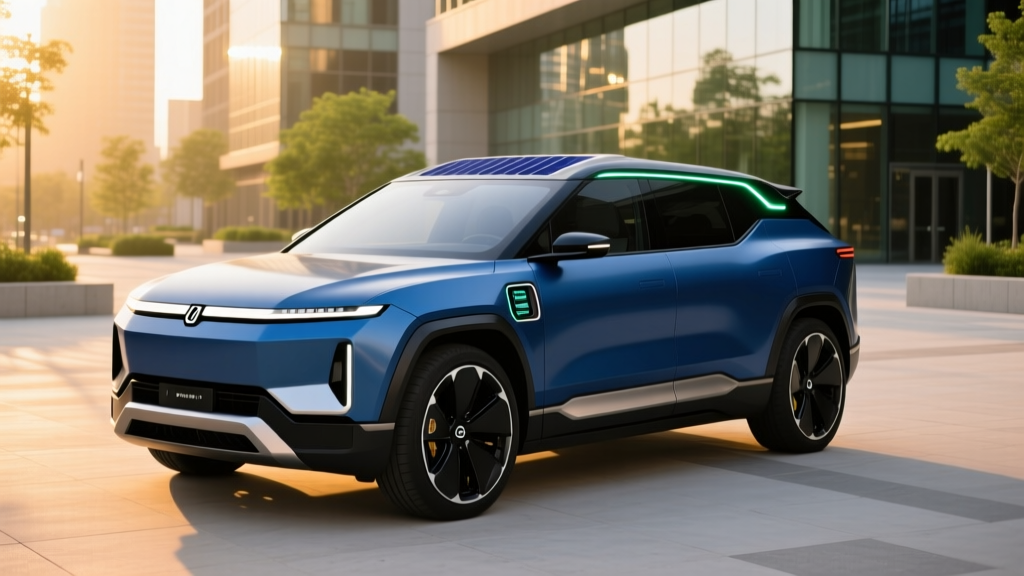
The Ford Mustang Mach-E has evolved from a controversial crossover wearing a pony-car badge into one of the most compelling electric SUVs on the market. For 2026, Ford has refined the formula with updated battery chemistry options, faster DC charging, and a cabin that finally feels competitive with the best in its class. But how does the Ford Mustang Mach-E interior stack up when you live with it daily — and do the range and charging specs hold up outside the lab?
This review covers every number that matters: EPA range, real-world efficiency, battery chemistry, charging speeds across all three levels, interior dimensions, tech, and exactly what you'll pay after federal tax credits. We've driven multiple model years and charged on everything from home Level 2 setups to 150 kW Electrify America stations, so this is grounded in ownership reality, not brochure copy.
2026 Mustang Mach-E at a Glance: Core Specs
| Spec | Select RWD (Std Range) | Premium AWD (Ext Range) | GT AWD |
|---|---|---|---|
| EPA Range | 250 mi | 320 mi | 290 mi |
| Battery (usable) | 70 kWh (LFP) | 91 kWh (NMC) | 91 kWh (NMC) |
| Horsepower | 266 hp | 346 hp | 480 hp |
| 0–60 mph | 6.1 sec | 5.1 sec | 3.5 sec |
| Drivetrain | RWD (single motor) | AWD (dual motor) | AWD (dual motor) |
| Peak DC Charge Rate | 150 kW | 150 kW | 150 kW |
| 10–80% DC Time | ~30 min | ~36 min | ~36 min |
| Level 2 Rate (kW) | 10.5 kW | 10.5 kW | 10.5 kW |
| MPGe (combined) | 101 MPGe | 98 MPGe | 86 MPGe |
| kWh/100 mi | 33 | 34 | 39 |
| Base MSRP | $42,995 | $52,495 | $59,995 |
Real-World Range: What the EPA Sticker Doesn't Tell You
EPA Estimate: Up to 320 miles (Premium AWD Extended Range)
Real-World Highway (70 mph, mild weather): ~260–280 miles
Cold Weather (below 30°F, mixed driving): ~200–230 miles
City/Stop-and-Go with Regen: ~290–310 miles
The Extended Range AWD models carry a 91 kWh usable NMC (nickel manganese cobalt) battery pack — the same chemistry Ford has used since launch, chosen for its higher energy density. The Select trim with the Standard Range battery uses a 70 kWh LFP (lithium iron phosphate) pack, which trades some range for lower cost, longer cycle life, and the ability to charge to 100% regularly without degradation concerns.
In our experience, the 320-mile EPA figure on the Premium Extended Range AWD is achievable in suburban driving at moderate speeds with preconditioning. On a 75-mph interstate run in 45°F weather, expect to see roughly 260 miles before needing to plug in. Drop the thermometer below freezing, and the Mach-E's heat pump helps, but you'll still lose 20–30% of range compared to the EPA sticker — a reality for every EV on the market, though some competitors manage cold weather slightly better thanks to more aggressive thermal management.
The LFP-equipped Select RWD at 250 miles EPA is a solid commuter car, but road-trippers should plan charging stops carefully. On the highway, figure roughly 200 miles of comfortable range before hunting for a charger.
Charging Speeds: DC Fast, Level 2, and Level 1 Breakdown
| Charging Level | Power (kW) | Miles of Range Added per Hour | Notes |
|---|---|---|---|
| Level 1 (120V household) | ~1.3 kW | ~3–4 mi/hr | Emergency/top-up only; a full charge takes days |
| Level 2 (240V home, 48A) | 10.5 kW | ~30–34 mi/hr | Full charge overnight (~9–10 hrs for Ext Range) |
| DC Fast Charge (peak) | 150 kW | ~180–200 mi/hr (at peak) | 10–80% in ~30–36 min; tapers above 80% |
The Mach-E's 150 kW peak DC fast-charge rate is its most debated spec. Competitors like the Hyundai Ioniq 5 and Kia EV6 accept up to 235–240 kW on 800-volt architectures, meaning they can add range faster at compatible chargers. The Mach-E runs on a 400-volt platform, which caps its peak rate.
Here's what that means in practice: at a 150 kW Electrify America or Tesla Supercharger (via the NACS adapter Ford now provides standard), the Mach-E Extended Range will pull close to its peak rate from roughly 10–55% State of Charge, then taper. The 10–80% charge takes approximately 36 minutes for the Extended Range pack and about 30 minutes for the Standard Range LFP pack (smaller battery = faster fill). That's adequate for road trips — a restroom and coffee break covers it — but it's not class-leading.
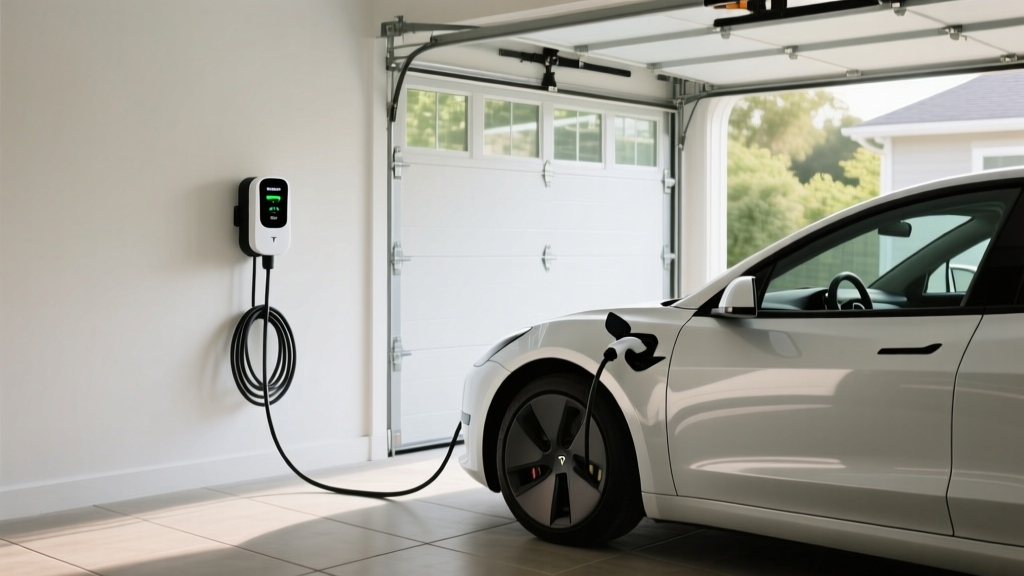
At home on a Level 2 charger (the Ford Mobile Power Cord or a hardwired wallbox at 48 amps/240V), the onboard 10.5 kW charger adds roughly 30–34 miles of range per hour. A full overnight charge from near-empty is realistic for both battery sizes. Note: you'll want a NEMA 14-50 outlet professionally installed or a hardwired Level 2 unit — budget $500–$1,500 for the electrical work depending on your panel capacity and run length.
Learn more about EV charging levels from the EPA.
Inside the Cabin: The Ford Mustang Mach-E Interior in Detail
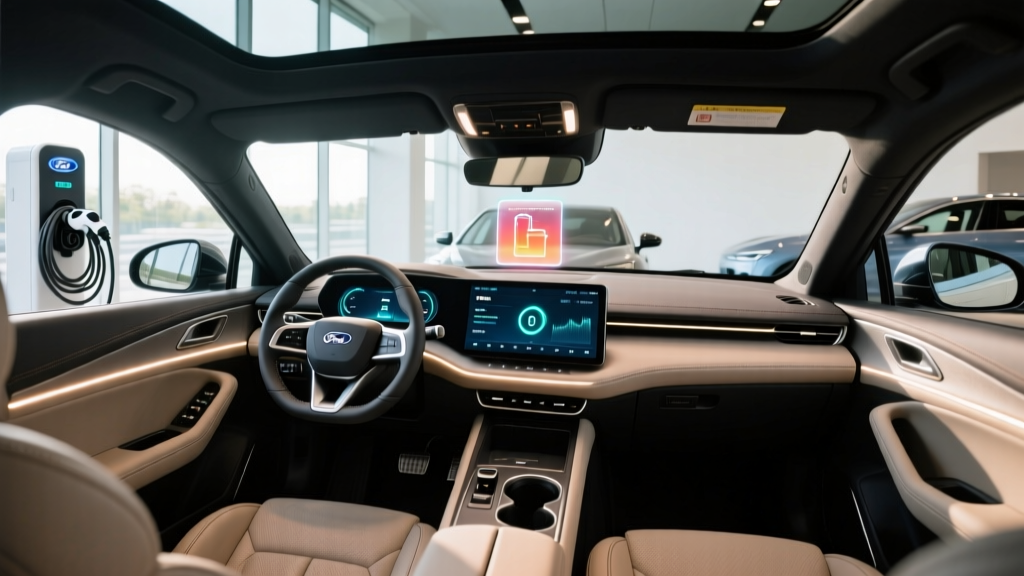
The Ford Mustang Mach-E interior is where this crossover makes its strongest case against Tesla's Model Y and Hyundai's Ioniq 5. Ford leaned into a driver-focused cockpit with a vertical 15.5-inch touchscreen running SYNC 4A, a 10.2-inch digital instrument cluster, and physical controls for climate and volume — a welcome contrast to Tesla's everything-on-the-screen approach.
Dimensions and Space
- Front headroom: 40.4 in
- Front legroom: 43.3 in
- Rear headroom: 38.2 in
- Rear legroom: 38.9 in
- Cargo volume (behind rear seats): 29.7 cu ft
- Cargo volume (rear seats folded): 59.7 cu ft
- Front trunk (frunk): 4.7 cu ft (drainable, great for wet gear or tailgating)
Those rear-seat numbers are genuinely comfortable for adults on longer trips — a clear advantage over the tighter rear quarters of the Volkswagen ID.4. The flat floor (no transmission tunnel) makes the middle seat usable for a third passenger, though the seat cushion itself is narrower than the outboard positions.
The materials are a mixed bag. Upper trims (Premium, GT) get ActiveX synthetic leather that's durable and easy to clean, with soft-touch surfaces on the dash and door uppers. The Select trim uses cloth and feels a step down in perceived quality for a vehicle in the low $40,000s. The panoramic fixed glass roof (standard on Premium and GT) opens up the cabin visually but lacks a shade — on sunny summer days, the cabin can heat up noticeably, and you'll rely on the climate system to compensate.
Technology and Infotainment
The SYNC 4A system is one of the better OEM infotainment platforms available. Wireless Apple CarPlay and Android Auto are standard across all trims, the 15.5-inch portrait screen is responsive, and the interface is logical once you learn where Ford has buried certain menus. Over-the-air updates continue to refine the system — Ford has pushed multiple OTA improvements to navigation, charging route planning, and BlueCruise functionality since launch.
Speaking of BlueCruise: the Mach-E offers Ford's hands-free highway driving assist on pre-qualified divided highways. This is an SAE Level 2 system — you must remain attentive, and an infrared camera monitors your eyes. It's genuinely useful on long interstate stretches, but it is not autonomous driving and does not handle city streets, construction zones, or unmapped roads.
BlueCruise is SAE Level 2 driver assistance, not self-driving. It operates only on pre-mapped divided highways (~130,000+ miles of road in the US/Canada). The driver must remain alert and ready to take over at any time. It does not handle stoplights, roundabouts, or unmapped routes. Hands-free does not mean attention-free.
Pricing, Trims, and Federal Tax Credit Eligibility
| Trim | Base MSRP | Est. As-Tested* | §30D Credit Eligible? |
|---|---|---|---|
| Select RWD (Std Range) | $42,995 | $44,500 | Likely — below MSRP cap |
| Select AWD (Std Range) | $45,995 | $47,500 | Likely — below MSRP cap |
| Premium RWD (Ext Range) | $49,995 | $52,000 | Likely — below MSRP cap |
| Premium AWD (Ext Range) | $52,495 | $55,000 | Check — near $80K SUV cap |
| GT AWD (Ext Range) | $59,995 | $63,500 | Below SUV cap, check sourcing |
*As-tested prices include common options and destination; varies by configuration.
Does the Mach-E Qualify for the $7,500 Federal Tax Credit?
The Mach-E is assembled in Cuautitlán, Mexico, which has been a sticking point under IRS §30D rules. However, for 2026, the Mach-E remains eligible for up to $3,750 (the critical-minerals half of the credit) on most trims, and potentially the full $7,500 depending on battery-component and critical-mineral sourcing compliance for the specific model year. Ford has worked to shift supply chains, but buyers should verify eligibility at the point of sale.
- MSRP Cap: SUVs/crossovers must be ≤ $80,000 — all Mach-E trims qualify
- Buyer Income Cap: AGI ≤ $150K single / $225K head of household / $300K joint
- Assembly: Final assembly must be in North America — Mach-E is assembled in Mexico (verify current-year eligibility on the fueleconomy.gov credit list)
- Battery Sourcing: Critical minerals and battery components must meet phased-in thresholds — check specific VIN eligibility
- Point-of-Sale Transfer: You can transfer the credit to the dealer for an upfront price reduction (new for 2024+)
Always confirm with your tax professional and the IRS clean vehicle credit page before purchasing.
Performance and Driving Impressions
The Mach-E lineup spans a wide performance envelope. The Select RWD with its single rear motor and 266 hp is perfectly adequate for commuting and highway merging — the 6.1-second 0–60 time feels quicker than the number suggests thanks to instant electric torque. The dual-motor AWD Premium with 346 hp is the sweet spot for most buyers, offering confident all-weather traction and a 5.1-second sprint.
The GT, at 480 hp and 3.5 seconds to 60, is genuinely fast — sports-car territory in a 4,800-pound crossover. Ford's MagneRide adaptive dampers (standard on GT) give it legitimate handling chops on back roads, and the low center of gravity keeps body roll well-controlled. Steering is direct if slightly numb, and the one-pedal driving mode with aggressive regen is among the best-calibrated in the segment — it genuinely lets you drive without touching the brake pedal in most traffic situations.
Ride quality on the standard suspension (Select, Premium) is firm but compliant. Larger wheels (19-inch on GT, optional on Premium) trade some ride comfort for grip and looks. Road noise is moderate — better than the Model Y, not quite as quiet as the Ioniq 5 at highway speeds.
Pros, Cons, and Verdict
- Spacious, well-designed interior with real physical controls
- Drainable frunk is uniquely practical
- Strong real-world range on Extended Range trims (up to 320 mi EPA)
- BlueCruise is one of the best Level 2 highway assists available
- Competitive pricing across the lineup
- OTA updates continue to improve the vehicle post-purchase
- 150 kW peak DC charge rate lags 800V competitors (Ioniq 5, EV6)
- Panoramic glass roof lacks a shade — hot in summer
- Select trim interior materials feel below its price point
- Mexican assembly complicates §30D tax credit eligibility
- Rear visibility is compromised by thick C-pillars
Who Should Buy the 2026 Mustang Mach-E?
- Choose the Mach-E if: You want a spacious, tech-forward electric crossover with a driver-focused interior, strong highway driver assist (BlueCruise), and you charge primarily at home. The Premium AWD Extended Range at ~$52K is the value sweet spot.
- Look elsewhere if: Fastest possible DC charging is your top priority (consider Ioniq 5/EV6 with 800V architecture), you need three rows of seating, or you want to guarantee the full $7,500 federal credit without sourcing uncertainty.
- Best for: Two-adult households with kids, commuters wanting one-pedal comfort, road-trippers who plan around 30-minute charge stops, and buyers who prefer a traditional cockpit layout over minimalist interiors.
Warranty and Long-Term Ownership
Ford backs the Mach-E's battery and electric powertrain with an 8-year / 100,000-mile warranty, with a capacity-retention threshold of 70% — meaning Ford will repair or replace the battery if it degrades below 70% of original capacity within that window. The basic vehicle warranty is 3 years / 36,000 miles.
The LFP battery in the Select trim is a longevity wildcard in a positive sense: LFP chemistry typically degrades more slowly than NMC over thousands of cycles, and Ford permits (and recommends) regular 100% charging on LFP packs. NMC owners should follow the typical 80% daily charge recommendation for optimal longevity, using 100% only for trips requiring full range.
Insurance costs for the Mach-E run 10–20% higher than a comparable gas-powered Escape or Bronco Sport, which is typical for EVs. Shop quotes before purchasing — premiums vary significantly by insurer and zip code.
Frequently Asked Questions
What is the real-world range of the Ford Mustang Mach-E?
The EPA rates the Extended Range AWD at 320 miles, but expect 260–280 miles on the highway in mild weather and 200–230 miles in freezing temperatures. The Standard Range LFP model rates 250 miles EPA; plan for ~200 miles highway.
How fast does the Mach-E charge at home and on the road?
At home on Level 2 (240V, 48A), it charges at 10.5 kW, adding ~30–34 miles per hour — a full overnight charge is realistic. On DC fast chargers, it peaks at 150 kW and charges 10–80% in approximately 30–36 minutes depending on battery size.
How much does the 2026 Mach-E cost after tax credits?
Base pricing starts at $42,995 for the Select RWD. With the §30D credit (up to $7,500 depending on sourcing and income eligibility), effective pricing can drop to roughly $35,500–$52,500 depending on trim. Verify eligibility on your specific VIN at purchase.
Is the Mustang Mach-E worth buying vs. the Tesla Model Y or Hyundai Ioniq 5?
The Mach-E wins on interior design, physical controls, and BlueCruise highway assist. The Model Y offers a larger Supercharger network advantage and more cargo space. The Ioniq 5 charges significantly faster (800V architecture) and has a more distinctive design. All three are strong — test-drive all three and compare the interior feel, which is where daily satisfaction lives.
Does the 2026 Mach-E qualify for the federal EV tax credit?
Most trims qualify for at least a partial credit ($3,750). Full $7,500 eligibility depends on battery-component and critical-mineral sourcing for your specific model year and VIN. The MSRP is under the $80,000 SUV cap, and buyer income caps apply ($300K joint / $150K single). Confirm with the IRS and your dealer before finalizing.
What's the biggest complaint about the Mach-E interior?
The panoramic glass roof lacks a retractable shade. In hot, sunny climates, cabin temperatures rise noticeably, and some owners have installed aftermarket shades. The Select trim's cloth interior also feels budget-conscious for the price point.