Ford Mustang Mach-E Incentives: What Buyers Need to Know in 2026
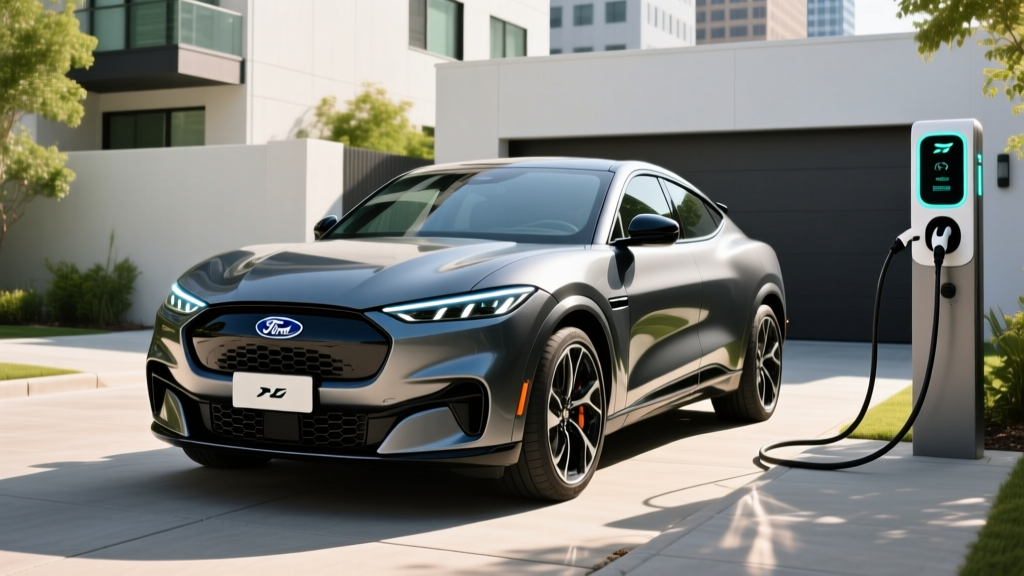
The 2026 Ford Mustang Mach-E remains one of the most compelling electric SUVs on the market, but understanding available incentives is crucial for maximizing value. With federal tax credits, state rebates, and utility programs potentially saving buyers thousands, the Mach-E's effective price becomes significantly more attractive than its MSRP suggests.
This guide breaks down exactly which incentives apply to the 2026 Mustang Mach-E, how much you'll actually save, and whether the vehicle delivers real-world value after accounting for charging infrastructure, efficiency, and ownership costs.
2026 Mustang Mach-E Pricing and Federal Tax Credit Eligibility
The 2026 Ford Mustang Mach-E starts at $39,995 for the Select trim with rear-wheel drive and the standard-range battery. Higher trims and extended-range batteries push prices well above $50,000, making federal tax credit eligibility a key consideration.
| Trim Level | MSRP (2026) | Federal Tax Credit Eligibility | Effective Price After Credit |
|---|---|---|---|
| Select RWD (Standard Range) | $39,995 | Up to $7,500 | $32,495 |
| Premium RWD (Extended Range) | $48,995 | Up to $7,500 | $41,495 |
| GT AWD (Extended Range) | $59,995 | Up to $7,500 | $52,495 |
| Rally AWD (Extended Range) | $61,995 | Up to $7,500 | $54,495 |
Federal EV Tax Credit (§30D) Requirements
The IRS §30D federal tax credit offers up to $7,500, but eligibility depends on multiple factors:
- MSRP Cap: SUVs must have an MSRP of $80,000 or less (all Mach-E trims qualify)
- Income Limits: Adjusted gross income cannot exceed $150,000 (single), $225,000 (head of household), or $300,000 (married filing jointly)
- Battery Sourcing: Critical minerals and battery components must meet North American sourcing requirements (phased percentages increase annually through 2030)
- Final Assembly: Vehicle must be assembled in North America (Mach-E is built in Cuautitlán, Mexico, which qualifies under USMCA)
Key Point: As of 2026, the point-of-sale transfer option allows buyers to apply the credit directly at purchase, reducing upfront cost rather than waiting for tax filing. However, battery sourcing requirements have tightened—verify current-year compliance with your dealer before purchase.
Real-World Range: EPA Estimates vs. Actual Driving
The 2026 Mustang Mach-E offers two battery options with varying range estimates. But EPA stickers don't tell the whole story—highway driving, cold weather, and terrain significantly impact real-world usability.
Standard-Range Battery (70 kWh usable, LFP chemistry)
EPA Estimated Range: 250 miles (Select RWD)
Real-World Expectations:
- City/commute driving: 240-250 miles
- Highway (70+ mph): 210-230 miles
- Cold weather (below 32°F): 175-200 miles
- Mixed driving with climate control: 220-240 miles
Extended-Range Battery (91 kWh usable, NMC chemistry)
EPA Estimated Range: 320 miles (Premium RWD)
Real-World Expectations:
- City/commute driving: 310-320 miles
- Highway (70+ mph): 270-295 miles
- Cold weather (below 32°F): 230-260 miles
- Mixed driving with climate control: 285-310 miles
The standard-range battery uses LFP (lithium iron phosphate) chemistry, which offers superior longevity and can be charged to 100% regularly without degradation concerns. The extended-range uses NMC (nickel manganese cobalt), providing higher energy density but requiring charge-limiting for optimal battery life.
For context, fueleconomy.gov lists the 2026 Mach-E Premium Extended Range at 320 miles combined, but sustained highway speeds above 70 mph reduce efficiency by 10-15%. Cold weather impact is more pronounced in LFP batteries due to chemistry characteristics, though Ford's thermal management system mitigates this somewhat.
Charging Speed and Infrastructure
Charging capability determines daily usability. The 2026 Mach-E supports both Level 2 home charging and DC fast charging, with speeds varying by battery size.
| Charging Method | Standard Range (70 kWh) | Extended Range (91 kWh) |
|---|---|---|
| Level 1 (120V household) | 3-4 miles/hour | 3-4 miles/hour |
| Level 2 (240V, 48A home charger) | 11.5 kW / 32 miles/hour | 11.5 kW / 32 miles/hour |
| DC Fast Charge (peak) | 150 kW | 170 kW |
| DC Fast Charge (10-80%) | ~38 minutes | ~41 minutes |
| Charge Port | CCS (NACS adapter available) | CCS (NACS adapter available) |
Real-World Charging Insights
The Mach-E's charging curve tapers significantly above 80% state of charge. While Ford advertises 170 kW peak speed for extended-range models, sustained charging averages closer to 120-130 kW during the 10-80% window. This is typical for NMC batteries but means actual charging sessions take longer than peak numbers suggest.
For home charging, a 48-amp Level 2 charger requires a 60-amp circuit and typically costs $1,200-$2,500 installed (including electrician labor, permit, and potential panel upgrade). With overnight charging at 11.5 kW, you'll add approximately 250 miles of range in 8 hours—more than sufficient for daily use.
Ford provides a complimentary Ford Connected Charge Station with purchase, though installation costs remain the owner's responsibility.
Performance, Efficiency, and Daily Usability
The 2026 Mach-E balances performance with efficiency across its trim lineup:
| Specification | Select RWD | Premium RWD | GT AWD | Rally AWD |
|---|---|---|---|---|
| Horsepower | 266 hp | 290 hp | 480 hp | 480 hp |
| Torque | 317 lb-ft | 317 lb-ft | 634 lb-ft | 634 lb-ft |
| 0-60 mph | 6.1 sec | 5.8 sec | 3.5 sec | 3.5 sec |
| Drivetrain | Rear-wheel drive | Rear-wheel drive | Dual-motor AWD | Dual-motor AWD |
| MPGe (combined) | 101 MPGe | 105 MPGe | 84 MPGe | 82 MPGe |
| kWh/100 miles | 33 kWh | 32 kWh | 40 kWh | 41 kWh |
Cargo and Passenger Space
The Mach-E offers competitive interior volume for a midsize electric SUV:
- Cargo (behind rear seats): 29.7 cubic feet
- Cargo (rear seats folded): 59.7 cubic feet
- Front trunk (frunk): 4.7 cubic feet (weather-sealed, drainable)
- Rear legroom: 38.9 inches
- Front legroom: 43.3 inches
The frunk is notably smaller than competitors like the Hyundai Ioniq 5, but its drainable design makes it practical for wet gear or tailgating.
Technology, Safety, and Driver Assistance
The 2026 Mach-E comes equipped with Ford's latest SYNC 4A infotainment system on a 15.5-inch vertical touchscreen, wireless Apple CarPlay and Android Auto, and over-the-air update capability.
Ford BlueCruise (SAE Level 2 Driver Assistance)
Ford BlueCruise enables hands-free driving on pre-approved divided highways (over 130,000 miles of compatible roads in the U.S. and Canada). However, this is SAE Level 2 automation—the driver must remain attentive and ready to take control immediately. BlueCruise uses driver monitoring cameras to ensure engagement.
BlueCruise is included for 90 days, then requires a subscription ($75/month or $800/year as of 2026).
Standard Safety Features
Ford Co-Pilot360 2.0 includes automatic emergency braking with pedestrian detection, blind-spot monitoring, rear cross-traffic alert, lane-keeping system, and evasive steer assist. The NHTSA awarded the Mach-E a 5-star overall safety rating.
Warranty Coverage and Long-Term Ownership
Ford provides competitive warranty coverage for the Mach-E's electric powertrain:
- Basic Vehicle Warranty: 3 years / 36,000 miles
- Electric Powertrain/Battery: 8 years / 100,000 miles
- Battery Capacity Retention: Guaranteed to maintain at least 70% capacity over 8 years/100,000 miles
- Roadside Assistance: 5 years / 60,000 miles
The 70% capacity retention threshold is standard for the industry, though some competitors (like Hyundai/Kia) offer 10-year/100,000-mile coverage. Real-world degradation data from 2021-2024 Mach-E owners shows typical capacity loss of 5-8% over the first 100,000 miles, well within warranty parameters.
Pros and Cons: Is the Mach-E Worth It?
Pros
- Strong federal tax credit eligibility (up to $7,500)
- Competitive real-world range, especially extended-range models
- Engaging driving dynamics with GT performance option
- BlueCruise hands-free highway driving (subscription required after trial)
- Over-the-air updates continuously add features
- LFP battery option allows regular 100% charging without degradation
- Drainable frunk adds practical utility
Cons
- DC fast charging slower than Hyundai/Kia E-GMP platform competitors
- Smaller frunk than Ioniq 5 or Tesla Model Y
- BlueCruise subscription cost adds long-term expense
- Extended-range NMC battery requires charge-limiting for longevity
- Rear visibility compromised by styling
- Some owners report SYNC 4A software glitches (improved in 2026)
Who Should Buy the 2026 Mustang Mach-E?
The Mach-E excels for specific use cases:
Ideal for:
- Daily commuters with home charging access (250-320 miles covers most weekly driving)
- Small families needing cargo space and rear-seat comfort without full-size SUV bulk
- Performance-oriented buyers (GT trim delivers sports-car acceleration with EV efficiency)
- Tax credit-eligible buyers who can maximize the $7,500 federal incentive
Consider alternatives if:
- You frequently take 400+ mile road trips (faster-charging competitors like Ioniq 5 or Tesla Model Y reduce downtime)
- You need maximum cargo capacity (Tesla Model Y offers 76 cubic feet vs. Mach-E's 59.7)
- You lack home charging access (public charging costs and convenience favor longer-range, faster-charging models)
Frequently Asked Questions
What is the real-world range of the 2026 Mustang Mach-E?
Standard-range models deliver 210-250 miles depending on driving style and weather. Extended-range models achieve 270-320 miles in mixed conditions. Highway driving at 70+ mph reduces range by 10-15%, and cold weather (below 32°F) can reduce range by 20-30%.
How fast does the Mach-E charge at home and on DC fast chargers?
Home Level 2 charging (48A, 240V) adds 32 miles per hour, fully charging overnight. DC fast charging peaks at 150-170 kW depending on battery size, with 10-80% taking 38-41 minutes. Actual charging sessions average 120-130 kW due to charge curve taper.
How much does the Mach-E cost after federal tax credits?
After the $7,500 federal credit (if eligible), the Select RWD starts at $32,495, Premium Extended Range at $41,495, and GT at $52,495. State and utility incentives may reduce costs further—check state-specific programs.
Does the 2026 Mach-E qualify for the full $7,500 federal tax credit?
Yes, all trims qualify if you meet income requirements (under $150K single/$300K married filing jointly) and the vehicle meets 2026 battery sourcing requirements. Verify current-year compliance with your dealer, as sourcing rules tighten annually.
Is the Mustang Mach-E worth buying vs. competitors?
The Mach-E competes well against the Tesla Model Y, Hyundai Ioniq 5, and Kia EV6. It offers better driving dynamics than the Model Y, more range than base Ioniq 5, and stronger tax credit eligibility than some imported competitors. Choose Mach-E for performance and tax incentives; consider Ioniq 5 or Model Y for faster charging or maximum cargo space.
What are the biggest pros and cons?
Pros: Strong tax credit eligibility, engaging performance, competitive range, BlueCruise hands-free driving. Cons: Slower DC charging than rivals, smaller frunk, BlueCruise subscription cost, NMC battery requires charge management.
Final Verdict: Value After Incentives
The 2026 Ford Mustang Mach-E delivers strong value when federal tax credits apply. The Select RWD at $32,495 (after credit) undercuts many competitors while offering 250 miles of range and solid performance. The Premium Extended Range at $41,495 provides 320 miles and premium features that justify the price premium.
However, buyers should weigh charging speed limitations against their road-trip needs and verify tax credit eligibility before purchase. For tax-credit-eligible buyers with home charging and mostly sub-300-mile daily needs, the Mach-E represents one of the best values in the electric SUV segment.