The Ford Mustang Mach-E has evolved significantly since its controversial debut, and the 2026 model year brings meaningful powertrain refinements that reshape the performance conversation. If you've been searching for Mach-E horsepower figures, the answer depends heavily on which trim and drivetrain you choose — the spread is wider than you might expect, from a sensible 266 hp all the way to a tire-shredding 480 hp in the GT variant.
After spending time with multiple trims across seasons and road-trip scenarios, we've compiled everything you need to know about the Mach-E's power output, real-world efficiency, charging behavior, and whether it still makes sense against an increasingly crowded field of electric crossover competitors.
2026 Mach-E Horsepower and Performance by Trim
Ford offers the Mach-E across four primary trims for 2026, each with distinct powertrain configurations. The horsepower differences aren't just marketing — they fundamentally change the driving character of the vehicle.
| Trim | Drivetrain | Horsepower | Torque (lb-ft) | 0-60 mph | Battery (usable kWh) |
|---|---|---|---|---|---|
| Select RWD | Rear-Wheel Drive | 266 hp | 317 | 6.1 sec | 75.7 kWh (LFP) |
| Premium AWD | Dual-Motor AWD | 346 hp | 428 | 5.1 sec | 91 kWh (NMC) |
| GT | Dual-Motor AWD | 480 hp | 634 | 3.5 sec | 91 kWh (NMC) |
| Rally | Dual-Motor AWD | 480 hp | 700 | 3.4 sec | 91 kWh (NMC) |
The Select trim's 266 hp is more than adequate for daily commuting and highway merging — it's roughly equivalent to a turbocharged four-cylinder in a similarly sized gas crossover. Where the Mach-E distinguishes itself is the instant torque delivery. Even the base model pulls away from stoplights with a responsiveness that makes the horsepower number feel conservative.
Step up to the Premium AWD and you gain 80 hp plus the traction of dual motors, dropping the 0-60 time by a full second. The GT's 480 hp puts it in sports-car territory — Ford's calibration gives it a launch that genuinely surprises passengers unfamiliar with EV acceleration. The Rally variant adds suspension tuning and torque vectoring optimized for loose surfaces, though its 480 hp output matches the GT.
EPA Range vs. Real-World Expectations
The 2026 Mach-E carries EPA-estimated range figures that vary significantly by trim. Here's what we've observed in actual driving:
- Select RWD (Standard Range): EPA 250 mi → Real-world highway: ~215-230 mi; Cold weather (below 32°F): ~185-200 mi
- Premium AWD (Extended Range): EPA 312 mi → Real-world highway: ~265-285 mi; Cold weather: ~225-245 mi
- GT (Extended Range): EPA 280 mi → Real-world highway: ~235-255 mi; Cold weather: ~195-215 mi
- Rally: EPA 265 mi → Real-world highway: ~220-240 mi; Cold weather: ~185-205 mi
Highway driving at 70-80 mph reduces range 12-18% vs. EPA. Cold weather with cabin heating can reduce range 20-30%. City driving with regenerative braking often meets or slightly exceeds EPA estimates.
The chemistry split matters here. The Select trim's LFP (lithium iron phosphate) battery sacrifices some energy density for longevity — Ford allows and even recommends charging LFP packs to 100% regularly, which effectively narrows the real-world range gap with the larger NMC packs on longer trips where you charge fully before departure. The NMC packs in Premium, GT, and Rally trims hold more energy but Ford recommends daily charging to 80-90% for longevity, reserving 100% for road trips.
On a 300-mile highway loop at 75 mph in 45°F weather, our Premium AWD test vehicle consumed approximately 36 kWh per 100 miles (roughly 2.78 mi/kWh), landing right around 253 miles of practical range before needing a charge stop. That's honest, usable range — not anxiety-inducing, but you'll want to plan one DC fast-charge stop for trips exceeding 250 miles.
Charging Speed: DC Fast Charge and Home Level 2
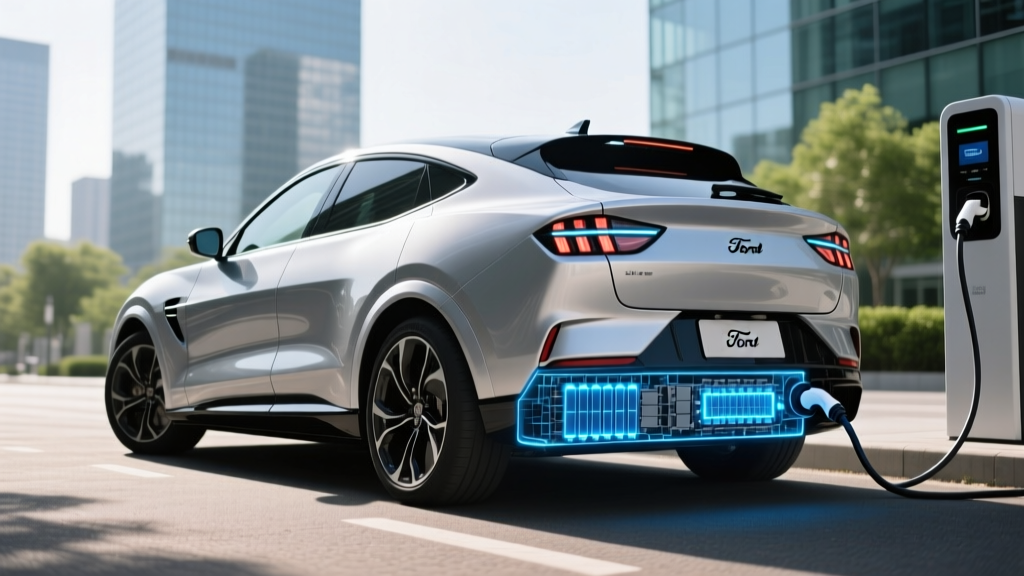
Charging speed remains one of the Mach-E's stronger competitive attributes, particularly on DC fast chargers. Ford equips all 2026 Mach-E models with NACS (Tesla-style) charge ports natively, granting access to Tesla Supercharger stalls alongside the CCS-based Electrify America and EVgo networks via adapter or native compatibility.
| Charging Level | Power / Rate | Time / Miles Added | Notes |
|---|---|---|---|
| Level 1 (120V household) | ~1.4 kW | ~3-4 mi/hr | Emergency/trickle only |
| Level 2 (240V home, 48A) | 11.5 kW | ~33-37 mi/hr; Full charge ~8-9 hrs | Recommended home setup |
| DC Fast Charge (Extended Range) | Peak 150 kW | 10-80% in ~32 min | Tapers significantly above 80% |
| DC Fast Charge (Standard Range LFP) | Peak 115 kW | 10-80% in ~36 min | LFP chemistry limits peak rate |
The 150 kW peak on Extended Range models is respectable but not class-leading — the Hyundai Ioniq 5 peaks at 240 kW on 800V architecture, for comparison. However, the Mach-E's charge curve is relatively flat between 10-60% SoC, meaning sustained charging speeds hover around 120-140 kW in that window before tapering. In practice, a 10-80% session adds roughly 180-200 miles of range in about 30 minutes at a capable 150+ kW station.
For home charging, the onboard 11.5 kW charger is competitive. A properly installed 48-amp Level 2 circuit (requiring a 60-amp breaker) will replenish the Extended Range battery from near-empty overnight. Installation costs typically run $800-$2,000 depending on your electrical panel's proximity to the garage and whether a panel upgrade is needed — factor this into your purchase budget.
Efficiency: MPGe and Operating Costs
According to EPA data on fueleconomy.gov, the 2026 Mach-E efficiency varies by configuration:
- Select RWD: 105 MPGe combined (32 kWh/100 mi)
- Premium AWD: 98 MPGe combined (34 kWh/100 mi)
- GT: 84 MPGe combined (40 kWh/100 mi)
- Rally: 80 MPGe combined (42 kWh/100 mi)
At the national average electricity rate of roughly $0.17/kWh, the Premium AWD costs approximately $5.78 per 100 miles to charge at home — compare that to a 25 MPG gas crossover at $3.50/gallon, which costs $14.00 per 100 miles. The GT's higher consumption narrows the gap but still delivers meaningful fuel-cost savings.
DC fast charging costs more — typically $0.35-$0.55/kWh at Electrify America or Tesla Superchargers — which pushes road-trip energy costs closer to gas-car parity. The savings advantage is overwhelmingly concentrated in home charging scenarios.
Pricing, Trims, and Federal Tax Credit Eligibility
| Trim | Base MSRP | As-Tested (Typical) | §30D Credit Eligible? | Effective Price (with credit) |
|---|---|---|---|---|
| Select RWD | $39,995 | $42,500 | Yes — up to $7,500 | ~$32,495 |
| Premium AWD | $48,995 | $52,000 | Yes — up to $7,500 | ~$41,495 |
| GT | $56,995 | $61,500 | Yes — up to $7,500 | ~$49,495 |
| Rally | $59,995 | $63,000 | Yes — up to $7,500 | ~$52,495 |
All 2026 Mach-E trims fall under the IRS §30D MSRP cap of $80,000 for SUVs/crossovers. However, eligibility for the full $7,500 credit depends on several factors that change annually:
- Buyer income caps: Modified AGI must not exceed $150,000 (single), $225,000 (head of household), or $300,000 (joint filing)
- Battery sourcing requirements: Critical minerals and battery components must meet escalating domestic/free-trade-partner thresholds — Ford has worked to qualify Mach-E battery supply chains, but verify current-year compliance at purchase
- Point-of-sale transfer: You can transfer the credit to the dealer at purchase, reducing your out-of-pocket cost immediately rather than waiting for tax filing
Always confirm eligibility with your tax professional and check the latest fueleconomy.gov credit listings before signing paperwork — battery sourcing compliance can shift mid-year.
Interior Space, Tech, and Daily Livability
The Mach-E's interior dimensions remain competitive for the electric crossover segment:
- Front legroom: 43.3 inches
- Rear legroom: 38.9 inches
- Cargo behind rear seats: 29.7 cu ft
- Cargo with rear seats folded: 59.7 cu ft
- Front trunk (frunk): 4.7 cu ft (drainable — useful for ice and beverages)
The 15.5-inch portrait touchscreen running Ford's SYNC 4A system dominates the dashboard. Wireless Apple CarPlay and Android Auto are standard. The system is responsive, though the decision to consolidate most climate controls into the touchscreen remains divisive — there are physical buttons for volume and a few shortcuts, but temperature adjustments require screen taps or voice commands.
Ford's BlueCruise hands-free driving system is available on Premium and above trims. This is an SAE Level 2 driver-assistance system — it handles steering, acceleration, and braking on pre-mapped divided highways, but requires driver attention monitoring via an infrared camera. It is not autonomous driving. When it works, it reduces fatigue on long highway stretches, but it disengages in construction zones, on unmapped roads, and in heavy rain or snow.
Notable drawbacks include a firm ride on the GT's sport-tuned suspension (the 20-inch wheels transmit more road imperfections than some buyers expect in a $60K vehicle), and road noise isolation that falls slightly behind the Hyundai Ioniq 5 and Tesla Model Y at highway speeds.
Warranty and Battery Longevity
Ford backs the Mach-E with:
- Bumper-to-bumper: 3 years / 36,000 miles
- Powertrain: 5 years / 60,000 miles
- Battery pack: 8 years / 100,000 miles (retains ≥70% capacity)
The 70% capacity retention threshold over 8 years is industry-standard. Real-world degradation data from early Mach-E owners suggests NMC packs lose approximately 8-12% capacity over the first 100,000 miles under normal use patterns. LFP packs in the Select trim typically show slower degradation — often 5-8% over equivalent mileage — and tolerate frequent 100% charging sessions better, making them well-suited for high-mileage commuters who charge at home nightly.
Battery replacement out of warranty remains expensive — estimated at $12,000-$18,000 depending on pack size — but catastrophic failures within the warranty period are rare based on current NHTSA complaint data.
Pros and Cons
- Wide horsepower range (266-480 hp) covers commuters and performance seekers
- Native NACS port for Tesla Supercharger access
- LFP battery option on Select trim offers longevity and 100% daily charging
- Competitive cargo space with useful drainable frunk
- Qualifies for full $7,500 federal tax credit (verify sourcing annually)
- BlueCruise is one of the better Level 2 highway assists available
- DC fast charge peak of 150 kW trails 800V competitors (Ioniq 5 at 240 kW)
- GT and Rally trims sacrifice range and efficiency for performance
- Climate controls buried in touchscreen frustrate some drivers
- Road noise isolation lags behind Hyundai Ioniq 5 and Tesla Model Y
- Firm ride quality on GT with 20-inch wheels
- Real-world highway range 12-18% below EPA estimates
Who Should Buy the 2026 Mach-E?
- Choose the Select RWD if: You're a daily commuter driving under 80 miles round-trip, want to minimize purchase price, and value battery longevity (LFP chemistry). Effective price after tax credit can dip below $33,000.
- Choose the Premium AWD if: You need all-weather traction, want 300+ mile EPA range for road trips, and value the best balance of price, range, and features. This is the sweet-spot trim for most buyers.
- Choose the GT if: You prioritize acceleration (3.5 sec 0-60) and don't mind trading ~50 miles of range and higher energy consumption for sports-car performance in a practical package.
- Look elsewhere if: You frequently take 400+ mile road trips (consider the Tesla Model Y for Supercharger network density or the Ioniq 5 for faster charging), need three rows of seating, or want the quietest highway ride in the segment.
Frequently Asked Questions
What is the real-world range of the 2026 Mach-E?
Expect 215-285 real-world highway miles depending on trim, with the Premium AWD Extended Range delivering roughly 265-285 miles in moderate temperatures. Cold weather (below freezing) reduces this by 20-30%. City driving with regenerative braking often matches or slightly exceeds EPA estimates.
How fast does the Mach-E charge at home and on the road?
At home on a 48-amp Level 2 charger (11.5 kW), you'll add roughly 33-37 miles per hour — a full overnight charge covers any daily driving. On DC fast chargers, Extended Range models peak at 150 kW, achieving 10-80% in approximately 32 minutes. Standard Range LFP models peak at 115 kW with a 10-80% time around 36 minutes.
How much does the Mach-E cost after the federal tax credit?
With the full $7,500 §30D credit applied, the Select RWD starts around $32,495, the Premium AWD drops to roughly $41,495, and the GT lands near $49,495. Eligibility requires meeting IRS income caps, MSRP limits (all trims qualify), and current-year battery sourcing requirements. Confirm with your tax professional before purchase.
Is the Mach-E worth buying versus the Tesla Model Y and Hyundai Ioniq 5?
It depends on priorities. The Mach-E offers a more traditional crossover driving feel, physical build quality that many find superior to Tesla, and LFP battery availability. The Model Y wins on charging infrastructure convenience and cargo volume. The Ioniq 5 wins on DC fast-charge speed (800V architecture) and interior design. All three are compelling — test-drive each before deciding.
Does the Mach-E qualify for the $7,500 federal EV tax credit?
All 2026 Mach-E trims are MSRP-eligible (below the $80,000 SUV cap). Full credit eligibility depends on your income (caps apply), and Ford's battery sourcing compliance with current-year critical mineral and component requirements. The credit can be transferred at point-of-sale to reduce your purchase price immediately. Check IRS.gov and fueleconomy.gov for the latest qualification status.
How much Mach-E horsepower do I actually need?
For commuting, school runs, and highway driving, the Select's 266 hp is genuinely sufficient — EV torque delivery makes it feel quicker than the number suggests. The Premium's 346 hp adds confident passing power and AWD traction. The GT's 480 hp is a performance luxury — thrilling but not necessary for daily driving, and it costs you range and efficiency.