Is the Ford Mustang EV Worth Buying in 2026?
Quick answer: The 2026 Ford Mustang Mach-E remains a strong midsize electric crossover starting at $39,995, offering 230–320 miles of EPA range depending on trim and battery. It qualifies for a partial or full $7,500 federal tax credit (subject to income, MSRP caps, and battery-sourcing rules under IRS §30D). Real-world highway range drops to roughly 200–270 miles, and DC fast charging peaks at 150 kW on Extended Range models (10–80% in ~36 minutes). If you have Level 2 home charging access and drive under 250 miles daily, the Mach-E delivers genuine cost savings over a comparable gas SUV after about 3–4 years of ownership.
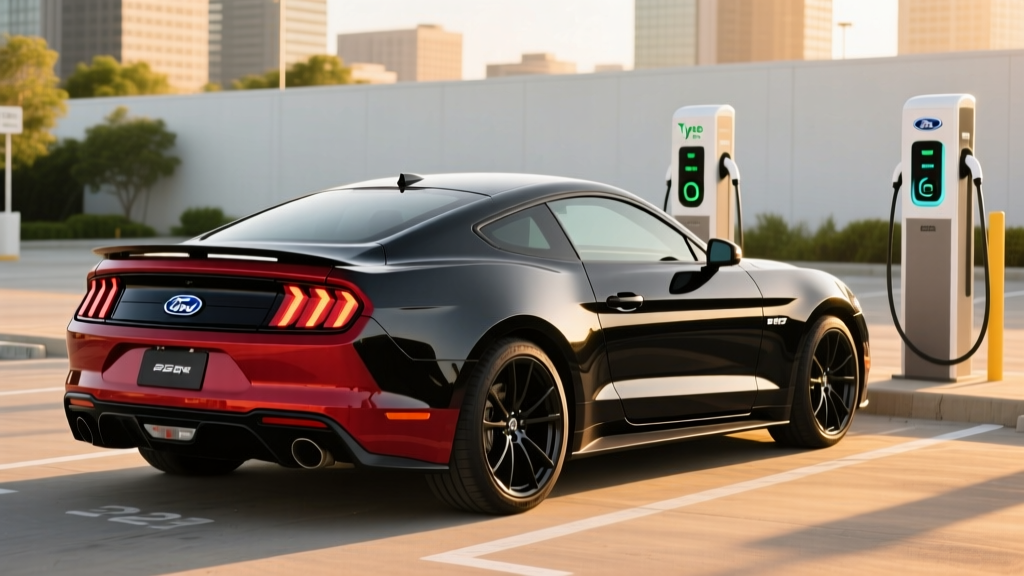
The Mustang Mach-E carries the Mustang nameplate into the electric era, and for 2026 Ford has refined the lineup with updated battery chemistry options, revised pricing, and expanded BlueCruise coverage. But the question for most buyers isn't whether it's a good EV — it's whether it's the right EV for your specific driving pattern, charging situation, and budget. This guide breaks down every number that matters.
2026 Mach-E Specs: Range, Battery, and Charging
The 2026 Mach-E is offered in Select, Premium, and GT trims with two battery options. Here's the full spec breakdown:
| Spec | Select (Std Range) | Premium (Ext Range) | GT (Ext Range) |
|---|---|---|---|
| Base MSRP | $39,995 | $46,995 | $55,995 |
| EPA Range | 230 mi | 320 mi (RWD) | 280 mi |
| Battery (usable) | 72 kWh (LFP) | 91 kWh (NMC) | 91 kWh (NMC) |
| Drivetrain | RWD / eAWD | RWD / eAWD | eAWD |
| Horsepower | 266 hp (RWD) | 290 hp (RWD) | 480 hp |
| 0–60 mph | 6.3 sec | 5.8 sec | 3.5 sec |
| Peak DC Charge | 115 kW | 150 kW | 150 kW |
| 10–80% DCFC | ~38 min | ~36 min | ~36 min |
| Level 2 Rate | 10.5 kW | 10.5 kW | 10.5 kW |
| MPGe (combined) | 101 MPGe | 104 MPGe | 84 MPGe |
| Battery Warranty | 8 yr / 100k mi | 8 yr / 100k mi | 8 yr / 100k mi |
Source: fueleconomy.gov and Ford's official specifications.
Real-world range reality: The EPA 320-mile figure on the Premium Extended Range RWD assumes a mix of city and moderate-speed driving. In sustained 75 mph highway driving, expect roughly 260–280 miles. In sub-freezing temperatures (20–30°F), plan for a 20–30% reduction — that 320-mile sticker can drop to 225–260 miles on a cold winter road trip. The Mach-E's liquid thermal management and available heat pump (standard on Premium and GT trims) help mitigate this, but physics always wins in extreme cold.
Understanding the Charge Curve
The 150 kW peak charge rate on Extended Range models is just that — a peak. In practice, the Mach-E sustains roughly 130–150 kW between 10–55% State of Charge (SoC), then tapers to ~80 kW through 70%, and drops further to ~40 kW above 80%. This is normal lithium-ion behavior to protect cell longevity. If you're road-tripping, plan your stops around the 10–80% window — charging from 80–100% can add another 25–30 minutes for just 60 or so extra miles.
Mach-E vs. Gas SUV: The Real Cost Comparison
Let's put the 2026 Mach-E Premium Extended Range RWD ($46,995) head-to-head with a comparably equipped 2026 Ford Edge AWD (~$42,000 MSRP) over 5 years and 75,000 miles of mixed driving.
| Cost Category | Mach-E Premium (EV) | Ford Edge (Gas) |
|---|---|---|
| Purchase Price | $46,995 | $42,000 |
| Federal Tax Credit (§30D) | –$3,750 to –$7,500* | $0 |
| Effective Purchase | $39,495–$43,245 | $42,000 |
| Fuel/Energy (75k mi) | $2,400–$3,600** | $7,500*** |
| Maintenance (5 yr) | ~$1,200 | ~$3,800 |
| Insurance (5 yr avg) | ~$9,500 | ~$7,800 |
| 5-Year Total | $52,595–$57,545 | $61,100 |
*Tax credit eligibility depends on your modified adjusted gross income (≤$150k single / ≤$300k joint), MSRP caps ($80k for SUVs), and battery critical-mineral sourcing. The Mach-E's credit amount has varied — verify current eligibility at IRS.gov §30D or ask your dealer about point-of-sale transfer availability.
**Assumes $0.13–$0.18/kWh home charging at 3.0 mi/kWh. Public DCFC costs more (~$0.35–$0.50/kWh).
***Assumes $3.50/gal, 24 MPG combined.
The Mach-E wins on total cost of ownership primarily through fuel savings and dramatically lower maintenance (no oil changes, fewer brake replacements due to regenerative braking, no transmission fluid). However, EV insurance premiums run 15–25% higher on average — a cost that erodes some of the savings.
EV vs. Hybrid: Which Powertrain Fits Your Life?
| Factor | Mach-E (BEV) | Toyota RAV4 Hybrid (HEV) | Toyota RAV4 Prime (PHEV) |
|---|---|---|---|
| Base Price | $39,995 | $33,500 | $44,500 |
| Electric-Only Range | 230–320 mi | 0 mi | 42 mi |
| MPGe / MPG Combined | 84–104 MPGe | 41 MPG | 94 MPGe / 38 MPG |
| Home Charging Needed? | Strongly recommended | No | Recommended for full benefit |
| Road-Trip Fueling | DCFC (20–40 min stops) | Gas station (5 min) | Gas station (5 min) |
| Federal Credit | Up to $7,500 | None | Up to $7,500 |
| Best For | Home chargers, daily commuters | No charging access, high mileage | Short commutes + road trips |
The Mach-E makes the most financial sense if you can charge at home (Level 2) and your daily driving stays under 200 miles. If you live in an apartment without charging access, frequently drive 400+ miles in a day through rural areas, or live in a region with sparse public charging infrastructure, a hybrid like the RAV4 HEV eliminates range concern entirely while still cutting fuel costs roughly in half versus a gas-only vehicle.
First-Time EV Buyer: What You Actually Need to Know
Home Charging Is Non-Negotiable for Most Owners
Over 80% of EV charging happens at home. A Level 2 home charger (240V, 32–48 amps) adds roughly 25–35 miles of range per hour on the Mach-E and fully replenishes the Extended Range battery in about 9–10 hours — overnight. Installation costs typically run $800–$2,500 for a straightforward setup (panel capacity available, short wire run), but can climb to $3,000–$5,000+ if your electrical panel needs a 200-amp upgrade. Get a quote from a licensed electrician before purchasing the vehicle.
Level 1 charging (standard 120V outlet) adds only about 3–4 miles per hour. It works for low-mileage drivers (under 40 miles/day) but is impractical as a primary strategy for the Mach-E's 91 kWh battery.
Cold Weather Changes Everything
If you live in the northern U.S., winter range loss of 20–30% is typical. The Mach-E's heat pump (standard on Premium/GT) helps cabin efficiency, but battery chemistry itself becomes less efficient in cold. Practical tips:
- Precondition the battery while plugged in — this warms the pack using grid power, preserving range
- Use seat heaters and steering wheel heat instead of cranking cabin temperature
- Plan for 25% less range in winter when scheduling road-trip charging stops
Public Charging Reliability Varies
The Mach-E uses the NACS (Tesla-style) connector starting with the 2025 model year, granting access to Tesla Supercharger stalls with an adapter (included). This is a major advantage — the Supercharger network has the highest uptime and reliability of any public network. Electrify America, EVgo, and ChargePoint stations remain available via CCS adapter for older models. Plan road trips using A Better Routeplanner or the FordPass app to pre-identify reliable stops.
Myths vs. Facts: Common Mach-E Misconceptions
| Myth | Fact |
|---|---|
| "The battery will need replacing in 5 years" | Ford warranties the battery for 8 years/100,000 miles with a 70% capacity retention threshold. Real-world data from early 2021 Mach-E owners shows ~5–8% degradation at 60,000 miles — well within warranty. |
| "EVs are worse in the cold" | Range drops, yes. But EVs start instantly in cold weather (no cold-start issues), and preconditioning while plugged in means you leave home with a warm cabin and full battery every morning. |
| "I'll be stranded with no charging stations" | With NACS access to 25,000+ Supercharger stalls and growing CCS networks, coverage in the lower 48 is extensive. Rural gaps exist — plan accordingly. |
| "The $7,500 tax credit applies to everyone" | It depends on your income (≤$150k single / ≤$300k joint), the vehicle's MSRP (≤$80k for SUVs), and battery mineral sourcing compliance. Always verify on IRS.gov before relying on it. |
| "It's basically a Tesla" | The Mach-E has its own platform, SYNC infotainment, and Ford's BlueCruise (Level 2 hands-free highway driving). It's a fundamentally different product with different strengths. |
Decision Framework: Should You Buy the Mach-E?
Buy the 2026 Mach-E if:
- You have (or can install) Level 2 home charging
- Your daily commute is under 200 miles round-trip
- You want a sporty crossover with genuine performance (especially the GT at 3.5 sec 0–60)
- You value NACS/Supercharger access for road trips
- You qualify for at least a partial federal or state tax credit
Consider a hybrid (HEV/PHEV) instead if:
- You cannot install or access home charging
- You regularly drive 300+ miles through rural charging deserts
- Your budget is under $35,000 and you need maximum value per dollar
- You live in extreme cold (below 0°F regularly) and can't garage the vehicle
Wait or look elsewhere if:
- You need 3 rows of seating (the Mach-E is a 5-passenger vehicle)
- You need to tow more than 3,500 lbs (Mach-E max towing is 2,300 lbs on eAWD models)
- You want the absolute fastest DC charging — competitors like the Hyundai Ioniq 5 (peak 240 kW, 10–80% in ~18 min) charge significantly faster
Frequently Asked Questions
Does the 2026 Ford Mustang Mach-E qualify for the $7,500 federal tax credit?
Eligibility depends on several factors under IRS §30D: your modified adjusted gross income must be ≤$150,000 (single) or ≤$300,000 (joint filing), the vehicle MSRP must be ≤$80,000 (it qualifies as an SUV), and the battery must meet critical-mineral and component sourcing thresholds that change annually. The Mach-E's credit amount has ranged from $3,750 to the full $7,500 depending on the model year and sourcing compliance. Check the current status at IRS.gov and ask your dealer about point-of-sale transfer, which lets you apply the credit as a down payment reduction at purchase.
How much does it cost to charge a Mach-E at home vs. gas?
At the U.S. average residential electricity rate of ~$0.16/kWh, fully charging the 91 kWh Extended Range battery costs about $14.50, yielding roughly 320 miles — or about $0.045 per mile. A comparable gas SUV at 24 MPG and $3.50/gallon costs ~$0.146 per mile. That's roughly $7,500 in fuel savings over 75,000 miles. Public DC fast charging is more expensive ($0.35–$0.50/kWh), so home charging is where the economics really work.
Is BlueCruise self-driving?
No. Ford BlueCruise is a SAE Level 2 driver-assistance system. It provides hands-free driving on pre-mapped divided highways (over 130,000 miles of coverage as of 2026), but the driver must remain attentive and ready to take over at any time. A driver-facing camera monitors your eyes. It is not autonomous driving — it's an advanced cruise control and lane-centering system, similar in capability to GM's Super Cruise.
What happens if the Mach-E battery degrades significantly?
Ford's battery warranty covers 8 years or 100,000 miles with a capacity retention threshold of 70%. If your battery drops below 70% of its original capacity within that window, Ford will repair or replace it at no cost. Real-world data from 2021–2024 Mach-E owners suggests typical degradation of 5–10% over the first 60,000–80,000 miles — most owners will never approach the warranty threshold. Replacement cost out of warranty is estimated at $12,000–$18,000 depending on battery size, though this is expected to decrease as battery technology matures.
Can I tow with the Mach-E?
Yes, but modestly. The Mach-E with eAWD and the factory tow package is rated for up to 2,300 pounds — enough for a small utility trailer, a couple of dirt bikes, or a light pop-up camper. It is not a substitute for a body-on-frame SUV if you need to tow a boat or travel trailer. Towing also significantly reduces range — expect a 30–50% reduction depending on trailer weight and aerodynamics.
How does the Mach-E compare to the Tesla Model Y?
The Model Y Long Range AWD offers slightly more EPA range (310 mi vs. 320 mi for the Mach-E Premium RWD, but the Model Y is AWD), faster DC charging (peak 250 kW, 10–80% in ~20 min), more cargo space (76 cu ft vs. 59.7 cu ft), and access to Tesla's Supercharger network natively. The Mach-E counters with a more conventional interior layout, physical buttons, available BlueCruise, and a lower starting price on the Select trim. Both are strong choices — the decision often comes down to whether you prefer Tesla's software-centric approach or Ford's more traditional automotive experience.
Safety note: The 2026 Mach-E has earned top ratings from the NHTSA (5-Star Overall) and the IIHS (Top Safety Pick+). Always review current crash-test data for the specific model year before purchasing.