The Bottom Line on the Ford Mustang Mach-E
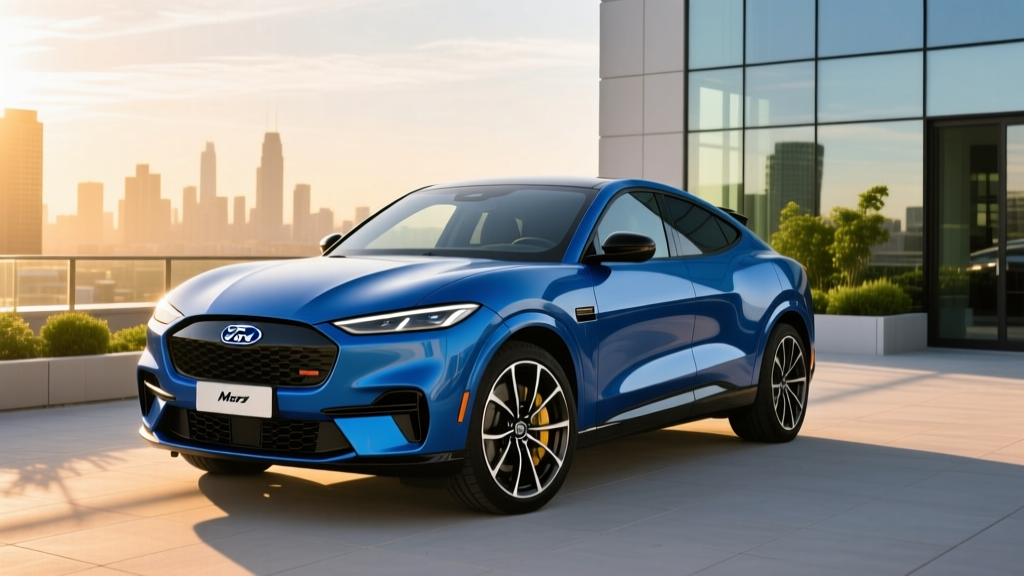
The Ford Mustang Mach-E is a battery-electric crossover SUV (not a hybrid) that seats five, offers 250–320 miles of EPA range depending on trim and battery pack, and starts at approximately $37,995 for the 2026 Select trim. It qualifies for up to $7,500 in federal point-of-sale tax credits under IRS §30D if your income and the vehicle's battery-sourcing details meet current-year requirements. With Level 2 home charging, most owners spend roughly $50–$70 per month on electricity — about 60% less than fueling a comparable gas SUV like the Ford Edge. The Mach-E makes sense if you have access to home or workplace Level 2 charging and want a practical electric daily driver with crossover utility.
Range, Battery, and Charging: What the Numbers Actually Mean
The 2026 Mustang Mach-E is available with two battery options: a Standard Range pack (approximately 72 kWh usable, LFP chemistry) and an Extended Range pack (approximately 91 kWh usable, NMC chemistry). Chemistry matters here — LFP batteries tolerate daily 100% charging with less degradation but offer lower energy density, while NMC packs deliver more range but benefit from staying between 20–80% for daily use.
| Specification | Select / Premium (Std Range) | Premium (Ext Range RWD) | GT (Ext Range AWD) |
|---|---|---|---|
| EPA Range | 250 mi | 320 mi | 290 mi |
| Battery (usable) | ~72 kWh (LFP) | ~91 kWh (NMC) | ~91 kWh (NMC) |
| Horsepower | 266 hp | 290 hp | 480 hp |
| 0–60 mph | 5.8 sec | 5.2 sec | 3.5 sec |
| Max DC Fast Charge | ~150 kW | ~150 kW | ~150 kW |
| 10–80% DCFC Time | ~34 min | ~41 min | ~41 min |
| Level 2 Rate (home) | 10.5 kW | 10.5 kW | 10.5 kW |
| Base MSRP | $37,995 | $45,995 | $57,995 |
| Battery Warranty | 8 yr / 100,000 mi | 8 yr / 100,000 mi | 8 yr / 100,000 mi |
Real-World Range Reality Check
The EPA figure assumes a mix of city and highway driving at moderate temperatures. In practice:
- Highway-only at 75 mph: Expect ~85–90% of EPA range — roughly 270–285 mi on the Extended Range RWD model.
- Cold weather (below 30°F): Range drops 15–30% depending on cabin heating demands. The Mach-E's heat pump (standard on most trims) mitigates this, but a 320-mi pack can realistically deliver 220–260 mi in deep winter highway driving.
- City / stop-and-go: Regenerative braking extends range — you may match or slightly exceed EPA in warm-weather urban driving.
Source: fueleconomy.gov
On DC fast charging, the Mach-E peaks at approximately 150 kW. That's competitive but not class-leading — Hyundai's Ioniq 5 peaks at 240 kW. The charging curve tapers significantly above 80%, which is why the 10–80% time is the meaningful metric. Plan on adding roughly 120–150 miles in 20 minutes at a 150 kW station, then slowing considerably. For road trips, this means 25–35 minute stops every 200 miles or so.
Mach-E vs. Gas SUV: The Cost Comparison That Matters
The most direct gas comparison is the Ford Edge (before discontinuation) or the Hyundai Santa Fe — midsize two-row crossovers in the $38,000–$48,000 range. Here's how five-year costs stack up, assuming 15,000 miles/year, $3.50/gallon gas, and $0.14/kWh electricity (national average):
| Cost Category | Mach-E Premium Ext Range | Gas SUV (25 MPG combined) |
|---|---|---|
| Purchase Price (MSRP) | $45,995 | $42,000 |
| Federal Tax Credit (§30D) | Up to –$7,500* | $0 |
| Effective Purchase Price | $38,495 | $42,000 |
| Fuel/Energy (5 yr) | $5,250 | $10,500 |
| Maintenance (5 yr) | ~$2,200 | ~$4,500 |
| Insurance (5 yr est.) | ~$9,500 | ~$7,800 |
| Total 5-Year Cost | $55,445 | $64,800 |
*Federal credit eligibility depends on your modified adjusted gross income (≤$150,000 single / ≤$300,000 joint), vehicle MSRP caps ($80,000 for SUVs), and battery critical-mineral and component sourcing requirements. Rules evolve — verify at IRS.gov §30D and consider consulting a tax professional. The credit can be transferred to the dealer as a point-of-sale discount.
Key takeaway: the Mach-E's higher insurance premiums (~20% more on average for EVs) partially offset fuel and maintenance savings, but the total cost of ownership still favors the electric option by roughly $9,000 over five years when the tax credit applies. Without the credit, the gap narrows to ~$1,500.
What First-Time EV Buyers Must Know Before Committing
If you're transitioning from a gas vehicle, these practical realities shape daily ownership more than spec sheets do:
Home Charging Access Is the Deciding Factor
Over 80% of EV charging happens at home. A Level 2 home charger (240V, 32–48 amps) adds roughly 25–30 miles per hour of charging, fully replenishing the Extended Range pack overnight. Installation costs range from $500 (simple outlet near the panel) to $3,000+ (panel upgrade, long conduit runs). If you can't charge at home or work, EV ownership becomes significantly less convenient — public DCFC sessions cost 2–3× more per kWh and require planning.
Public Charging Is Improving but Uneven
The Mach-E uses the NACS connector (Tesla's standard, now adopted by Ford) for DC fast charging, giving access to Tesla Supercharger stations via adapter or natively on newer models. This dramatically expands the usable charging network. However, reliability varies — expect 5–10% of non-Tesla public chargers to be out of service at any time. Always have a backup charging plan on road trips.
Driving Patterns Matter More Than You Think
If your daily commute is under 60 miles round-trip, any Mach-E trim covers it easily with range to spare. If you regularly drive 200+ miles in a single day or tow (max 2,300 lbs on AWD trims), the Extended Range pack is worth the premium. For frequent cold-climate highway driving, budget for 25% range loss in winter.
Common Mach-E Misconceptions, Addressed with Data
| Misconception | Fact |
|---|---|
| "The battery will need expensive replacement within a few years." | Ford warranties the pack for 8 years/100,000 miles against dropping below 70% capacity. Industry data from IIHS and fleet studies show most EV batteries retain 85–90% capacity at 100,000 miles. Full replacement (rarely needed) costs $12,000–$18,000. |
| "It's not a real Mustang." | The Mach-E shares no mechanical parts with the Mustang coupe, but it's a legitimate Ford performance EV — the GT variant does 0–60 in 3.5 seconds with 480 hp. |
| "EVs are worse in cold weather." | Range drops are real (15–30%), but the Mach-E's heat pump, battery preconditioning for charging, and heated seats/steering wheel make it practical in winter. Many EV owners in Minnesota and Norway operate year-round without issue. |
| "I'll save money instantly." | Upfront cost is higher. Savings accumulate over 3–5 years through fuel/maintenance reduction and tax incentives. If you sell within two years, you may not recoup the premium. |
| "Charging takes too long." | At home, you plug in at night and wake up full — zero time spent "fueling." On road trips, 25–35 minute DCFC stops every ~200 miles are comparable to rest stops. |
2026 Tax Credit Eligibility: Can You Actually Get $7,500?
The Mach-E's federal credit eligibility under §30D has been a moving target due to evolving battery-sourcing and critical-mineral requirements. As of the 2026 tax year, here's what determines your eligibility:
- Income cap: MAGI ≤$150,000 (single) or ≤$300,000 (married filing jointly)
- MSRP cap: Vehicle base price ≤$80,000 (SUV classification — Mach-E qualifies across all trims)
- Battery sourcing: Must meet critical-mineral and battery-component requirements that tighten annually — the Mach-E's eligibility for the full $7,500 vs. partial $3,750 depends on the current-year sourcing thresholds
- Point-of-sale transfer: You can apply the credit as an immediate dealer discount rather than waiting for a tax refund, reducing your out-of-pocket cost at purchase
- Final assembly: Must occur in North America (Mach-E is assembled in Cuautitlán, Mexico — verify current-year compliance)
Always confirm eligibility at the point of sale and cross-reference with IRS guidance. Dealer incentives and state-level rebates may stack on top.
Decision Framework: Is the Mach-E Right for You?
Choose the Mach-E if:
- You have Level 2 home or workplace charging access
- Your daily driving is under 150 miles and you want a comfortable, tech-forward crossover
- You value access to the Tesla Supercharger network (via NACS)
- You qualify for the federal tax credit, bringing effective pricing below $40,000 for the Select trim
- You want Ford dealer service support and an 8-year/100,000-mi battery warranty
Look elsewhere if:
- You lack reliable home or workplace charging and don't want to depend on public infrastructure
- You need three-row seating (consider the Kia EV9 or a PHEV minivan)
- You tow more than 2,300 lbs regularly (a PHEV or gas truck may serve better)
- Maximum DC fast-charge speed is a priority — the Hyundai Ioniq 5 (240 kW peak) charges ~40% faster
- You live in a rural charging desert with minimal public DCFC coverage
Frequently Asked Questions
Is the Ford Mustang Mach-E fully electric or a hybrid?
The Mach-E is a battery-electric vehicle (BEV) — it has no gasoline engine and no hybrid system. It runs exclusively on its lithium-ion battery pack and electric motors. If you want a Ford with both gas and electric capability, look at the Ford Escape PHEV.
How much does it cost to charge a Mach-E at home?
With the national average electricity rate of ~$0.14/kWh, fully charging the 91 kWh Extended Range pack costs about $12.74. Driving 1,000 miles per month (at ~3.0 mi/kWh) costs roughly $47 in electricity — compared to ~$140 in gasoline for a 25 MPG SUV.
Does the Mach-E use the Tesla charging connector?
Starting with the 2025 model year, Ford transitioned the Mach-E to the NACS (North American Charging Standard) connector, which is compatible with Tesla Superchargers. Earlier models use CCS1 and require an adapter for Supercharger access.
What happens if the battery degrades?
Ford's battery warranty guarantees at least 70% capacity retention over 8 years or 100,000 miles. Real-world data suggests most Mach-E packs lose only 5–12% capacity in the first 100,000 miles. If a replacement is ever needed outside warranty, expect $12,000–$18,000 — though full pack replacements remain rare.
Can I take a Mach-E on a road trip?
Yes. With NACS access to Tesla Superchargers and growing Electrify America coverage, highway travel is practical. Plan for 25–35 minute charging stops every 180–220 miles at highway speeds. Preconditioning the battery before arriving at a charger (built into the navigation routing) optimizes charge speed.