Quick Verdict: The Mach-E in 2026
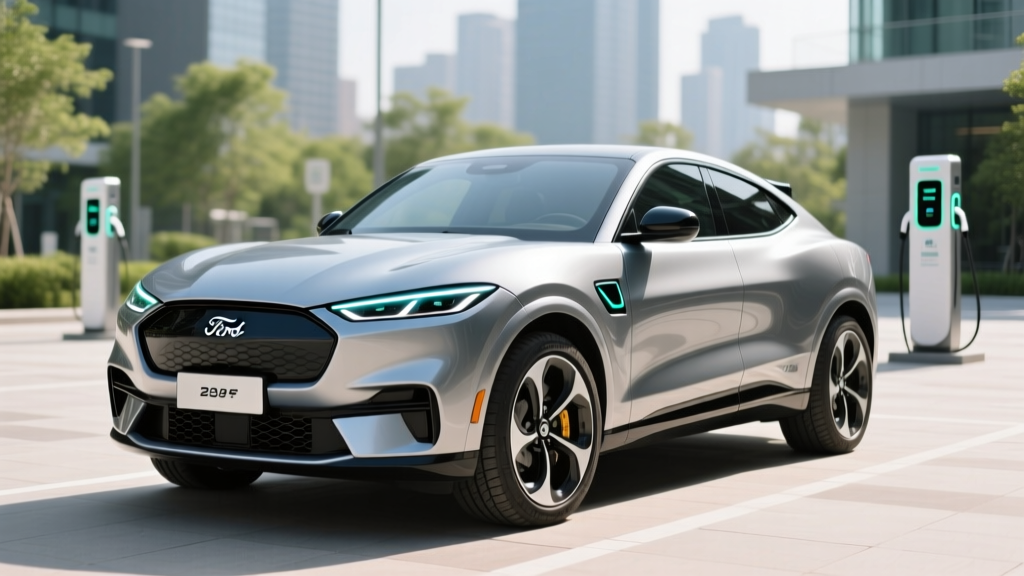
The 2026 Ford Mustang Mach-E remains one of the most well-rounded electric crossovers on the market, balancing usable range, competitive charging speeds, and a practical interior. For buyers researching Ford Mach-E colors alongside the hard specs that matter — range, charging, pricing, and tax credit eligibility — this guide covers every trim, paint option, and number you need before heading to the dealer or configuring online.
Ford has streamlined the lineup for 2026, keeping the proven Extended Range battery and adding subtle palette updates. The result is an EV that competes directly with the Tesla Model Y, Hyundai Ioniq 5, and Chevrolet Blazer EV on merit, not just brand loyalty.
2026 Ford Mach-E Colors and Exterior Options
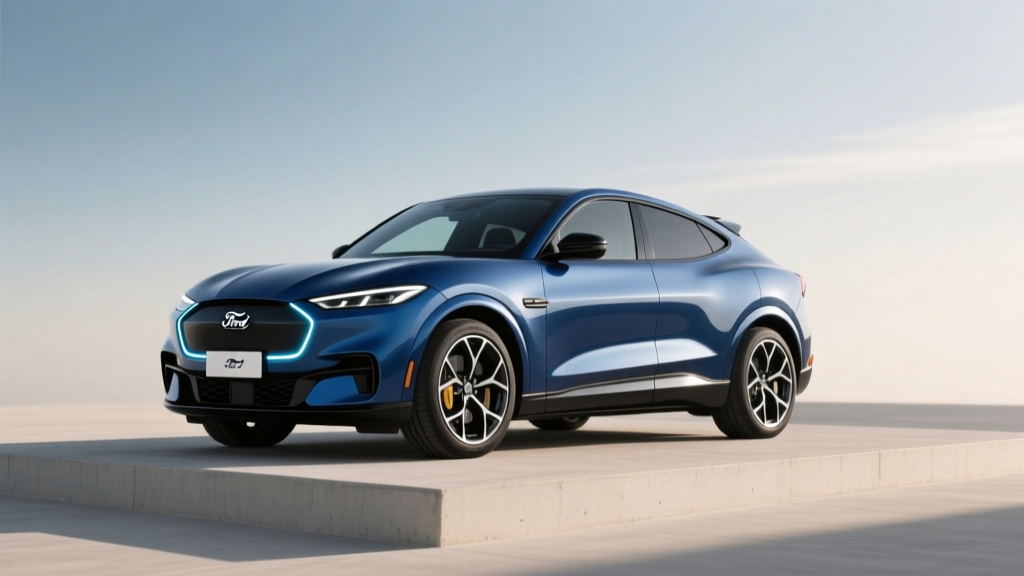
Color choice is one of the most-searched configuration decisions for the Mach-E, and Ford offers a focused palette for 2026 across all trims. Availability varies by trim level, and some colors carry a premium upcharge.
| Color Name | Finish Type | Premium Upcharge | Available Trims |
|---|---|---|---|
| Shadow Black | Solid | No | Select, Premium, GT |
| Oxford White | Solid | No | Select, Premium, GT |
| Glacier Gray Metallic | Metallic | $395 | Select, Premium, GT |
| Desert Sand | Metallic | $395 | Premium, GT |
| Eruption Green Metallic | Metallic Tri-Coat | $795 | Premium, GT |
| Molten Magenta | Metallic Tri-Coat | $795 | GT only |
| Star White Metallic Tri-Coat | Tri-Coat | $795 | Premium, GT |
| Velocity Blue Metallic | Metallic | $395 | Select, Premium, GT |
The GT trim's exclusive Molten Magenta and the Premium-tier Eruption Green are the standout choices for buyers who want visual differentiation. For fleet or resale-minded buyers, Shadow Black and Oxford White remain no-cost standards that hold value well in the used market. All trims include a black-painted roof as standard; the available panoramic fixed glass roof (standard on Premium and GT) replaces the traditional roof panel and alters the vehicle's silhouette noticeably.
Range, Battery, and Efficiency
EPA-estimated range peaks at 320 miles (Select/Premium RWD with Extended Range battery). Expect 260–285 miles in mixed highway driving at 70+ mph, and 220–250 miles in freezing temperatures (below 32°F) with cabin heat active. AWD trims reduce range by roughly 20–30 miles vs. RWD equivalents.
| Spec | Select RWD ER | Premium AWD ER | GT AWD |
|---|---|---|---|
| EPA Range | 320 mi | 290 mi | 280 mi |
| Battery (usable) | 91 kWh (NMC) | 91 kWh (NMC) | 91 kWh (NMC) |
| MPGe (city/hwy/combined) | 111/94/103 | 103/89/96 | 98/84/91 |
| kWh/100 mi | 33 | 35 | 37 |
| Horsepower | 290 hp | 365 hp | 480 hp |
| Torque | 317 lb-ft | 428 lb-ft | 634 lb-ft |
| 0–60 mph | 6.1 sec | 5.1 sec | 3.5 sec |
| Drivetrain | RWD (single motor) | AWD (dual motor) | AWD (dual motor) |
The Mach-E uses NMC (nickel manganese cobalt) lithium-ion pouch cells supplied by CATL and assembled in Ford's Ion Park facility. NMC chemistry delivers higher energy density than LFP, which is why Ford fits a 91 kWh usable pack in a relatively compact crossover footprint. The trade-off: NMC batteries prefer daily charging limits around 80–90% for longevity, unlike LFP packs that tolerate regular 100% charges. Ford's battery management system includes a top-buffer and active liquid thermal management to mitigate degradation.
According to fueleconomy.gov, the RWD Extended Range model achieves 103 MPGe combined, translating to roughly 33 kWh per 100 miles — competitive with the Tesla Model Y Long Range and slightly behind the Hyundai Ioniq 5's efficiency.
Charging Speed: DC Fast Charge and Home Level 2
| Charge Level | Connector | Peak Power | Rate / Time |
|---|---|---|---|
| Level 1 (120V) | J1772 / NACS adapter | ~1.4 kW | ~3–4 mi/hr |
| Level 2 (240V, 48A) | J1772 / NACS | 11.5 kW | ~32 mi/hr (full in ~9.5 hr) |
| DC Fast Charge | CCS1 / NACS | 150 kW peak | 10–80% in ~36 min |
The Mach-E's 150 kW peak DC fast-charge rate is its most debated spec. On a 350 kW Electrify America or Tesla Supercharger (via NACS adapter), the Mach-E will ramp to ~150 kW between roughly 15–40% State of Charge, then taper progressively. From 10–80%, expect approximately 36 minutes under ideal thermal conditions. In cold weather (below 40°F) without preconditioning, that 10–80% session can stretch to 50+ minutes.
Preconditioning matters. Navigate to a DC fast charger using the Mach-E's built-in route planner, and the battery thermal system will warm the pack to optimal charging temperature before you arrive. Skip this step, and the charge curve will be noticeably slower for the first 10–15 minutes as the battery heats up.
For home charging, Ford includes access to the Ford Connected Charge Station (48A, hardwired, Level 2). At 11.5 kW, it adds roughly 32 miles of range per hour of charging — enough to fully replenish the 91 kWh pack overnight in about 9.5 hours. Home installation typically runs $500–$1,500 depending on panel proximity and whether a 60A circuit is available. Always have a licensed electrician confirm your panel capacity before installation.
Ford provides a complimentary NACS adapter, granting access to Tesla's Supercharger network — a significant advantage for road-trip charging reliability. The Mach-E retains its native CCS1 port alongside NACS compatibility via the adapter.
Pricing, Trims, and Federal Tax Credit Eligibility
| Trim | Base MSRP | As-Tested (Typical) | §30D Credit Eligible? |
|---|---|---|---|
| Select RWD (Std Range) | $39,995 | $41,500 | Yes — up to $3,750* |
| Select RWD (Extended Range) | $44,495 | $46,000 | Yes — up to $3,750* |
| Premium AWD (Extended Range) | $49,495 | $52,500 | Yes — up to $3,750* |
| GT AWD | $55,995 | $60,500 | Yes — up to $3,750* |
*Under IRS §30D rules for 2026, the Ford Mustang Mach-E qualifies for a partial credit (typically $3,750) based on critical-mineral sourcing requirements. The full $7,500 requires both critical-mineral AND battery-component compliance. Eligibility also depends on:
- Buyer income caps: AGI ≤ $150,000 (single), ≤ $225,000 (head of household), ≤ $300,000 (joint)
- MSRP cap: SUVs/vans capped at $80,000 — all Mach-E trims qualify
- Battery sourcing: Critical minerals and component rules phase in annually; check IRS guidance for current-year percentages
- Point-of-sale transfer: Eligible buyers can transfer the credit to the dealer at purchase, reducing the out-of-pocket price immediately
The Mach-E's battery sourcing has historically met the critical-minerals threshold but not the full battery-component threshold, resulting in the $3,750 partial credit. Ford continues to localize supply chain elements, so this may shift — verify current eligibility at the IRS Clean Vehicle Credit page before purchasing.
Interior Space, Cargo, and Technology
The Mach-E offers 29.7 cubic feet of cargo space behind the rear seats and 59.7 cubic feet with the rear seats folded — competitive with the Model Y but behind the Ioniq 5's flat-floor versatility. The front trunk (frunk) adds 4.7 cu ft of drainable storage, useful for wet items or charging cables.
Passenger dimensions are generous:
- Front legroom: 43.3 inches
- Rear legroom: 38.9 inches
- Front headroom: 40.4 inches (without glass roof)
- Rear headroom: 39.3 inches
The SYNC 4A infotainment system runs on a 15.5-inch portrait touchscreen with wireless Apple CarPlay and Android Auto, OTA updates, and an integrated 5G modem for remote features. The system is responsive but occasionally buries climate controls behind submenus — a common complaint. Physical volume and tuning knobs remain, which is appreciated.
Ford Co-Pilot360 Assist 2.0 includes adaptive cruise control with stop-and-go, lane centering, evasive steering assist, and intersection braking. This is a SAE Level 2 driver-assistance system — the driver must remain engaged with hands on the wheel at all times. It is not autonomous driving. BlueCruise (hands-free highway driving on pre-mapped divided highways) is available as a subscription add-on on Premium and GT trims, but remains Level 2 with driver monitoring via an interior camera.
Warranty and Long-Term Ownership
Ford backs the Mach-E with:
- Battery warranty: 8 years / 100,000 miles (retains ≥70% capacity)
- Electric powertrain warranty: 8 years / 100,000 miles
- Bumper-to-bumper: 3 years / 36,000 miles
- Roadside assistance: 5 years / 60,000 miles
The 70% capacity retention threshold at 8 years/100,000 miles is industry-standard. Real-world degradation data from early 2021–2023 Mach-E owners suggests the NMC pack holds roughly 90–93% capacity after 3 years and 40,000 miles with typical charging habits (daily limit set to 80–90%, occasional 100% for road trips). A full battery replacement out of warranty would cost an estimated $12,000–$18,000 based on current parts pricing — a figure to weigh for second owners beyond the warranty window.
Pros, Cons, and Who Should Buy
Pros
- Up to 320 mi EPA range (RWD Extended Range)
- NACS adapter included — Tesla Supercharger access
- Strong 0–60 performance, especially GT (3.5 sec)
- Comfortable ride quality and composed handling
- Spacious rear seat and practical frunk
- §30D tax credit eligible (partial, $3,750)
Cons
- 150 kW peak DC charge rate trails rivals (Ioniq 5: 240 kW, Model Y: 250 kW)
- 10–80% charge in ~36 min — slower than competitors on road trips
- SYNC 4A interface can feel cluttered
- No LFP battery option for daily 100% charging tolerance
- BlueCruise requires paid subscription after trial
Best for: Daily commuters and small families who prioritize ride comfort, cargo practicality, and brand familiarity over maximum charging speed. The Mach-E shines in suburban and urban use where overnight Level 2 home charging covers daily needs, and DC fast charging is an occasional road-trip requirement rather than a daily routine.
Consider alternatives if: You frequently take 400+ mile road trips and want the fastest possible DC charging (Hyundai Ioniq 5 or Kia EV6 with 800V architecture), or if you want hands-free driving without a subscription (GM's Super Cruise on the Blazer EV includes more complimentary time).
Frequently Asked Questions
What is the real-world range of the 2026 Ford Mach-E?
The EPA rates the RWD Extended Range model at 320 miles. In real-world highway driving at 70–75 mph, expect 260–285 miles. In freezing temperatures with cabin heat, range can drop to 220–250 miles. AWD trims lose roughly 20–30 miles vs. their RWD counterparts.
How fast does the Mach-E charge at home and on DC fast chargers?
At home on a 48A Level 2 charger (11.5 kW), the Mach-E adds about 32 miles per hour and fully charges in roughly 9.5 hours. On DC fast chargers, it peaks at 150 kW and charges from 10–80% in approximately 36 minutes under ideal conditions. Cold weather without preconditioning can extend this to 50+ minutes.
Does the 2026 Mach-E qualify for the federal EV tax credit?
Yes, the Mach-E qualifies for a partial §30D credit of $3,750 based on current critical-mineral sourcing compliance. Full $7,500 eligibility requires both critical-mineral and battery-component thresholds. Buyer income caps ($150K single / $300K joint) and the $80,000 SUV MSRP cap also apply. The credit can be transferred to the dealer at point of sale. Verify current-year rules at irs.gov.
What Ford Mach-E colors are available for 2026?
The 2026 lineup includes Shadow Black, Oxford White, Glacier Gray Metallic, Velocity Blue Metallic, Desert Sand, Eruption Green Metallic, Star White Metallic Tri-Coat, and the GT-exclusive Molten Magenta. Premium paints carry a $395–$795 upcharge depending on finish type.
Is the Mach-E worth buying over the Tesla Model Y or Hyundai Ioniq 5?
The Mach-E competes well on ride quality, interior comfort, and NACS/Supercharger access. It falls behind the Ioniq 5 and EV6 on DC charging speed (150 kW vs. 240 kW) and behind the Model Y on efficiency and Supercharger-native convenience. Choose the Mach-E if you value Ford dealer support, traditional crossover ergonomics, and a composed ride over maximum charging performance.
What is the Mach-E's battery warranty?
Ford covers the high-voltage battery for 8 years or 100,000 miles, whichever comes first, guaranteeing at least 70% capacity retention. The electric powertrain (motors, inverter, reduction gear) carries the same 8-year/100,000-mile coverage.