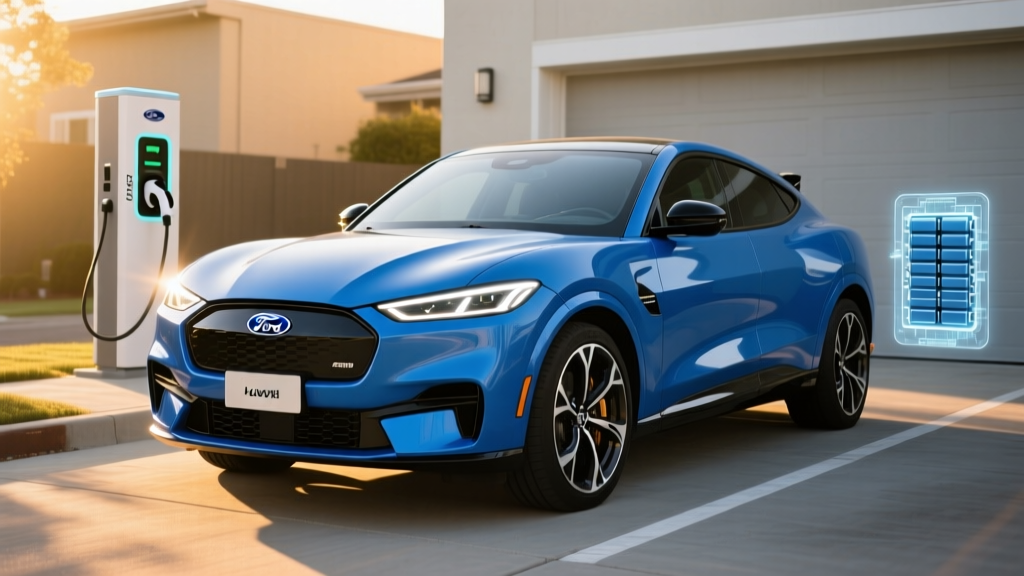
The Ford Mustang Mach-E remains one of the most recognizable electric SUVs on the market, and for 2026, Ford continues to offer several striking blue exterior options that draw buyer attention. Whether you're searching for a blue Mach-E in Vapor Blue, Velocity Blue, or the newly available Atlas Blue Metallic, the real question isn't the paint — it's whether this electric crossover delivers where it counts: range, charging speed, practicality, and value after federal tax credits. This review breaks down every spec, real-world driving expectation, and ownership cost you need before signing on the dotted line.
Quick Verdict: Is the Blue Mach-E Worth It in 2026?
The 2026 Mustang Mach-E is a well-rounded electric SUV that excels as a daily commuter and capable road-trip vehicle, especially in the Extended Range AWD configuration. With EPA-estimated range up to 320 miles, peak DC fast charging at 150 kW, and a starting MSRP around $39,995, it undercuts rivals like the Tesla Model Y Long Range on price while offering a more traditional, driver-oriented cabin. The available blue paint options — particularly Vapor Blue on the GT trim — make it one of the most visually distinctive EVs in its class. However, its DC fast-charging speed trails newer 800-volt competitors, and real-world highway range falls noticeably short of the EPA sticker.
EPA Estimated: 320 miles (Extended Range RWD) / 300 miles (Extended Range AWD)
Real-World Highway (70 mph, 70°F): ~265–280 miles
Real-World Highway (30°F, cold weather): ~210–235 miles
Source: EPA fueleconomy.gov; real-world estimates based on independent EV range testing.
Range, Battery, and Efficiency Breakdown
The 2026 Mach-E is offered with two battery configurations. The Standard Range model uses a 72 kWh usable lithium-ion battery with NMC (nickel manganese cobalt) chemistry, while the Extended Range variant packs a 91 kWh usable NMC pack. Ford does not currently offer LFP (lithium iron phosphate) chemistry in the Mach-E lineup, meaning owners should follow NMC best practices: avoid sustained 100% state of charge for daily driving and aim for an 80–90% daily limit to maximize long-term battery health.
| Specification | Standard Range RWD | Extended Range RWD | Extended Range AWD | GT AWD |
|---|---|---|---|---|
| Usable Battery | 72 kWh (NMC) | 91 kWh (NMC) | 91 kWh (NMC) | 91 kWh (NMC) |
| EPA Range | 250 mi | 320 mi | 300 mi | 280 mi |
| MPGe (Combined) | 101 MPGe | 104 MPGe | 98 MPGe | 86 MPGe |
| Efficiency | 33 kWh/100mi | 32 kWh/100mi | 34 kWh/100mi | 39 kWh/100mi |
| Horsepower | 266 hp | 290 hp | 346 hp | 480 hp |
| 0–60 mph | 5.8 sec | 5.5 sec | 4.8 sec | 3.5 sec |
| Drivetrain | RWD | RWD | AWD (Dual Motor) | AWD (Dual Motor) |
Efficiency varies meaningfully across trims. The GT's performance-tuned motors and stickier summer tires push consumption to 39 kWh per 100 miles — roughly 22% less efficient than the Extended Range RWD. If range maximization is your priority, the Extended Range RWD is the clear winner.
Charging Speed: DC Fast Charging and Home Level 2
Charging capability is where the Mach-E shows its age relative to 800-volt platforms like the Hyundai Ioniq 5 and Kia EV6. The 2026 Mach-E uses a 400-volt architecture with a peak DC fast-charge rate of 150 kW. On a compatible CCS or NACS station (Ford now equips all new Mach-E models with the NACS charge port, enabling native Tesla Supercharger access), you'll see the following charge curve:
| Charging Method | Power | Speed / Time | Notes |
|---|---|---|---|
| Level 1 (120V household) | ~1.4 kW | ~3–4 miles/hour | Emergency/trickle only |
| Level 2 (240V, 32A home) | 7.7 kW | ~22 miles/hour; full charge ~12 hrs (ER) | Standard home setup |
| Level 2 (240V, 48A home) | 11.5 kW | ~33 miles/hour; full charge ~8 hrs (ER) | Requires 60A circuit |
| DC Fast (peak) | 150 kW | 10–80% in ~36 minutes | Tapers significantly above 80% |
| DC Fast (sustained avg) | ~100 kW avg | ~160 miles added in 30 min | Real-world average on road trips |
The charge curve is the critical detail most spec sheets omit. The Mach-E hits 150 kW briefly between 15–35% state of charge, then progressively tapers — dropping to roughly 80 kW by 60% and below 50 kW past 80%. On a road trip, plan to charge from 10% to 80% rather than topping off to 100%, as the final 20% can add 25+ minutes. Always precondition the battery using the vehicle's built-in navigation routing to a charger for optimal charge speed.
Pricing, Trims, and Federal Tax Credit Eligibility
The 2026 Mach-E lineup spans four primary trims. Blue exterior colors — including Vapor Blue (premium), Atlas Blue Metallic, and Shadow Black/Blue accent combinations — are available across most trims, with Vapor Blue commanding a $395 premium and exclusive to select packages.
| Trim | Base MSRP | As-Tested (Popular Config) | Est. After §30D Credit* |
|---|---|---|---|
| Select SR RWD | $39,995 | $42,590 | $35,090 |
| Premium ER RWD | $46,495 | $49,890 | $42,390 |
| Premium ER AWD | $49,495 | $52,790 | $45,290 |
| GT ER AWD | $59,995 | $64,390 | $56,890 |
*Estimated price assumes full $7,500 federal tax credit under IRS §30D. Eligibility depends on multiple factors — see checklist below.
- Vehicle MSRP must not exceed $80,000 for SUVs (all Mach-E trims qualify)
- Buyer AGI must not exceed: $150,000 (single), $225,000 (head of household), $300,000 (joint)
- Battery components must meet increasing domestic-content thresholds (phase-in rules per IRS guidelines)
- Critical minerals must meet sourcing requirements from US or FTA-partner countries
- Credit can be transferred to dealer at point of sale for an immediate price reduction
- Always verify current eligibility on irs.gov before purchasing — rules change and specific battery-sourcing compliance varies by production batch
Interior, Cargo, and Technology
The Mach-E's cabin prioritizes a driver-centric layout with a 15.5-inch vertically oriented touchscreen running Ford's SYNC 4A infotainment system. Wireless Apple CarPlay and Android Auto are standard, as is a 10.2-inch digital instrument cluster. The available blue-themed interior accent stitching on Premium and GT trims complements the exterior blue paint options.
Cargo and passenger dimensions:
- Cargo volume (behind rear seats): 29.7 cu ft
- Cargo volume (rear seats folded): 59.7 cu ft
- Front trunk (frunk): 4.7 cu ft (drainable, useful for wet gear)
- Rear legroom: 38.9 inches
- Front headroom: 40.4 inches
The frunk is a genuine differentiator versus the Tesla Model Y, which eliminated its frunk in recent refreshes. The Mach-E's drainable frunk is ideal for tailgating or storing muddy hiking boots.
Driver-assist technology: Ford's BlueCruise hands-free driving system is available on highway-divided routes (over 130,000 miles of qualified roads in the US). BlueCruise is an SAE Level 2 system — the driver must remain attentive, and a driver-facing camera monitors eye gaze. It is not autonomous driving. The system works well on long highway stretches but disengages in construction zones and requires hands-on-wheel resumption frequently.
Warranty and Long-Term Ownership
Ford backs the Mach-E with competitive warranty coverage that addresses the biggest concern among EV buyers: battery longevity.
- Battery warranty: 8 years / 100,000 miles (retains at least 70% of original capacity)
- Electric powertrain: 8 years / 100,000 miles
- Bumper-to-bumper: 3 years / 36,000 miles
- Roadside assistance: 5 years / 60,000 miles
The 70% capacity retention threshold is standard for the industry but worth monitoring. Based on current NMC degradation data from high-mileage Mach-E fleets, most owners report approximately 5–8% degradation over the first 60,000 miles, suggesting the battery should comfortably outlast the warranty period. Replacement cost for a 91 kWh Extended Range pack currently ranges from $14,000 to $18,000 out of warranty — a figure expected to decline as battery costs continue to fall.
- Native NACS port enables Tesla Supercharger network access
- Engaging driving dynamics, especially GT trim
- Generous frunk + rear cargo space
- BlueCruise hands-free highway driving
- Competitive pricing vs. Model Y and Ioniq 5
- Striking blue color options (Vapor Blue standout)
- DC fast charging peaks at 150 kW — trails 800V competitors
- Real-world highway range 12–15% below EPA estimate
- No LFP battery option for 100% daily-charge tolerance
- BlueCruise requires subscription after trial period
- GT trim efficiency drops significantly (39 kWh/100mi)
- Ride quality firm on 20-inch GT wheels
How It Compares: Mach-E vs. Key Competitors
The Mach-E competes directly with the Tesla Model Y, Hyundai Ioniq 5, and Kia EV6. Here's how the blue Mach-E stacks up against the benchmark Model Y Long Range AWD:
| Attribute | 2026 Mach-E Premium ER AWD | 2026 Tesla Model Y LR AWD |
|---|---|---|
| EPA Range | 300 mi | 330 mi |
| Battery (usable) | 91 kWh (NMC) | 78 kWh (NMC/LFP varies) |
| Peak DC Charge | 150 kW | 250 kW |
| 10–80% Time | ~36 min | ~25 min |
| 0–60 mph | 4.8 sec | 4.8 sec |
| Cargo (rear) | 29.7 cu ft | 30.2 cu ft |
| Starting MSRP | $49,495 | $48,990 |
| Blue Exterior | Multiple options (Vapor Blue) | Deep Blue Metallic |
The Model Y charges significantly faster and offers slightly more range, but the Mach-E counters with a more intuitive infotainment interface, a physical frunk, Apple CarPlay support (which Tesla lacks), and available blue paint options that many buyers find more distinctive than Tesla's Deep Blue Metallic.
Who Should Buy the Blue Mach-E?
Best for: Daily commuters with home Level 2 charging who want a stylish, practical electric SUV with strong Supercharger network access and don't frequently road-trip beyond 250 miles between stops. The Premium Extended Range AWD in Vapor Blue or Atlas Blue Metallic is the sweet-spot configuration for most families.
Consider alternatives if: You regularly drive 300+ mile highway stretches in cold weather (the Ioniq 5 charges faster and recovers range quicker at stops), you want LFP battery chemistry for carefree 100% daily charging, or you need more than 300 miles of EPA range without stopping.
Choose the Model Y if: Maximum range, fastest DC charging, and Tesla's software ecosystem are top priorities.
Choose the Ioniq 5/EV6 if: 800V ultra-fast charging (350 kW peak) and V2L capability matter for your use case.
Frequently Asked Questions
What is the real-world range of the blue Mach-E?
The Extended Range AWD is EPA-rated at 300 miles, but expect approximately 265–280 miles on highway trips at 70 mph in mild weather, and 210–235 miles in freezing temperatures. The RWD variant delivers closer to 280–290 miles real-world highway. See fueleconomy.gov for official EPA data.
How fast does the Mach-E charge at home and on the road?
At home on a 48-amp Level 2 charger (240V), the Extended Range battery gains about 33 miles per hour and fully charges in roughly 8 hours. On DC fast chargers, it peaks at 150 kW and charges from 10–80% in approximately 36 minutes — adequate but not class-leading.
Does the 2026 Mach-E qualify for the $7,500 federal tax credit?
The Mach-E has historically qualified for the full $7,500 credit under IRS §30D, but eligibility depends on battery component sourcing, critical mineral requirements, buyer income caps ($150K single / $300K joint), and the $80K MSRP cap for SUVs. Always verify on the IRS qualified vehicles list at time of purchase. The credit can be applied at point of sale through dealer transfer.
Is the blue Mach-E worth buying over a Tesla Model Y?
If you prioritize infotainment usability (CarPlay), a drainable frunk, distinctive styling, and comparable Supercharger access (via native NACS port), the Mach-E is a strong alternative. If maximum charging speed and range are paramount, the Model Y's 250 kW peak and 330-mile EPA rating give it an edge on road trips.
What blue color options are available for the 2026 Mach-E?
Ford offers Vapor Blue (premium metallic, $395 extra, most popular), Atlas Blue Metallic (deep navy tone), and occasionally limited-edition blue accent packages on the GT. Availability varies by trim and production period — confirm with your dealer.
How long will the Mach-E battery last?
Ford warranties the battery for 8 years or 100,000 miles with at least 70% capacity retention. Real-world data from high-mileage Mach-E owners suggests 5–8% degradation over 60,000 miles with normal NMC charging habits (20–80% daily, occasional 100% for trips). The battery should provide reliable service well beyond 150,000 miles.