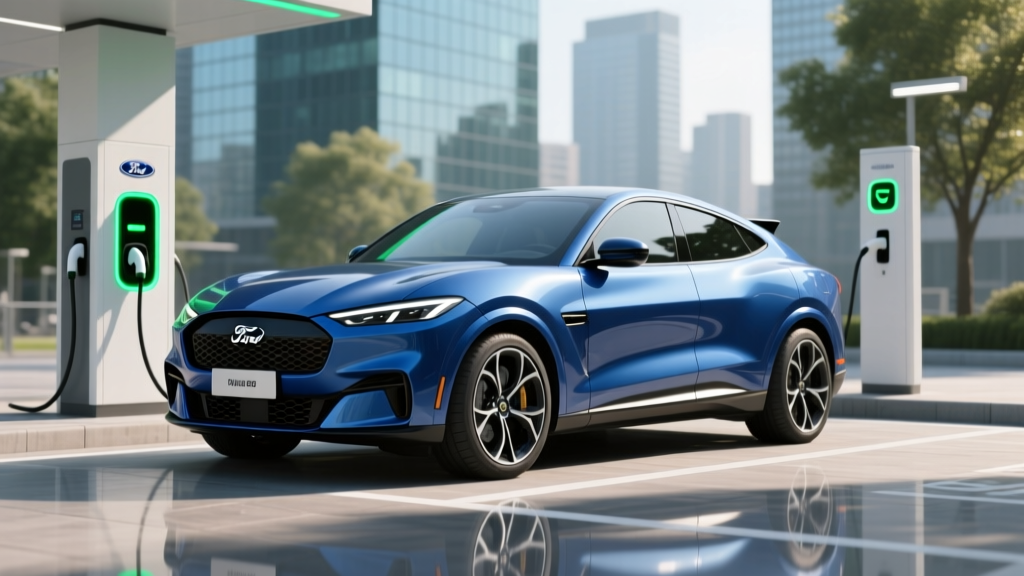
The Ford Mustang Mach-E enters the 2026 model year as one of the most well-rounded electric SUVs on the market — and for many buyers, the deciding factor is whether it ships with Ford's hands-free driving system. Blue Cruise availability on the Mach-E depends heavily on trim level and optional packages, and understanding exactly which configurations unlock hands-free highway driving (and which don't) is essential before you sign a purchase agreement. This review breaks down the 2026 Mach-E lineup with exact specs, real-world range expectations, charging performance, and a clear guide to where Blue Cruise fits in.
Blue Cruise Availability: Which 2026 Mach-E Trims Include It?
Ford Blue Cruise is the brand's SAE Level 2 hands-free driver-assistance system, operational on pre-mapped divided highways (over 130,000 miles of compatible roads in North America as of early 2026). It uses a driver-facing camera to monitor attention, allowing you to take your hands off the wheel while keeping your eyes on the road. It is not autonomous driving — you remain the responsible operator at all times.
Blue Cruise is classified as SAE Level 2 automation. The system handles steering, acceleration, and braking on compatible highways, but the driver must remain attentive and ready to take over instantly. This is fundamentally different from Level 4 robotaxi services like Waymo, which operate without a human driver. Never treat Blue Cruise as a substitute for active driving engagement.
Here is how Blue Cruise availability breaks down across the 2026 Mustang Mach-E trim lineup:
| Trim | Blue Cruise | Included or Optional? | Trial Period |
|---|---|---|---|
| Select (RWD/AWD) | Not available | — | — |
| Premium (RWD/AWD) | Available | Optional (Ford Co-Pilot360 Active 2.0 Prep Package) | 90-day free trial, then subscription (~$75/yr or $7.50/mo) |
| GT (AWD) | Included | Standard equipment | 1-year free trial, then subscription |
| Rally (AWD) | Included | Standard equipment | 1-year free trial, then subscription |
The key takeaway: if Blue Cruise is a must-have feature, you'll need to step up to at least the Premium trim and add the Active 2.0 Prep Package (approximately $1,500–$2,000 depending on model year packaging), or opt for the GT or Rally trims where it's bundled standard. The base Select trim does not support Blue Cruise at all — it includes conventional lane-centering and adaptive cruise control (hands-on), but not the hands-free hardware suite.
Blue Cruise does not navigate city streets, handle construction zones, manage unmapped roads, or operate in severe weather (heavy rain, snow, fog). It requires clearly visible lane markings and GPS signal. When the system reaches a limit, it issues escalating alerts and will bring the vehicle to a controlled stop if the driver does not respond. Plan to remain fully engaged on non-highway segments.
2026 Mustang Mach-E Specs: Range, Battery, and Efficiency
| Spec | Select RWD | Premium RWD (Ext. Range) | GT (AWD) | Rally (AWD) |
|---|---|---|---|---|
| Usable Battery (kWh) | 72 kWh (LFP) | 91 kWh (NMC) | 91 kWh (NMC) | 91 kWh (NMC) |
| EPA Range (mi) | 250 | 320 | 280 | 265 |
| MPGe (combined) | 103 | 101 | 91 | 86 |
| kWh/100 mi | 33 | 34 | 37 | 39 |
| Horsepower | 266 hp | 290 hp | 480 hp | 480 hp |
| Torque (lb-ft) | 387 | 387 | 634 | 700 |
| 0–60 mph (sec) | 6.3 | 5.9 | 3.8 | 3.9 |
| Drivetrain | RWD | RWD | Dual-motor AWD | Dual-motor AWD |
The Select trim uses a lithium iron phosphate (LFP) battery, which trades energy density for longevity and thermal stability. LFP cells tolerate frequent 100% charging better than NMC, making the Select a practical choice for daily commuters who can charge at home every night. The Premium Extended Range, GT, and Rally trims use nickel-manganese-cobalt (NMC) chemistry for higher energy density and longer per-charge range — Ford recommends daily charging to 80–90% for these packs to slow degradation.
EPA estimates are measured under controlled conditions. In real-world driving, expect the following:
• Highway (70–75 mph, moderate temps): Subtract 10–15% from EPA. The Premium Extended Range's 320-mi sticker translates to roughly 270–285 mi at sustained highway speeds.
• Cold weather (below 32°F): Subtract 20–30%. The same Premium ER drops to roughly 220–255 mi in winter highway driving, depending on cabin heat usage and whether you precondition.
• City / mixed driving (moderate temps): You'll meet or slightly exceed EPA figures thanks to regenerative braking in stop-and-go traffic.
Always plan road trips around the lower-bound figure to avoid unpleasant surprises.
Charging Performance: DC Fast, Level 2, and Home Setup
Charging speed is where the Mach-E has drawn both praise and criticism. The 2026 model retains a peak DC fast-charge rate of 150 kW on Extended Range (NMC) trims and approximately 115 kW on the Standard Range (LFP) Select. These numbers are competitive with similarly priced EVs but trail the Hyundai Ioniq 5 and Kia EV6, which peak above 230 kW on 800V architectures.
| Charging Level | Power | Speed / Time | Notes |
|---|---|---|---|
| Level 1 (120V household) | ~1.4 kW | ~3–4 mi/hr | Emergency/top-up only; full charge takes days |
| Level 2 (240V home, 48A) | 10.5 kW | ~30–33 mi/hr; full charge in 9–10 hr | Requires NEMA 14-50 outlet or hardwired Wall Connector; ~$500–$1,500 install |
| DC Fast (Select / LFP) | Peak 115 kW | 10–80% in ~38 min | Charge curve tapers significantly above 80% |
| DC Fast (Premium ER / GT / Rally) | Peak 150 kW | 10–80% in ~28 min | Sustains ~130–150 kW through ~55% SoC, then tapers |
Charging curve reality check: The "peak 150 kW" figure applies only at a low state of charge (roughly 10–20% SoC) on a compatible 150+ kW DC fast charger. As the battery fills, the rate drops — by 60% SoC you'll typically see 80–100 kW, and above 80% it falls to under 40 kW. This is normal lithium-ion behavior, but it means a 10–90% session takes closer to 45–50 minutes, not 28. Plan your road-trip stops accordingly.
The Mach-E uses the NACS (North American Charging Standard) connector as of the 2025 model year, meaning native access to Tesla Supercharger stalls — a significant practical advantage for public charging infrastructure. Ford's charging network page confirms compatibility with over 50,000 chargers across the FordPass network, including Electrify America, EVgo, and Tesla Superchargers.
Pricing, Tax Credits, and Total Cost
| Trim | Base MSRP | As-Tested (typical) | §30D Credit Eligible? | Effective Price (with credit) |
|---|---|---|---|---|
| Select RWD | $42,995 | $44,500 | Yes (if sourcing rules met) | ~$35,495 |
| Premium RWD (ER) | $48,995 | $54,500 | Yes (MSRP under $80K cap) | ~$41,495 |
| GT (AWD) | $59,995 | $63,500 | Yes (MSRP under $80K cap) | ~$52,495 |
| Rally (AWD) | $61,995 | $65,000 | Yes (MSRP under $80K cap) | ~$54,495 |
All 2026 Mach-E trims fall under the IRS §30D SUV MSRP cap of $80,000. However, the full $7,500 federal tax credit is not guaranteed for every buyer. Eligibility depends on:
- Buyer income caps: Modified AGI must not exceed $150,000 (single), $225,000 (head of household), or $300,000 (joint filing).
- Battery component sourcing: A percentage of battery components must be manufactured or assembled in North America, and critical minerals must be sourced from the U.S. or free-trade-agreement partners. These thresholds tighten annually — verify current-year compliance on fueleconomy.gov.
- Point-of-sale transfer: As of 2024, eligible buyers can transfer the credit to the dealer at purchase, reducing the out-of-pocket price immediately rather than waiting for a tax refund.
- VIN verification: The dealer must provide a seller report with the vehicle's VIN confirming eligibility at the time of sale.
Consult a tax professional before relying on the credit — eligibility rules are complex and subject to legislative change.
Interior, Cargo, and Daily Practicality
The Mach-E's cabin is a strong point relative to rivals. The 15.5-inch vertical touchscreen running SYNC 4A dominates the dash and supports wireless Apple CarPlay and Android Auto. Physical buttons are minimal, though Ford retains a rotary gear dial and a few HVAC shortcuts.
| Dimension | Measurement |
|---|---|
| Front legroom | 43.3 in |
| Rear legroom | 38.1 in |
| Cargo (behind rear seats) | 29.7 cu ft |
| Cargo (rear seats folded) | 59.7 cu ft |
| Front trunk (frunk) | 4.7 cu ft (drainable, useful for wet items) |
| Max towing capacity | Up to 3,500 lb (AWD with tow package) |
Rear seat space is adequate for adults on shorter trips but tighter than a Hyundai Ioniq 5 or Tesla Model Y. The drainable frunk is a practical differentiator — useful for storing charging cables, gym clothes, or groceries that might leak. Cargo volume trails the Model Y (76 cu ft max) but exceeds most compact gas crossovers.
Warranty, Reliability, and Battery Longevity
| Coverage | Term |
|---|---|
| Basic vehicle warranty | 3 years / 36,000 miles |
| Powertrain warranty | 5 years / 60,000 miles |
| Battery (high-voltage) | 8 years / 100,000 miles (capacity retention ≥70%) |
| Blue Cruise hardware | Covered under basic warranty; software requires ongoing subscription after trial |
Ford's 8-year/100,000-mile battery warranty guarantees that the pack will retain at least 70% of its original capacity. In practice, NMC packs in liquid-cooled systems like the Mach-E's have shown degradation of roughly 5–10% over the first 100,000 miles based on fleet data from similar platforms. LFP packs (Select trim) typically degrade even more slowly, though they start with less total capacity.
If you plan to keep the Mach-E beyond the warranty period, the LFP-equipped Select trim offers the best long-term battery economics — you can charge to 100% daily without the same degradation concerns that apply to NMC. The trade-off is less range per charge.
Who the 2026 Mach-E Suits Best — and Who Should Look Elsewhere
- You want hands-free highway driving (Blue Cruise) in a mainstream-brand EV with a large dealer network
- NACS native charging and Tesla Supercharger access matter to your road-trip routine
- You value engaging driving dynamics — the GT's 3.8-second 0–60 and tuned suspension outperform most rivals in this price bracket
- You prefer a car-like crossover over a boxy SUV shape
- Maximum cargo and rear-seat space are top priorities (the Tesla Model Y and Ioniq 5 offer more interior volume)
- You need the fastest DC charging available (Ioniq 5/EV6 at 230+ kW charge noticeably faster on road trips)
- You want Blue Cruise on a base-trim budget — the Select doesn't offer it at any price
- You frequently tow more than 3,500 lb (consider the Ford F-150 Lightning or Rivian R1S)
- Blue Cruise is one of the most refined Level 2 systems available, with smooth lane changes and reliable highway operation
- Native NACS connector provides seamless Tesla Supercharger access
- GT and Rally trims deliver genuine sports-car acceleration in a practical package
- LFP battery option on Select trim offers excellent long-term degradation characteristics
- Drainable frunk and solid infotainment with wireless phone integration
- 150 kW peak DC charging trails 800V competitors by a significant margin
- Blue Cruise unavailable on base Select trim; subscription required after trial
- Rear seat space is tighter than key rivals
- Road noise at highway speeds is more pronounced than in luxury alternatives
- Real-world cold-weather range loss of 20–30% requires trip planning in northern climates
Frequently Asked Questions
What is the real-world range of the 2026 Mustang Mach-E?
The EPA rates the Premium Extended Range RWD at 320 miles, but sustained highway driving at 70–75 mph typically yields 270–285 miles. In cold weather (below freezing), expect 220–255 miles on the same trim. The GT's 280-mile EPA rating drops to roughly 240 miles on the highway and 195–220 in winter conditions.
How fast does the Mach-E charge at home and on the road?
On a Level 2 home charger (240V, 48A), the Mach-E adds roughly 30–33 miles of range per hour, reaching a full charge overnight in 9–10 hours. On a DC fast charger, Extended Range trims peak at 150 kW and charge from 10–80% in approximately 28 minutes, though the full 10–90% session takes 45–50 minutes due to taper above 80%.
How much does the Mach-E cost after the federal tax credit?
If you qualify for the full $7,500 §30D credit (income under caps, battery sourcing requirements met), the Select RWD drops to roughly $35,495 and the Premium ER to roughly $41,495. The credit can now be applied at the point of sale, reducing your out-of-pocket cost immediately. Verify eligibility with your dealer and a tax professional before committing.
Is the Mach-E worth buying versus the Tesla Model Y or Hyundai Ioniq 5?
The Mach-E wins on driving engagement, Blue Cruise refinement, and native Supercharger access. The Model Y offers more cargo space, a slightly longer range, and Tesla's charging ecosystem. The Ioniq 5 charges faster (230+ kW peak) and has a more spacious rear seat. If hands-free highway driving and a traditional dealer experience are priorities, the Mach-E is the strongest choice in this segment.
Does the 2026 Mach-E qualify for the federal EV tax credit?
All trims fall under the $80,000 SUV MSRP cap, making them potentially eligible. However, the full $7,500 credit depends on buyer income limits ($300K joint / $150K single), battery component sourcing from North America, and critical mineral requirements. These sourcing thresholds tighten each year. Check the latest eligibility data at fueleconomy.gov and confirm with your dealer at purchase.
Do I have to pay for Blue Cruise after the free trial?
Yes. After the included trial period (90 days on Premium with the prep package, 1 year on GT/Rally), Blue Cruise requires a subscription — approximately $75 per year or $7.50 per month. Without an active subscription, the vehicle reverts to conventional hands-on adaptive cruise control and lane-centering.