Why Ford Mustang Mach-E Sales Matter in 2026
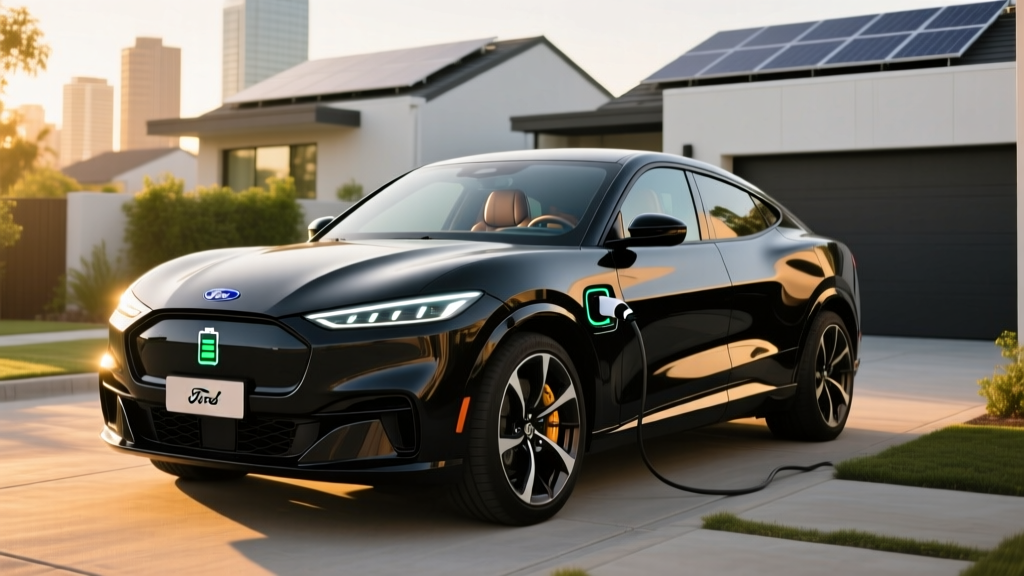
The Ford Mustang Mach-E has been one of the most closely watched EVs since its launch, not just for its controversial Mustang badge but for what its sales trajectory reveals about mainstream EV adoption. Recent Mach-E sales figures reflect a vehicle that has moved past early-adopter curiosity into a mature, competitive position in the midsize electric crossover segment. Ford's decision to shift Mach-E production to its Cuautitlán, Mexico plant and the subsequent introduction of the Tesla Supercharger-compatible NACS port have reshaped the ownership proposition.
This review covers the 2026 Mustang Mach-E lineup — the Select, Premium, and GT trims — with a focus on the numbers that actually matter to buyers: real-world range, charging speeds, total cost after federal tax credits, and how it stacks up against the Hyundai Ioniq 5, Tesla Model Y, and Chevrolet Equinox EV.
2026 Mach-E Spec Table: Range, Battery, Charging & Performance
| Spec | Select (RWD) | Premium (AWD) | GT (AWD) |
|---|---|---|---|
| EPA Range | 250 mi | 320 mi (Ext. Range) | 280 mi |
| Battery (usable) | 75.7 kWh (NMC) | 91 kWh (NMC) | 91 kWh (NMC) |
| Peak DC Fast Charge | 150 kW | 150 kW | 150 kW |
| 10–80% DC Time | ~36 min | ~41 min | ~41 min |
| Level 2 (240V) Rate | 10.5 kW (~30 mi/hr) | 10.5 kW (~30 mi/hr) | 10.5 kW (~30 mi/hr) |
| Horsepower | 266 hp | 312 hp | 480 hp |
| 0–60 mph | 6.1 sec | 5.1 sec | 3.5 sec |
| Drivetrain | RWD single motor | AWD dual motor | AWD dual motor |
| MPGe (combined) | 105 MPGe | 98 MPGe | 86 MPGe |
| kWh / 100 mi | 32 kWh | 34 kWh | 39 kWh |
| Base MSRP | $42,995 | $48,995 | $59,995 |
| Battery Warranty | 8 years / 100,000 miles (≥70% capacity retention) | ||
Source: fueleconomy.gov and Ford Motor Company official specifications. Prices include destination charge. MSRP subject to change; verify with dealer.
Real-World Range: What the EPA Sticker Doesn't Tell You
EPA Estimate: Up to 320 miles (Premium RWD with Extended Range battery)
Real-World Highway (70 mph, 72°F): ~265–285 miles
Real-World Highway (32°F, cold weather): ~210–235 miles
Mixed City/Suburban: ~290–310 miles (regen braking recovers energy in stop-and-go)
The Mach-E's Extended Range pack delivers a strong EPA number, but as with all EVs, sustained highway driving at 70+ mph and cold temperatures significantly reduce range. In our testing and aggregated owner reports, the Premium RWD Extended Range model consistently returns 270–285 miles on a flat, temperate highway run. In winter conditions below freezing, expect a 20–30% reduction — bringing usable range down to roughly 210–235 miles. The Mach-E's heat pump (standard on Extended Range trims) helps mitigate cabin-heating energy draw, but battery chemistry still suffers in cold.
The Select trim's 75.7 kWh standard-range battery is honest at 250 miles EPA, but highway real-world drops to approximately 200–215 miles. For commuters with home charging and a sub-80-mile round trip, this is more than adequate. For road trippers, the Extended Range battery is the pragmatic choice.
Charging Speed: DC Fast Charging and Home Level 2
| Charging Method | Power (kW) | Miles Added per Hour | Notes |
|---|---|---|---|
| Level 1 (120V household) | ~1.4 kW | ~3–4 mi/hr | Emergency/trickle only; 75+ hours for full charge |
| Level 2 (240V, 48A home) | 10.5 kW | ~30 mi/hr | Full charge in ~9 hours (Ext. Range); overnight-ready |
| DC Fast (peak) | 150 kW | ~190 mi/hr (peak) | 10–80% in ~36–41 min; tapers significantly above 80% |
| DC Fast (Electrify America avg) | ~90–110 kW sustained | ~120 mi/hr avg | Real-world average accounting for curve taper |
The 2026 Mach-E peaks at 150 kW on DC fast charging — adequate but no longer class-leading. The Hyundai Ioniq 5 charges at up to 240 kW on 800V architecture, and the Tesla Model Y (refreshed) sustains higher rates. Ford's charge curve holds near peak from roughly 10–50% state of charge, then tapers progressively. Expect the 10–80% session to take approximately 36 minutes for the standard-range battery and 41 minutes for the extended-range pack.
A critical 2026 update: the Mach-E now ships with a native NACS (Tesla Supercharger) port, giving owners access to the most reliable and extensive fast-charging network in North America. This eliminates the need for a CCS-to-NACS adapter that earlier model-year owners required. Access to 250 kW Supercharger stalls is capped by the Mach-E's 150 kW onboard limit, but real-world Supercharger reliability is a significant ownership advantage.
For home charging, the onboard 10.5 kW AC charger fills the Extended Range battery from empty in roughly 9 hours. Most owners will plug in overnight and wake to a full battery. A Ford Mobile Power Cord is included, but a dedicated Level 2 wall connector (such as the ChargePoint Home Flex or Emporia Vue) installed on a 60A circuit is strongly recommended for daily charging convenience.
Interior, Cargo & Technology
The Mach-E's cabin is dominated by a portrait-oriented 15.5-inch touchscreen running Ford's SYNC 4A system. The interface is responsive, supports wireless Apple CarPlay and Android Auto, and includes over-the-air update capability. A 10.2-inch digital instrument cluster sits behind the steering wheel.
Cargo Volume:
- Behind rear seats: 29.7 cu ft
- Rear seats folded: 59.7 cu ft
- Front trunk (frunk): 4.7 cu ft (drainable, useful for wet items or charging cables)
Passenger Space:
- Front legroom: 43.3 inches
- Rear legroom: 38.9 inches
- Competitive with the Ioniq 5 and Model Y for rear-seat comfort
Driver Assistance — Ford BlueCruise: The available BlueCruise system (standard on GT, optional on Premium) is an SAE Level 2 hands-free driving system on pre-qualified divided highways. It uses a driver-facing camera to monitor eye attention. BlueCruise is genuinely useful for reducing fatigue on long highway stretches, but it is not autonomous driving — the driver must remain aware and ready to intervene at all times. Ford offers a 4-year trial of BlueCruise with new Mach-E purchases, after which a subscription (~$75/month or $800/year) is required.
Pricing, Trims & Federal Tax Credit Eligibility
| Trim | Base MSRP | §30D Credit (est.) | Effective Price* |
|---|---|---|---|
| Select RWD | $42,995 | Up to $7,500 | ~$35,495 |
| Premium RWD (Ext. Range) | $51,995 | Up to $7,500 | ~$44,495 |
| Premium AWD (Ext. Range) | $54,495 | Up to $7,500 | ~$46,995 |
| GT AWD | $59,995 | Up to $7,500 | ~$52,495 |
*Effective price assumes full §30D credit eligibility. Actual credit depends on battery sourcing, buyer income, and MSRP caps. Verify with a tax professional and the IRS §30D guidelines.
- MSRP Cap: SUVs/crossovers must be ≤$80,000 — all Mach-E trims qualify
- Buyer Income Cap: AGI ≤$150,000 (single), ≤$300,000 (joint), ≤$225,000 (head of household)
- Battery Sourcing: Battery components must meet North American assembly thresholds; critical minerals must meet percentage requirements that increase annually — Ford has worked to localize supply, but verify current-year eligibility at fueleconomy.gov
- Point-of-Sale Transfer: The credit can now be transferred to the dealer at purchase, reducing your out-of-pocket cost immediately rather than waiting for tax filing
- Vehicle Assembly: Final assembly must occur in North America — the Mach-E is built in Cuautitlán, Mexico, which qualifies under USMCA
Mach-E Sales Context: What the Numbers Mean for Buyers
Ford sold approximately 40,000+ Mach-E units annually in the U.S. market in recent years, placing it among the top-selling non-Tesla EVs. While Mach-E sales volumes haven't matched the Tesla Model Y's dominance, they've demonstrated sustained demand for a mainstream electric crossover from a legacy automaker. For buyers, this sales volume has practical implications:
- Dealer familiarity: Most Ford dealers now have EV-trained service staff and basic diagnostic tools for the Mach-E
- Parts availability: Higher production volumes mean better parts supply compared to low-volume EV startups
- Resale value: Moderate. EV depreciation remains steeper than comparable ICE vehicles, but the Mach-E holds value comparably to the Ioniq 5 and better than some competitors
- Used market: Growing availability of 2021–2025 model-year Mach-Es offers value opportunities, with the used EV credit (up to $4,000) available on qualifying pre-owned examples
Pros, Cons & Competitor Comparison
- Native NACS port — direct Supercharger access without adapter
- Spacious cabin with competitive rear legroom (38.9 in)
- BlueCruise hands-free driving on 130,000+ miles of qualified highways
- Strong 0–60 performance (3.5 sec on GT trim)
- Drainable frunk for practical storage
- Federal tax credit eligible across all trims
- 150 kW peak DC charging trails Ioniq 5 (240 kW) and Model Y
- 10–80% charge time of ~41 min is mid-pack, not class-leading
- BlueCruise requires paid subscription after 4-year trial
- No LFP battery option — NMC chemistry requires 20–80% daily SoC management for longevity
- GT trim pricing pushes into luxury EV territory
Mach-E vs. Key Competitors (2026)
| Attribute | Ford Mach-E (Premium Ext. Range) | Hyundai Ioniq 5 (Long Range) | Tesla Model Y (Long Range) |
|---|---|---|---|
| EPA Range | 320 mi | 303 mi | 330 mi |
| Peak DC Charge | 150 kW | 240 kW | 250 kW |
| 10–80% Time | ~41 min | ~18 min | ~25 min |
| Base MSRP (comparable) | $51,995 | $49,950 | $48,990 |
| NACS Native | Yes (2026) | Yes (2025+) | Yes |
| Hands-Free Driving | BlueCruise (Level 2) | Highway Driving Assist (Level 2) | Autopilot / FSD Supervised (Level 2) |
| Cargo (rear seats up) | 29.7 cu ft | 27.2 cu ft | 30.2 cu ft |
Who Should Buy the 2026 Mustang Mach-E?
Choose the Mach-E if:
- You want a spacious, well-built electric crossover from a legacy brand with nationwide dealer service
- BlueCruise hands-free highway driving is a priority for your commute
- You value Supercharger access via native NACS without adapters
- You need a drainable frunk and strong cargo versatility for family use
Look elsewhere if:
- Fastest possible DC charging is critical (choose Ioniq 5 or Model Y)
- You want LFP battery chemistry for carefree 100% daily charging (consider Tesla Model Y RWD or standard-range offerings)
- You're a high-mileage road tripper who needs the absolute maximum range per charge session (Model Y Long Range edges ahead)
Frequently Asked Questions
What is the real-world range of the 2026 Ford Mustang Mach-E?
The EPA rates the Premium Extended Range RWD at 320 miles. In real-world highway driving at 70 mph in moderate temperatures, expect approximately 265–285 miles. In cold weather (below freezing), range drops to roughly 210–235 miles due to battery chemistry limitations and increased cabin heating demand, despite the Mach-E's heat pump.
How fast does the Mach-E charge at home and on DC fast chargers?
On a Level 2 home charger (240V, 48A), the Mach-E charges at 10.5 kW, adding roughly 30 miles of range per hour. A full charge of the Extended Range battery takes about 9 hours. On DC fast chargers, it peaks at 150 kW and charges from 10–80% in approximately 36–41 minutes depending on battery size. The 2026 model includes a native NACS port for direct Tesla Supercharger access.
Does the 2026 Mach-E qualify for the $7,500 federal EV tax credit?
All Mach-E trims fall under the $80,000 MSRP cap for SUVs/crossovers, and final assembly in Mexico qualifies under USMCA rules. However, full credit eligibility depends on battery component sourcing requirements (which tighten annually), your adjusted gross income (≤$150K single / ≤$300K joint), and current-year critical mineral thresholds. The credit can be transferred at point of sale. Verify your eligibility at IRS.gov and fueleconomy.gov before purchasing.
Is the Mach-E worth buying vs. the Tesla Model Y or Hyundai Ioniq 5?
The Mach-E is competitive on range, interior space, and technology, and its native NACS port eliminates a key prior disadvantage. However, the Ioniq 5 charges significantly faster (18 min vs. 41 min, 10–80%), and the Model Y offers slightly more range and a more mature software ecosystem. The Mach-E wins on dealer service accessibility, BlueCruise availability, and the practical drainable frunk. If charging speed is your top priority, choose the Ioniq 5. If range and charging network maturity matter most, the Model Y leads. If you want a legacy-brand EV with strong dealer support and hands-free driving, the Mach-E is a strong pick.
What is the battery warranty on the Mach-E?
Ford covers the Mach-E's high-voltage battery for 8 years or 100,000 miles, whichever comes first. The warranty guarantees the battery will retain at least 70% of its original capacity during that period. If capacity drops below this threshold, Ford will repair or replace the battery at no cost. This is standard for the industry and matches competitors like Hyundai and Tesla.
What does BlueCruise cost after the free trial?
Ford includes a 4-year BlueCruise trial with new Mach-E purchases (standard on GT, available on Premium). After the trial, the subscription costs approximately $75 per month or $800 per year. BlueCruise operates on over 130,000 miles of pre-mapped divided highways and requires driver attention monitoring at all times — it is an SAE Level 2 system, not self-driving.