The Quick Answer
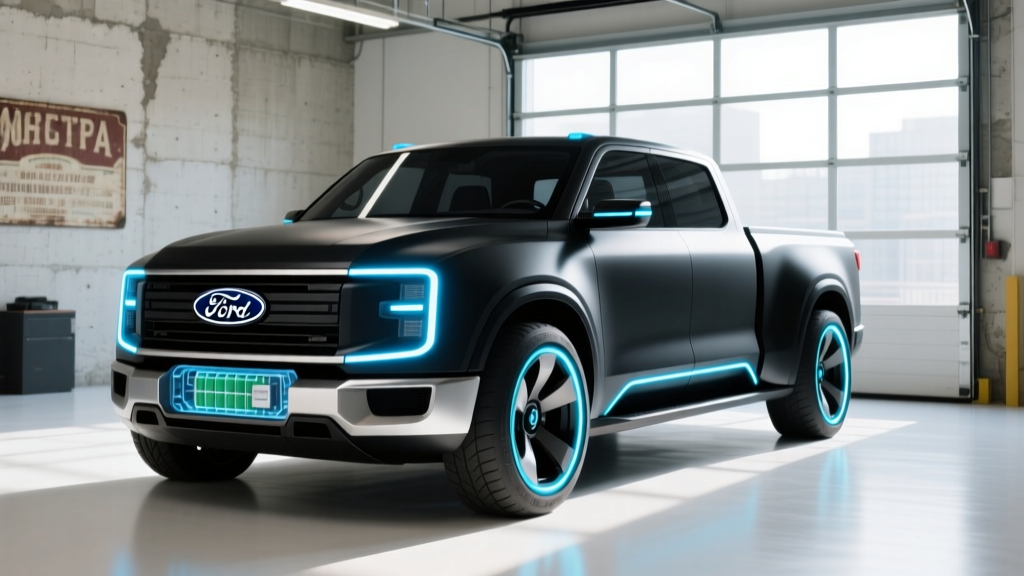
As of early 2026, Ford has not officially announced a production vehicle called the "Model T EV." The search interest around this term appears to stem from speculative reports, concept renderings, and enthusiast discussions about Ford potentially reviving the Model T nameplate as an affordable electric vehicle — possibly a compact truck or utility EV positioned below the F-150 Lightning. Ford's confirmed near-term EV roadmap includes next-generation electric trucks and SUVs built on new flexible architectures, but no vehicle wearing the Model T badge is currently in production or available for order. This guide covers what Ford has confirmed, what the speculation entails, and how to evaluate the opportunity cost of waiting versus buying a currently available electric truck or crossover today.
Where the "Ford Model T EV" Rumors Come From
The idea of a Ford Model T EV taps into powerful nostalgia: the original Model T (1908–1927) was the car that put America on wheels, priced affordably and built at massive scale. Several automotive publications and YouTube channels have floated the concept of Ford using that name for a sub-$30,000 electric vehicle — a spiritual successor to the Model T's mission of democratizing transportation.
Ford CEO Jim Farley has publicly discussed the company's need for a smaller, more affordable EV to compete with low-cost Chinese electric vehicles globally. In a 2024 earnings call, Farley referenced a "secret skunkworks" team in California developing a low-cost EV platform from scratch, led by former Tesla engineer Alan Clarke. This platform, reportedly codenamed T3 ("Tesla, Toyota, Model T"), is expected to underpin a compact electric pickup and potentially other body styles starting around 2027.
However, Ford has not confirmed the "Model T" nameplate for any production vehicle. The company's trademark filings and official communications reference new electric models but stop short of reviving the Model T brand. Until Ford makes a formal announcement with specs, pricing, and a production timeline, everything circulating under the "Ford Model T EV" label should be treated as speculative.
Ford's Confirmed EV Lineup: What You Can Actually Buy
While waiting for a potential Model T EV, Ford currently sells two fully electric vehicles in the U.S., each with known specs and real-world ownership data:
| Specification | F-150 Lightning | Mustang Mach-E |
|---|---|---|
| Body Style | Full-size pickup | Crossover SUV |
| EPA Range | 240–320 mi (depending on battery/trim) | 250–320 mi |
| Battery (Usable) | 98 kWh (Standard) / 131 kWh (Extended) | 70 kWh (Standard) / 91 kWh (Extended) |
| Chemistry | NMC (Nickel Manganese Cobalt) | NMC |
| Peak DC Fast Charge | ~150 kW (Std) / ~150 kW (Ext, tapered curve) | ~150 kW |
| 10–80% DC Charge Time | ~41 min (Std Range) / ~45 min (Extended) | ~38 min |
| Level 2 Home Charge Rate | 11.3 kW (standard) / 19.2 kW (available) | 10.5 kW |
| 0–60 mph | ~3.8 sec (Extended Range, 580 hp) | ~3.5 sec (GT, 480 hp) |
| Horsepower | 452–580 hp | 266–480 hp |
| Base MSRP | ~$54,995 | ~$39,995 |
| Federal Tax Credit (§30D) | Eligibility varies by trim/sourcing — check IRS rules | Eligibility varies by trim/sourcing — check IRS rules |
| Battery/Powertrain Warranty | 8 years / 100,000 miles | 8 years / 100,000 miles |
Real-world range caveat: EPA estimates assume mixed driving at moderate temperatures. Expect highway-only range to drop 10–15% below the sticker figure. In sub-freezing weather, range loss of 20–30% is common across all EVs due to cabin heating demand and reduced battery efficiency. The F-150 Lightning Extended Range (320 mi EPA) typically delivers 250–270 miles in real-world highway driving and 200–230 miles in winter conditions.
What a "Model T EV" Would Need to Offer
If Ford does revive the Model T nameplate for an affordable compact electric truck, it would need to hit specific benchmarks to be competitive in the 2027–2028 market. Here's what the spec sheet would likely need to look like:
Competitive Benchmarks for a Sub-$30,000 Electric Truck
- Target Price: $25,000–$30,000 MSRP before incentives — undercutting the base F-150 Lightning by ~$25,000
- EPA Range: Minimum 250 miles to satisfy mainstream buyers (below 200 miles invites range-anxiety criticism)
- Battery: ~55–65 kWh usable, likely LFP (lithium iron phosphate) chemistry for lower cost and longer cycle life, accepting slightly lower energy density
- DC Fast Charging: Peak 120–150 kW, with a 10–80% time under 35 minutes
- Size Class: Compact/midsize pickup — think Ford Maverick footprint with a 4.5-foot bed
- Towing: 2,000–3,500 lbs (compact truck territory)
- Tax Credit: Would need to meet §30D critical-mineral and battery-component sourcing requirements to qualify for up to $7,500 — a significant engineering and supply-chain challenge at this price point
The LFP chemistry choice is notable. LFP batteries are cheaper to produce, tolerate daily 100% charging without accelerated degradation, and have longer cycle life (3,000+ cycles vs. ~1,500–2,000 for NMC). The trade-off is lower energy density — meaning a heavier or physically larger battery pack for the same range. For a compact truck where cost matters more than maximizing range per pound, LFP is the logical choice. Tesla already uses LFP in its Standard Range Model 3 and Model Y.
Cost Comparison: Current Ford EVs vs. Gas Equivalents
One of the most common questions from prospective EV buyers is whether the higher purchase price is offset by lower operating costs. Here's a data-driven comparison using the F-150 Lightning versus a comparably equipped gas F-150, based on fueleconomy.gov data and national average energy prices:
| Cost Category | F-150 Lightning (Extended Range) | Gas F-150 4WD (3.5L EcoBoost) |
|---|---|---|
| Base MSRP | ~$69,995 (Lariat Ext. Range) | ~$57,000 (Lariat 4WD) |
| Potential Federal Tax Credit | Up to $7,500 (if eligible) | $0 |
| Effective Purchase Price | ~$62,495 | ~$57,000 |
| Fuel/Energy (5 years, 75,000 mi) | ~$4,500 (home charging at $0.14/kWh avg) | ~$11,250 (19 MPG combined at $3.50/gal) |
| Maintenance (5 years) | ~$1,500 (no oil changes, fewer moving parts, regen reduces brake wear) | ~$3,500 (oil, filters, transmission fluid, brake pads) |
| Insurance (5-year avg) | ~$12,000 (EV premiums ~15–20% higher) | ~$10,000 |
| Estimated Depreciation (5 years) | ~$28,000 (EV depreciation has been steep; improving as market matures) | ~$22,000 |
| Total 5-Year Cost of Ownership | ~$108,495 | ~$103,750 |
Key takeaway: The Lightning saves roughly $6,750 on fuel and $2,000 on maintenance over five years, but those savings are partially offset by ~$2,000 higher insurance and ~$6,000 greater depreciation. The net result is a 5-year TCO that's within ~$5,000 of the gas F-150 — and the EV comes with the daily convenience of home "refueling" and zero tailpipe emissions. The math improves significantly if you qualify for the full $7,500 tax credit, have access to cheap overnight electricity (under $0.10/kWh in many utility time-of-use plans), or drive more than 15,000 miles annually.
The Opportunity Cost of Waiting
If you're holding out for a potential Ford Model T EV, you're making a calculated bet that may not pay off for 2–3 years. Here's what that waiting period costs you:
| Scenario | Annual Cost | 3-Year Cost |
|---|---|---|
| Driving a 19 MPG gas truck at 15,000 mi/yr | ~$2,763 in fuel | ~$8,289 in fuel |
| Driving a current Mach-E (home charging) | ~$630 in electricity | ~$1,890 in electricity |
| Annual fuel savings by switching now | ~$2,133/year — or ~$6,399 over 3 years | |
If a Model T EV arrives in late 2027 at $28,000, you'd save on the purchase price versus a Lightning or Mach-E. But you'd also have spent an extra ~$6,400 on gas during the wait. The break-even math depends heavily on your current vehicle's fuel economy, annual mileage, and local electricity rates.
Common Misconceptions About Ford's Electric Future
| Myth | Fact |
|---|---|
| "Ford has officially announced the Model T EV." | Ford has not confirmed this nameplate. The company has referenced a compact, affordable EV platform under development, but no production name, specs, or launch date has been announced. |
| "The affordable Ford EV will cost $20,000." | Industry analysts expect $25,000–$30,000. A sub-$20,000 EV with acceptable range (200+ miles) and U.S. safety compliance is not feasible with current battery economics and §30D sourcing requirements. |
| "Ford is abandoning EVs after scaling back investment." | Ford has adjusted its EV strategy — delaying some models, shifting to flexible platforms, and increasing hybrid offerings. However, the company continues to sell and develop EVs. The F-150 Lightning remains in production, and the next-gen compact EV platform is still in active development. |
| "The F-150 Lightning doesn't qualify for the tax credit anymore." | Eligibility under §30D depends on the specific trim, battery sourcing, and your personal income/MSRP caps. Some Lightning trims have qualified in recent tax years. Always verify current eligibility at irs.gov before purchasing. |
| "Waiting is always the smart move — EVs keep getting cheaper." | EV prices have fluctuated. While battery cell costs have trended downward over the long term, tariff policies, supply-chain disruptions, and incentive changes can push MSRP upward year-over-year. Waiting also means forgoing current fuel savings and available tax credits. |
Decision Framework: Should You Wait or Buy Now?
Choose Your Path
Buy a current Ford EV now (Lightning or Mach-E) if:
- You need a vehicle within the next 6 months
- You drive 15,000+ miles per year and are spending $3,000+ annually on gas
- You have home charging access (or can install a Level 2 charger for $500–$1,500)
- You want known, tested specs with real-world ownership data and IIHS/NHTSA safety ratings
- You qualify for the §30D federal tax credit (income under $150K single / $300K joint, vehicle MSRP within caps, battery sourcing compliant)
Wait for Ford's next-gen affordable EV (possibly called Model T) if:
- Your current vehicle is reliable and you can comfortably wait 2–3 years
- Your budget is strictly under $30,000 and you want a new EV (not used)
- You primarily need a compact truck for urban/suburban use, not heavy towing
- You're willing to accept the risk that the vehicle may be delayed, priced higher than expected, or ultimately carry a different name
Consider a hybrid (Ford Maverick Hybrid) as a bridge if:
- You lack reliable home charging access
- You regularly tow or take long road trips into areas with sparse DC fast-charging infrastructure
- You want lower fuel costs (~42 MPG combined) without range anxiety
- You plan to transition to a full EV in 3–5 years when charging infrastructure and affordable models mature
What First-Time EV Buyers Should Know Right Now
Whether you buy today or wait for future models, these fundamentals apply to every EV purchase:
Home charging is the backbone of EV ownership. Over 80% of EV charging happens at home. A Level 2 home charger (240V, 32–48 amps) adds 25–40 miles of range per hour of charging and costs $500–$1,500 for equipment plus $500–$2,000 for professional installation, depending on your electrical panel's capacity. If your panel is maxed out at 100 amps, a panel upgrade to 200 amps can add $1,500–$3,000. Always get a quote from a licensed electrician before committing to a vehicle.
kW vs. kWh — know the difference. kW (kilowatts) measures power — how fast you can charge. kWh (kilowatt-hours) measures energy — how much your battery holds. A 70 kWh battery charged at 7 kW takes 10 hours from empty to full. A 150 kW DC fast charger can refill that same battery to 80% in roughly 30–40 minutes.
Charging slows above 80%. This is called the charge curve taper. A vehicle that charges at 150 kW from 10–60% might slow to 50 kW from 60–80% and 20 kW from 80–100%. This is normal battery-protective behavior, not a defect. For road trips, plan to charge to 80% and keep moving.
Cold weather reduces range. At 20°F, expect 20–30% less range than the EPA sticker. Using a heat pump (standard on some models, unavailable on others) and preconditioning the battery before fast charging can mitigate this loss.
The federal tax credit is not guaranteed. Under §30D, the up-to-$7,500 credit depends on your income, the vehicle's MSRP (capped at $55,000 for cars, $80,000 for trucks/SUVs/vans), battery component sourcing from the U.S. or FTA partners, and critical-mineral sourcing requirements that tighten annually. As of 2026, the point-of-sale transfer option allows dealers to apply the credit directly to your purchase price. Verify current rules at irs.gov and consult a tax professional.
Frequently Asked Questions
Is the Ford Model T EV real?
Not as a confirmed production vehicle. Ford has discussed developing an affordable compact EV on a new platform, and industry speculation has attached the "Model T" name to it, but Ford has not officially announced this nameplate, released specs, or opened pre-orders. Treat all "Model T EV" information as speculative until Ford issues a formal press release.
When might Ford's affordable electric truck be available?
Ford's next-generation compact EV platform is expected to debut around 2027, based on CEO Jim Farley's public statements. However, EV timelines have frequently shifted — delays of 12–18 months are common across the industry. A realistic estimate for customer deliveries is late 2027 at the earliest, more likely 2028.
How does the Ford Maverick Hybrid compare to waiting for an electric truck?
The Maverick Hybrid starts around $28,000, achieves 42 MPG combined, requires no charging infrastructure, and is available now. Over 5 years and 75,000 miles, it would cost approximately $6,250 in fuel (at $3.50/gallon) — more than an EV but significantly less than a gas-only truck. It's a strong bridge option for buyers who want fuel savings without range anxiety or charging-dependency.
Will Ford's compact EV qualify for the $7,500 tax credit?
It's too early to know. Qualification under §30D requires meeting critical-mineral and battery-component sourcing thresholds that are difficult at a sub-$30,000 price point. Ford's supply-chain decisions between now and launch will determine eligibility. The MSRP cap for trucks is $80,000, so pricing won't be the barrier — sourcing will.
Should I buy an F-150 Lightning now or wait?
If you need a full-size electric truck today, the Lightning is a proven, well-reviewed vehicle with known real-world range (expect ~250–270 highway miles for the Extended Range model), robust towing (up to 10,000 lbs), and an available onboard power system (Pro Power Onboard) that turns the truck into a mobile generator. If you can wait 2+ years and don't need full-size capability, Ford's upcoming compact EV may offer similar utility at a much lower price — but with significant uncertainty around timing and specs.
What's the cheapest electric truck I can buy right now?
As of 2026, the most affordable new electric truck available is the Ford F-150 Lightning Pro starting around $54,995. For a lower entry point, the used EV market offers Lightnings from 2022–2023 in the $35,000–$45,000 range, and the federal used-EV tax credit (up to $4,000 or 30% of the sale price, whichever is less) may apply if you meet income requirements and the vehicle is purchased from a dealer.