The Short Answer on Ford's Midsize Electric Pickup
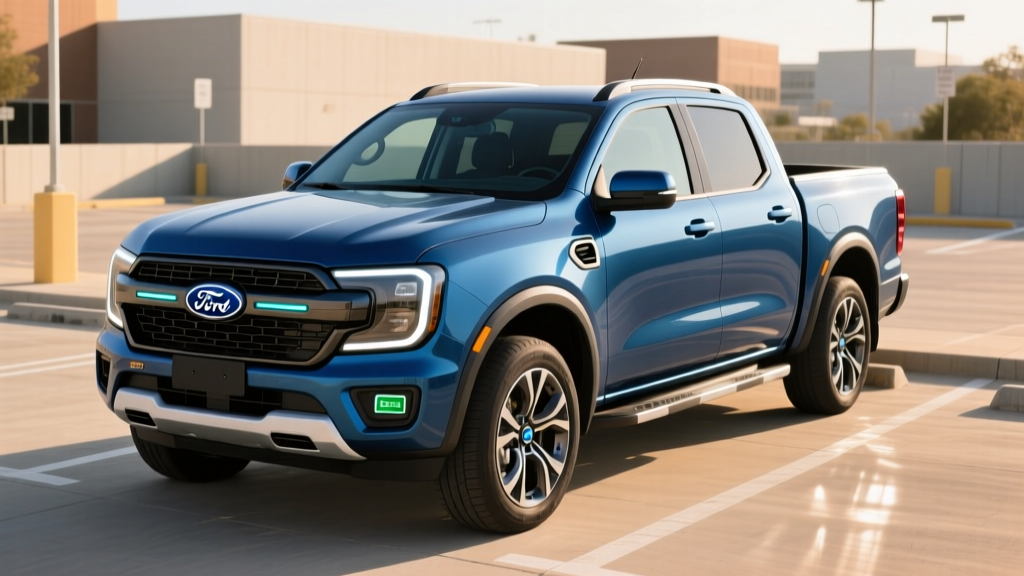
As of early 2026, Ford has not yet released a production midsize electric pickup to directly compete in the Ranger/Maverick EV space. The current Ford Ranger remains gas-only, and the Maverick offers a hybrid (HEV) but no full battery-electric variant. Ford CEO Jim Farley confirmed in 2024 that a next-generation, body-on-frame midsize electric pickup is in development on Ford's new universal EV platform, with production targeted for late 2027 or 2028. Until then, buyers seeking a Ford midsize electric pickup must wait — or pivot to the Maverick Hybrid (42 MPG combined) or the full-size F-150 Lightning (EPA 240–320 miles, starting around $54,995 for 2025 models).
What We Know About Ford's Upcoming Midsize Electric Truck
Ford's universal EV platform — a flexible, body-on-frame architecture — was announced specifically to underpin a new generation of affordable electric vehicles, including a midsize pickup. This platform is distinct from the skateboard architecture used in the F-150 Lightning and is designed to reduce production costs significantly.
Based on Ford's public statements and industry analysis, here are the preliminary, projected specifications for what a Ford midsize electric pickup could look like. Treat these as informed estimates, not confirmed specs:
| Attribute | Projected / Estimated |
|---|---|
| Platform | Universal EV (body-on-frame) |
| Battery Chemistry | LFP (lithium iron phosphate) likely for base trim |
| Battery Capacity | ~70–85 kWh usable (est.) |
| EPA Range | ~230–280 miles (target) |
| Peak DC Fast Charge | ~150–175 kW (est.) |
| 10–80% Charge Time | ~30–35 minutes (est.) |
| Level 2 Home Charging | ~11.5 kW (est.) |
| 0–60 mph | ~6.0–7.5 seconds (est.) |
| Towing Capacity | ~5,000–7,500 lbs (target) |
| Estimated Starting MSRP | ~$35,000–$40,000 |
| Production Target | Late 2027 or 2028 |
Why LFP chemistry matters here: Lithium iron phosphate batteries are cheaper to produce, have longer cycle life (often 3,000+ cycles before significant degradation), and avoid cobalt/nickel supply chain issues. The trade-off is lower energy density — meaning a heavier pack for the same kWh — and reduced cold-weather range retention compared to NMC (nickel manganese cobalt). For a truck aimed at value, LFP is the pragmatic choice.
What You Can Buy Right Now: Ford's Current Midsize Options
If you need a Ford midsize truck today, here's the actual lineup with real, confirmed data from fueleconomy.gov and Ford's spec sheets:
| Spec | Ford Ranger (Gas) | Ford Maverick Hybrid | Ford F-150 Lightning |
|---|---|---|---|
| Powertrain | 2.3L EcoBoost Turbo I4 | 2.5L Hybrid I4 | Dual-Motor BEV |
| Horsepower | 270 hp | 191 hp (combined) | 580 hp (Extended Range) |
| EPA Fuel Economy | 21 city / 26 hwy / 23 combined MPG | 42 city / 33 hwy / 37 combined MPG | 78–76 MPGe (Extended Range) |
| EPA Range / Tank | ~430 miles (18.5-gal tank) | ~500+ miles (16.5-gal tank) | 240–320 miles (battery) |
| Battery / Fuel Capacity | 18.5-gal gas tank | 16.5-gal gas tank + 1.1 kWh battery | 98–131 kWh battery |
| Max Towing | 7,500 lbs | 2,000 lbs (hybrid) | 7,700–10,000 lbs |
| Starting MSRP | ~$34,700 | ~$28,995 | ~$54,995 |
| §30D Federal Tax Credit | None | None (not a PHEV/BEV) | Up to $7,500 (eligibility varies) |
Cost Comparison: EV Pickup vs. Gas vs. Hybrid Over 5 Years
Let's run real numbers for a buyer driving 15,000 miles per year. We'll compare the current Maverick Hybrid, the Ranger gas model, and a projected midsize EV pickup at $38,000 MSRP with 250 miles of range. Electricity cost assumes $0.14/kWh national average; gas assumes $3.40/gallon.
| Cost Category | Ranger Gas | Maverick Hybrid | Projected Midsize EV |
|---|---|---|---|
| Purchase Price (MSRP) | $34,700 | $28,995 | $38,000 (est.) |
| Federal Tax Credit (§30D) | $0 | $0 | Up to $7,500* |
| Net Purchase Price | $34,700 | $28,995 | ~$30,500 (est.) |
| Fuel/Energy (5 yrs) | $11,087 (gas) | $6,892 (gas) | $3,750 (electric) |
| Maintenance (5 yrs) | ~$3,200 | ~$2,800 | ~$1,500 |
| Insurance (5 yrs, avg) | ~$7,500 | ~$7,000 | ~$8,500 |
| 5-Year Total | $56,487 | $45,687 | ~$44,250 |
*§30D credit eligibility depends on MSRP caps (trucks: $80,000), buyer income limits ($150K single / $300K joint), and battery critical-mineral/component sourcing requirements. Always verify current rules at irs.gov and consult a tax professional. The credit may also be transferred to the dealer at point of sale as an upfront discount.
Key takeaway: The EV pickup wins on energy and maintenance costs — saving roughly $7,300 in fuel and $1,700 in maintenance over five years vs. the gas Ranger. But insurance runs higher (EV premiums average 15–20% more than gas equivalents), and the upfront price is still steeper even after the tax credit. The Maverick Hybrid remains the cost champion for buyers who don't need a full EV.
Real-World Ownership: What a First-Time EV Truck Buyer Must Know
Home Charging Is Non-Negotiable for Most Owners
Over 80% of EV charging happens at home. A Level 2 home charger (240V, ~11.5 kW) adds roughly 30–40 miles of range per hour — meaning a full overnight charge from 20% to 80% takes about 4–5 hours for an ~80 kWh pack. Installation costs vary widely:
| Component | Cost Range |
|---|---|
| Level 2 Charger (hardware) | $350–$700 |
| Electrician (240V outlet or hardwire) | $500–$2,000 |
| Electrical Panel Upgrade (if needed, 100A→200A) | $1,500–$3,500 |
| Permit & Inspection | $100–$400 |
| Total (best case: panel OK, short run) | $950–$1,500 |
| Total (worst case: panel upgrade, long run) | $3,500–$6,600 |
If you rent, live in a condo without charging access, or rely solely on street parking, EV truck ownership becomes significantly harder. Public DC fast charging works but costs $0.30–$0.50/kWh — roughly double the home rate — and repeated fast-charging accelerates battery degradation.
Cold Weather Hits Range Hard
LFP batteries lose 20–35% of their range in sustained sub-freezing temperatures. A projected 250-mile EPA range could drop to 160–200 miles in a Midwestern or Northeastern winter. Heat pumps help (and Ford is expected to include one), but physics is unforgiving. If you regularly drive 200+ miles in winter, an EV midsize pickup will require mid-trip charging stops.
Charging Deserts Still Exist
While the Supercharger network (now accessible to most non-Tesla EVs via NACS adapters) and Electrify America have expanded coverage along major interstates, rural routes — particularly in the Mountain West, Great Plains, and parts of the Southeast — still have sparse DC fast-charging infrastructure. A truck buyer planning regular towing through rural areas should map routes carefully using tools like PlugShare or the DOE's Alternative Fuels Data Center.
Myths vs. Facts: Ford Midsize Electric Pickup
| Myth | Fact |
|---|---|
| "The Ford midsize EV truck is available now." | Not yet. Ford has confirmed it's in development on the universal EV platform, targeting late 2027/2028 production. No orders are open. |
| "Electric trucks can't tow." | The F-150 Lightning tows up to 10,000 lbs. However, towing cuts EV range by 30–50%. A midsize EV truck towing 5,000 lbs will see its 250-mile range drop to ~130–175 miles. |
| "I'll get the full $7,500 tax credit automatically." | Eligibility requires meeting MSRP caps, buyer income limits, AND battery sourcing requirements that change yearly. Many EVs qualify for partial or no credit. Verify at irs.gov before purchasing. |
| "EV batteries need replacing every 5 years." | Modern EV batteries are warrantied for 8 years/100,000 miles (minimum, per federal mandate) and real-world data shows most retain 85–90% capacity at 100K miles. LFP packs often last 300,000+ miles before hitting 80% state of health. |
| "Hybrid trucks are just as good as EVs." | Hybrids like the Maverick (37 MPG combined) are excellent for buyers without home charging. But they still burn gas, require oil changes, and lack the instant torque and V2L (vehicle-to-load) capability of a BEV. |
Decision Framework: Should You Wait, Buy Gas, or Go Hybrid?
If X, Then Y
- If you can wait 2–3 years AND have home charging AND drive under 250 miles/day: The Ford midsize electric pickup is worth waiting for. Projected $35K–$40K pricing with potential §30D credit eligibility makes it a compelling value play.
- If you need a truck NOW AND want maximum fuel savings without range anxiety: Buy the Ford Maverick Hybrid. At ~$29K and 37 MPG combined, it has the lowest 5-year total cost of any midsize truck on the market. No plug required.
- If you need serious towing AND need a truck now: The gas Ford Ranger (7,500 lbs towing) or the F-150 Lightning (10,000 lbs) are your options — but know that EV towing range drops dramatically.
- If you live in an apartment without charging access: Skip the EV for now. The Maverick Hybrid gives you electrified efficiency without the charging infrastructure requirement.
- If you live in a cold climate AND regularly drive 200+ miles: The Maverick Hybrid or gas Ranger is more practical today. A future EV truck will work, but plan for 170–200 real-world winter miles.
Frequently Asked Questions
Will the Ford midsize electric pickup qualify for the $7,500 federal tax credit?
It's too early to confirm. §30D credit eligibility depends on battery sourcing (critical minerals and component manufacturing requirements), which change annually. Ford is investing heavily in North American battery production (including LFP plants), which improves the odds — but buyers should verify eligibility at the time of purchase via irs.gov. The credit also has buyer income caps ($150K single / $300K joint) and an MSRP cap of $80,000 for trucks.
How does an electric midsize truck compare to the Rivian R1T or Chevrolet Colorado?
The Rivian R1T is a premium, full-size-class electric truck starting above $70,000 — a different market segment entirely. The Chevrolet Colorado is gas-only (no EV or hybrid option as of 2026). Ford's upcoming midsize EV pickup targets a mainstream price point (~$35K–$40K) that neither competitor currently addresses in electric form. The closest price comparison is the gas Ranger or Maverick Hybrid.
What will insurance cost for an electric Ford midsize pickup?
EV insurance premiums typically run 15–25% higher than comparable gas vehicles due to higher repair costs (specialized body work, battery replacement). Expect annual premiums in the $1,600–$2,000 range depending on your state, driving record, and coverage level. The Maverick Hybrid, by contrast, insures closer to gas-car rates since its drivetrain is conventional.
Can I use an electric truck to power tools or my home?
Ford's F-150 Lightning offers Pro Power Onboard (up to 9.6 kW V2L — vehicle-to-load) and available V2H (vehicle-to-home) backup power. It's reasonable to expect the midsize electric pickup to offer similar V2L capability, potentially at 2.4–7.2 kW, making it a genuine mobile power source for job sites or camping. This is a capability gas trucks can't match without a separate generator.
How long will the battery last, and what does replacement cost?
Ford's EV batteries carry a federal-mandated minimum warranty of 8 years / 100,000 miles against degradation below 70% state of health. Real-world data from high-mileage EVs shows most batteries retain 85–92% capacity at 100K miles. LFP chemistry (likely for the midsize truck) offers even longer cycle life. Full battery replacement, if ever needed out of warranty, currently costs $10,000–$18,000 depending on pack size — but this is rare and costs continue to decline.