Is the Ford Focus Electric Still Worth Buying in 2026?
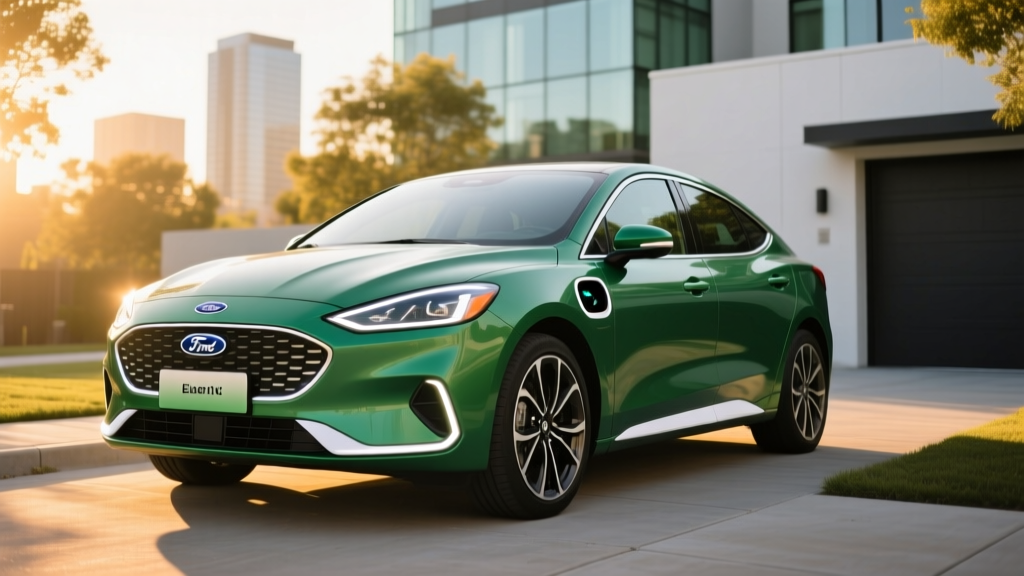
The short answer: The Ford Focus Electric (produced 2012–2018) is a discontinued, used-market-only EV. It makes sense only as a low-cost, short-commute second car if you have home charging. The early models (2012–2016) deliver just 76 miles of EPA range on a 23 kWh battery; the 2017–2018 refresh bumps that to 115 miles on a 33.5 kWh pack. With used prices typically $6,000–$12,000, it's one of the cheapest ways into EV ownership — but its limited DC fast-charging capability and aging battery mean you must go in with realistic expectations.
Ford killed the Focus Electric after the 2018 model year as it pivoted to the Mustang Mach-E and broader electrification strategy. That means every Focus Electric on the road is now at least seven years old. For a data-driven buyer, the core question isn't "is it a good EV?" — it's "does its usable range, charging speed, and total cost of ownership fit my specific driving pattern at the price I can get one?"
This guide breaks down the exact numbers, compares it to gas and hybrid alternatives, and gives you a concrete decision framework before you hand over cash.
Specs That Matter: Range, Battery, and Charging
| Spec | 2012–2016 Model | 2017–2018 Model |
|---|---|---|
| EPA Range | 76 miles | 115 miles |
| Battery Capacity (usable) | 23 kWh (liquid-cooled) | 33.5 kWh (liquid-cooled) |
| Battery Chemistry | NMC (LG Chem) | NMC (LG Chem) |
| Motor Output | 107 kW / 143 hp | 107 kW / 143 hp |
| 0–60 mph | ~9.5 seconds | ~9.5 seconds |
| EPA Efficiency | 105 MPGe combined | 107 MPGe combined |
| Level 2 AC Charging (kW) | 6.6 kW | 6.6 kW |
| Level 2 Time (0–100%) | ~3.5 hours | ~5 hours |
| DC Fast Charging | Not available (2012–2013); optional 50 kW CCS (2014–2016) | 50 kW CCS (standard) |
| DC Fast Charge (10–80%) | N/A or ~45 min | ~45 minutes |
| Battery Warranty (original) | 8 yr / 100,000 mi | 8 yr / 100,000 mi |
kW vs kWh refresher: kW (kilowatts) is the rate of power flow — how fast you charge. kWh (kilowatt-hours) is total energy stored — how far you go. The Focus Electric's 33.5 kWh battery is the tank; the 6.6 kW onboard charger is the hose filling it.
Real-World Range Reality: The 2017–2018 EPA sticker says 115 miles. In practice, expect roughly 95–105 miles in mixed driving at moderate temperatures. Highway-heavy driving at 70+ mph drops that to ~85–95 miles. In freezing weather (below 32°F), plan on 70–85 miles of usable range — a 25–35% reduction typical of NMC packs without a heat pump. The 2012–2016 model's 76-mile EPA figure translates to roughly 55–65 real-world miles in winter.
Used Pricing and What You'll Actually Pay
As of early 2026, used Ford Focus Electric pricing breaks down roughly as follows:
- 2012–2014 models (76-mile range): $5,000–$8,000 depending on mileage and battery health
- 2015–2016 models (76-mile range, optional DCFC): $6,500–$9,500
- 2017–2018 models (115-mile range): $9,000–$14,000
The 2017–2018 refresh is the one to target. The 53% range bump is transformative for daily usability, and DC fast charging became standard, giving you emergency road-trip capability (albeit at a modest 50 kW by today's standards).
Federal and State Incentives on a Used Purchase
Under the IRS §25E used clean vehicle credit, you may qualify for up to $4,000 (30% of the sale price, capped at $4,000) on a used Focus Electric if you meet these requirements:
- Purchase from a licensed dealer (private sales don't qualify)
- Sale price is $25,000 or less (easily met here)
- Vehicle is at least two model years old (all Focus Electrics qualify)
- Your modified adjusted gross income is ≤ $75,000 (single), ≤ $112,500 (head of household), or ≤ $150,000 (joint)
- You haven't claimed the used-vehicle credit in the prior three years
On a $10,000 Focus Electric, 30% of sale price is $3,000 — that's your credit, not the $4,000 cap. This can bring your effective purchase price down to $7,000, which is genuinely compelling for an EV with a liquid-cooled battery.
Cost of Ownership: Focus Electric vs Gas vs Hybrid
Let's compare a used 2017 Focus Electric against a typical used compact gas car (2017 Ford Focus gasoline, ~29 MPG combined) and a used hybrid (2017 Toyota Prius, ~52 MPG combined) over five years at 10,000 miles per year.
| Cost Category (5 yr / 50k mi) | Focus Electric (2017) | Focus Gasoline (2017) | Prius Hybrid (2017) |
|---|---|---|---|
| Purchase Price (used, avg) | $11,000 | $9,500 | $14,000 |
| Federal Used EV Credit | −$3,300 | $0 | $0 |
| Effective Purchase | $7,700 | $9,500 | $14,000 |
| Fuel/Energy (50k miles) | $1,750 (home L2, $0.14/kWh) | $5,170 ($3.00/gal, 29 MPG) | $2,885 ($3.00/gal, 52 MPG) |
| Maintenance (5 yr) | $600 (tires, cabin filter, wipers) | $2,500 (oil, brakes, filters) | $2,000 (oil, brakes, filters) |
| Insurance (avg 5 yr) | $5,500 | $5,000 | $5,200 |
| Estimated Battery Replacement Reserve | $0–$6,000 | $0 | $0–$3,000 (hybrid battery) |
| Total 5-Year Cost | $15,550–$21,550 | $22,170 | $24,085–$27,085 |
Key takeaways from the numbers:
- Energy savings are substantial: roughly $3,400 less than gas and $1,100 less than hybrid over five years at the $0.14/kWh national average electricity rate (per EIA data).
- Maintenance savings are real — no oil changes, no spark plugs, and regenerative braking extends pad life dramatically.
- The wild card is battery health. If the pack has degraded past 70% State of Health (SoH) and needs replacement, out-of-pocket cost from a third-party rebuilder runs $4,000–$7,000. Ford no longer produces replacement packs directly.
- Insurance is slightly higher on EVs in general, though the Focus Electric's low value keeps premiums modest.
Charging at Home and on the Road: What to Expect
Home Charging Setup
The Focus Electric uses a standard J1772 connector for Level 1 and Level 2 AC charging. It does not support the Tesla NACS connector without an adapter, and its CCS port (on 2014+ models) is for DC fast charging only.
| Charging Level | Power | Miles Added Per Hour | Time (0–100%, 33.5 kWh Pack) |
|---|---|---|---|
| Level 1 (120V outlet) | ~1.4 kW | ~4–5 miles | ~24 hours |
| Level 2 (240V, 32A home charger) | 6.6 kW (car-limited) | ~22 miles | ~5 hours |
| DC Fast Charge (CCS) | 50 kW peak | ~150 miles/hr (peak) | ~45 min (10–80%) |
Home charging reality: If you have a garage or driveway with a 240V outlet (or can install one), Level 2 charging overnight is the ideal ownership experience. A basic 32-amp Level 2 home charger (ChargePoint Home Flex, Emporia Level 2) costs $300–$600 for the unit. Professional installation by a licensed electrician runs $500–$2,000 depending on panel proximity and whether your electrical panel needs an upgrade. Total: $800–$2,600.
Level 1 on a standard 120V outlet adds only ~4–5 miles per hour. That's enough if you drive under 30 miles daily and can plug in for 10+ hours overnight. But it's painfully slow for the 2012–2016 models with their smaller battery.
Public Charging Limitations
Here's the Focus Electric's biggest weakness in 2026: its 50 kW DC fast-charge peak is slow by modern standards. A current Hyundai Ioniq 5 or Tesla Model 3 charges at 150–250 kW. At 50 kW, you'll add roughly 75–80 miles in a 30-minute session — enough to extend a trip, but you'll feel the patience tax on any drive over 150 miles.
Additionally, the growing national shift toward the NACS (Tesla-style) connector means some newer Electrify America and third-party stations are prioritizing NACS stalls. The Focus Electric's CCS port will still work at most networks (EVgo, Electrify America, ChargePoint), but you may need a CCS-to-NACS adapter as infrastructure evolves. Plan road trips carefully using PlugShare or A Better Routeplanner.
Battery Health: The Make-or-Break Factor
Every used EV purchase lives or dies on battery State of Health (SoH). The Focus Electric's liquid-cooled LG Chem NMC pack was well-engineered for its era, but these packs are now 7–14 years old.
| Myth | Fact |
|---|---|
| "EV batteries just die suddenly" | NMC packs degrade gradually. Expect 70–85% SoH on a well-maintained 2017–2018 model. Range drops proportionally — a 115-mile car at 80% SoH delivers ~92 miles. |
| "You can't check battery health on a used EV" | An OBD2 reader with EV-capable software (e.g., Leaf Spy equivalent, Forscan for Fords) can read pack SoH, cell voltage variance, and charge cycles. Ask the seller for a health report before buying. |
| "The 8-year battery warranty covers me" | The original 8 yr / 100,000 mi warranty has expired on all 2012–2017 models. Only 2018 models might retain warranty coverage through early 2026, and only if under 100,000 miles. Ford's coverage required the pack to drop below ~60% of original capacity. |
| "Replacement batteries cost $20,000" | Third-party rebuilt packs for the Focus Electric typically run $4,000–$7,000 installed. New OEM packs are largely unavailable since Ford discontinued the model. |
Pre-purchase checklist for battery health:
- Request an SoH reading via OBD2 diagnostic (target: above 80%)
- Check for cell voltage imbalance (variance > 0.2V between cells is a red flag)
- Review charging history — frequent DC fast charging and consistent 100% storage accelerate degradation
- Look for signs of coolant leaks around the battery enclosure (the liquid cooling system can develop seepage at age)
- Verify the battery warranty status by VIN through a Ford dealer
Decision Framework: Should You Buy a Ford Focus Electric?
Buy the Focus Electric (2017–2018) if:
- Your daily round-trip commute is under 60 miles (leaving a comfortable buffer on ~95 real-world miles)
- You have reliable home Level 2 charging access (garage, driveway, or workplace)
- You want the lowest-cost entry into EV ownership and qualify for the $3,000–$4,000 used EV tax credit
- This is a second car — not your only vehicle for long trips
- You're comfortable with basic OBD2 diagnostics to monitor battery health
Look elsewhere if:
- Your commute exceeds 70 miles round-trip (the 2012–2016 models especially won't cut it)
- You rely exclusively on street parking with no charging access
- You live in a region with extreme cold and need reliable 100+ mile range year-round
- You need a single-vehicle household that handles 300+ mile road trips without planning anxiety
- You want modern ADAS features (the Focus Electric has basic stability control and ABS — no adaptive cruise, no lane-keep, no automatic emergency braking)
Consider a used Chevrolet Bolt EV (2017+, 238-mile EPA range, often $10,000–$15,000) or a used Nissan Leaf (2018+, 150–226 miles depending on pack) if you need more range but still want a budget entry point.
Common First-Time EV Buyer Mistakes to Avoid
If the Focus Electric is your first EV, watch for these pitfalls:
- Ignoring winter range loss. NMC batteries lose 25–35% range in sub-freezing temperatures. The Focus Electric has no heat pump — it uses resistive cabin heating, which draws heavily from the pack. A 115-mile car becomes a 75–85-mile car in January in Minnesota.
- Overestimating DC fast charging. The 50 kW peak charge rate means you won't replicate the "15-minute pit stop" experience of modern EVs. Budget 40–50 minutes per fast-charge stop.
- Skipping the pre-purchase battery check. Buying a used EV without an SoH reading is like buying a gas car without checking compression. Don't do it.
- Assuming the tax credit is automatic. The §25E used credit requires a dealer purchase, income eligibility, and a vehicle that meets the price cap. Verify your eligibility on IRS.gov before counting on it.
- Forgetting about tire costs. EVs are heavier than their gas counterparts and wear tires faster. Budget for a $500–$800 tire replacement every 30,000–40,000 miles.
Frequently Asked Questions
Can I still get parts and service for a Ford Focus Electric in 2026?
Yes, with caveats. The Focus Electric shares many body, suspension, and interior components with the gas Focus, so mechanical and cosmetic parts remain widely available. EV-specific components (battery modules, onboard charger, electric compressor) are more limited but can be sourced through third-party EV rebuilders and salvage networks. Any Ford dealer can perform basic diagnostics, but for battery-specific work, seek an EV-specialist shop.
How does the Focus Electric compare to a used Nissan Leaf?
The 2017–2018 Focus Electric (115 miles EPA, liquid-cooled) competes most directly with the 2016–2017 Nissan Leaf (107 miles EPA on the 30 kWh pack). The critical difference is thermal management: the Focus Electric's liquid-cooled battery degrades more slowly and handles DC fast charging better than the Leaf's passively cooled pack, which is notorious for capacity loss in hot climates and rapid degradation from repeated fast charging. If you're in a hot state (Arizona, Texas, Florida), the Focus Electric's liquid cooling is a significant longevity advantage. The 2018+ Leaf with the 40/62 kWh pack (150/226 miles) is a substantially more capable vehicle but costs more.
Is the Ford Focus Electric safe?
The Focus Electric earned a "Good" rating from the IIHS in moderate overlap front and side crash tests for its model years. It includes standard front, side, and curtain airbags, stability control, and ABS. However, it lacks any modern ADAS features — no forward collision warning, no automatic emergency braking, no lane-departure warning. By 2026 safety standards, it's a basic vehicle.
What's the actual cost per mile to drive a Focus Electric?
At the national average residential electricity rate of ~$0.14/kWh and the Focus Electric's efficiency of ~31 kWh/100 miles (107 MPGe), your energy cost is approximately $0.043 per mile. Compare that to a 29 MPG gas car at $3.00/gallon: $0.103 per mile. That's a $0.06/mile savings, or roughly $600 per year at 10,000 miles.
Will the Focus Electric qualify for HOV lane access?
HOV lane sticker programs are state-specific and many have expired or changed for older EVs. California's Clean Air Vehicle decals, for example, have expiration dates and transfer rules. Check your state's current DMV or air resources board for eligibility based on the vehicle's model year and your registration date.