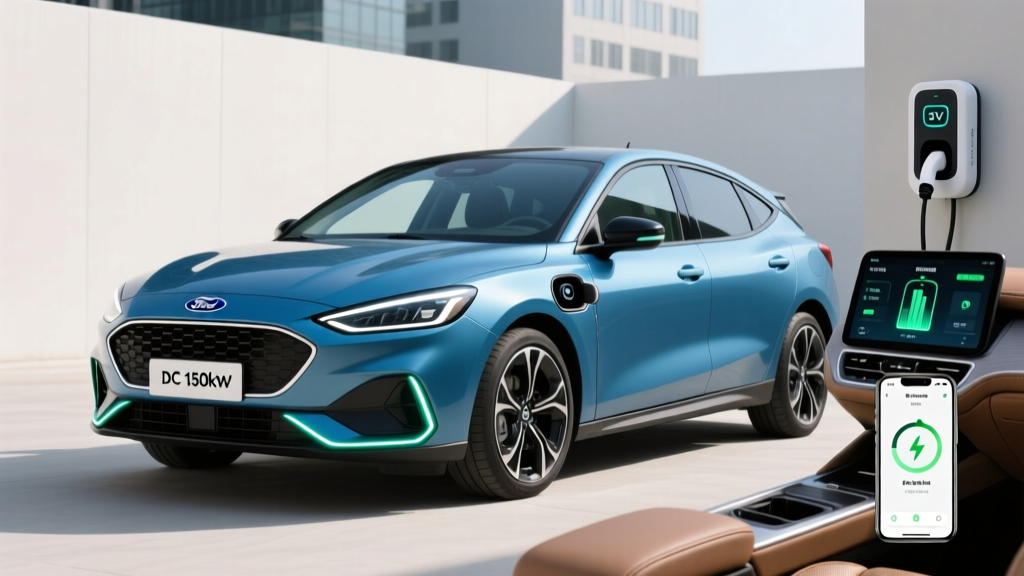
If you've been searching for a Ford Focus Electric hatchback in 2026, here's the essential reality: this model was discontinued after the 2018 model year, so you're exclusively shopping the used market. With an EPA-estimated 76 miles of range from its 23 kWh usable battery (33.5 kWh gross), the Focus Electric serves as a dedicated city commuter — not a road-trip vehicle. Expect to pay between $7,000 and $13,000 depending on mileage and condition. It qualifies for the federal used EV tax credit (up to $4,000 under IRS §25E) if you meet income requirements and buy from a licensed dealer. For short commutes under 30 miles round-trip with reliable home charging access, it remains one of the most affordable ways to go electric. For anything beyond that, you'll want to look at newer, longer-range alternatives.
Quick Verdict: Who Should Buy a Used Ford Focus Electric?
Buy it if: Your daily round-trip commute is under 40 miles, you have Level 2 home charging, you want the cheapest possible entry into EV ownership, and you primarily drive in mild-to-moderate climates.
Skip it if: You need more than 70 miles of real-world range, you live in a cold-weather region without a garage, you lack home charging access, or you regularly take highway trips over 50 miles.
Ford Focus Electric: Key Specs at a Glance
| Specification | 2017–2018 Model | 2012–2016 Model |
|---|---|---|
| EPA Range | 115 miles | 76 miles |
| Battery (Usable / Gross) | 33.5 kWh / ~23 kWh usable | 23 kWh / ~19 kWh usable |
| Battery Chemistry | Lithium-ion (LG Chem) | Lithium-ion (LG Chem) |
| Motor Output | 107 kW (143 hp) | 107 kW (143 hp) |
| 0–60 mph | ~9.3 seconds | ~9.3 seconds |
| DC Fast Charging | 50 kW (CCS1) | Not available (L2 only) |
| Level 2 Charge Rate | 6.6 kW onboard charger | 6.6 kW onboard charger |
| Level 2 Time (0–100%) | ~5.5 hours | ~3.5 hours |
| EPA Efficiency (Combined) | 107 MPGe | 105 MPGe |
| Battery Warranty (Original) | 8 years / 100,000 miles | 8 years / 100,000 miles |
| Cargo Volume | 14.5 cu ft (reduced by battery) | 14.5 cu ft |
| Current Used Price Range (2026) | $9,000–$13,000 | $6,500–$9,500 |
Sources: fueleconomy.gov, Ford Motor Company archived specifications.
Real-World Range: What the EPA Number Doesn't Tell You
EPA Sticker: 115 miles (2017–2018) / 76 miles (2012–2016)
Real-World Expectation: 85–100 miles for the later model in mild conditions; 55–65 miles for the earlier model. In cold weather (below 35°F), expect a 25–40% reduction, dropping the 2017–2018 model to as low as 65 miles and the earlier model to roughly 45 miles.
The Focus Electric uses a liquid-cooled battery pack — an advantage over the passively cooled Nissan Leaf of the same era — which helps manage thermal degradation. However, these batteries are now 8 to 14 years old. Based on typical lithium-ion degradation curves for LG Chem cells of this generation, expect 15–25% capacity loss from original, depending on climate history and charging habits of previous owners.
Highway driving at 70+ mph will reduce range by roughly 15–20% compared to the EPA combined figure. The Focus Electric's relatively small battery means there is very little buffer for unexpected detours, headwind, or elevation changes. If your one-way commute is 35 miles on the freeway, you're cutting it dangerously close in the earlier model and have only a modest margin in the 2017–2018 version.
Charging: What You Need to Know Before You Buy
Charging capability is where the model-year split matters enormously:
| Charging Level | 2017–2018 Focus Electric | 2012–2016 Focus Electric |
|---|---|---|
| Level 1 (120V, 1.4 kW) | ~4 miles per hour | ~3 miles per hour |
| Level 2 (240V, 6.6 kW) | ~20 miles per hour; full charge ~5.5 hrs | ~16 miles per hour; full charge ~3.5 hrs |
| DC Fast Charge (CCS1, 50 kW) | 10–80% in ~30 min | Not available |
The 2017–2018 model's DC fast-charging capability (50 kW via CCS1 connector) is a significant practical advantage. It means you can add roughly 60 miles of range in a 30-minute stop at a public DC charger — enough to extend your day if needed. The earlier models have no DC fast charging at all, limiting them strictly to home and destination Level 2 charging.
Home charging setup: A Level 2 home charger is essentially mandatory. On a standard 120V outlet (Level 1), a full charge of the 2017–2018 model takes roughly 24 hours — impractical for daily use. Budget $500–$1,200 for a quality Level 2 EVSE (such as a ChargePoint Home Flex or Emporia Level 2) and $800–$2,500 for professional electrical installation, depending on whether your panel needs an upgrade to support a 240V/40A circuit. Per Energy.gov, most homes with a 200-amp panel can accommodate this without a full panel replacement.
Important note on kW vs kWh: The Focus Electric's battery capacity is measured in kWh (kilowatt-hours — total energy stored, like gallons in a gas tank). Its charging speed is measured in kW (kilowatts — the rate of energy flow, like gallons per minute at a pump). A 6.6 kW Level 2 charger delivering power to a 33.5 kWh battery will take roughly 5 hours from empty to full (accounting for charging inefficiency).
Cost Breakdown: Focus Electric vs. Gas Compact Hatchback
Let's compare the used Focus Electric against a typical used gas compact hatchback (e.g., a 2017 Honda Civic Hatchback getting 30 MPG combined) over a 5-year ownership period, assuming 10,000 miles driven annually.
| Cost Category | Used Focus Electric (2017–2018) | Used Gas Hatchback (30 MPG) |
|---|---|---|
| Purchase Price (avg.) | $11,000 | $14,000 |
| Federal Used EV Credit (§25E) | –$4,000 (if eligible) | $0 |
| Effective Purchase Price | $7,000 | $14,000 |
| Home Charger Install | $1,500 (one-time) | $0 |
| Fuel/Energy (5 yrs, 50k mi) | $2,250 ($0.13/kWh avg, 30 kWh/100mi) | $5,835 ($3.50/gal, 30 MPG) |
| Maintenance (5 yrs) | $800 (tires, cabin filter, brake fluid) | $3,200 (oil, filters, brakes, belts) |
| Insurance (5 yrs avg.) | $7,500 ($1,500/yr) | $6,500 ($1,300/yr) |
| Estimated Battery Replacement Risk | $0–$6,000 (if out of warranty) | $0 |
| Total 5-Year Cost | $19,050–$25,050 | $29,535 |
| Cost Per Mile | $0.38–$0.50 | $0.59 |
Key takeaway: Even factoring in the potential battery replacement risk, the Focus Electric is significantly cheaper to own over five years — provided you qualify for the used EV tax credit and have affordable home electricity rates. The fuel savings alone ($3,585 over five years) nearly cover the home charger installation and then some.
Federal used EV tax credit (§25E): Under current IRS rules, you can claim up to $4,000 or 30% of the sale price (whichever is lower) on a used EV purchased from a licensed dealer. Requirements include: buyer income under $75,000 (single) / $150,000 (joint), vehicle sale price under $25,000, and the vehicle must be at least two model years old. See IRS.gov §25E for full eligibility details. Note: private-party sales do not qualify.
EV vs. Gas vs. Hybrid: Where the Focus Electric Fits
| Factor | Focus Electric (BEV) | Gas Compact Hatchback | Hybrid (e.g., Prius) |
|---|---|---|---|
| Purchase Price (Used) | $7,000–$13,000 | $12,000–$18,000 | $14,000–$22,000 |
| Annual Fuel Cost (10k mi) | $450 | $1,167 | $700 |
| Range | 65–100 mi (real-world) | 350–400 mi | 500+ mi |
| Refuel/Recharge Time | 5.5 hrs (L2) / 30 min (DC) | 5 minutes | 5 minutes |
| Home Refueling Possible? | Yes (Level 2) | No | No |
| Cold Weather Impact | 25–40% range loss | Minimal (~5%) | Minimal (~5%) |
| Maintenance Complexity | Very low | Moderate | Moderate |
| Road Trip Friendly? | No (limited range + DCFC) | Yes | Yes |
The Focus Electric occupies a very specific niche: it's an around-town commuter that excels when your driving is predictable and short. A hybrid like the Toyota Prius offers far more flexibility for $5,000–$8,000 more upfront but will cost you more per mile in fuel and maintenance. A gas hatchback gives you unlimited range but at the highest ongoing cost.
Common Misconceptions About the Focus Electric
| Myth | Fact |
|---|---|
| "The battery will need replacement soon and cost $15,000." | Liquid-cooled LG Chem packs in the Focus Electric have shown moderate degradation (15–25% over 8–14 years). A replacement, if needed, runs $4,000–$7,000 from independent EV shops — not $15,000. Many packs still function adequately. |
| "It can't handle cold weather at all." | The liquid-cooled battery and available cabin preheating (while plugged in) mitigate cold-weather loss. You will lose range — plan for 65 miles instead of 100 in winter — but the car starts and runs reliably in cold conditions. |
| "There's no DC fast charging, so road trips are impossible." | The 2017–2018 models DO have 50 kW DC fast charging via CCS1. The 2012–2016 models do not. Check the model year carefully. |
| "Used EVs don't qualify for any tax credits." | The federal §25E used clean vehicle credit offers up to $4,000 for eligible buyers purchasing from a dealer. Many states also offer additional used EV incentives. |
| "Parts and service are impossible to find." | The Focus Electric shares most body, suspension, and interior parts with the gas Focus hatchback, which was sold in high volumes. EV-specific components (motor, inverter) are generally reliable and serviced by Ford dealerships. |
Real-World Ownership: What First-Time EV Buyers Must Know
If the Focus Electric would be your first EV, here are the practical realities to prepare for:
1. Home charging is non-negotiable for this car. With only 65–100 miles of range, relying solely on public charging is impractical and expensive. Public Level 2 chargers cost $1.00–$1.50/hour, and DC fast chargers cost $0.30–$0.48/kWh. At home, you'll pay roughly $0.10–$0.18/kWh depending on your utility. Confirm you can install a 240V outlet (NEMA 14-50 or hardwired EVSE) before purchasing.
2. Battery health varies wildly by history. Before buying, request a battery state-of-health (SoH) reading. Some OBD-II apps (like LeafSpy for Nissan, or Ford-specific tools at a dealership) can estimate remaining capacity. A Focus Electric showing less than 75% SoH should be priced accordingly or avoided. Cars from hot climates (Arizona, Texas) typically show more degradation than those from cooler coastal regions.
3. The original 8-year/100,000-mile battery warranty has expired or is expiring. For a 2017 model, the warranty expires in 2025. For a 2018 model, it expires in 2026. If you're buying now, verify with a Ford dealer whether any battery warranty remains. Once expired, any battery repair or replacement is your responsibility.
4. Insurance may cost slightly more. EVs generally carry 10–20% higher insurance premiums than comparable gas vehicles due to higher repair costs for collision damage. Get a quote before committing to the purchase.
5. CCS1 charging network access is shrinking. As the industry transitions to NACS (Tesla's connector standard, now adopted by most automakers), CCS1 infrastructure is still widely available at Electrify America and EVgo stations, but long-term investment is shifting to NACS. The Focus Electric's CCS1 port will remain functional for years, but adapter options (CCS1-to-NACS) may become relevant for Tesla Supercharger access.
Decision Framework: Is the Ford Focus Electric Right for You?
Choose the Focus Electric if:
- Your daily driving is under 50 miles round-trip
- You have a garage or driveway where you can install a Level 2 charger
- You live in a mild or moderate climate (or have a garage for winter)
- You want the lowest possible cost-per-mile for commuting
- You qualify for the $4,000 federal used EV credit (income under $75K single / $150K joint)
- You have a second vehicle for longer trips
Look at alternatives if:
- Your commute exceeds 50 miles one-way → consider a used Chevy Bolt EV (238–259 mi range, ~$12,000–$16,000)
- You need road-trip capability → consider a used Tesla Model 3 (220–310 mi range, ~$18,000–$25,000)
- You lack home charging → a hybrid (Prius, Insight) is a better fit
- You live in extreme cold (regularly below 20°F) → a newer EV with a heat pump and larger battery will serve you better
- You need cargo space → the Focus Electric's raised battery floor reduces cargo usability to roughly 14.5 cu ft
Frequently Asked Questions
Can I still buy a Ford Focus Electric in 2026?
Yes, but only on the used market. Ford discontinued the Focus Electric after the 2018 model year. You'll find them through private sellers, used-car dealerships, and online marketplaces. Expect to pay $7,000–$13,000 depending on model year, mileage, and condition.
Does the Focus Electric qualify for any tax credits?
It does not qualify for the new EV credit (§30D), but it can qualify for the federal used clean vehicle credit (§25E), which provides up to $4,000 or 30% of the sale price. You must buy from a licensed dealer, earn under the income caps ($75K single / $150K joint), and the sale price must be under $25,000. Check IRS.gov for current rules.
How long will the battery last on a used Focus Electric?
Most 2017–2018 Focus Electric batteries are showing 75–85% state of health in 2026. The liquid-cooled thermal management system helped preserve longevity compared to passively cooled competitors. With proper care (avoiding frequent 100% charges and DC fast charging in extreme heat), these packs can deliver usable service for several more years. Budget $4,000–$7,000 for a potential replacement within your ownership window.
What happens if I need to drive farther than 100 miles?
In the 2017–2018 model with DC fast charging, you can stop at a CCS1-equipped public charger and add roughly 60 miles of range in 30 minutes. However, this requires route planning around charger availability and is not convenient for regular long-distance driving. The 2012–2016 models have no DC fast charging, making trips beyond the battery range impractical.
Is the Focus Electric a good first EV?
It can be an excellent, low-risk first EV if your driving patterns match its capabilities. The low purchase price (especially after the used EV credit) means minimal financial exposure. The driving experience is smooth, quiet, and torquey around town. However, if your lifestyle requires flexibility and spontaneity in driving distance, you'll find the range limiting and should look at a used Chevy Bolt EV or Nissan Leaf with a larger battery as your first EV instead.
How does the Focus Electric compare to a used Nissan Leaf?
The 2017–2018 Focus Electric (115 mi EPA, liquid-cooled battery, DC fast charging) competes directly with the 2016–2017 Nissan Leaf (107 mi EPA, passively cooled battery, CHAdeMO DC fast charging). The Focus Electric's liquid cooling gives it an edge in long-term battery health, especially in hot climates. The Leaf has slightly more cargo space and a larger dealer/service network. For the 2018+ Leaf with the 40 kWh battery (151 mi EPA), the Leaf pulls ahead on range but costs $3,000–$5,000 more on the used market.