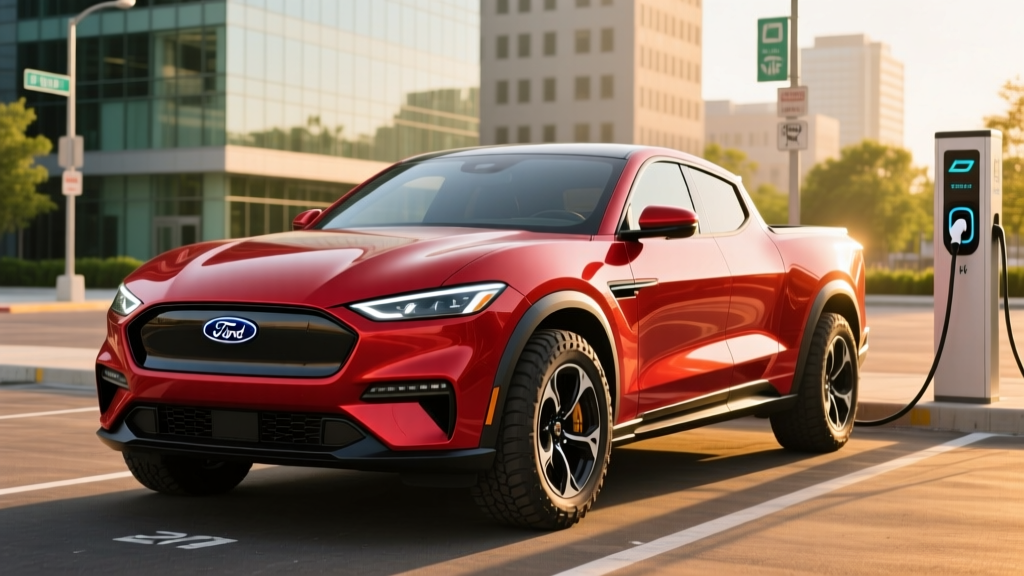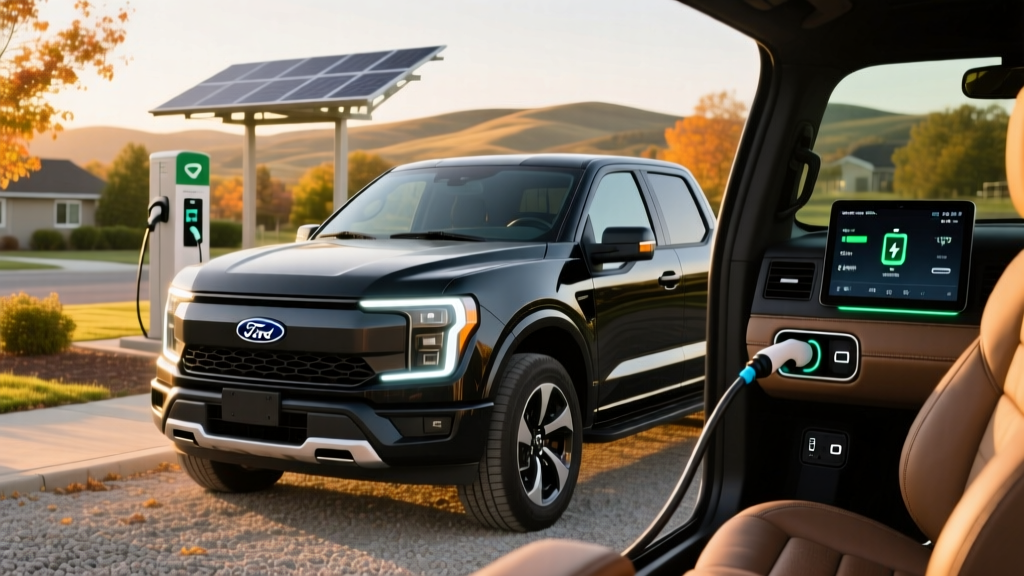
The Ford F-150 Lightning remains one of the most capable electric pickups on the market, blending full-size truck utility with a battery-electric powertrain. But spec sheets only tell part of the story. Below, we break down every critical Ford F-150 Lightning specification — from real-world range and charging curves to tax credit eligibility — so you can decide whether this truck fits your work site, driveway, and budget.
Core Ford F-150 Lightning Specifications at a Glance
| Specification | Standard-Range (SR) | Extended-Range (ER) |
|---|---|---|
| EPA Range | 240 miles | 320 miles |
| Battery Usable Capacity | 98 kWh (NMC) | 131 kWh (NMC) |
| Horsepower | 563 hp | 580 hp |
| Torque | 775 lb-ft | 775 lb-ft |
| 0–60 mph | ~3.8 sec | |
| Drivetrain | Dual-motor AWD | Dual-motor AWD |
| Max DC Fast Charge | ~150 kW peak | ~150 kW peak |
| 10–80% DC Time | ~44 min | ~56 min |
| Level 2 Home Charge Rate | 11.3 kW (~30 mi/hr) | 19.2 kW (~50 mi/hr) with 80A charger |
| Max Towing (properly equipped) | 7,700 lb | 10,000 lb |
| Max Payload | 2,235 lb | 1,952 lb |
| Efficiency (Combined MPGe) | 68 MPGe | 66 MPGe |
| Starting MSRP (Pro trim) | ~$55,000 | ~$70,000 (Lariat ER) |
Real-World Range: What the EPA Sticker Doesn't Tell You
EPA Estimate: 240 mi (SR) / 320 mi (ER)
Expect in Practice: Highway driving at 70+ mph reduces range by 15–20%. Cold weather (below 30°F) can cut range an additional 20–30% due to battery heating demands and cabin climate load. On a 75-mph winter highway run, ER owners should plan for roughly 200–230 miles of usable range before needing a charge stop. City and mixed driving in moderate temperatures will closely match EPA figures.
The Lightning's boxy aerodynamics and substantial curb weight (over 6,000 lb for the ER) work against highway efficiency. According to fueleconomy.gov, the Extended-Range model achieves 66 MPGe combined, translating to roughly 48 kWh/100 mi. That's thirsty by EV standards — comparable trucks like the Rivian R1T achieve similar figures, but sedans and crossovers use far less energy per mile.
For daily commuting under 80 miles round-trip, even the Standard-Range battery provides ample buffer. Road-trippers towing a 5,000-lb trailer should expect range to drop to roughly 120–150 miles depending on speed, terrain, and wind — a critical planning factor the EPA sticker simply doesn't capture.
Charging Speed: DC Fast, Level 2, and the Curve Reality
| Charging Level | Power / Voltage | Approx. Miles Added per Hour | Notes |
|---|---|---|---|
| Level 1 (120V household) | ~1.4 kW | ~3 mi/hr | Emergency/trickle only |
| Level 2 (240V, 32A mobile) | 7.7 kW | ~20 mi/hr | Included mobile cord |
| Level 2 (240V, 48A Wall Connector) | 11.3 kW | ~30 mi/hr | SR full charge ~10 hr |
| Level 2 (240V, 80A Ford Charge Station Pro) | 19.2 kW | ~50 mi/hr | ER full charge ~8 hr; requires 100A circuit |
| DC Fast Charge (CCS) | Up to ~150 kW peak | ~150–200 mi in 30 min (10–80%) | SR: ~44 min 10–80%; ER: ~56 min 10–80% |
The Lightning's DC fast-charging peak of roughly 150 kW is competitive but not class-leading. The Chevrolet Silverado EV, built on GM's Ultium platform, supports up to 350 kW on compatible chargers. The Lightning sustains its peak rate only between roughly 10–40% State of Charge (SoC), then tapers progressively. Above 80%, charging slows dramatically to protect battery longevity — expect the final 80–100% to take as long as the initial 10–80%.
Home charging is where the Lightning shines if you invest in the right equipment. The 80-amp Ford Charge Station Pro delivers 19.2 kW to Extended-Range models, adding roughly 50 miles per hour — enough to fully replenish the 131 kWh pack overnight. However, this requires a dedicated 100-amp electrical circuit, which may necessitate a panel upgrade in older homes. Budget $1,500–$3,500 for a professional Level 2 installation including the charger, wiring, permit, and potential panel work. Always get a quote from a licensed electrician before committing.
Performance and Drivetrain: Dual-Motor AWD Across the Board
Every F-150 Lightning uses a dual-motor all-wheel-drive layout — there is no rear-wheel-drive option. The Standard-Range powertrain produces 563 horsepower and 775 lb-ft of torque, while the Extended-Range bumps output to 580 hp with the same torque figure. The result is genuinely quick acceleration: MotorTrend tested the Extended-Range model at 3.8 seconds to 60 mph, making it one of the fastest production pickups ever sold.
That instant electric torque also translates to real capability. The Lightning's low center of gravity (battery pack mounted under the floor) gives it surprisingly composed handling for a full-size truck, and the AWD system provides confident traction in rain, snow, and on loose surfaces. The available Pro Power Onboard system turns the truck into a mobile generator — offering 2.4 kW or up to 9.6 kW of 120V/240V AC output through bed-mounted outlets, enough to power job-site tools or serve as home backup during outages.
Cargo, Passenger Space, and the Mega Power Frunk
The Lightning retains the SuperCrew four-door cab configuration with a 5.5-foot bed. Rear-seat legroom measures approximately 43.6 inches — competitive with the gas F-150 SuperCrew and generous for adult passengers on longer trips. Behind the rear seats, you get roughly 52.8 cubic feet of cargo volume in the bed.
The standout storage feature is the Mega Power Frunk — a 14.1-cubic-foot front trunk replacing the engine bay. It's lockable, weather-sealed, and includes a drain plug for use as a cooler. The frunk offers 400 lb of payload capacity and features four 120V outlets plus USB ports, making it practical for tailgating, secure tool storage, or groceries that you don't want sliding around in the bed.
Pricing, Trims, and Federal Tax Credit Eligibility
| Trim | Battery | MSRP (approx.) | §30D Credit Eligible? |
|---|---|---|---|
| Pro (fleet/commercial) | Standard-Range | ~$55,000 | Potentially — see rules below |
| XLT | SR / ER | ~$60,000–$75,000 | Potentially (SR); ER may exceed cap |
| Lariat | ER | ~$70,000–$82,000 | Check MSRP cap |
| Platinum | ER | ~$90,000+ | Exceeds MSRP cap |
- MSRP Cap: Pickup trucks must have an MSRP at or below $80,000 to qualify.
- Income Cap: Modified AGI must not exceed $150,000 (single), $225,000 (head of household), or $300,000 (joint filers).
- Battery Sourcing: Critical minerals and battery components must meet phased-in domestic/FtA-country sourcing thresholds that tighten annually. Verify current-year compliance on the IRS clean vehicle credits page.
- Point-of-Sale Transfer: Eligible buyers can transfer the credit to the dealer at purchase, reducing the out-of-pocket price immediately rather than waiting for a tax refund.
- Credit Amount: Up to $7,500, depending on how many sourcing requirements the vehicle meets. Some trims may qualify for only $3,750 if partial sourcing thresholds are met.
The Pro and XLT Standard-Range trims fall under the $80,000 MSRP cap and are the most likely to qualify. Platinum and high-option Lariat ER trims often exceed the cap. Always confirm eligibility with your dealer and a tax professional before relying on the credit in your purchase math.
Battery Warranty, Longevity, and Chemistry
The Lightning uses nickel-manganese-cobalt (NMC) lithium-ion cells supplied by SK Innovation (via the BlueOval SK joint venture). NMC chemistry offers higher energy density than LFP (lithium iron phosphate), which is essential for fitting 131 usable kWh into the Extended-Range pack — but it is more sensitive to sustained high-SoC storage and extreme heat than LFP.
Ford covers the battery pack with an 8-year / 100,000-mile warranty, guaranteeing that the pack will retain at least 70% of its original capacity during that period. Based on industry-wide data from fleets and early adopters, NMC packs typically lose 5–10% capacity in the first 100,000 miles under normal use. To maximize longevity, avoid routinely charging to 100% unless needed for a trip, and use preconditioning before DC fast-charging sessions to bring the battery to optimal temperature.
Technology, Driver Assists, and Standout Features
The Lightning's cabin tech centers on a large portrait-oriented touchscreen (12-inch on Pro/XLT, 15.5-inch on Lariat/Platinum) running Ford's SYNC 4A system with wireless Apple CarPlay and Android Auto, over-the-air updates, and integrated navigation with real-time charging-station routing.
Ford's BlueCruise hands-free driver-assistance system is available on equipped trims, enabling hands-off driving on pre-mapped divided highways (over 130,000 miles of qualified roads in the US). BlueCruise uses a driver-facing camera to monitor eye attention. It is an SAE Level 2 system — you must remain alert and ready to resume control at all times. It is not self-driving.
BlueCruise is a Level 2 hands-free system, not an autonomous driving feature. It operates only on qualified divided highways and requires continuous driver supervision. It will not handle construction zones, unmapped roads, severe weather, or complex urban intersections. Keep your eyes on the road and hands available.
Other standout technology includes the available Intelligent Backup Power system, which pairs with a Ford Charge Station Pro and a home transfer switch to power your house during grid outages — providing up to 9.6 kW of continuous output, enough to run essential circuits for roughly three days on a full Extended-Range battery.
Pros and Cons: An Honest Assessment
- Genuine truck capability: 10,000-lb towing (ER), 4WD standard
- Pro Power Onboard: up to 9.6 kW mobile AC power
- Massive 14.1 cu-ft frunk with integrated outlets
- Quick acceleration (3.8 sec 0–60 ER)
- Available home backup power (Intelligent Backup Power)
- Spacious SuperCrew cabin with generous rear legroom
- BlueCruise hands-free highway driving
- DC fast charging peaks at ~150 kW — slower than rivals (Silverado EV: 350 kW)
- Range drops sharply when towing (expect 120–150 mi with 5,000-lb trailer)
- High-option trims exceed $80K MSRP cap, losing tax credit eligibility
- Heavy curb weight reduces efficiency vs. smaller EVs
- Cold-weather range loss of 20–30% is significant for a 240-mi SR pack
- 80A home charger requires expensive 100A circuit install
Who Should Buy the Ford F-150 Lightning?
Choose the Lightning if: You need a full-size pickup for work or family use, want mobile power output for job sites or emergencies, have access to home Level 2 charging, and your daily driving falls within 150–200 miles (or you can plan DC fast-charge stops for longer trips).
Look elsewhere if: You regularly tow heavy trailers over long distances (range becomes impractical), you need the fastest possible road-trip charging (consider the Silverado EV or Tesla Cybertruck on the Supercharger network), or you lack reliable home charging access and your area has sparse public DC infrastructure.
Frequently Asked Questions
What is the real-world range of the Ford F-150 Lightning?
The EPA rates the Standard-Range at 240 miles and the Extended-Range at 320 miles. In real-world highway driving at 70+ mph, expect roughly 195–210 miles (SR) and 260–280 miles (ER). In cold weather below 30°F, subtract another 20–30%. Towing cuts range roughly in half.
How fast does the F-150 Lightning charge at home and on the road?
On a DC fast charger, the Lightning peaks at approximately 150 kW, achieving a 10–80% charge in about 44 minutes (SR) or 56 minutes (ER). At home with the 80-amp Ford Charge Station Pro, the Extended-Range pack adds roughly 50 miles per hour and fully charges in about 8 hours. A standard 48-amp Level 2 charger delivers about 30 miles per hour.
Does the F-150 Lightning qualify for the $7,500 federal EV tax credit?
It depends on trim, MSRP, your income, and battery sourcing. The truck must have an MSRP at or below $80,000 (the pickup cap under §30D), and your modified AGI must be within IRS limits ($300K joint, $150K single). Battery critical-mineral and component sourcing requirements also apply and tighten annually. The Pro and XLT SR trims are the strongest candidates. Verify on the IRS website and with a tax professional.
Is the F-150 Lightning worth buying vs. the Rivian R1T or Chevrolet Silverado EV?
The Lightning offers the best value among electric pickups for traditional truck buyers — it drives like a familiar F-150, has the Pro Power Onboard advantage, and its pricing undercuts the Rivian R1T. The Silverado EV charges faster (up to 350 kW) and offers more range in its top trims but starts at a higher price point. The R1T is more adventurous off-road and has a quad-motor option, but costs significantly more. For fleet, work-site, and family truck use with home charging, the Lightning remains the default recommendation.
What is the battery warranty on the F-150 Lightning?
Ford provides an 8-year / 100,000-mile battery warranty covering defects and capacity loss below 70% of original capacity. The powertrain carries the same 8-year / 100,000-mile coverage.
Can the F-150 Lightning power my home during an outage?
Yes, with the available Intelligent Backup Power system. This requires the Ford Charge Station Pro (80A bidirectional-capable unit) and a professionally installed home transfer switch. The Extended-Range battery can supply up to 9.6 kW of continuous power, running essential home circuits for approximately three days on a full charge.