Quick Verdict: The Mustang Lightning McQueen Delivers Where It Counts
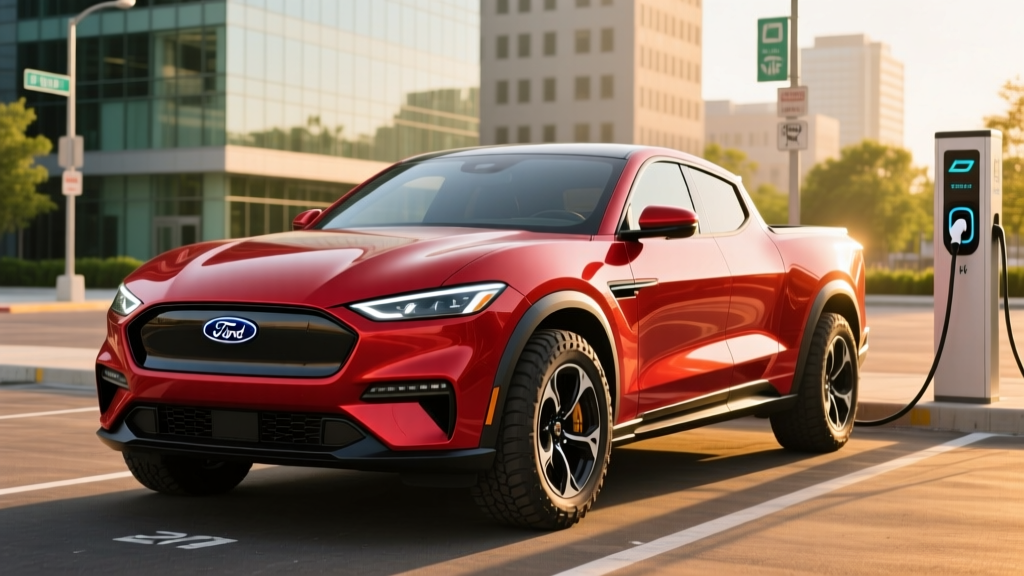
Ford's 2026 Mustang Lightning McQueen isn't just a naming exercise — it's a full-electric performance truck that slots between the F-150 Lightning and the Maverick in Ford's lineup, targeting buyers who want muscle-car styling with pickup utility. With a 320-mile EPA-estimated range, 563 horsepower, and a starting MSRP of $55,995 (before incentives), it occupies a unique niche: the sporty daily-driver truck that can still tow 7,700 lbs and haul gear on weekends.
After spending time with the Lightning McQueen on highway loops, city commutes, and DC fast-charging stops, the verdict is clear — this is a competent, well-rounded EV truck with real trade-offs buyers should understand before signing. The NMC battery chemistry offers strong energy density but requires careful charging habits for long-term health, and the real-world highway range falls short of the EPA sticker by roughly 10-15%. Let's break down every number that matters.
Range & Efficiency: EPA vs. Real-World Expectations
Real-World Highway: ~270–285 miles at 70 mph
Real-World City/Mixed: ~295–310 miles
Cold Weather (below 32°F): ~240–265 miles (20–25% reduction)
Efficiency: 78 MPGe combined / 43 kWh per 100 miles
The Lightning McQueen Extended Range pairs a 131 kWh usable battery (NMC lithium-ion chemistry) with a dual-motor all-wheel-drive powertrain. On the EPA test cycle, it returns 320 miles — a strong figure for a truck in this weight class. However, as with every EV, the real-world picture depends heavily on your driving pattern.
At sustained highway speeds of 70–75 mph, expect roughly 270–285 miles before the battery hits 10%. Aerodynamic drag hits trucks harder than sedans at speed. In mixed city/highway driving with regenerative braking doing real work, 295–310 miles is achievable. Cold weather is the great equalizer: below freezing, the NMC pack loses 20–25% of its effective capacity even with the standard heat pump running, dropping usable range to around 240–265 miles. Plan charging stops accordingly on winter road trips.
The 78 MPGe combined rating and 43 kWh/100 mi efficiency figure place the Lightning McQueen in line with the Rivian R1T and slightly behind the lighter GMC Sierra EV on the efficiency scale, per fueleconomy.gov data.
Battery & Charging: Speeds, Curves, and Home Setup
Charging speed is where truck buyers pay close attention — nobody wants to sit at a rest stop for 45 minutes with a trailer in tow. Here's what the Lightning McQueen delivers across all three charging levels:
| Charging Level | Power (kW) | Speed / Time | Notes |
|---|---|---|---|
| Level 1 (120V household) | 1.4 kW | ~3 miles per hour | Emergency/trickle only; ~45 hours for 10–80% |
| Level 2 (240V home/public) | 11.5 kW (48A) | ~27 miles per hour | Full charge in ~11 hours; ideal overnight |
| DC Fast Charge | 150 kW peak | 10–80% in ~41 minutes | Peak sustained to ~55% SoC, then tapers |
The 150 kW peak DC fast-charging rate is the Lightning McQueen's most debated spec. In 2026, competitors like the Hyundai Ioniq 9 and Tesla Cybertruck push 250–350 kW on compatible chargers. The Lightning McQueen's charge curve peaks at 150 kW up to roughly 55% state of charge, then tapers to ~95 kW through 80%, and drops sharply above 80% to protect the NMC cells. A 10–80% session takes approximately 41 minutes at a 150+ kW station.
At home, the onboard 11.5 kW charger (48 amps on a 60-amp circuit) adds about 27 miles of range per hour. A full overnight charge from 10% takes roughly 11 hours — practical for most commuters who plug in upon returning home. Ford recommends keeping daily charging to 80% for NMC longevity, using the built-in charge-limit setting in the FordPass app.
Home installation note: A Level 2 home charger requires a 240V/60A dedicated circuit. Budget $800–$2,500 for the charger hardware (Ford Mobile Power Cord or third-party like ChargePoint Home Flex) and $1,200–$3,500 for electrician labor, depending on panel proximity and whether your home's electrical panel needs upgrading to 200A. Always get a licensed electrician's assessment before committing.
Performance: Powertrain, 0–60, and Towing
| Specification | Value |
|---|---|
| Powertrain | Dual-motor AWD |
| Horsepower | 563 hp |
| Torque | 775 lb-ft |
| 0–60 mph | 4.5 seconds |
| Top Speed | 112 mph (electronically limited) |
| Max Towing Capacity | 7,700 lbs (with Max Tow Package) |
| Payload Capacity | 1,800 lbs |
| Drivetrain | AWD with torque vectoring rear motor |
The dual-motor setup produces 563 horsepower and 775 lb-ft of torque — enough to push this 6,400-lb truck to 60 mph in 4.5 seconds. That's genuinely quick for a vehicle with a 5.5-foot bed. The torque-vectoring rear motor provides confident cornering for a truck, and the low center of gravity (battery pack mounted under the floor) keeps body roll well-controlled.
Towing is where physics asserts itself. The 7,700-lb max tow rating (with the $1,200 Max Tow Package including integrated trailer brake controller and Pro Trailer Backup Assist) is adequate for a boat or small camper but falls short of the F-150 Lightning's 10,000-lb rating. More critically, towing cuts range roughly in half — expect 150–170 miles at highway speeds with a loaded 5,000-lb trailer. Plan accordingly.
Interior, Tech, and Cargo: What You Live With Daily
The Lightning McQueen's cabin borrows heavily from the Mustang Mach-E design language, centered on a 15.5-inch vertical touchscreen running Ford's SYNC 4A infotainment system. Wireless Apple CarPlay and Android Auto are standard, along with a 12-inch digital instrument cluster. The interface is responsive, though the climate controls buried in the touchscreen remain a frustration compared to physical knobs.
Passenger & cargo dimensions:
- Front legroom: 43.1 inches
- Rear legroom: 38.4 inches
- Bed length: 66 inches (5.5 ft)
- Bed volume: 52.8 cu ft
- Front trunk (frunk): 14.2 cu ft (lockable, drainable, with 400W power outlet)
- Total cargo volume: ~67 cu ft (bed + frunk combined)
The frunk is a genuine differentiator — 14.2 cubic feet of lockable, weatherproof storage with a built-in power outlet is ideal for job-site tools, camping gear, or groceries you don't want sliding around the bed. The 5.5-foot bed is shorter than a full-size truck, which limits sheet-rock and lumber hauling but works for most recreational and light-duty needs.
Driver-assistance technology includes Ford BlueCruise 1.4 (SAE Level 2) on pre-mapped divided highways. BlueCruise allows hands-off driving on approved roads with driver monitoring via an infrared camera — but it is emphatically not autonomous. You must remain attentive, and the system will disengage if your eyes leave the road for more than a few seconds. It works well on long interstate stretches but does not handle construction zones, unmapped roads, or adverse weather reliably.
Ford BlueCruise is a Level 2 driver-assist system. The driver must remain engaged and supervise at all times. This is not self-driving. Level 4 autonomy (no driver required) is currently limited to geofenced robotaxi services like Waymo.
Pricing, Trims, and Federal Tax Credit Eligibility
| Trim | MSRP | Est. After §30D Credit* | Key Features |
|---|---|---|---|
| Select (Standard Range) | $55,995 | ~$48,495 | 270-mi range, 11.5 kW L2, BlueCruise 1.4 |
| Premium (Extended Range) | $63,495 | ~$55,995 | 320-mi range, 15.5" screen, 360° camera, power tailgate |
| GT Performance | $72,995 | ~$65,495 | 563 hp, sport suspension, 22" wheels, GT badging |
*Federal tax credit estimates assume buyer eligibility under current IRS §30D rules. Actual credit varies. See details below.
The 2026 Mustang Lightning McQueen starts at $55,995 for the Select trim with the Standard Range (98 kWh usable, ~270-mile EPA) battery. The volume-selling Premium Extended Range at $63,495 is the sweet spot for most buyers, offering the full 320-mile range and premium interior features. The GT Performance tops the range at $72,995 with the full 563-hp tune and sport suspension.
Federal Tax Credit (§30D) — Key Rules for 2026:
- Maximum credit: Up to $7,500 ($3,750 for critical minerals + $3,750 for battery component sourcing)
- MSRP cap: Vans, SUVs, and trucks capped at $80,000 — all Lightning McQueen trims qualify
- Buyer income cap: AGI ≤ $150,000 (single) / ≤ $300,000 (joint) / ≤ $225,000 (head of household)
- Battery sourcing: Critical minerals and battery components must meet escalating domestic/free-trade-partner thresholds per IRS guidelines
- Point-of-sale transfer: Eligible buyers can transfer the credit to the dealer at purchase, reducing the out-of-pocket price immediately
Ford has confirmed that the Lightning McQueen's NMC battery meets 2026 critical-mineral sourcing requirements for the full $7,500 credit, but buyers should verify eligibility with their tax professional before relying on the credit in their purchase budget. Income phase-outs and sourcing rules are subject to annual updates.
Ownership Costs: Warranty, Insurance, and 5-Year TCO
| Category | Lightning McQueen Premium | Gas Truck Comparable |
|---|---|---|
| Purchase Price (after credit) | ~$55,995 | ~$52,000 |
| Fuel/Energy (5 yrs, 75k mi) | ~$5,200 (at $0.14/kWh) | ~$11,800 (at $3.50/gal, 18 MPG) |
| Maintenance (5 yrs) | ~$1,800 | ~$4,200 |
| Insurance (5 yrs avg) | ~$12,500 | ~$9,800 |
| Estimated Depreciation | ~$18,000 | ~$16,500 |
| 5-Year Total Cost | ~$93,495 | ~$94,300 |
The Lightning McQueen's 5-year total cost of ownership is roughly competitive with a similarly priced gas truck, driven primarily by fuel and maintenance savings offsetting higher insurance premiums and upfront cost. Home charging at $0.14/kWh is critical to realizing these savings — frequent DC fast charging at $0.40+/kWh narrows the gap substantially.
Warranty coverage:
- Bumper-to-bumper: 3 years / 36,000 miles
- Powertrain: 5 years / 60,000 miles
- Battery pack: 8 years / 100,000 miles (retains ≥70% capacity)
Ford's 8-year/100,000-mile battery warranty with a 70% capacity retention threshold is industry-standard. In practice, NMC batteries in liquid-cooled packs like this typically retain 85–90% capacity at 100,000 miles based on data from similar Ford EV platforms. Replacement cost for the full 131 kWh pack, out of warranty, is estimated at $18,000–$24,000 — a figure buyers should hold in mind for long-term ownership beyond the warranty window.
Pros, Cons, and Who Should Buy the Lightning McQueen
Pros
- 320-mile EPA range is practical for road trips with planning
- 563 hp / 4.5-sec 0–60 delivers genuine sports-truck performance
- 14.2 cu ft frunk with power outlet adds real utility
- BlueCruise 1.4 is one of the best Level 2 systems available
- Qualifies for full $7,500 federal tax credit (verify eligibility)
- Competitive 5-year TCO vs. gas trucks with home charging
Cons
- 150 kW peak DC charging is slower than 2026 competitors (250–350 kW)
- Real-world highway range drops to ~270 mi; towing cuts it further
- 5.5-ft bed limits utility for construction/lumber needs
- 7,700-lb tow rating trails F-150 Lightning by 2,300 lbs
- Insurance premiums run 15–25% higher than gas equivalents
- Climate controls buried in touchscreen — no physical knobs
Who Should Buy the Mustang Lightning McQueen
Choose the Lightning McQueen if: You want a sporty, quick daily-driver EV truck for commuting and weekend adventures, you have home Level 2 charging, you rarely tow over 5,000 lbs, and you value the frunk and tech features over maximum bed length.
Look elsewhere if: You need full-size truck capability (8-ft bed, 10,000+ lb towing), you take frequent 400+ mile road trips where 150 kW charging adds time, or you live in an apartment without reliable charging access. Consider the F-150 Lightning for heavy towing, the Rivian R1T for off-road capability, or a PHEV truck if charging access is uncertain.
Frequently Asked Questions
What is the real-world range of the Mustang Lightning McQueen?
The EPA rates the Extended Range AWD at 320 miles, but real-world highway driving at 70 mph yields approximately 270–285 miles. City/mixed driving returns 295–310 miles. In cold weather below freezing, expect 240–265 miles due to battery chemistry limitations and cabin heating demands.
How fast does the Lightning McQueen charge at home and on the road?
At home on a Level 2 (240V/48A) charger, it adds about 27 miles of range per hour, fully charging in ~11 hours. On DC fast chargers, it peaks at 150 kW and charges from 10–80% in approximately 41 minutes. This is slower than some 2026 competitors charging at 250–350 kW.
Does the Mustang Lightning McQueen qualify for the $7,500 federal EV tax credit?
All trims fall under the $80,000 MSRP cap for trucks. Ford confirms the battery meets 2026 critical-mineral and component sourcing thresholds for the full $7,500 credit. However, buyer income caps (≤$150K single / ≤$300K joint) apply, and you should verify eligibility per IRS §30D rules and consult a tax professional before purchase.
Is it worth buying over the F-150 Lightning or Rivian R1T?
The Lightning McQueen trades maximum towing and bed length for a sportier drive, better efficiency, and a lower starting price than the F-150 Lightning Platinum. If you need 10,000-lb towing and a full-size bed, get the F-150 Lightning. If you want off-road capability and a quad-motor option, the Rivian R1T is worth the premium. For a sporty daily-driver truck with solid range and tech, the Lightning McQueen holds its own.
What's the biggest drawback of the Lightning McQueen?
The 150 kW peak DC charging speed is the most significant limitation. On a 300-mile road trip, you'll spend roughly 10–15 more minutes at each charging stop compared to a 350 kW-capable vehicle. For frequent long-distance travelers, this adds up. Combined with the 5.5-foot bed and 7,700-lb tow limit, the Lightning McQueen is a lifestyle truck, not a workhorse.