Quick Verdict: The Electric Truck That Remembers It's a Truck
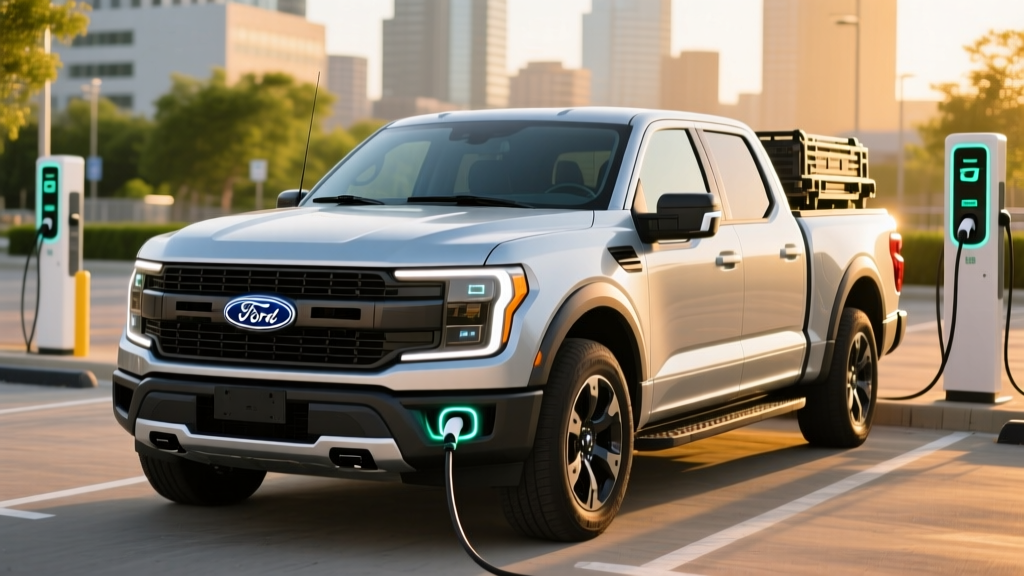
If you've spent years behind the wheel of a 2008 Ford F-150 and keep finding yourself Googling the 08 Ford F150 bolt pattern (6×135 mm) to source replacement wheels or upgrade to a heavier-duty setup, the jump to the 2026 F-150 Lightning will feel both familiar and radical. The Lightning keeps the full-size-truck bones — aluminum body, independent rear suspension, the same cab configurations — but swaps the V8 rumble for dual motors and a 131 kWh lithium-ion pack. For the 2026 model year, Ford has refined the thermal management system, slightly bumped the Extended Range pack's usable capacity, and expanded BlueCruise hands-free highway coverage. The result is a truck that can tow, haul, power a job site, and — when you're not loading the bed — deliver sedan-quick acceleration with zero tailpipe emissions.
Range, Efficiency, and the Real-World Reality Check
Real-World Expectation: Plan on 200–220 miles highway at 75 mph in the Standard Range, and 260–285 miles in the Extended Range. Towing a 5,000-lb trailer cuts that roughly in half — expect 110–140 miles before needing a DC fast charger. Cold weather (below 32°F) typically shaves 15–25% off EPA figures, so a Minnesota winter commuter in the Extended Range should budget ~240 miles of usable range.
Efficiency lands at 78 MPGe combined for the Extended Range 4×4 (EPA), which translates to roughly 43 kWh per 100 miles in mixed driving. That's thirstier than a Rivian R1T Dual-Motor (37 kWh/100 mi) but about what you'd expect from a 6,500-lb truck with the aerodynamics of a garden shed. The Standard Range truck's smaller battery makes it a better city and suburban commuter where regenerative braking recovers more energy; the Extended Range earns its keep on highway runs and job-site duty cycles.
Battery, Chemistry, and Longevity
Both packs use NMC (nickel-manganese-cobalt) pouch cells supplied primarily by SK On. Ford does not currently offer an LFP option on the Lightning — if you want LFP longevity and don't mind lower energy density, you'll have to look at the Tesla Cybertruck's structural pack or the upcoming Silverado EV Work Truck. The Extended Range pack is rated at 131 kWh usable (roughly 140 kWh gross), while the Standard Range sits at 98 kWh usable.
| Spec | Standard Range | Extended Range |
|---|---|---|
| Battery (usable) | 98 kWh NMC | 131 kWh NMC |
| EPA Range | 240 mi | 320 mi |
| Drivetrain | Dual-motor AWD | Dual-motor AWD |
| Horsepower | 580 hp | 580 hp |
| Torque | 775 lb-ft | 775 lb-ft |
| 0–60 mph | ~4.5 sec | ~3.8 sec |
| Max Tow (properly equipped) | 7,700 lb | 10,000 lb |
| Max Payload | 2,235 lb | 1,952 lb |
| MPGe (combined) | 76 MPGe | 78 MPGe |
Ford's battery warranty covers 8 years / 100,000 miles with a capacity-retention floor of 70% — standard for the segment, though Hyundai's 10-year / 100,000-mile coverage on the Ioniq 5 raises the bar. Long-term data from 2022–2023 Lightning owners suggests NMC degradation in the 5–8% range after 60,000 miles when owners avoid habitual 100% charges and frequent DC fast charging. A full pack replacement, out of warranty, currently lists at roughly $20,000–$28,000 installed — a number worth factoring into a 15-year ownership plan.
Charging Speeds: Home, DC Fast, and the Curve Reality
| Level | Power | Miles Added per Hour | Notes |
|---|---|---|---|
| Level 1 (120V) | ~1.4 kW | ~2–3 mi/hr | Emergency/trickle only |
| Level 2 (240V, 32A mobile) | 7.7 kW | ~13 mi/hr | Standard mobile cord |
| Level 2 (240V, 48A Wall Charger) | 11.5 kW | ~20 mi/hr | Ford Charge Station Pro |
| Level 2 (240V, 80A Charge Station Pro) | 19.2 kW | ~30–33 mi/hr | Requires 100A circuit; dual onboard chargers |
| DC Fast (Standard Range) | Peak 120 kW | — | 15–80% in ~44 min |
| DC Fast (Extended Range) | Peak 150 kW | — | 15–80% in ~41 min |
Here's the honest take: the Lightning's DC fast-charging curve is its most-criticized spec. Peak 150 kW on the Extended Range sounds competitive until you park it next to a Hyundai Ioniq 5 pulling 240 kW or a Cybertruck on a V4 Supercharger at 250+ kW. The Lightning holds peak rate only briefly — typically between 15% and 35% state of charge — before tapering to ~100 kW through the mid-range and dropping further above 80%. On a long road trip, plan your stops around 15–80% sessions of roughly 40 minutes; pushing to 95% adds another 25+ minutes for marginal range.
At home, the 80A Ford Charge Station Pro is the sweet spot for Extended Range owners. A full overnight charge from 20% takes about 9 hours — perfect for off-peak utility rates. Installation typically requires a 100-amp dedicated circuit; budget $1,200–$2,500 for the electrician work depending on panel proximity, per Ford's home charging guidance. The truck also supports Pro Power Onboard — 2.4 kW standard, 9.6 kW optional — letting you run job-site tools or back up essential home circuits through the bed outlets.
Performance, Ride, and the Bolt-Pattern Note for 08 F-150 Upgraders
Dual motors deliver all-wheel drive as standard on every Lightning trim. The Extended Range's 3.8-second 0–60 time is absurd for a full-size pickup and makes merging onto freeways effortless, but what you'll notice more in daily driving is the instant torque at low speeds — stoplight launches and low-range crawling both feel telepathic. The independent rear suspension (a first for the F-150) ditches the leaf springs, and the result is a dramatically smoother unloaded ride compared to any gas F-150 you've owned.
For owners coming off a 2008 F-150: the 08 Ford F150 bolt pattern is 6×135 mm, and the Lightning shares that same pattern — so your aftermarket wheel collection will physically bolt on. However, two critical caveats apply. First, the Lightning's curb weight (6,500–6,800 lbs) demands wheels rated for the higher load; many 2008-era aftermarket wheels were rated for ~2,500 lbs per corner and may not meet the Lightning's requirements. Second, the Lightning uses a different center bore and TPMS system, so plan on hub-centric rings and new sensors. Confirm load ratings with the wheel manufacturer before mounting — this is a safety item, not a cosmetic one.
Pricing, Trims, and the Federal Tax Credit Math
| Trim | Base MSRP | Est. After §30D Credit* |
|---|---|---|
| Pro (Standard Range) | $55,990 | ~$48,490 |
| XLT (Standard Range) | $59,990 | ~$52,490 |
| Lariat (Extended Range) | $75,490 | ~$67,990 |
| Platinum (Extended Range) | $96,990 | Not eligible (MSRP cap) |
*Federal §30D credit up to $7,500. Subject to buyer income caps ($150k single / $300k joint), MSRP cap ($80,000 for trucks), and battery-component / critical-mineral sourcing requirements that change annually. The Platinum trim exceeds the $80,000 truck cap and does not qualify. Point-of-sale transfer is available at participating dealers. Verify eligibility at IRS.gov and consult a tax professional before purchase.
The value sweet spot is the XLT with the Standard Range pack — it unlocks the $7,500 credit, keeps MSRP well under the cap, and delivers the full towing/payload capability most buyers actually use. Lariat buyers who need the 320-mile Extended Range should confirm the truck's battery-sourcing compliance on the window sticker, as the critical-mineral thresholds tighten each year under current DOE/EPA guidance.
Interior, Cargo, and Tech That Earns Its Keep
The cabin is functionally identical to the gas F-150 — same dash architecture, same SuperCrew dimensions, same 52.8 inches of rear legroom. The 12-inch (Pro/XLT) or 15.5-inch portrait touchscreen (Lariat/Platinum) runs SYNC 4 with wireless CarPlay and Android Auto. What sets the Lightning apart is the Mega Power Frunk: 14.1 cubic feet of lockable, drainable, front-trunk storage with 400 lbs of payload capacity. It swallows toolboxes, groceries, or a weekend of camping gear and is genuinely the best-executed frunk in the EV market.
The bed is 5.5 feet (67.1 inches) on SuperCrew models with 52.8 cubic feet of volume. Max payload varies by pack — the Standard Range's lighter battery actually yields higher payload (2,235 lbs) than the Extended Range (1,952 lbs). Ford's onboard scale feature in the bed is a standout for contractors who need to monitor load weight in real time. BlueCruise hands-free highway driving covers over 130,000 miles of divided highways in the U.S. and Canada — it's an SAE Level 2 system, meaning you must remain attentive and the vehicle will monitor your eyes via the driver-facing camera.
Who the Lightning Suits — and Who Should Look Elsewhere
Pros
- Mega Power Frunk is class-leading utility
- Pro Power Onboard turns the truck into a mobile generator
- Independent rear suspension = civilized unloaded ride
- 6×135 mm bolt pattern carries over from 08 F-150
- Strong tow rating (10,000 lbs Extended Range)
Cons
- DC fast-charging peak is modest vs. rivals (150 kW)
- Towing collapses real-world range to 110–140 mi
- Platinum trim prices out of §30D credit eligibility
- NMC pack replacement is $20k–$28k out of warranty
- BlueCruise subscription adds $75/mo after trial
Buy the Lightning if: you need a real work truck that happens to be electric — contractors, rural homeowners with 240V access, fleet operators, and 08 F-150 upgraders who want to keep the familiar dimensions and wheel spec while cutting fuel and maintenance costs.
Look elsewhere if: you tow long distances frequently (the Rivian R1T Max Pack or Silverado EV offer longer real-world tow range), you want the fastest DC charging in the segment (Hyundai/Kia E-GMP platform trucks are coming), or your budget puts you in Platinum territory where the tax credit doesn't apply.
Frequently Asked Questions
What is the real-world range of the 2026 F-150 Lightning?
Expect 260–285 highway miles in the Extended Range under mild conditions, dropping to ~240 miles in cold weather and ~120 miles while towing 5,000+ lbs. The Standard Range delivers roughly 200–220 miles in real-world mixed driving.
How fast does the Lightning charge at home and on the road?
On a properly installed 80A Ford Charge Station Pro, the Extended Range adds about 33 miles of range per hour — a full overnight charge. DC fast-charging peaks at 150 kW (Extended Range), with a 15–80% session taking about 41 minutes.
Does the 2026 F-150 Lightning qualify for the federal EV tax credit?
Most trims under the $80,000 MSRP cap for trucks qualify for up to $7,500 under IRS §30D, provided the buyer meets income limits and the truck's battery meets critical-mineral and component-sourcing thresholds. The Platinum trim exceeds the cap and does not qualify.
Will my 2008 F-150 wheels fit the Lightning?
Both trucks share a 6×135 mm bolt pattern, but Lightning wheels must be rated for its higher curb weight (~6,700 lbs). Verify load rating, center bore, and TPMS compatibility before mounting any 08-era wheels.
Is the F-150 Lightning worth it versus the Rivian R1T or Silverado EV?
The Lightning wins on price (entry-level Pro undercuts both), frunk utility, and F-150 parts/service familiarity. The R1T offers better off-road geometry and faster charging; the Silverado EV promises longer range. For most truck-first buyers, the Lightning remains the default choice.