Quick Answer: 2026 Toyota EV Options
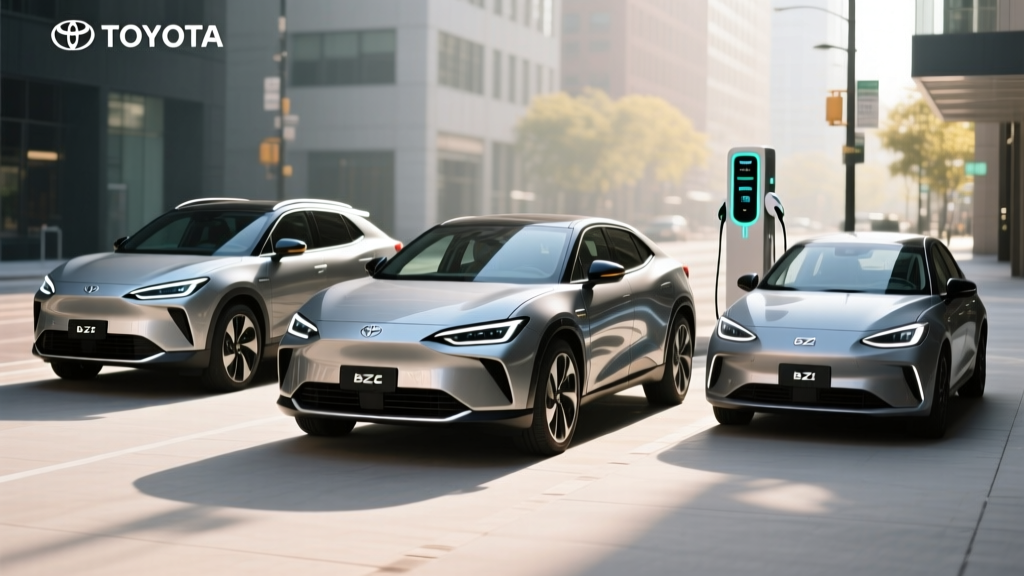
For 2026, Toyota offers one fully electric vehicle in the US market: the bZ4X compact SUV with EPA ranges of 222-252 miles, starting at approximately $43,000. Toyota's strategy remains hybrid-focused, with 11 hybrid/PHEV models available. The bZ4X qualifies for partial federal tax credits (up to $3,750) depending on battery sourcing and buyer income. If you need a Toyota EV today, the bZ4X is your only option—but Toyota's hybrid lineup (RAV4 Hybrid, Camry Hybrid, Prius) offers 40-94 MPGe with no range anxiety.
Toyota's 2026 EV Reality: One Model, Hybrid-First Strategy
Unlike competitors with expanding EV portfolios, Toyota has maintained a cautious approach to full electrification. The 2026 lineup reflects this philosophy: one battery electric vehicle (BEV) alongside an extensive hybrid and plug-in hybrid selection.
The 2026 Toyota bZ4X carries over from the 2025 model year with minor updates. Built on the e-TNGA platform, it offers front-wheel drive (FWD) or all-wheel drive (AWD) configurations with a 71.4 kWh lithium-ion battery pack (usable capacity).
2026 Toyota bZ4X Core Specifications
| Specification | bZ4X FWD | bZ4X AWD |
|---|---|---|
| EPA Range | 252 miles | 222 miles |
| Battery Capacity | 71.4 kWh usable | 71.4 kWh usable |
| Battery Chemistry | NMC (Nickel Manganese Cobalt) | NMC |
| Horsepower | 201 hp | 214 hp |
| 0-60 mph | 7.1 seconds | 6.5 seconds |
| Peak DC Fast Charge | 150 kW | 150 kW |
| 10-80% DC Charge Time | ~30 minutes | ~30 minutes |
| Level 2 Charge Rate | 6.6 kW | 6.6 kW |
| MPGe (Combined) | 119 MPGe | 104 MPGe |
| Starting MSRP | $43,070 | $46,670 |
Real-World Range Expectations
EPA Sticker: 252 miles (FWD), 222 miles (AWD)
Real-World Highway (70 mph): Expect 200-220 miles (FWD), 180-195 miles (AWD)
Cold Weather (below 32°F): Range drops 20-30%, yielding 155-200 miles (FWD) depending on cabin heating use
The bZ4X lacks a heat pump in US models, relying on resistive heating that significantly impacts winter efficiency. Preconditioning while plugged in helps mitigate this loss.
Cost Breakdown: bZ4X vs. RAV4 Hybrid vs. Gas RAV4
Toyota buyers often cross-shop the bZ4X against the RAV4 Hybrid and conventional RAV4. Here's how the economics compare over 5 years and 75,000 miles:
| Cost Factor | bZ4X AWD | RAV4 Hybrid AWD | RAV4 Gas AWD |
|---|---|---|---|
| Base MSRP | $46,670 | $33,425 | $30,575 |
| Federal Tax Credit (§30D) | Up to $3,750* | None | None |
| Effective Purchase Price | $42,920 | $33,425 | $30,575 |
| Fuel/Energy (5 yr) | $3,200** | $6,800 | $9,400 |
| Maintenance (5 yr) | $1,800 | $3,200 | $3,800 |
| Insurance (5 yr avg) | $9,500 | $7,800 | $7,400 |
| 5-Year Total Cost | $57,420 | $51,225 | $51,175 |
| Cost Per Mile | $0.77 | $0.68 | $0.68 |
*Tax credit eligibility depends on battery component sourcing, buyer income caps ($150k single/$300k joint), and MSRP limits. Verify current eligibility at IRS.gov. The bZ4X qualifies for $3,750 (critical minerals requirement met, battery components not fully domestic).
**Energy cost assumes 70% home charging at $0.14/kWh, 30% public DC charging at $0.40/kWh. Actual costs vary significantly by local electricity rates and charging access.
The Hybrid Advantage
The numbers reveal Toyota's strategic positioning: the RAV4 Hybrid delivers nearly identical 5-year costs to the gas model while offering 40 MPG combined versus 28 MPG. The bZ4X's higher upfront cost and insurance premiums offset its fuel savings unless you drive significantly more than 15,000 miles annually or have access to very cheap home charging.
Real-World Ownership Considerations
Home Charging Access: The Critical Factor
The bZ4X ownership experience depends heavily on your charging situation:
| Charging Level | Power | Miles Added Per Hour | Full Charge Time (0-100%) | Use Case |
|---|---|---|---|---|
| Level 1 (120V outlet) | 1.4 kW | 3-4 miles | ~55 hours | Emergency/trickle only |
| Level 2 (240V home) | 6.6 kW | 20-22 miles | ~10 hours | Daily overnight charging |
| DC Fast Charge | 150 kW peak | N/A | 10-80% in ~30 min | Road trips |
Level 2 Installation Reality: Expect $800-$2,500 for a quality Level 2 charger (ChargePoint Home Flex, Emporia Vue) plus $500-$2,000 for electrician installation depending on panel capacity and run distance. Homes with 100-amp service may require a $2,000-$4,000 panel upgrade to support 240V/40A charging circuits.
No Home Charging? If you rely on apartment living or street parking, the bZ4X becomes significantly less practical. Public DC charging costs 3-4x more than home charging and requires time commitment. Consider a Toyota hybrid instead.
Charging Speed Limitations
The bZ4X's 150 kW peak charge rate trails competitors like the Hyundai Ioniq 5 (240 kW) and Tesla Model Y (250 kW). More critically, real-world testing shows the bZ4X sustains peak rates only briefly before tapering:
- 10-30% SoC: 130-150 kW (if battery preconditioned)
- 30-60% SoC: 90-120 kW
- 60-80% SoC: 50-70 kW
- 80-100% SoC: Below 30 kW (not recommended for DC charging)
Avoid charging above 80% on DC fast chargers—the time penalty is severe and unnecessary for most driving needs.
Climate Considerations
Cold Weather (Northern US): Without a heat pump, the bZ4X experiences significant winter range loss. Owners in Minnesota, Michigan, and New England report 25-35% range reduction in sub-freezing temperatures. Garage parking and preconditioning help but don't eliminate the penalty.
Hot Weather (Southwest): Battery thermal management handles heat well, but expect 5-10% range loss from air conditioning use. The battery warranty covers 8 years/100,000 miles with capacity retention above 70%.
Tax Credit Eligibility: What You Actually Get
The federal EV tax credit (§30D) has become complex under current rules. Here's the 2026 reality for the bZ4X:
| Requirement | bZ4X Status | Credit Impact |
|---|---|---|
| MSRP Cap ($80k SUVs) | ✓ Qualifies | Eligible |
| Buyer Income Cap | Varies ($150k single/$300k joint AGI) | Must verify |
| Battery Components (North America) | ✗ Not met | Lose $3,750 |
| Critical Minerals (US/FTA partners) | ✓ Met | Qualifies for $3,750 |
| Maximum Credit | $3,750 |
Starting in 2024, buyers can transfer the credit to the dealer at point-of-sale, reducing the purchase price directly rather than waiting for tax filing. However, if your tax liability is less than the credit amount, you cannot claim the excess—the credit is non-refundable.
State incentives vary widely. California's CVRP program, Colorado's innovative vehicle credit, and utility rebates may add $1,000-$5,000 depending on your location. Check state incentive databases for current programs.
Decision Framework: Is the bZ4X Right for You?
Choose the Toyota bZ4X if:
- You want a Toyota EV specifically and accept the limited range
- You have reliable Level 2 home charging
- Your daily driving is under 80 miles round-trip
- You rarely drive in extreme cold
- You value Toyota's reliability reputation and dealer network
- You qualify for the $3,750 federal credit plus state incentives
Choose a Toyota Hybrid (RAV4 Hybrid, Camry Hybrid) if:
- You lack home charging access
- You regularly drive in sub-freezing climates
- You take frequent road trips exceeding 250 miles
- You want lower upfront cost ($10,000+ savings vs. bZ4X)
- You prefer proven technology with 20+ year track record
- You want 40+ MPG without charging infrastructure concerns
Consider Competitors (Hyundai Ioniq 5, Tesla Model Y, Ford Mustang Mach-E) if:
- You need 300+ mile range
- You want faster DC charging (200+ kW sustained)
- You prioritize advanced driver assistance (Tesla Autopilot, Hyundai HDA2)
- You need more cargo space or towing capacity
Common Misconceptions About Toyota EVs
| Myth | Fact |
|---|---|
| "Toyota doesn't make electric cars" | Toyota offers the bZ4X BEV globally, plus the RAV4 Prime PHEV with 42 miles electric-only range |
| "The bZ4X gets 300+ miles range" | EPA maximum is 252 miles (FWD), real-world highway is 200-220 miles |
| "Toyota EVs qualify for the full $7,500 tax credit" | Only $3,750 due to battery component sourcing rules |
| "Charging is always cheaper than gas" | Public DC charging at $0.40/kWh costs similar to gas; savings require home charging at lower rates |
| "EV batteries need replacement every few years" | Toyota warranties the bZ4X battery for 8 years/100,000 miles at 70%+ capacity; most last 15+ years |
| "Hybrids are outdated technology" | Toyota hybrids achieve 40-94 MPGe with zero range anxiety and lower total cost than most EVs |
First-Time EV Buyer Essentials
Before You Buy:
- Audit Your Charging Access: Can you install Level 2 at home? Do you have a dedicated 240V circuit or garage outlet? If renting or in a condo, verify charging options before committing.
- Calculate Real Energy Costs: Check your utility's EV rate plans. Time-of-use rates can reduce charging costs to $0.08-$0.12/kWh overnight, but peak rates may exceed $0.30/kWh.
- Map Your Typical Drives: Track your weekly mileage for a month. If 90% of trips are under 100 miles, the bZ4X works. If you regularly exceed 200 miles, plan DC charging stops or reconsider.
- Verify Tax Credit Eligibility: Income limits, tax liability, and vehicle sourcing all affect your actual credit. Consult a tax professional and verify on fueleconomy.gov.
- Test the Charging Ecosystem: Download PlugShare, ChargePoint, and EVgo apps. Map chargers along your common routes. Experience a DC fast charge before buying to understand the time commitment.
Ownership Realities:
- Insurance Costs More: EV insurance premiums run 15-25% higher than equivalent gas vehicles due to repair costs and battery replacement risk.
- Maintenance is Lower: No oil changes, fewer brake replacements (regen braking), no transmission service. Expect $300-$400 annually versus $600-$800 for gas vehicles.
- Tire Wear Increases: EVs are heavier with instant torque. Budget for tire replacement every 30,000-40,000 miles versus 50,000+ for gas cars.
- Resale Value Uncertain: EV depreciation remains volatile. The bZ4X may lose 50-60% of value over 5 years, though this is improving as the market matures.
2026 Toyota EV FAQ
Does Toyota have other electric vehicles coming in 2026?
Toyota has announced plans for additional bZ-series EVs globally, but no US market additions are confirmed for 2026. The company's strategy emphasizes hybrids and hydrogen fuel cells alongside gradual BEV expansion. Any new models would likely be announced 12-18 months before availability.
How does the bZ4X compare to the Subaru Solterra?
The Solterra is mechanically identical to the bZ4X (both built on the e-TNGA platform through a Toyota-Subaru partnership). Differences are cosmetic and pricing. The Solterra starts ~$1,000 higher but includes AWD standard. Choose based on dealer proximity and brand preference.
Can I tow with the bZ4X?
The bZ4X has a 2,200-pound towing capacity (AWD models) when properly equipped. This handles small utility trailers or a pair of jet skis but not campers or boats. Towing reduces range by 30-50% depending on trailer weight and aerodynamics.
What's the battery replacement cost?
Out-of-warranty battery replacement runs $15,000-$20,000 including labor. However, most EV batteries outlast the vehicle. Toyota's 8-year/100,000-mile warranty covers capacity below 70%, and real-world data shows most batteries retain 85-90% capacity at 100,000 miles.
Is the bZ4X eligible for HOV lane access?
Yes, in states offering clean vehicle decals (California, Colorado, Georgia, Maryland, and others). California's program has income limits and expires in 2025 for new applications, but existing decals transfer with the vehicle.
How reliable is the bZ4X?
Early data (2023-2024 models) shows average reliability with some software complaints. The electric powertrain itself is simple and proven. Toyota's dealer network provides service access, though EV-specific technician training varies by location.
Should I wait for future Toyota EVs?
If you need a vehicle now and want Toyota, the bZ4X or a hybrid are your options. Toyota has committed to solid-state battery EVs by 2027-2028 with 750+ mile range and 10-minute charging, but these remain unproven and will likely debut at premium prices.
Bottom Line: Toyota's 2026 EV Position
The 2026 Toyota bZ4X serves a specific buyer: someone committed to the Toyota brand who wants electric propulsion and accepts the range and charging limitations. For most buyers, Toyota's hybrid lineup offers better economics, proven reliability, and zero infrastructure concerns.
If you're set on a Toyota EV, the bZ4X works for suburban commuters with home charging and moderate daily mileage. If you need versatility, cold-weather capability, or road-trip readiness, the RAV4 Hybrid or RAV4 Prime PHEV deliver Toyota reliability with greater flexibility.
Toyota's cautious EV approach reflects market reality: hybrids outsell BEVs by 3:1 in the US, and many buyers aren't ready for charging lifestyle changes. Whether this strategy proves wise or shortsighted depends on charging infrastructure expansion and battery cost reductions over the next decade.