Quick Answer: Is the Ford F-150 Lightning Worth It in 2026?
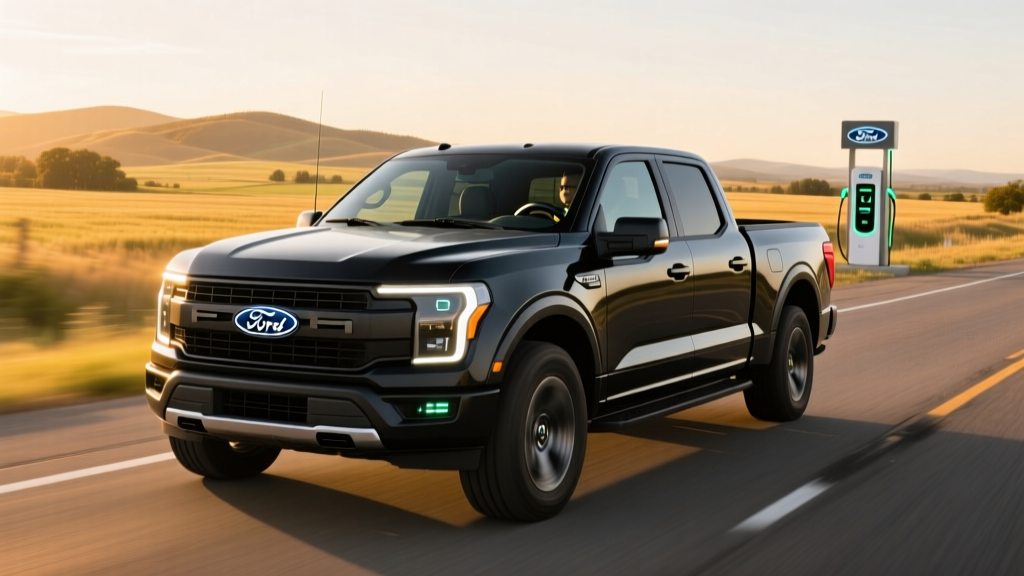
The Ford F-150 Lightning delivers 230–320 miles of EPA range, peaks at 150 kW DC fast charging (10–80% in ~41 minutes), and starts at $54,995 for the Pro trim. Compared to a gas F-150 4WD, owners save roughly $1,500–$2,200 annually on fuel and maintenance — but pay $8,000–$15,000 more upfront depending on trim. The Lightning makes the most financial sense for buyers with home Level 2 charging, daily commutes under 200 miles, and eligibility for the federal §30D tax credit (up to $7,500 with point-of-sale transfer). If you frequently tow heavy loads over 300 miles or live in a charging desert, the gas F-150 or a hybrid alternative may serve you better.
F-150 Lightning Specs: Range, Battery, and Charging at a Glance
| Specification | Standard Range | Extended Range |
|---|---|---|
| EPA Range | 230 miles | 320 miles |
| Battery (Usable) | 98 kWh (NMC) | 131 kWh (NMC) |
| Max DC Fast Charge | 150 kW | 150 kW |
| 10–80% DC Charge Time | ~36 minutes | ~41 minutes |
| Level 2 Charge Rate | 11.3 kW (standard) / 19.2 kW (optional) | 19.2 kW |
| Level 2 Full Charge Time | ~10 hours (11.3 kW) | ~8 hours (19.2 kW) |
| Horsepower | 452 hp | 580 hp |
| 0–60 mph | ~4.5 seconds | ~3.8 seconds |
| Max Towing | 7,700 lbs | 10,000 lbs |
| Max Payload | 2,235 lbs | 1,952 lbs |
| MPGe (Combined) | 68 MPGe | 66 MPGe |
Real-World Range vs. EPA Sticker
The EPA numbers above assume moderate temperatures and mixed driving. In practice, expect the following adjustments:
- Highway-only (70–75 mph): Subtract 15–20%. The Extended Range model delivers roughly 260–275 miles at sustained highway speeds.
- Cold weather (below 30°F): Subtract 20–30%. The Standard Range pack may drop to 160–180 miles in freezing temperatures without preconditioning.
- Towing (5,000+ lb trailer): Subtract 40–50%. Real-world towing range on the Extended Range model is typically 150–190 miles depending on trailer weight and terrain.
- City/regenerative driving: You can meet or slightly exceed EPA estimates thanks to regenerative braking recovery.
The Lightning uses NMC (nickel manganese cobalt) chemistry, which offers higher energy density than LFP but is more sensitive to extreme temperatures. Ford's liquid thermal management system helps mitigate this, but preconditioning the battery before DC fast charging is essential — without it, peak charge rates can drop below 80 kW.
F-150 Lightning vs. Gas F-150: Cost and Capability Compared
The core question for most truck buyers isn't whether electric is "better" — it's whether the Lightning's strengths align with their actual use case. Here's a direct comparison using current data from fueleconomy.gov and manufacturer pricing:
| Factor | F-150 Lightning (Extended Range) | F-150 Gas (3.5L EcoBoost 4WD) |
|---|---|---|
| Starting MSRP (comparable trim) | ~$69,995 (Lariat) | ~$57,500 (Lariat) |
| Fuel/Energy Cost per Mile | $0.045–$0.06 (home charging) | $0.17–$0.21 (gasoline at $3.40/gal) |
| Annual Fuel Cost (15,000 mi) | $675–$900 | $2,550–$3,150 |
| Annual Maintenance | ~$300–$450 | ~$800–$1,200 |
| Oil Changes | None | 2–3 per year ($150–$250 total) |
| Brake Wear | Minimal (regen braking) | Replacement every 40–60k mi |
| EPA Range / Tank Range | 320 miles | ~480 miles (26-gal tank) |
| Refuel/Recharge Time | 8 hrs (L2) / 41 min (10–80% DC) | 5 minutes |
| Max Towing | 10,000 lbs | 13,000–14,000 lbs |
| Frunk (Front Trunk) | 14.1 cu ft (400 lb capacity) | None |
| Pro Power Onboard | Up to 9.6 kW V2L | Up to 7.2 kW (generator option) |
The gas F-150 still wins on maximum towing capacity, long-distance range, and refueling speed. The Lightning wins on per-mile operating cost, instant torque (580 hp and a sub-4-second 0–60 in the Extended Range model), the lockable waterproof frunk, and vehicle-to-load power that can run job-site tools or back up essential home circuits.
Total Cost of Ownership: 5-Year Breakdown
Let's model a realistic 5-year ownership scenario for both trucks, assuming 15,000 miles per year, home Level 2 charging at $0.13/kWh (national average), and gas at $3.40/gallon. These figures are estimates — your local electricity and fuel prices will shift the numbers.
| Cost Category (5 Years) | F-150 Lightning Ext. Range | F-150 Gas 3.5L EcoBoost |
|---|---|---|
| Purchase Price (Lariat trim) | $69,995 | $57,500 |
| Federal Tax Credit (§30D) | –$7,500 (if eligible) | $0 |
| Home Level 2 Charger Install | $1,200–$2,500 | $0 |
| Fuel/Energy (75,000 miles) | $3,750–$4,500 | $12,750–$15,750 |
| Maintenance (5 years) | $1,500–$2,250 | $4,000–$6,000 |
| Insurance (avg annual premium) | $10,500–$12,500 | $7,500–$9,500 |
| Estimated Depreciation | ~$28,000–$32,000 | ~$22,000–$26,000 |
| 5-Year Total (approx.) | $79,645–$91,245 | $81,750–$88,750 |
Key takeaways from this model:
- The tax credit is the linchpin. Without the §30D credit, the Lightning costs roughly $7,000–$12,000 more over five years. With it, the two trucks break even or the Lightning pulls slightly ahead — but only if you charge primarily at home.
- Insurance is higher for the Lightning. EV truck premiums run 25–40% higher than gas equivalents, driven by higher repair costs and parts pricing. Get quotes before committing.
- Depreciation remains uncertain. EV depreciation curves have been volatile. The Lightning has held value better than some competitors, but long-term residual values depend on battery health perception and market shifts.
- Public DC fast charging changes the math. If you rely on Electrify America or EVgo at $0.40–$0.55/kWh, your per-mile cost jumps to $0.10–$0.15 — erasing much of the fuel savings versus gas.
Federal Tax Credit Eligibility: What You Actually Need to Know
The IRS §30D Clean Vehicle Credit can reduce your effective purchase price by up to $7,500, but eligibility is not guaranteed. Here's the current checklist:
- MSRP cap: Trucks and vans must be priced at or below $80,000. Most Lightning trims qualify, but a fully optioned Platinum can exceed this cap.
- Buyer income limits: Adjusted gross income must not exceed $150,000 (single), $225,000 (head of household), or $300,000 (joint filing).
- Battery sourcing requirements: A percentage of critical minerals and battery components must be sourced from the U.S. or free-trade-agreement countries. This requirement tightens annually — verify current-year compliance on the IRS qualified vehicles list before purchasing.
- Point-of-sale transfer: Since 2024, you can transfer the credit to the dealer at purchase, reducing your out-of-pocket cost immediately rather than waiting for a tax refund.
- One credit per VIN: The credit applies once per vehicle. A used Lightning does not qualify for the new-vehicle credit (but may qualify for the separate used-EV credit of up to $4,000).
Always verify eligibility with your tax professional and the IRS qualified vehicles list before finalizing your purchase. Sourcing rules change, and a model that qualifies in January may not in June.
Home Charging Setup: What First-Time EV Buyers Must Plan For
The Lightning's ownership experience rises or falls on your charging setup. Here's what you need to budget for:
| Item | Cost Range | Notes |
|---|---|---|
| Level 2 Charger (hardware) | $400–$800 | Ford Mobile Power Cord included; dedicated wall unit recommended |
| 240V / 48A Circuit Install | $800–$2,000 | Requires a 60A breaker; existing panel must have capacity |
| Electrical Panel Upgrade (if needed) | $1,500–$4,000 | Homes with 100A service often need a 200A upgrade |
| Permits & Inspection | $100–$400 | Varies by municipality |
| Total Install (typical) | $1,200–$2,500 | $3,000–$5,000 if panel upgrade needed |
Critical detail on the 19.2 kW onboard charger: The Extended Range Lightning supports 19.2 kW Level 2 charging, which requires an 80A circuit and a hardwired charger like the Ford Charge Station Pro. Most homes have 48A or 60A circuits available, limiting Level 2 speed to 11.3 kW — still adequate for overnight replenishment of 200+ miles. Have a licensed electrician evaluate your panel before committing to equipment.
If you cannot install home charging — due to apartment living, street parking, or HOA restrictions — the Lightning becomes significantly harder to live with. Public Level 2 chargers add 20–30 miles per hour, and relying on DC fast charging daily accelerates battery degradation and costs 3–5× more per mile than home charging.
Common Misconceptions About the F-150 Lightning
| Myth | Fact |
|---|---|
| "The battery will need replacing in 5 years for $20,000" | Ford warranties the battery for 8 years/100,000 miles against degradation below 70% capacity. Industry data shows NMC packs losing roughly 10–15% capacity over 150,000 miles under normal use. Full replacement, if ever needed, is covered by warranty for most owners. |
| "You can't tow with an electric truck" | The Lightning tows up to 10,000 lbs — adequate for most boat, utility, and camper trailers. The limitation is range, not capability: expect 150–190 miles when towing at max capacity. Plan charging stops accordingly. |
| "DC fast charging takes too long" | 10–80% in ~41 minutes at 150 kW is slower than the Hyundai Ioniq 5 or Tesla Cybertruck, but it's practical for road-trip meal and rest stops. The charge curve tapers significantly above 80% — don't plan to charge to 100% on the road. |
| "Electric trucks can't handle cold weather" | Range drops 20–30% in sub-freezing temps, which is real. But the Lightning's heat pump and battery preconditioning mitigate this. Plug in overnight and precondition while connected to preserve range. |
| "The Lightning is just a compliance EV" | Ford has produced over 150,000 Lightnings. It's a mainstream production vehicle with full dealer support, not a limited-run experiment. |
Decision Framework: Should You Buy the F-150 Lightning?
Choose the F-150 Lightning If:
- You have home Level 2 charging access (garage or driveway with a 240V circuit or the ability to install one).
- Your daily driving is under 200 miles, covering most commutes, school runs, and errands without needing to charge away from home.
- You qualify for the §30D tax credit (income under the caps, truck MSRP under $80,000, and battery sourcing compliance confirmed).
- You value Pro Power Onboard for job-site tools, tailgating, or home backup power (up to 9.6 kW with the Extended Range pack).
- You want instant torque and a sub-4-second 0–60 in a full-size truck — the Extended Range Lightning out-accelerates most gas V8 trucks.
- Your towing needs are under 10,000 lbs and your typical tow trips are under 150 miles round-trip (or you're willing to plan DC fast charging stops).
Choose the Gas F-150 (or Wait) If:
- You cannot install home charging and would rely on public infrastructure daily.
- You regularly tow over 10,000 lbs or take long-distance towing trips exceeding 200 miles without reliable charging along the route.
- You live in a region with extreme cold and limited charging infrastructure — the combination of range loss and sparse DC chargers creates genuine trip-planning friction.
- Your budget is firm below $50,000 — the Lightning's base Pro trim starts at $54,995 before options, and the value trims (XLT, Lariat) land between $59,995 and $69,995.
- You put on 25,000+ highway miles per year — the higher insurance and depreciation may outweigh fuel savings at that mileage.
Frequently Asked Questions
What is the real-world range of the Ford F-150 Lightning?
The Extended Range model carries a 320-mile EPA rating, but expect 260–275 miles in real-world highway driving at 70–75 mph, and 160–220 miles in freezing weather or while towing. The Standard Range model's 230-mile EPA figure translates to roughly 185–200 miles on the highway. Always plan trips with a 15–20% buffer below these numbers.
How long does it take to charge the F-150 Lightning at home?
On a 48A Level 2 circuit (11.3 kW), the Extended Range 131 kWh battery charges from empty to full in roughly 12 hours. On an 80A circuit with the 19.2 kW onboard charger, that drops to about 8 hours. Most owners charge overnight and never need a full empty-to-full cycle — plugging in each evening to replenish 100–200 miles takes 4–8 hours.
Does the F-150 Lightning qualify for the $7,500 federal tax credit?
Most Lightning trims qualify, but eligibility depends on your income (under $150K single / $300K joint), the truck's MSRP (under $80K for trucks), and current battery-sourcing compliance. The credit can be transferred to the dealer at point of sale for an immediate price reduction. Verify on the IRS qualified vehicles list before purchasing.
How does the Lightning compare to the Tesla Cybertruck or Rivian R1T?
The Lightning is the most conventional and truck-like of the three — traditional body-on-frame feel, full Ford dealer network, and the lowest starting price. The Cybertruck offers faster DC charging (250+ kW) and more range but polarizes on design and has limited service centers. The R1T is more premium and adventure-oriented with a quad-motor option, but starts above $70,000 and has a smaller service footprint. If you want a work truck with established dealer support, the Lightning leads.
What happens if the battery degrades?
Ford warrants the Lightning's battery for 8 years or 100,000 miles, guaranteeing it will retain at least 70% of original capacity. Real-world data from high-mileage EVs suggests NMC packs typically lose 10–15% over 150,000 miles. If degradation exceeds the warranty threshold, Ford will repair or replace the battery at no cost. Out-of-warranty replacement costs are estimated at $15,000–$25,000, though prices are expected to decline as battery manufacturing scales.
Can the F-150 Lightning power my home during an outage?
Yes, with the available Ford Intelligent Backup Power system and the Extended Range 131 kWh battery, the Lightning can supply up to 9.6 kW of continuous power to your home through a compatible transfer switch (installed by an electrician). Ford estimates this can power an average home for 3–10 days depending on usage. This requires the 80A Ford Charge Station Pro and a home energy management system — budget an additional $2,000–$4,000 for the complete setup.