Quick Verdict: The Lightning Flash Hits the Sweet Spot
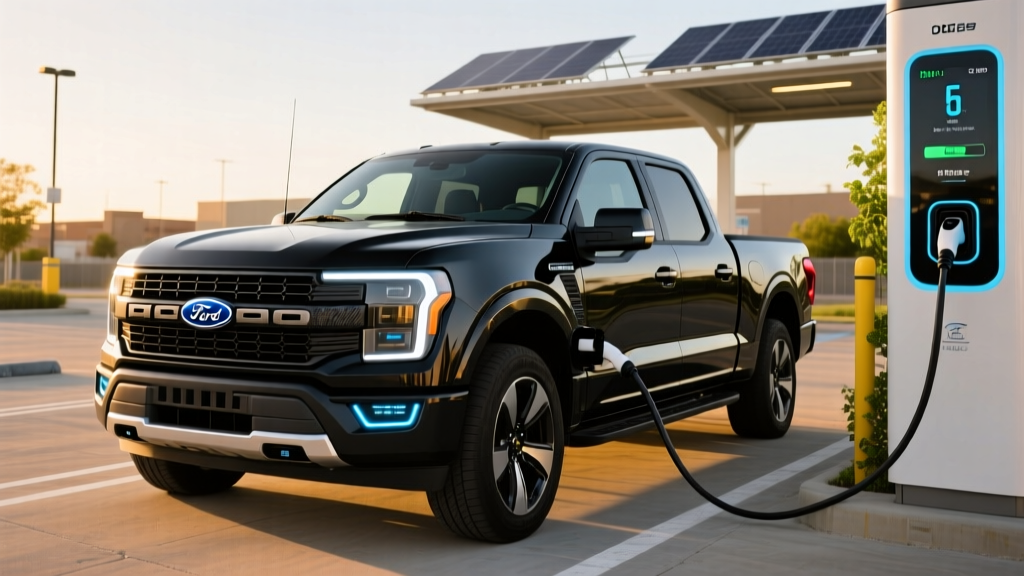
The 2025 Ford F-150 Lightning Flash occupies a specific and compelling niche: it's the most affordable way to get the Extended Range battery in Ford's electric truck lineup. Priced at $59,995 before destination, the Flash trim strips away the luxury extras of the Lariat and Platinum while preserving the 131 kWh usable battery pack that delivers an EPA-estimated 320 miles of range. For fleet buyers, worksite managers, and cost-conscious truck owners who need range more than massaging seats, the Flash makes a persuasive argument.
But the Lightning platform is now three model years old, and competitors like the Chevrolet Silverado EV and Rivian R1T have closed ground in charging speed, software, and efficiency. This review breaks down the exact numbers — range, charging curves, real-world efficiency, and tax credit math — so you can decide whether the Flash still earns its spot in the driveway.
Range and Efficiency: EPA vs. Reality
Real-World Expectation: ~260–290 miles mixed driving; ~230–250 miles sustained highway at 70+ mph; ~190–220 miles towing a 5,000-lb trailer; ~200–240 miles in sub-freezing weather (20°F and below)
The 320-mile EPA figure applies specifically to the Extended Range pack paired with the Flash or Lariat trims on 18- or 20-inch wheels. Step up to 22-inch wheels or the Platinum trim, and that number drops to approximately 280–300 miles due to increased rolling resistance and weight.
According to fueleconomy.gov, the 2025 F-150 Lightning Extended Range AWD earns a combined MPGe rating of 70 MPGe (equivalent to roughly 48 kWh per 100 miles). In our experience, mixed suburban and highway driving yields closer to 44–52 kWh/100mi depending on speed, temperature, and payload. Highway efficiency at 75 mph typically lands around 50–55 kWh/100mi, which translates to roughly 240–260 miles from the 131 kWh usable pack before you hit the low-state-of-charge buffer.
Cold weather remains the Lightning's most significant range variable. Lithium-ion cells lose efficiency below freezing, and cabin heating in a truck this size draws substantial energy. Expect a 25–35% range reduction in sustained sub-20°F conditions, particularly on short trips where the cabin must heat from cold repeatedly. The Lightning's heat pump helps, but it cannot fully overcome the physics of warming a large cab in bitter cold.
| Specification | Value |
|---|---|
| EPA Range (Extended Range) | 320 miles |
| Battery Usable Capacity | 131 kWh (NMC chemistry) |
| Drivetrain | Dual-motor AWD |
| Horsepower | 580 hp |
| Torque | 775 lb-ft |
| 0–60 mph | ~4.5 seconds |
| Max DC Fast Charge Rate | 150 kW (peak) |
| 10–80% DC Charge Time | ~41 minutes |
| Level 2 Home Charge Rate | 19.2 kW / 80A (optional); 11.5 kW / 48A (standard) |
| MPGe (Combined) | 70 MPGe |
| Efficiency | 48 kWh/100mi |
| Max Towing Capacity | 10,000 lbs (w/ Max Trailer Tow Pkg) |
| Payload Capacity | ~1,800 lbs |
| Base MSRP (Flash) | $59,995 + $2,095 destination |
| Battery/Powertrain Warranty | 8 years / 100,000 miles |
Charging Speed: DC Fast, Level 2, and the Curve Reality
The Lightning Flash's 150 kW peak DC fast-charging rate is its most debated specification. In 2025, competitors like the Hyundai Ioniq 5 (peak 240 kW) and the Chevrolet Silverado EV (peak 350 kW on compatible chargers) significantly outpace the Ford on paper. But peak rate tells only part of the story — the charge curve matters more for actual stop duration.
The Lightning's NMC pack accepts close to its 150 kW peak between roughly 15% and 45% state of charge, then tapers progressively. From 10% to 80%, expect approximately 41 minutes at a 150 kW or higher station. That 10–80% session adds roughly 225 miles of range. The taper above 80% is steep — charging from 80% to 100% can take nearly as long as 10% to 80%. For road trips, plan to charge to 80% and move on unless you specifically need a full pack for towing the next leg.
| Charge Level | Power (kW) | Miles of Range Added per Hour | Notes |
|---|---|---|---|
| Level 1 (120V, 12A) | ~1.4 kW | ~3 mi/hr | Emergency/trickle only; 100+ hrs for full charge |
| Level 2 (240V, 48A) | 11.5 kW | ~25 mi/hr | Standard onboard charger; full charge ~11 hrs |
| Level 2 (240V, 80A) | 19.2 kW | ~42 mi/hr | Requires dual onboard chargers + 100A circuit; full charge ~7 hrs |
| DC Fast Charge | 150 kW peak | ~330 mi/hr (at peak) | 10–80% in ~41 min; tapers above 80% |
At home, the standard 48A onboard charger delivers 11.5 kW, adding roughly 25 miles of range per hour — sufficient for overnight replenishment of daily driving (a 100-mile commute requires about 4 hours of charging). The optional 80A dual charger setup demands a dedicated 100-amp circuit and a hardwired Ford Charge Station Pro or equivalent Level 2 unit. Installation costs for the 80A setup, including panel upgrades if necessary, typically run $1,500–$3,500 depending on your home's electrical capacity. Consult a licensed electrician for a site assessment before committing.
One practical advantage: the Lightning's NACS port (Ford adopted the Tesla connector standard starting with the 2025 model year on new production) gives you native access to Tesla Supercharger V3 and V4 stations without an adapter. This substantially expands the reliable DC fast-charging network available to Lightning owners, particularly on rural highway corridors where Electrify America and EVgo coverage remains sparse.
Performance and Capability: 580 HP Meets Truck Duty
The dual-motor AWD powertrain in the Extended Range Lightning produces 580 horsepower and 775 lb-ft of torque, launching the Flash to 60 mph in approximately 4.5 seconds. That's brisk for a vehicle with a curb weight approaching 6,800 pounds, and the instantaneous torque delivery makes highway merging and passing genuinely effortless.
Towing is where the Lightning Flash differentiates from unibody electric SUVs. With the Max Trailer Tow Package, the Extended Range model is rated for up to 10,000 pounds. However, towing at or near maximum capacity slashes range dramatically — expect 1.5 to 2.0 kWh per mile (roughly 65–130 miles of range from a full pack depending on speed, grade, and trailer aerodynamics). The onboard scales feature and Pro Power Onboard (up to 9.6 kW of exportable AC power from the bed outlets) make the Lightning a compelling jobsite and campsite tool.
Ride quality benefits from the independent rear suspension — a first for the F-150 platform — which eliminates the leaf-spring harshness of the gas truck over broken pavement. The trade-off is that the Lightning's heavy battery pack is felt during aggressive cornering; this is a comfortable cruiser, not a canyon carver.
Interior, Cargo, and Technology
The Flash trim comes equipped with a 12-inch touchscreen running Ford's SYNC 4A system, wireless Apple CarPlay and Android Auto, a 12-inch digital instrument cluster, and Ford Co-Pilot360 2.0 driver-assistance features including adaptive cruise control, lane centering, blind-spot monitoring with trailer coverage, and automatic emergency braking.
BlueCruise — Ford's hands-free highway driving system — is available on the Flash but typically requires the Co-Pilot360 Active 2.0 Prep package (approximately $2,100). BlueCruise operates on pre-mapped divided highways and allows hands-off driving while the driver remains monitored by an infrared camera. This is an SAE Level 2 system: you must remain attentive and ready to resume steering at any time. It is not autonomous driving.
Cargo space remains a Lightning strength. The 5.5-foot bed offers 52.8 cubic feet of volume, and the front trunk (frunk) adds 14.1 cubic feet of lockable, weather-sealed storage with a drain plug — useful as a cooler or secure gear locker. The Mega Power Frunk also includes 2.4 kW of onboard power (120V outlets and USB-C).
Passenger space mirrors the gas F-150 SuperCrew: 43.9 inches of front legroom and 43.5 inches of rear legroom, with seating for five (or six with the optional front bench, though the Flash typically ships with buckets and a console). Rear-seat comfort is excellent, with a flat floor made possible by the skateboard battery architecture.
Pricing, Trim Levels, and Federal Tax Credit
The 2025 F-150 Lightning lineup spans five trims. Here's how the Flash fits into the pricing structure:
| Trim | Battery | Base MSRP | Est. After $7,500 Credit* |
|---|---|---|---|
| Pro (Standard Range) | 98 kWh | $54,995 | $47,495 |
| Pro (Extended Range) | 131 kWh | $69,995 | $62,495 |
| Flash (Extended Range) | 131 kWh | $59,995 | $52,495 |
| Lariat (Extended Range) | 131 kWh | $74,995 | $67,495 |
| Platinum (Extended Range) | 131 kWh | $94,995 | $87,495 |
*Tax credit figures assume full $7,500 eligibility under IRS §30D. Eligibility depends on multiple factors — see checklist below. Point-of-sale transfer is available from participating dealers, reducing your out-of-pocket at purchase.
- MSRP Cap: Trucks/vans/SUVs must have an MSRP at or below $80,000. The Flash at $59,995 clears this easily; the Lariat Extended Range and Platinum may exceed it depending on options.
- Buyer Income Cap: Modified AGI must not exceed $150,000 (single), $225,000 (head of household), or $300,000 (married filing jointly).
- Battery Component Sourcing: A percentage of battery components must be manufactured or assembled in North America (threshold increases annually; 100% for 2025).
- Critical Minerals Sourcing: A percentage of critical minerals must be sourced from the US or a free-trade-agreement country (80% for 2025). Failure to meet either threshold reduces the credit to $3,750 or $0.
- Point-of-Sale Transfer: Buyers may transfer the credit to the dealer at purchase for an immediate price reduction, subject to dealer participation.
- Verify Current Status: Sourcing requirements change annually. Check IRS qualified vehicle list before purchasing.
As-tested pricing for a Flash with the Max Trailer Tow Package, BlueCruise prep, and the 80A dual onboard charger typically lands between $66,000 and $69,000 before any incentives — still well under the $80,000 MSRP cap.
Ownership Costs and Warranty
Ford backs the Lightning's battery pack and electric powertrain components with an 8-year / 100,000-mile warranty, covering defects and capacity loss below 70% of original capacity. The bumper-to-bumper limited warranty runs 3 years / 36,000 miles.
Charging costs vary significantly by scenario. At the national average residential electricity rate of approximately $0.17/kWh (per EIA data), a full 131 kWh charge at home costs roughly $22.27 — yielding a cost per mile of about $0.07. Compare this to a gas F-150 at 20 MPG combined and $3.50/gallon fuel: $0.175 per mile. Over 15,000 annual miles, the Lightning saves roughly $1,500 per year in energy costs when charging primarily at home.
Public DC fast charging is more expensive — Electrify America and similar networks charge $0.40–$0.55/kWh in many markets, pushing per-mile cost to $0.18–$0.25, which narrows the gap with gasoline. For maximum savings, home charging is essential.
Insurance premiums for the Lightning tend to run 15–25% higher than the gas F-150 due to repair costs and vehicle value. Get quotes before purchasing — the difference can be $400–$800 annually depending on your state, driving record, and coverage level.
Pros, Cons, and Competition
- Best value for Extended Range battery in the Lightning lineup
- 320-mile EPA range is practical for most daily and regional use
- NACS native port opens Tesla Supercharger network access
- Pro Power Onboard turns the truck into a mobile generator (9.6 kW)
- Independent rear suspension improves ride quality over gas F-150
- Massive frunk with integrated power outlets
- Qualifies for full $7,500 federal tax credit (verify sourcing annually)
- BlueCruise hands-free highway driving available
- 150 kW peak DC charging is slow vs. 250–350 kW competitors
- Towing range drops to 65–130 miles at max load
- Heavy curb weight (~6,800 lbs) affects handling and tire wear
- Efficiency lags behind lighter EV trucks and SUVs (70 MPGe combined)
- Cold-weather range loss of 25–35% in sub-freezing temps
- SYNC 4A software can feel dated compared to newer EV platforms
- 80A home charging requires expensive electrical panel upgrade
The Lightning Flash competes most directly with the Chevrolet Silverado EV (which offers up to 350 kW DC charging and a longer 4WT trim range but starts at a higher price point for Extended Range configurations) and the Rivian R1T Dual-Motor (more efficient and faster-charging but significantly more expensive at ~$75,000+). Against the Tesla Cybertruck, the Lightning offers a more conventional truck experience with proven body-on-frame capability, though the Cybertruck's 48V architecture and stainless steel exoskeleton appeal to a different buyer.
- Choose the Flash if: You want 300+ miles of range in a full-size electric truck under $60K, you charge primarily at home, and you value Pro Power Onboard for worksite or camping use.
- Look elsewhere if: You tow long distances frequently (towing range is severely limited), you need the fastest possible DC charging for road-trip-heavy lifestyles, or you want a lighter, more efficient EV with similar utility (consider the Rivian R1T or a large electric SUV).
Frequently Asked Questions
What is the real-world range of the 2025 F-150 Lightning Flash?
The EPA rates it at 320 miles, but real-world mixed driving typically yields 260–290 miles. Sustained highway driving at 70–75 mph drops that to roughly 230–250 miles. Cold weather below 20°F can reduce range to 200–240 miles. Towing a 5,000-lb trailer at highway speed cuts range to approximately 100–130 miles.
How fast does the F-150 Lightning Flash charge?
On DC fast charging, it peaks at 150 kW and charges from 10% to 80% in approximately 41 minutes. At home on a standard 48A Level 2 charger, it adds about 25 miles per hour (full charge in ~11 hours). The optional 80A dual charger setup adds roughly 42 miles per hour (full charge in ~7 hours).
Does the 2025 F-150 Lightning Flash qualify for the $7,500 federal tax credit?
The Flash's MSRP of $59,995 is well under the $80,000 truck cap, making it MSRP-eligible. However, you must also meet buyer income limits ($150K single / $300K joint) and the vehicle must satisfy 2025 battery-component and critical-mineral sourcing thresholds. Ford's Lightning has historically qualified, but sourcing rules tighten annually. Verify on the IRS qualified vehicles list before purchase.
What battery chemistry does the Lightning Flash use?
The Extended Range pack uses NMC (nickel manganese cobalt) lithium-ion cells with a usable capacity of 131 kWh. NMC offers higher energy density than LFP (lithium iron phosphate), enabling the 320-mile range in a package that fits the F-150's frame. The trade-off is that NMC cells degrade slightly faster under repeated 100% charges and extreme heat, though Ford's thermal management system and 8-year/100,000-mile warranty provide substantial protection.
Is the Lightning Flash worth buying vs. the Silverado EV or Rivian R1T?
If your priority is value — the most range per dollar in a full-size electric truck — the Flash is the strongest option at roughly $52,500 after the federal credit. The Silverado EV charges faster but costs more in comparable configurations. The Rivian R1T is more refined and efficient but starts $15,000+ higher. For fleet and worksite use, the Lightning's Pro Power Onboard and NACS Supercharger access give it a practical edge.
How much does it cost to charge the Lightning Flash at home?
A full 131 kWh charge at the national average residential rate of ~$0.17/kWh costs approximately $22.27. For a typical daily commute of 40 miles (consuming roughly 19 kWh), you'll spend about $3.23 per day or $97 per month — roughly a third of what the equivalent gas F-150 would cost in fuel.