Quick Verdict: The BEV Truck That Started It All
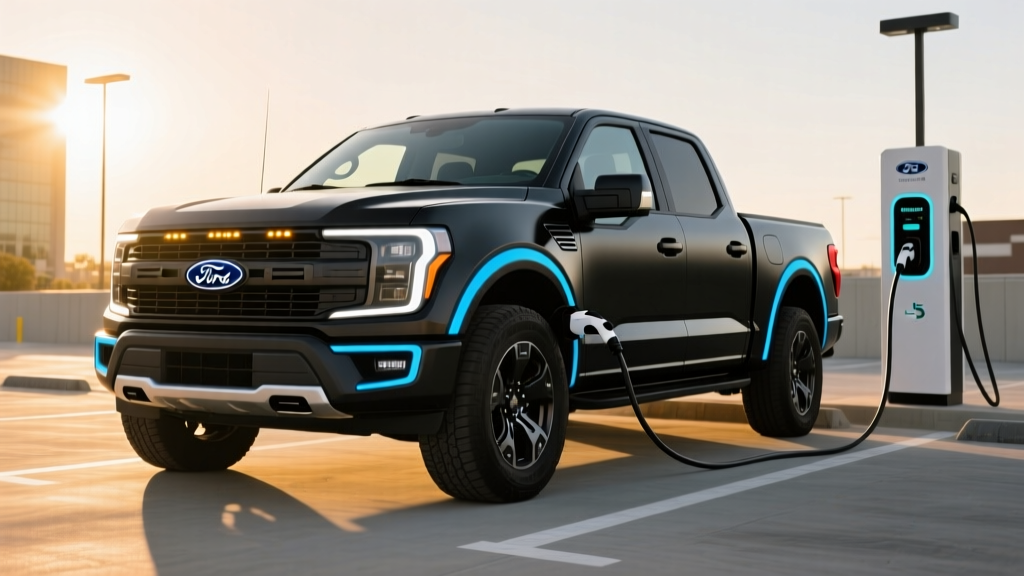
The Ford F-150 Lightning remains the benchmark against which every other battery-electric pickup is measured. Now in its fourth model year, the 2026 F-150 Lightning has matured past early-production growing pains into a genuinely capable daily driver and work tool. With EPA range stretching to 320 miles on the Extended Range battery, a practical front trunk (frunk), and vehicle-to-home backup power, it answers most of the objections buyers raise when considering a BEV truck for the first time.
But the Lightning isn't perfect. Highway range drops noticeably at 75+ mph, cold-weather efficiency takes a hit without consistent preconditioning, and the base Pro trim's range may leave road-trippers wanting. Here's the data-driven breakdown you need before signing a purchase agreement.
Range, Battery, and Real-World Efficiency
Ford offers two battery packs for 2026, both using nickel-manganese-cobalt (NMC) lithium-ion chemistry chosen for its higher energy density — a necessary trade-off in a full-size truck where weight and volume constraints limit the use of heavier LFP cells.
| Spec | Standard Range | Extended Range |
|---|---|---|
| Usable Battery Capacity | 98 kWh | 131 kWh |
| Chemistry | NMC | NMC |
| EPA Estimated Range | 230 miles | 320 miles |
| EPA Efficiency (Combined) | 76 MPGe (44 kWh/100mi) | 73 MPGe (46 kWh/100mi) |
| Drivetrain | Dual-Motor AWD | Dual-Motor AWD |
EPA Sticker: 230 mi (Standard) / 320 mi (Extended)
Highway (70 mph, moderate temps): Expect ~190–205 mi (Standard) / ~265–285 mi (Extended). Full-size trucks push a brick wall of air; efficiency drops sharply above 65 mph.
Cold Weather (below 30°F, no preconditioning): Subtract 25–35% from EPA figures. That puts the Extended Range pack at roughly 210–240 mi in deep winter. Preconditioning the battery via FordPass while plugged in recovers a significant portion of this loss.
Towing (5,000+ lb trailer): Range roughly halves. Plan for 110–160 mi between charges depending on terrain and speed.
For context on how the EPA arrives at these figures, see the official fueleconomy.gov EV testing methodology. The Lightning's combined MPGe of 73–76 is competitive with the Rivian R1T but trails lighter electric pickups like the Chevrolet Silverado EV's longer-range trims due to the F-150's heavier curb weight and boxier aerodynamics.
Charging Speed: DC Fast, Level 2, and Home Setup
Charging is where Lightning owners either thrive or struggle depending on their home electrical situation. Here's the full breakdown:
| Charging Level | Max Power | Rate / Time | Notes |
|---|---|---|---|
| Level 1 (120V outlet) | ~1.4 kW | ~2–3 mi/hr | Emergency/trickle only; 131 kWh pack takes days |
| Level 2 (240V, 32A) | 7.7 kW | ~13 mi/hr | Standard mobile charger included |
| Level 2 (240V, 48A) | 11.5 kW | ~19 mi/hr | Ford Charge Station Pro (hardwired) |
| Level 2 (240V, 80A) | 19.2 kW | ~30 mi/hr | Extended Range only; requires 100A circuit |
| DC Fast Charge (CCS) | 150–155 kW peak | 15–80% in ~41 min (Ext. Range) | Tapers significantly above 80% |
The 80-amp Level 2 capability is a genuine standout — few competitors accept this much AC power, meaning Extended Range Lightning owners with adequate home electrical service can fully recharge overnight in roughly 7–8 hours. However, installing a 100-amp dedicated circuit is a serious electrical project. Expect $1,500–$3,500 for the circuit and Charge Station Pro installation depending on your panel's existing capacity. If your home has a 200-amp main panel already near its load limit, a panel upgrade to 400 amps could add $2,000–$4,000.
On DC fast charging, the Lightning's ~155 kW peak is adequate but no longer class-leading. The charge curve holds near peak from roughly 15–55% state of charge before tapering to ~90 kW by 70% and dropping further above 80%. For road trips, plan your stops around the 15–80% sweet spot — charging from 80–100% on DC can add 20+ minutes for minimal range gain. The truck uses the CCS1 connector; a NACS adapter for Tesla Supercharger access is available and increasingly important as networks consolidate.
Performance, Towing, and Payload
| Spec | Standard Range | Extended Range |
|---|---|---|
| Horsepower | 452 hp | 580 hp |
| Torque | 775 lb-ft | 775 lb-ft |
| 0–60 mph | ~3.8 sec | |
| Max Towing Capacity | 7,700 lb | 10,000 lb (w/ Max Trailer Tow) |
| Max Payload | 2,235 lb | 1,800 lb |
| Curb Weight | ~6,170 lb | ~6,780 lb |
The Extended Range's 3.8-second 0–60 time makes it one of the quickest trucks on the road, gas or electric. The instant torque delivery is transformative for merging and passing, and the dual-motor AWD system provides confident traction without the mechanical complexity of a traditional transfer case.
Towing deserves a candid note: while the 10,000-lb max rating is respectable, towing at or near capacity compresses range dramatically. A 7,500-lb travel trailer at highway speed in hilly terrain will consume 70–90 kWh/100mi — roughly double the unloaded rate. For buyers who tow frequently over long distances, a BEV truck still requires careful route planning around DC fast chargers rated for 150+ kW. If your towing is local (boat ramp, dump run, 20-mile equipment haul), the Lightning handles it effortlessly.
Interior, Cargo, and Technology
The Lightning's cabin mirrors the gas F-150's layout with one massive upgrade: the Mega Power Frunk. This 14.1-cubic-foot front trunk is lockable, weather-sealed, drainable, and features four 120V outlets plus USB ports. It transforms the truck's utility — groceries, tool cases, and charging cables disappear into a space where a V8 engine block used to live.
Key dimensions:
- Rear legroom (SuperCrew): 43.6 inches — generous for adult passengers
- Bed length: 5.5 ft (standard on all Lightning trims)
- Bed volume: 52.8 cu ft
- Frunk volume: 14.1 cu ft
- Onboard scales: Available — estimates payload weight via suspension sensors and displays it on the touchscreen and via the FordPass app
The 12-inch touchscreen (15.5-inch on Lariat and up) runs Ford's SYNC 4A system with wireless Apple CarPlay and Android Auto. The available Pro Power Onboard system turns the truck into a mobile generator: the 2.4 kW system provides two 120V bed outlets, while the 9.6 kW option adds four 120V and one 240V outlet — enough to run power tools at a job site or keep essential home circuits alive during an outage when paired with the Ford Charge Station Pro and home integration system.
Driver assistance: Ford's BlueCruise hands-free highway driving (SAE Level 2) is available on pre-qualified divided highways. It handles steering, acceleration, and braking competently, but the driver must remain attentive — a camera monitors eye gaze. This is not autonomous driving; it's an advanced cruise-and-lane-centering system that reduces fatigue on long hauls. Expect periodic software updates to expand the mapped road network.
Pricing, Trims, and Federal Tax Credit Eligibility
| Trim | Battery | Base MSRP | Est. Price After §30D Credit* |
|---|---|---|---|
| Pro | Standard Range | $54,995 | $47,495 |
| XLT | Standard Range | $59,995 | $52,495 |
| XLT | Extended Range | $69,995 | $62,495 |
| Lariat | Extended Range | $76,995 | $69,495 |
| Platinum | Extended Range | $84,995 | $77,495 |
*Federal tax credit estimates assume eligibility. See rules below.
- Credit amount: Up to $7,500 ($3,750 for critical minerals + $3,750 for battery components)
- MSRP cap for trucks/SUVs: Vehicle MSRP must not exceed $80,000 — this excludes the Platinum trim from the full credit
- Buyer income caps (MAGI): $300,000 joint / $225,000 head of household / $150,000 single
- Battery sourcing: Critical minerals and battery component requirements phase in annually; check the latest IRS guidance on eligible vehicles before purchasing
- Point-of-sale transfer: Eligible buyers can transfer the credit to the dealer at purchase, reducing the sale price directly rather than waiting for a tax refund
- Assembly: Must be assembled in North America (the Lightning is built in Dearborn, MI — confirmed compliant)
Battery sourcing rules tighten each year under the Inflation Reduction Act. Ford has worked to localize its supply chain, but the exact credit amount available for a given Lightning build can vary by production batch. Always verify the specific VIN's eligibility on fueleconomy.gov's credit lookup tool before finalizing a deal. Consult a tax professional for your personal situation.
Warranty and Long-Term Battery Outlook
Ford backs the Lightning's battery and electric drivetrain with an 8-year/100,000-mile warranty covering defects and capacity loss below 70% of original capacity. The bumper-to-bumper warranty runs 3 years/36,000 miles, and the powertrain warranty (which covers the electric motors and associated components) runs 5 years/60,000 miles.
NMC battery degradation in the Lightning has tracked in line with industry norms. Early 2022–2023 models with 40,000+ miles are generally reporting 5–9% capacity loss, which projects to 85–92% state of health at 100,000 miles. Ford's thermal management system actively conditions the pack, which helps preserve longevity. For buyers concerned about out-of-warranty replacement, a full Lightning battery pack currently costs in the range of $15,000–$22,000 before labor — a figure that is expected to decline as cell costs continue their long-term downward trend.
How the Lightning Stacks Up Against Rivals
| Spec | Ford F-150 Lightning (Ext.) | Rivian R1T Dual-Motor Max | Chevy Silverado EV 4WT |
|---|---|---|---|
| EPA Range | 320 mi | ~350 mi (est.) | ~340 mi (est.) |
| Battery / Chemistry | 131 kWh / NMC | ~149 kWh / NMC | ~200 kWh / NMC |
| Peak DC Charge | ~155 kW | ~200+ kW | ~200+ kW |
| 10–80% DCFC Time | ~41 min | ~30 min | ~35 min |
| 0–60 mph | ~3.8 sec | ~3.5 sec | ~4.5 sec |
| Max Tow | 10,000 lb | 11,000 lb | 10,000 lb |
| Starting MSRP | $54,995 | $79,900 | $55,000 (est.) |
| Frunk | 14.1 cu ft | 11 cu ft (tunnel) | 10.7 cu ft |
The Lightning's advantage remains its price-to-capability ratio and the familiarity of the F-150 platform — any body shop can handle sheet metal, and Ford's dealer network dwarfs Rivian's direct-to-consumer model. The Silverado EV offers a longer bed option and potentially faster charging, but availability remains limited. The Rivian R1T is the more adventurous, tech-forward choice but commands a significant premium and lacks the Lightning's Pro Power Onboard versatility.
- Best-in-class frunk (14.1 cu ft) with integrated power
- Pro Power Onboard (up to 9.6 kW) for job-site and home backup
- 80A Level 2 charging acceptance (Extended Range)
- Familiar F-150 ergonomics and massive dealer/service network
- Competitive pricing with tax credit eligibility on most trims
- Strong 0–60 performance and instant towing torque
- DC fast-charge peak (~155 kW) lags behind Rivian and GM
- Highway and cold-weather range loss is significant for the Standard Range pack
- Only offered in 5.5-ft bed (SuperCrew configuration)
- Heavy curb weight impacts efficiency vs. lighter EVs
- Platinum trim exceeds $80K MSRP cap for full tax credit
- BlueCruise requires a subscription after the initial free trial
Who Should Buy the F-150 Lightning?
- You need a full-size truck for work or family but want to eliminate fuel costs for daily driving
- Home charging is available and you can install a 48A or 80A Level 2 circuit
- You value Pro Power Onboard for job-site tools, tailgating, or home backup power
- Your towing is primarily local or moderate-distance (under 150 miles round-trip)
- You want mainstream dealer support and proven F-150 parts availability
- You regularly tow heavy trailers over 200+ mile routes and can't afford charging downtime
- You need an 8-foot bed for commercial use
- Your budget is under $50,000 (consider the used Lightning market or a midsize BEV truck)
- You lack reliable home or workplace charging access
Frequently Asked Questions
What is the real-world range of the F-150 Lightning?
The Extended Range model is EPA-rated at 320 miles, but real-world highway driving at 70 mph typically yields 265–285 miles. In cold weather below 30°F without preconditioning, expect 210–240 miles. The Standard Range pack (230 mi EPA) delivers roughly 190–205 miles on the highway and can drop to 150–170 miles in deep winter.
How fast does the Lightning charge at home and on the road?
On a 48A Level 2 home charger, the Lightning adds about 19 miles of range per hour (full charge in ~7 hours for Extended Range). With an 80A circuit, that jumps to ~30 mi/hr. On DC fast chargers, it peaks at ~155 kW and charges from 15–80% in approximately 41 minutes (Extended Range). Plan for longer stops if you need to charge past 80%, as the rate tapers significantly.
Does the F-150 Lightning qualify for the $7,500 federal tax credit?
Most trims qualify, but eligibility depends on three factors: the buyer's modified adjusted gross income (must be under $300K joint/$150K single), the vehicle's MSRP (must be under $80K for trucks — excluding the Platinum trim), and battery-component/critical-mineral sourcing requirements that tighten annually. The credit can be transferred to the dealer at point of sale. Always verify your specific VIN's eligibility on fueleconomy.gov and consult a tax professional.
Is the Lightning worth buying over the Rivian R1T or Silverado EV?
For most buyers, yes — the Lightning offers the best balance of price, utility, and dealer support in the BEV truck segment. The Rivian R1T is more capable off-road and charges faster, but starts ~$25,000 higher and has a smaller service network. The Silverado EV is competitive on paper but remains limited in availability. If you prioritize value, frunk space, and onboard power, the Lightning is the strongest pick.
What's the biggest drawback of owning a BEV truck?
Charging logistics on long road trips, especially when towing. A BEV truck's large battery takes longer to charge than a sedan's, and towing can cut range nearly in half. For owners who charge at home and use the truck primarily for commuting, local errands, and short-haul work, this is rarely an issue. For cross-country towing, it remains a genuine limitation compared to diesel or gas trucks.
How long will the Lightning's battery last?
Ford warranties the battery for 8 years/100,000 miles against degradation below 70% capacity. Real-world data from early models suggests 85–92% state of health at 100,000 miles with normal use. With proper care — avoiding frequent DC fast charging to 100%, using scheduled preconditioning, and keeping the state of charge between 20–80% for daily driving — the pack should outlast 150,000+ miles before significant range loss is noticed.