Quick Verdict: The Electric Workhorse That Actually Works
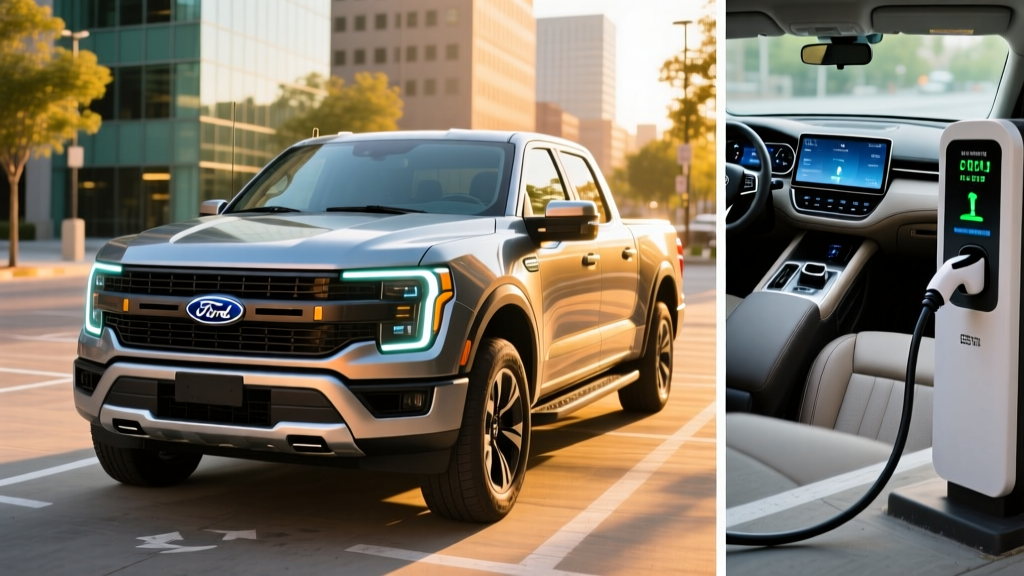
The 2024 Ford F-150 Lightning remains the benchmark for full-size electric pickups — not because it's the flashiest, but because Ford engineered it around how truck owners actually use their vehicles. The extended-range battery delivers a genuine 320-mile EPA range, the Pro Power Onboard system turns the bed into a mobile generator, and the Mega Power Frunk adds 14.1 cubic feet of lockable front storage no gas truck can match. For the 2024 model year, Ford streamlined the lineup and improved standard features, though base pricing climbed to $54,995 before incentives.
If you need a daily-driver truck with real towing capability, worksite power, and family-hauling comfort — and you can charge at home — the Lightning is still the one to beat. The Rivian R1T is more adventurous off-road, and the Chevy Silverado EV promises more range, but neither matches the Lightning's blend of utility, price, and dealer-network support.
Range, Efficiency & Real-World Expectations
| Metric | Standard Range (98 kWh) | Extended Range (131 kWh) |
|---|---|---|
| EPA Range | 230 miles | 320 miles |
| Battery Chemistry | NMC (Nickel Manganese Cobalt) | NMC |
| Usable Capacity | 98 kWh | 131 kWh |
| MPGe (Combined) | 76 MPGe | 70 MPGe |
| Efficiency | 44 kWh/100 mi | 48 kWh/100 mi |
Real-World Range Reality Check: The EPA 320-mile figure for the Extended Range model is achievable in mixed city/suburban driving at moderate temperatures. Expect ~260–280 miles on highway road trips at 70–75 mph, where aerodynamic drag dominates a truck this size. In cold weather (below 30°F), plan for a 20–30% range reduction, bringing the Extended Range down to roughly 220–250 miles. The Standard Range model realistically delivers 180–200 miles highway, dropping to ~150–170 miles in freezing conditions. Per fueleconomy.gov, these figures align with the Lightning's class — large electric trucks sacrifice efficiency for capability.
The Lightning uses regenerative braking with a one-pedal driving mode that's effective but not as aggressive as Tesla's. Ford's thermal management system actively conditions the battery, which helps preserve range and charging speed in extreme temperatures — a feature you'll appreciate during winter DC fast-charging sessions.
Charging Speed: DC Fast, Level 2 & Home Setup
Charging a 6,000+ pound truck battery requires patience and planning. Here's exactly what to expect at each level:
| Charging Level | Power | Standard Range (98 kWh) | Extended Range (131 kWh) |
|---|---|---|---|
| Level 1 (120V) | ~1.4 kW | ~3 mi/hr | ~3 mi/hr |
| Level 2 (240V, 48A) | 11.5 kW | ~27 mi/hr (9 hrs full) | ~27 mi/hr (13 hrs full) |
| Level 2 (80A Charge Station Pro) | 19.2 kW | ~45 mi/hr (5.5 hrs full) | ~45 mi/hr (8 hrs full) |
| DC Fast Charge (peak) | 150 kW | 10–80% in ~41 min | 10–80% in ~41 min |
Charging curve reality: The Lightning peaks at 150 kW on DC fast chargers, but only sustains that rate between roughly 10–40% state of charge. Above 60%, the rate tapers significantly — often dropping below 60 kW past 80%. This means the published 10–80% time of ~41 minutes is accurate, but charging from 80–100% at a DC station is painfully slow. Plan your road-trip stops around 10–80% charges.
For home charging, Ford offers the 80-amp Charge Station Pro (standard on Extended Range trims, optional on Standard Range), which requires a 100-amp dedicated circuit. Most buyers will install a 48-amp Level 2 charger on a 60-amp circuit, which still fully replenishes the Standard Range overnight. Professional installation typically runs $500–$2,000 depending on your panel capacity and run length — budget for a potential panel upgrade if you're running a 200-amp service with existing heavy loads.
Performance, Towing & Capability
Every 2024 F-150 Lightning comes with dual motors and electronic all-wheel drive as standard — there's no RWD-only option. The performance split depends on battery choice:
| Spec | Standard Range | Extended Range |
|---|---|---|
| Horsepower | 452 hp | 580 hp |
| Torque | 775 lb-ft | 775 lb-ft |
| 0–60 mph | ~4.5 seconds | ~4.0 seconds |
| Max Towing | 7,700 lbs | 10,000 lbs (w/ Max Tow Pkg) |
| Max Payload | 2,235 lbs | 1,803 lbs |
| Drivetrain | Dual-motor AWD | Dual-motor AWD |
The 4.0-second 0–60 time for the Extended Range model makes it the quickest production F-150 Ford has ever built. More importantly for truck duty, the instant 775 lb-ft of torque means effortless merging with a trailer and confident off-the-line behavior at stoplights. The independent rear suspension (a Lightning exclusive vs. the solid rear axle on gas F-150s) delivers noticeably better ride quality when unloaded, though it slightly reduces maximum payload compared to gas models.
Towing reality: The 10,000-pound max tow rating is legitimate, but towing near max capacity will slash your range by 40–50%. A 5,000-pound travel trailer at highway speeds will cut the Extended Range model to roughly 160–180 miles between charges. Ford's Pro Trailer Hitch Assist and onboard scales are genuinely useful tech that simplifies the towing experience.
Interior, Cargo & Technology
The Lightning's cabin mirrors the gas F-150's layout, which means it's spacious, functional, and built to a work-truck standard on lower trims. The available 15.5-inch vertical touchscreen (standard on Lariat and above, running SYNC 4A) dominates the dash and handles navigation, media, and vehicle settings. Wireless Apple CarPlay and Android Auto are standard across the lineup.
Cargo dimensions:
- Bed length: 5.5 ft (67.1 in) — standard on all Lightning trims
- Mega Power Frunk: 14.1 cu ft, 400 lbs max payload, lockable, with drain plug and 400W of onboard power
- Rear-seat legroom: 43.6 inches (SuperCrew only — no regular cab)
- Behind rear seat: 52.8 cu ft with seats folded
The frunk alone is a paradigm shift for truck owners. It's large enough for two carry-on bags, locks with the vehicle, and keeps gear dry and secure in a way a bed cover never will. The drain plug means you can fill it with ice for tailgating.
Standout tech:
- Pro Power Onboard: 2.4 kW standard (four 120V outlets in bed/cab); 9.6 kW available (adds 240V outlet, enough to run power tools, a welder, or essential home circuits during an outage)
- Ford BlueCruise: Hands-free highway driving on 130,000+ miles of divided highways (SAE Level 2 — driver must remain attentive, eyes monitored by cabin camera). Included for 90 days free, then $75/month or $2,100 for a 3-year subscription.
- Intelligent Backup Power: With the home integration system and compatible transfer switch, the Lightning can power your home during an outage — up to 3 days of average household use from the Extended Range battery.
ADAS Reality Check: Ford BlueCruise is an SAE Level 2 driver-assistance system. It does NOT make the Lightning self-driving. You must keep your eyes on the road (monitored via infrared camera), and the system will disengage if you look away for more than a few seconds. It excels at reducing fatigue on long highway stretches but does not handle construction zones, unmapped roads, or complex urban intersections.
Pricing, Trims & Federal Tax Credit
The 2024 Lightning lineup was simplified compared to the launch year. Here's the current trim structure and pricing:
| Trim | Battery | Base MSRP | Est. After §30D Credit* |
|---|---|---|---|
| Pro (Standard Range) | 98 kWh | $54,995 | ~$47,495 |
| XLT (Standard Range) | 98 kWh | $59,995 | ~$52,495 |
| XLT (Extended Range) | 131 kWh | $69,995 | ~$62,495 |
| Lariat (Extended Range) | 131 kWh | $77,495 | ~$69,995 |
| Platinum (Extended Range) | 131 kWh | $96,995 | Not eligible (MSRP cap) |
*Federal EV Tax Credit (IRS §30D) — 2024 Rules: The Lightning may qualify for up to $7,500, but eligibility depends on several factors that change frequently. Per IRS guidelines:
- MSRP cap: Trucks/vans/SUVs must have an MSRP at or below $80,000. The Platinum trim ($96,995) exceeds this and does NOT qualify.
- Buyer income cap: Modified AGI must not exceed $150,000 (single), $225,000 (head of household), or $300,000 (joint filers).
- Battery sourcing: The vehicle must meet critical-mineral and battery-component sourcing requirements that tighten annually. Ford has worked to qualify US-sourced batteries, but verify current eligibility at fueleconomy.gov before purchasing — rules can shift mid-year.
- Point-of-sale transfer: As of 2024, you can transfer the credit to the dealer at purchase for an immediate price reduction rather than waiting for tax filing.
- Consult a tax professional to confirm your personal eligibility — this is not tax advice.
Warranty & Long-Term Ownership
| Coverage | Term |
|---|---|
| Bumper-to-Bumper | 3 years / 36,000 miles |
| Powertrain | 5 years / 60,000 miles |
| EV Battery Components | 8 years / 100,000 miles |
| Battery Capacity Retention | Minimum 70% over 8 yr / 100,000 mi |
Ford's 8-year/100,000-mile battery warranty guarantees at least 70% capacity retention, which is industry-standard. Real-world data from early 2022–2023 Lightning owners shows degradation tracking well — most report 3–5% loss in the first 30,000 miles, which is typical for NMC chemistry with active thermal management. If you plan to keep the truck beyond 100,000 miles, budget for the possibility of battery service, though full pack replacement (estimated at $15,000–$25,000 out of warranty) is rare before 150,000+ miles based on current NMC longevity data.
Insurance costs run 10–20% higher than a comparable gas F-150, which is common for EVs due to higher repair costs and parts pricing. Shop quotes before buying — rates vary significantly by carrier and ZIP code.
Lightning vs. the Competition
| Spec | F-150 Lightning (ER) | Rivian R1T (Dual Max) | Silverado EV 4WT |
|---|---|---|---|
| EPA Range | 320 mi | 352 mi | 390 mi |
| 0–60 mph | 4.0 sec | 3.5 sec | ~4.5 sec |
| Max Towing | 10,000 lbs | 11,000 lbs | 10,000 lbs |
| Starting MSRP | $54,995 | $73,000 | $62,000 (fleet) |
| Dealer Network | Extensive | Direct-to-consumer | Extensive |
| Bed Length | 5.5 ft | 4.5 ft (+ tunnel) | 5.5 ft (w/ midgate) |
The Rivian R1T is the more premium, adventure-oriented option — faster, better off-road, and with a clever gear tunnel — but it starts nearly $20,000 higher and lacks a traditional dealer service network. The Chevy Silverado EV offers more range but launched primarily as a fleet/commercial product with limited consumer availability. For most retail truck buyers, the Lightning's combination of price, dealer support, and proven utility is the most accessible package.
Pros
- 320-mile EPA range (Extended Range) is practical for real use
- Pro Power Onboard turns the truck into a 9.6 kW mobile generator
- Mega Power Frunk adds 14.1 cu ft of secure, lockable storage
- 4.0-second 0–60 with 10,000-lb tow rating — no gas F-150 matches this combo
- Independent rear suspension = better unloaded ride quality
- Extensive Ford dealer network for service
- Intelligent Backup Power can power your home in an outage
Cons
- Base price rose to $54,995 — no longer under $40K as originally promised
- DC fast charging tops out at 150 kW — slower than Hyundai Ioniq 5 or Tesla Cybertruck
- Only available in 5.5-foot bed — no 6.5 or 8-foot option
- Payload capacity lower than gas F-150 equivalents
- BlueCruise subscription costs $75/month after trial
- Range drops significantly when towing near max capacity
- Extended Range trims push past the $80K tax-credit MSRP cap
Who the F-150 Lightning Is Built For
The Lightning excels for these buyers:
- Home-charging homeowners who drive 40–80 miles daily and want zero fuel stops for commuting
- Tradespeople and contractors who benefit from Pro Power Onboard at job sites (no more idling a gas truck to run a saw)
- Families who need a truck — SuperCrew cabin space matches any full-size crew cab, and the frunk adds grocery/gear storage
- Weekend warriors towing boats, campers, or UTVs under 7,000 pounds on day trips
- Homeowners in outage-prone areas who want vehicle-to-home backup power
It's not ideal for apartment dwellers without charging access, long-haul tow enthusiasts who regularly pull 8,000+ lb trailers over multi-state distances, or buyers who need an 8-foot bed for commercial upfitting.
Frequently Asked Questions
What is the real-world range of the F-150 Lightning?
The Extended Range model's 320-mile EPA rating translates to roughly 260–280 miles at highway speeds, 200–220 miles in cold weather. The Standard Range delivers about 180–200 highway miles in fair conditions.
How fast does the Lightning charge at home and on the road?
At home on a 48-amp Level 2 charger, expect ~27 miles of range per hour (full charge overnight for Standard Range, ~13 hours for Extended Range). On DC fast chargers, the Lightning peaks at 150 kW and charges from 10–80% in approximately 41 minutes, with significant tapering above 80%.
Does the F-150 Lightning qualify for the federal EV tax credit?
Most trims can qualify for up to $7,500 under IRS §30D, but eligibility depends on your income (under $150K–$300K depending on filing status), the trim's MSRP (must be under $80,000 for trucks), and current battery-sourcing requirements. The Platinum trim exceeds the MSRP cap and does not qualify. Verify at fueleconomy.gov and consult a tax professional.
Is the Lightning worth buying over the Rivian R1T or Silverado EV?
If you prioritize value, dealer service access, and proven utility features (Pro Power, frunk, home backup), the Lightning wins. The R1T is more premium and capable off-road but costs significantly more. The Silverado EV offers more range but has limited consumer availability as of 2024.
Can the F-150 Lightning power my house?
Yes — with the available Intelligent Backup Power system and a professionally installed home transfer switch, the Extended Range Lightning can supply up to 9.6 kW to your home's electrical panel, providing roughly 3 days of average household power during an outage.
How long will the Lightning's battery last?
Ford warranties the battery for 8 years / 100,000 miles with a minimum 70% capacity retention guarantee. Early owner data shows 3–5% degradation in the first 30,000 miles, suggesting the pack should retain 85–90% capacity at 100,000 miles with normal use and proper charging habits (avoiding consistent 100% charges and extreme heat exposure).