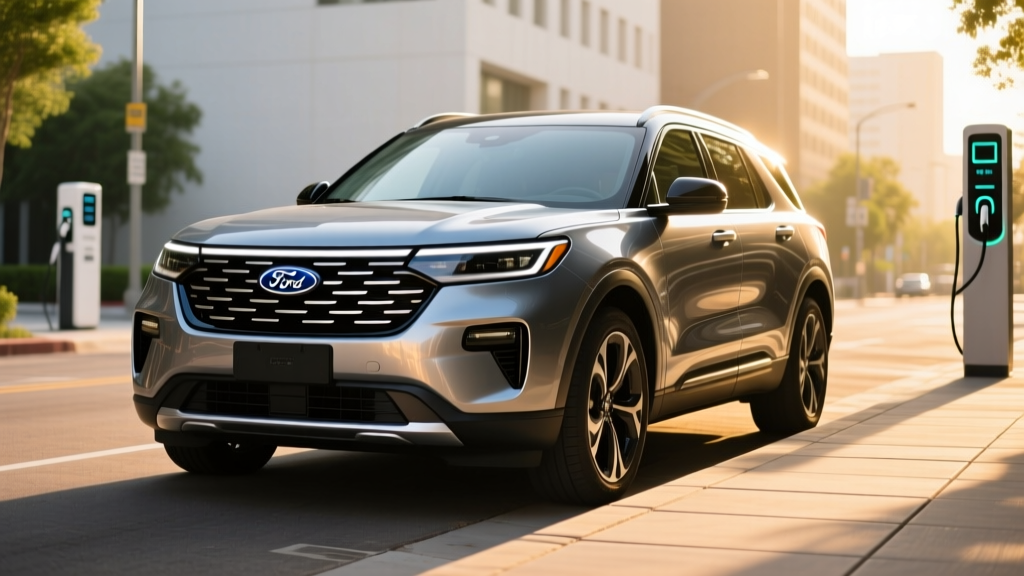
The Ford Explorer EV is a midsize electric SUV built on Volkswagen's MEB platform, offering up to an EPA-estimated 310 miles of range (RWD), a 77 kWh usable battery, and DC fast charging up to 170 kW. For US buyers, the Explorer EV is expected to start around $48,000 before incentives, positioning it against the Hyundai Ioniq 5, Tesla Model Y, and Volkswagen ID.4. If you can charge at home and your daily commute is under 80 miles, the Explorer EV delivers strong daily usability with minimal range compromise — but its real-world highway and cold-weather range will drop to roughly 240–260 miles, and federal tax credit eligibility depends on current-year IRS §30D sourcing and income rules.
Quick Answer: Is the Ford Explorer EV Right for You?
Buy the Ford Explorer EV if: You want a midsize electric SUV with 300+ miles of EPA range, European-built quality on a proven MEB platform, and you have access to Level 2 home charging.
Look elsewhere if: You need best-in-class DC fast charging (Hyundai Ioniq 5 charges faster), you regularly tow heavy loads, or you live in an area with limited public charging and cannot install a home charger.
Ford Explorer EV Specs: Range, Battery, and Charging
The 2026 Ford Explorer EV rides on Volkswagen's MEB architecture — the same platform underpinning the ID.4 and ID.5 — but with Ford-tuned suspension, styling, and software. Here are the key numbers buyers need:
| Specification | RWD Standard Range | RWD Extended Range | AWD Extended Range |
|---|---|---|---|
| EPA Range (est.) | ~220 mi | ~310 mi | ~280 mi |
| Battery (usable) | 59 kWh (NMC) | 77 kWh (NMC) | 77 kWh (NMC) |
| Horsepower | 168 hp | 282 hp | 335 hp |
| 0–60 mph | ~8.5 sec | ~6.5 sec | ~5.5 sec |
| Peak DC Fast Charge | 135 kW | 170 kW | 170 kW |
| 10–80% DC Charge Time | ~28 min | ~25 min | ~25 min |
| Level 2 AC Charge Rate | 11 kW | 11 kW | 11 kW |
| Estimated Base MSRP | $48,000 | $52,000 | $55,500 |
Real-world range reality: The EPA 310-mile estimate for the RWD Extended Range is achievable in mild weather at city speeds. On a 75 mph highway run, expect 260–275 miles. In freezing temperatures (below 30°F), range can drop 20–30%, bringing the Extended Range model to roughly 220–250 miles. The Explorer EV uses a resistive heater in some trims rather than a heat pump, which increases energy consumption in cold climates — a critical consideration for buyers in the northern US.
EPA vs. Real World: EPA 310 mi (RWD Extended) → Expect ~260–275 mi highway, ~220–250 mi in sub-freezing cold. Plan road trips around 200-mile legs to maintain a comfort buffer.
Charging the Explorer EV: Home and Public Networks
Understanding the difference between kW (power, or how fast energy flows) and kWh (energy, or how much the battery holds) is essential. The Explorer EV's 77 kWh battery stores energy; a 170 kW DC fast charger delivers it rapidly.
| Charging Level | Power | Miles Added per Hour | Typical Use Case |
|---|---|---|---|
| Level 1 (120V household) | ~1.4 kW | ~4–5 mi/hr | Overnight top-up; emergency only |
| Level 2 (240V home/public) | 11 kW (max) | ~32–36 mi/hr | Daily home charging; full charge in ~7–8 hrs |
| DC Fast Charge | Up to 170 kW | ~150+ mi in 10 min | Road trips; 10–80% in ~25 min |
Charging curve reality: The 170 kW peak rate applies only between roughly 10–30% state of charge. Above 50%, the rate tapers significantly — by 80% you may see 50–60 kW. This is normal for NMC chemistry on the MEB platform but means the last 20% takes disproportionately longer. For road trips, plan to charge from 10–80% and skip topping off unless needed.
Home charging setup: A Level 2 home charger (like a Ford Charge Station Pro or a universal Wallbox) on a 48-amp circuit delivers the full 11 kW. Installation costs typically range from $800 to $2,500 depending on your electrical panel's capacity. Homes with older 100-amp panels may need a $1,500–$3,000 panel upgrade — get a quote from a licensed electrician before purchasing.
Explorer EV vs. Gas Explorer vs. Hybrid Competitors
The gas-powered Ford Explorer remains one of America's best-selling three-row SUVs. Here's how the electric version compares on cost and capability:
| Metric | Explorer EV (Ext. RWD) | Gas Explorer (Base) | Hyundai Ioniq 5 (Long Range) |
|---|---|---|---|
| Base MSRP | ~$52,000 | ~$38,000 | ~$47,000 |
| EPA Range / Fuel Economy | 310 mi / 99 MPGe | 21/28 MPG | 303 mi / 114 MPGe |
| Fuel/Energy Cost per Mile | ~$0.04 (home charging) | ~$0.15 (gas at $3.50/gal) | ~$0.04 |
| Annual Fuel/Energy (15k mi) | ~$600 | ~$2,250 | ~$600 |
| 5-Year Fuel Savings vs. Gas | ~$8,250 | — | ~$8,250 |
| 0–60 mph | ~6.5 sec | ~7.5 sec | ~5.1 sec (AWD) |
| Cargo (behind 2nd row) | ~18 cu ft | 18.2 cu ft | 27.2 cu ft |
| Towing Capacity | ~2,200 lbs | 5,600 lbs | 2,300 lbs |
Key takeaway: The Explorer EV costs roughly $14,000 more upfront than the gas Explorer but saves approximately $1,650/year in fuel. Break-even on fuel alone takes about 8–9 years without tax credits. However, with the federal §30D credit (up to $7,500 if eligible), break-even drops to roughly 4–5 years. Add lower maintenance costs (no oil changes, fewer brake replacements due to regenerative braking), and total cost of ownership becomes competitive within 5 years.
The Ioniq 5 charges faster (up to 240 kW on 800V architecture, 10–80% in ~18 minutes) and offers more cargo space, making it a strong alternative if road-trip charging speed is a priority. The Explorer EV trades charging speed for a more traditional SUV driving position and Ford's dealer network.
Real Costs of Ownership: 5-Year Breakdown
| Cost Category | Explorer EV (Ext. RWD) | Gas Explorer (Base) |
|---|---|---|
| Purchase Price (MSRP) | $52,000 | $38,000 |
| Federal Tax Credit (§30D) | Up to -$7,500* | $0 |
| Effective Purchase Price | ~$44,500 | $38,000 |
| Home Charger Install | $1,200–$2,500 | $0 |
| Energy/Fuel (5 yrs, 15k mi/yr) | $3,000 | $11,250 |
| Maintenance (5 yrs) | ~$1,500 | ~$3,500 |
| Insurance (5 yrs, avg) | ~$9,000 | ~$7,500 |
| Estimated Depreciation (5 yrs) | ~$22,000 | ~$18,000 |
| Total 5-Year Cost | ~$66,200–$68,700 | ~$60,250 |
*§30D credit eligibility requires meeting IRS income caps ($150k single/$300k joint), MSRP caps ($80k for SUVs), and battery critical-mineral/sourcing requirements. Rules change frequently — verify at irs.gov or consult a tax professional. The credit can now be transferred to the dealer at point of sale, reducing your out-of-pocket cost at purchase.
Insurance note: EV insurance premiums run 10–20% higher than comparable gas vehicles due to higher repair costs and battery replacement risk. Get quotes from your insurer before committing.
Common Misconceptions About the Explorer EV
| Myth | Fact |
|---|---|
| "EV batteries need replacing every few years" | Ford warranties the Explorer EV battery for 8 years/100,000 miles with a minimum 70% capacity retention. MEB-platform batteries have shown less than 10% degradation at 100k miles in European fleet data. |
| "You can't take an EV on road trips" | The 310-mile range covers most drives between charging stops. A 600-mile trip requires one 25-minute DC fast charge — comparable to a gas-car lunch stop. |
| "EVs are worse in winter" | Range drops 20–30% in freezing temps, but preconditioning (warming the battery while plugged in) mitigates charging-speed loss. Traction and AWD performance are excellent due to instant torque and low center of gravity. |
| "Charging takes too long" | At home on Level 2, you plug in at night and wake up full — no gas station visits. On road trips, 10–80% takes ~25 minutes at a 170 kW charger. |
| "The Explorer EV is just a rebadged VW ID.4" | While sharing the MEB platform, the Explorer EV has unique body panels, interior, suspension tuning, and Ford's software layer. Driving dynamics and ergonomics are distinctly different. |
First-Time EV Buyer Checklist
If this is your first electric vehicle, these practical steps will smooth the transition:
- Verify home charging feasibility: Do you have a garage or driveway with access to a 240V outlet (like a dryer outlet)? A licensed electrician can assess your panel for $100–$200. Renters and condo dwellers should check building EV policies and explore workplace and public charging options.
- Map your daily driving: If 90% of your driving is under 80 miles round-trip, any Explorer EV trim covers your needs with massive range to spare.
- Download charging apps before buying: PlugShare, Electrify America, and EVgo show real-time charger availability. Confirm that DC fast chargers exist along your common road-trip routes.
- Understand the §30D tax credit: Check IRS.gov for current-year battery sourcing requirements — not every Explorer EV trim may qualify, and rules can shift mid-year.
- Test-drive with regen in mind: The Explorer EV offers adjustable regenerative braking. One-pedal driving (strong regen) takes a few days to master but reduces brake wear dramatically.
Decision Framework: Should You Buy the Explorer EV?
Choose the Ford Explorer EV if:
- You can install a Level 2 home charger and want a midsize electric SUV from a legacy automaker with a large dealer network
- Your daily commute is under 100 miles and you road-trip 2–4 times per year
- You value a traditional SUV seating position and Ford's brand/service infrastructure
- You qualify for the §30D credit, bringing effective price below $47,000
Choose the Hyundai Ioniq 5 or Tesla Model Y instead if:
- Road-trip charging speed is critical (Ioniq 5: 10–80% in ~18 min; Model Y: ~15 min on V3 Superchargers)
- You need maximum cargo space (Ioniq 5: 27 cu ft; Model Y: 30 cu ft vs. Explorer EV's ~18 cu ft)
- You want access to Tesla's Supercharger network without adapters (though NACS adoption is expanding access for non-Tesla vehicles)
Stick with the gas Explorer or a hybrid if:
- You cannot charge at home and public charging is sparse in your area
- You regularly tow more than 2,500 lbs (gas Explorer tows 5,600 lbs)
- You live in an extreme-cold climate where range loss compounds with long rural drives
Frequently Asked Questions
What is the real-world range of the Ford Explorer EV?
The Extended Range RWD model is EPA-rated at approximately 310 miles. In real-world highway driving at 70–75 mph, expect 260–275 miles. In freezing weather, that drops to 220–250 miles. The Standard Range model delivers roughly 220 miles EPA, or about 170–185 miles in cold highway conditions.
Does the Ford Explorer EV qualify for the $7,500 federal tax credit?
Eligibility depends on current-year IRS §30D rules, including buyer income caps, vehicle MSRP caps ($80,000 for SUVs), and battery critical-mineral and component sourcing requirements. Because the Explorer EV is built in Europe on a VW platform, battery sourcing may affect eligibility. Always verify on irs.gov before purchasing.
How long does it take to charge the Explorer EV at home?
On a Level 2 (240V, 48-amp) home charger delivering 11 kW, the 77 kWh Extended Range battery charges from empty to full in roughly 7–8 hours. Most owners plug in overnight and wake up fully charged. A standard 120V outlet (Level 1) adds only about 4–5 miles per hour — adequate for low-mileage days but not practical as a primary charging method.
Is the Ford Explorer EV the same as the gas Explorer?
No. The Explorer EV is a smaller, two-row midsize crossover built on VW's MEB electric platform in Europe. The gas Explorer is a larger, three-row SUV built on Ford's D6 platform in the US. They share the Explorer nameplate and some design cues, but the EV is closer in size to a Ford Edge or Escape. If you need three rows, the gas Explorer or a three-row EV like the Kia EV9 is the better fit.
What is the battery warranty on the Explorer EV?
Ford provides an 8-year/100,000-mile warranty on the high-voltage battery, guaranteeing a minimum of 70% capacity retention. If the battery degrades below that threshold within the warranty period, Ford will repair or replace it. This is standard for the industry and aligns with federal EV warranty requirements.
How does the Explorer EV handle in snow and ice?
The AWD Extended Range model provides confident traction with dual motors and a low center of gravity from the floor-mounted battery pack. Regenerative braking can be reduced in slippery conditions to prevent wheel slip on deceleration. Range loss of 20–30% is the primary winter concern — preconditioning while plugged in helps preserve both range and charging speed.