Ford EV Sales: The Quick Answer for Buyers
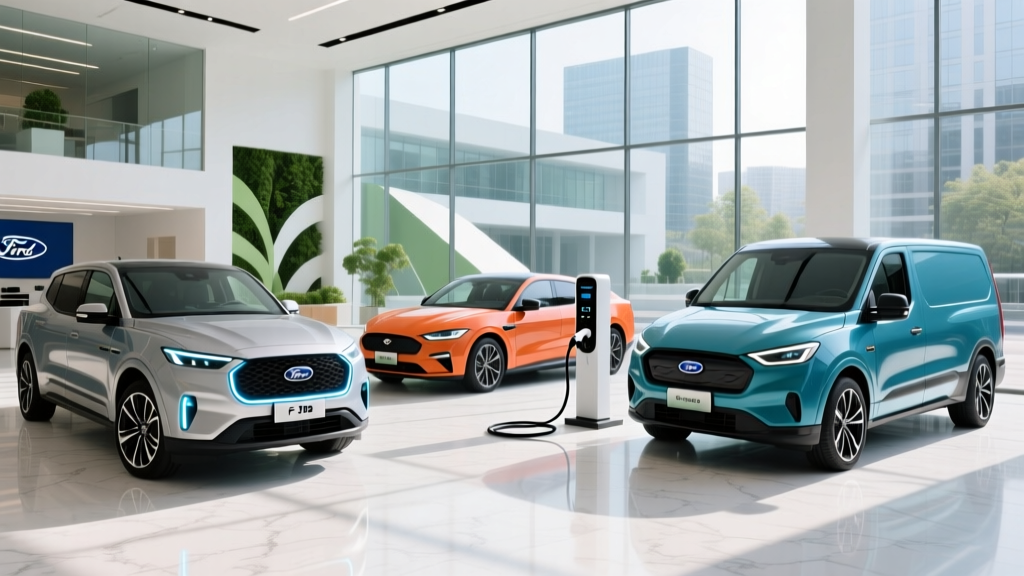
Ford's electric vehicle lineup in 2026 centers on two proven models: the F-150 Lightning (starting at $54,995) and Mustang Mach-E (starting at $42,995). Ford EV sales have stabilized after initial surge-and-slow patterns, with the company pivoting toward hybrid options alongside its battery-electric offerings. For buyers, this means better dealer inventory, more competitive pricing, and clearer long-term support commitments. If you have home charging access and drive under 250 miles daily, a Ford EV can cut fuel costs by 60-70% versus gas equivalents. Without home charging, consider Ford's strong hybrid lineup instead.
Current Ford EV Lineup: Specs That Matter
Ford's 2026 EV portfolio is lean but focused. Here's what's actually available and what the numbers show:
| Model | EPA Range | Battery (kWh) | Peak DC Charge | 10-80% Time | 0-60 mph | Base MSRP |
|---|---|---|---|---|---|---|
| F-150 Lightning (Std Range) | 240 mi | 98 kWh (NMC) | 150 kW | ~36 min | 4.4 sec | $54,995 |
| F-150 Lightning (Ext Range) | 320 mi | 131 kWh (NMC) | 150 kW | ~41 min | 3.8 sec | $69,995 |
| Mustang Mach-E (Std Range) | 250 mi | 75.7 kWh (NMC) | 150 kW | ~34 min | 5.2 sec | $42,995 |
| Mustang Mach-E (Ext Range) | 312 mi | 91 kWh (NMC) | 150 kW | ~38 min | 4.8 sec | $48,995 |
Real-world range reality: EPA estimates assume moderate temperatures and mixed driving. Expect 15-25% range reduction in freezing weather, and highway-only driving at 75+ mph typically yields 10-15% below EPA figures. The F-150 Lightning Extended Range, for example, delivers closer to 250-270 miles on a winter highway trip—still adequate for most daily needs but requiring planning for longer hauls.
Cold Climate Owners: If you live where temperatures regularly drop below 30°F, budget for 20-25% range loss. The F-150 Lightning's battery thermal management helps, but physics wins. A 320-mile EPA truck becomes a ~250-mile truck in January in Minnesota. Plan charging stops accordingly.
The Cost Question: Ford EV vs Gas Equivalent
Ford EV sales data shows buyers are cost-sensitive, so let's run the actual numbers. Comparing the F-150 Lightning against the gas F-150 (3.5L EcoBoost, 18 MPG combined) over 5 years and 75,000 miles:
| Cost Category | F-150 Lightning (Ext Range) | Gas F-150 EcoBoost |
|---|---|---|
| Purchase Price (MSRP) | $69,995 | $52,000 |
| Federal Tax Credit (§30D) | -$7,500 (if eligible) | $0 |
| Effective Purchase | $62,495 | $52,000 |
| Fuel/Energy (75k mi) | $3,750 (home charging @ $0.14/kWh) | $14,583 (@ $3.50/gal, 18 MPG) |
| Maintenance (5 yr) | $1,200 | $3,500 |
| Insurance (5 yr avg) | $9,500 | $7,800 |
| 5-Year Total Cost | $76,945 | $77,883 |
The math: The Lightning breaks even or saves money over 5 years if you qualify for the full $7,500 federal tax credit and charge primarily at home. Public DC fast charging at $0.40-0.50/kWh erodes savings fast—add $3,000-4,000 to your 5-year energy cost if you rely on it exclusively.
Tax credit eligibility (2026 rules): The IRS §30D credit requires:
- Buyer AGI under $150k (single) / $300k (joint)
- Vehicle MSRP under $80,000 (trucks/SUVs) or $55,000 (sedans)
- Battery components and critical minerals meeting North American sourcing thresholds
- Point-of-sale transfer available (dealer applies credit at purchase)
Both F-150 Lightning trims qualify. The Mach-E Extended Range ($48,995) also qualifies, but verify current battery sourcing status with your dealer—these requirements tighten annually.
Why Ford EV Sales Plateaued (And What It Means for You)
Ford's EV sales trajectory tells a story familiar across the industry: explosive 2022-2023 growth, followed by a 2024-2025 cooling as early adopters saturated and mainstream buyers hesitated. Ford responded by:
- Slowing EV investment: Redirecting capital toward hybrids (F-150 PowerBoost, Maverick hybrid) where demand is stronger
- Improving dealer experience: Better inventory, fewer markups, more transparent pricing
- Extending battery warranties: 8 years/100,000 miles on battery and powertrain components
What this means for buyers: You're not buying into a company abandoning EVs, but one right-sizing its approach. Ford will continue supporting Lightning and Mach-E with parts, service, and software updates. The risk isn't orphaned vehicles—it's that Ford's next-gen EVs (expected 2027+) may be more competitive than today's offerings.
Home Charging: The Make-or-Break Factor
Here's what Ford EV sales data doesn't show: the percentage of buyers who actually have viable home charging. This is the single biggest determinant of EV satisfaction.
| Charging Level | Power | Miles Added/Hour | Use Case |
|---|---|---|---|
| Level 1 (120V outlet) | 1.4 kW | 3-5 mi/hr | Overnight top-up, low-mileage drivers |
| Level 2 (240V, 40A circuit) | 9.6 kW | 25-30 mi/hr | Daily charging, full overnight refill |
| DC Fast Charging | 150 kW peak | ~200 mi in 30 min | Road trips, emergency top-up |
Level 2 installation reality: Expect $800-2,500 for a professional install (charger + electrician + permit), assuming your electrical panel has capacity. Older homes may need a $2,000-4,000 panel upgrade. Without Level 2 home charging, EV ownership becomes a chore of public charging logistics.
Decision Framework: Should You Buy a Ford EV?
- If you have garage/driveway access and can install Level 2 charging: The F-150 Lightning or Mach-E makes financial and practical sense, especially with the tax credit.
- If you rent or lack home charging: Wait. Public charging costs 3-4x more than home charging and adds time/friction to your routine. Consider Ford's hybrid options instead.
- If you regularly tow heavy loads (>7,000 lbs): The Lightning can tow 7,700-10,000 lbs, but towing cuts range by 40-50%. Gas or diesel remains more practical for frequent heavy towing.
- If you drive 300+ miles daily: Even the Extended Range models will require mid-day charging. Evaluate your route for reliable DC fast charging infrastructure.
- If you live in extreme cold (regular sub-20°F): Budget for 25% range loss and longer charging times. Preconditioning helps but doesn't eliminate the physics.
Common Misconceptions About Ford EVs
| Myth | Fact |
|---|---|
| "Ford is abandoning EVs" | Ford is slowing EV investment but committed to Lightning/Mach-E support through 2030+. Next-gen EVs are in development for 2027+. |
| "EV batteries need replacement every 5 years" | Ford warranties batteries for 8 years/100,000 miles with a 70% capacity retention guarantee. Real-world degradation data shows 10-15% loss over 8 years for most NMC batteries. |
| "EVs are worse in winter" | EVs start reliably in cold (no engine cranking), and regenerative braking works better on cold, dry roads. Range drops 15-25%, but most drivers don't use their full range daily anyway. |
| "I'll save money immediately" | Upfront cost is higher. Savings accrue over 3-5 years via fuel/maintenance reduction. If you sell before year 3, you may not recoup the premium. |
| "Fast charging damages the battery" | Occasional DC fast charging (1-2x/week) has minimal impact. Daily fast charging accelerates degradation slightly, but modern thermal management systems mitigate most risk. |
Ford EV vs Hybrid: The Honest Comparison
Ford's hybrid lineup (F-150 PowerBoost, Maverick hybrid, Escape hybrid) often makes more sense than their EVs for certain buyers. Here's the breakdown:
| Factor | Ford EV (Lightning/Mach-E) | Ford Hybrid (PowerBoost/Maverick) |
|---|---|---|
| Fuel Cost (per mile) | $0.04-0.06 (home charging) | $0.12-0.15 (gas) |
| Range Flexibility | 240-320 mi, requires charging stops | 500-700 mi, 5-minute gas fill |
| Home Charging Required? | Yes (for cost savings) | No |
| Maintenance | Minimal (no oil, fewer moving parts) | Moderate (oil changes, but less than gas-only) |
| Towing Range Impact | Severe (-40-50% range) | Moderate (-20-30% MPG) |
| Upfront Cost Premium | $10,000-18,000 vs gas equivalent | $2,000-5,000 vs gas equivalent |
| Tax Credit | $7,500 (if eligible) | $0 (most hybrids don't qualify) |
The verdict: If you have home charging, drive under 250 miles daily, and don't tow frequently, the EV wins on 5-year cost. If you lack home charging, regularly exceed 300 miles between stops, or tow heavy loads often, the hybrid is the pragmatic choice.
Frequently Asked Questions
Are Ford EVs reliable long-term?
Ford's EV powertrain warranty covers 8 years/100,000 miles. Early Lightning and Mach-E models (2022-2023) have shown typical EV reliability—fewer mechanical issues than gas vehicles, but occasional software glitches and charging system quirks. Battery degradation data from high-mileage fleet vehicles suggests 10-15% capacity loss over 100,000 miles, well within warranty thresholds.
Can I use Tesla Superchargers with a Ford EV?
Yes. Ford EVs use the NACS (North American Charging Standard) connector as of 2025, granting access to Tesla's Supercharger network—the most reliable and extensive DC fast charging infrastructure in the U.S. You can also use an adapter for older CCS chargers, though NACS is becoming the standard.
What happens if Ford stops making my EV model?
Federal law requires manufacturers to provide parts and service support for 10+ years after discontinuation. Ford's commitment to its EV customer base, combined with the simplicity of EV powertrains (fewer wear parts), means long-term support risk is low. The greater risk is resale value depreciation if Ford shifts strategy dramatically.
How much does it cost to replace an EV battery?
Out-of-warranty battery replacement for the F-150 Lightning runs $15,000-20,000; the Mach-E is $12,000-16,000. However, fueleconomy.gov data and fleet studies show most EV batteries retain 85-90% capacity at 100,000 miles. Full replacement is rare—individual module repair is more common and costs $2,000-5,000.
Do Ford EVs qualify for state incentives?
Many states offer additional rebates ($1,000-5,000) on top of the federal credit. California, Colorado, Massachusetts, and New York have active programs. Check your state's energy office or Alternative Fuels Data Center for current eligibility. These stack with the federal §30D credit.
Is the F-150 Lightning good for off-road use?
The Lightning has 8.9 inches of ground clearance and available 4WD, making it capable for light off-road use (forest roads, camping). However, the battery pack sits low and is vulnerable to rock strikes. For serious off-roading, the gas F-150 Raptor or a dedicated off-road vehicle is more appropriate.
Bottom Line: Who Should Buy a Ford EV in 2026?
Ford EV sales have normalized, which is actually good news for buyers. You're not fighting markups or scarce inventory, and Ford's commitment to supporting these models is clear. The F-150 Lightning remains the best electric truck on the market for work and daily use, while the Mach-E is a solid electric SUV option (though it faces stiff competition from Hyundai Ioniq 5 and Tesla Model Y).
Buy a Ford EV if: You have home charging, drive under 250 miles daily, qualify for the tax credit, and value lower operating costs over 5+ years.
Consider a Ford hybrid instead if: You lack home charging, regularly drive 300+ miles between stops, tow frequently, or plan to sell within 3 years.
Ford's EV future is uncertain beyond 2027, but their current models are proven, well-supported, and increasingly affordable. The question isn't whether Ford will keep making EVs—it's whether an EV fits your specific driving and charging situation.