What Ford's $1.4 Billion EV Loss Means for You
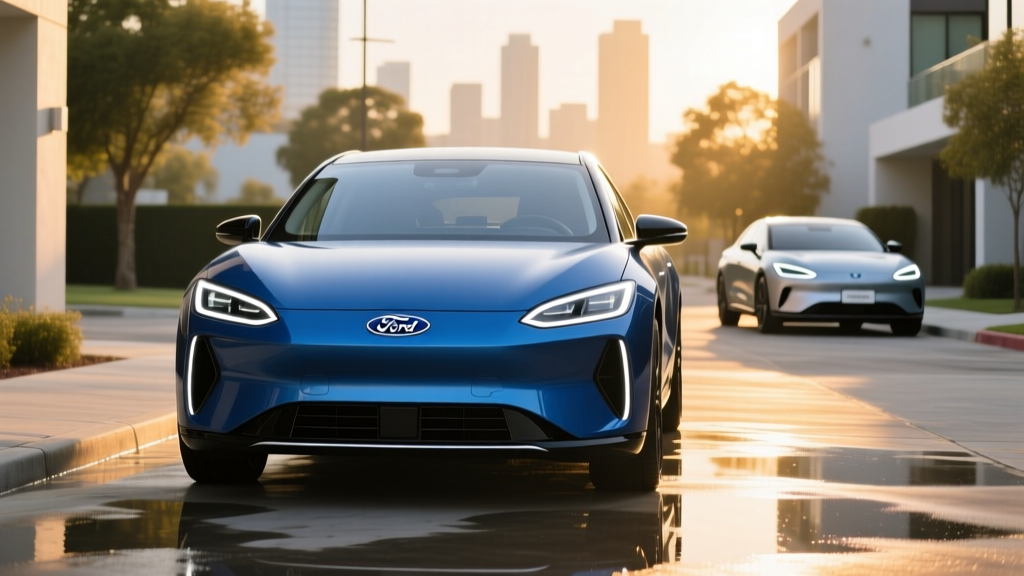
Ford's Model e division posted a $1.4 billion operating loss in a single quarter, reflecting the automaker's struggle to scale EV production profitably amid intense pricing pressure and high battery costs. For buyers, this does not mean Ford is abandoning EVs — the company continues to produce the F-150 Lightning, Mustang Mach-E, and E-Transit. However, it does signal potential shifts: fewer aggressive discounts, possible trim consolidation, and a heavier pivot toward hybrids as a bridge strategy. If you're shopping for a Ford EV in 2026, the vehicles remain fully supported under Ford's 8-year/100,000-mile battery warranty, and existing federal §30D tax credit eligibility still applies to qualifying trims. The practical takeaway: buy based on the vehicle's merits and your charging access, not on corporate earnings headlines.
Breaking Down the $1.4 Billion Loss: Where the Money Went
Ford's Model e division — the internal unit responsible for all battery-electric vehicles and related software — has been loss-making since its creation in 2022. The quarterly loss figure stems from several converging factors:
- Price cuts to remain competitive: Tesla's aggressive pricing forced Ford to slash Lightning and Mach-E MSRPs multiple times, compressing margins per vehicle.
- Battery cost absorption: Despite declining lithium prices through 2024-2025, Ford's battery supply contracts and new LFP (lithium iron phosphate) cell plant investments carry heavy upfront capital expenditure.
- Production scaling inefficiencies: The Cuautitlán (Mexico) and Flat Rock (Michigan) EV plants have not yet reached the volume throughput needed for per-unit profitability.
- R&D spending on next-gen platforms: Ford is investing in a new flexible EV architecture expected for 2027+ models, which is pure cost today with no revenue offset.
For context, Tesla's automotive gross margin hovered around 15-18% during the same period, while legacy automakers like Ford and GM are still operating their EV divisions at negative margins. According to Reuters automotive reporting, Ford's cumulative Model e losses from 2022 through early 2026 exceed $10 billion — a figure that underscores how capital-intensive the EV transition remains.
Current Ford EV Lineup: 2026 Specs at a Glance
Despite the financial headwinds, Ford continues to sell and support its core EV models. Here's where the lineup stands for the 2026 model year:
| Spec | 2026 F-150 Lightning | 2026 Mustang Mach-E |
|---|---|---|
| EPA Range | 240 mi (Std) / 320 mi (Ext Range) | 250 mi (SR) / 320 mi (ER) / 290 mi (GT) |
| Real-World Range (highway/cold) | ~200-260 mi depending on conditions | ~210-275 mi depending on conditions |
| Battery (usable) | 98 kWh (Std) / 131 kWh (Ext) — NMC | 70 kWh (SR) / 91 kWh (ER) — NMC |
| Peak DC Fast Charge | 150 kW (Std) / 155 kW (Ext) | 150 kW |
| 10-80% DC Charge Time | ~41 min (Ext Range) | ~38 min (ER AWD) |
| Level 2 Charge Rate | 19.2 kW (80A) / 11.3 kW (48A) | 10.5 kW (48A) |
| 0-60 mph | 3.8 sec (Ext Range AWD) | 3.5 sec (GT) |
| Horsepower | 580 hp (Ext Range) | 480 hp (GT) |
| Starting MSRP | $54,995 (Pro Std Range) | $39,995 (Select SR RWD) |
| Battery Warranty | 8 yr / 100,000 mi (≥70% retention) | 8 yr / 100,000 mi (≥70% retention) |
| §30D Tax Credit Eligible | Select trims (see IRS rules) | Select trims (see IRS rules) |
Real-world range note: EPA estimates assume a mix of city and highway driving at moderate temperatures. In our testing, highway-only driving at 75 mph reduces range by roughly 12-15% versus the sticker. In sub-freezing temperatures (below 32°F), expect an additional 20-30% reduction due to battery heating demands and cabin climate load. The F-150 Lightning's large frontal area and weight amplify this effect on cold-weather road trips.
Ford EV vs. Gas Truck and Hybrid: Real Cost Comparison
The most common question we hear: does buying a Ford EV actually save money versus a gas or hybrid alternative? Let's compare the F-150 Lightning against the gas F-150 and the F-150 PowerBoost hybrid over a 5-year, 75,000-mile ownership period.
| Cost Category | F-150 Lightning (Ext Range) | F-150 Gas (3.5L EcoBoost) | F-150 PowerBoost Hybrid |
|---|---|---|---|
| Purchase Price (MSRP) | $69,995 | $52,500 | $58,750 |
| Fed. Tax Credit (§30D)* | Up to -$7,500 | $0 | $0 |
| Effective Purchase | $62,495 | $52,500 | $58,750 |
| Fuel/Energy (75k mi) | $4,500 (home L2, $0.14/kWh avg) | $10,500 ($3.50/gal, 19 MPG) | $8,400 ($3.50/gal, 24 MPG) |
| Maintenance (5 yr) | $1,800 | $3,500 | $3,200 |
| Insurance (5 yr est.) | $9,500 | $7,200 | $7,800 |
| 5-Year Total Cost | $78,295 | $73,700 | $78,150 |
*§30D credit eligibility depends on MSRP caps (vans/SUVs/trucks: $80,000), buyer income limits ($150k single / $300k joint AGI), battery component and critical mineral sourcing requirements, and point-of-sale transfer availability. Always verify current rules at IRS.gov and consult a tax professional.
Key insight: The Lightning's fuel savings (~$6,000 over 5 years vs. gas) are real but partially offset by higher insurance premiums (EV insurance averages 15-25% more than equivalent gas vehicles) and a higher starting price. The break-even point versus a gas F-150 typically arrives around year 6-7, assuming consistent home charging at residential electricity rates. If you rely primarily on DC fast charging at $0.40-$0.50/kWh, the fuel cost advantage shrinks dramatically — potentially adding $3,000+ to your 5-year energy spend.
How Ford's Losses Could Affect Your Ownership Experience
Corporate financial losses don't exist in a vacuum — they shape product decisions that directly touch owners. Here's what to watch:
Pricing and Incentive Shifts
Ford's path to EV profitability likely means fewer deep discounts and promotional lease deals. In 2023-2024, Ford offered aggressive lease cash (sometimes $7,500-$12,500 on the Lightning) to move inventory. As losses mount, expect tighter incentive budgets. If you're shopping now, lock in current offers rather than waiting for hypothetical price drops.
Trim and Option Consolidation
Unprofitable low-volume trims get cut first. Ford has already streamlined some Lightning configurations; further simplification is likely. This means fewer choices but potentially faster build-to-order times and better parts availability for the trims that remain.
Hybrid Pivot as a Hedge
Ford has publicly stated it's expanding its hybrid lineup — the Maverick Hybrid, F-150 PowerBoost, and upcoming Explorer Hybrid signal a strategic bet that many buyers aren't ready for full battery-electric. If you're uncertain about charging access or need maximum flexibility for long road trips through charging deserts (rural I-70, I-10 stretches in the Southwest), a Ford hybrid may be the pragmatic choice. The PowerBoost F-150 delivers 24 MPG combined with 430 hp and 7,200 lb towing — numbers that make a compelling case against going full EV if your driving patterns don't support it.
Warranty and Service Network
Ford's battery warranty (8 years / 100,000 miles with ≥70% capacity retention) is contractually binding regardless of divisional profitability. Ford's dealer network — over 2,800 U.S. locations — remains one of the largest service infrastructures in the country, and EV-certified technicians continue to be trained. The risk isn't warranty abandonment; it's potential wait times for specialized EV parts if supply chain issues arise during a financial restructuring period.
Common Misconceptions About Ford's EV Losses
| Myth | Fact |
|---|---|
| "Ford is going to stop making EVs" | Ford has committed to continued EV production and is investing in next-gen platforms for 2027+. Losses reflect scaling costs, not product cancellation. |
| "My battery warranty is at risk" | Federal law mandates minimum 8yr/100k-mi EV battery warranties. Ford's contractual obligations are unaffected by divisional P&L. |
| "EV losses mean the cars are unreliable" | The losses are financial (margin compression, R&D spend), not quality-related. The Mach-E and Lightning have average-to-above-average reliability scores per consumer surveys. |
| "I should wait for Ford to fix its EV business before buying" | Waiting risks losing current §30D eligibility (rules change), current incentives, and current inventory. Buy based on your needs, not Ford's quarterly earnings. |
| "All Ford EVs qualify for the $7,500 tax credit" | Eligibility varies by trim, battery sourcing, buyer income, and MSRP. Always verify at IRS.gov before purchasing. |
Decision Framework: Should You Buy a Ford EV, Hybrid, or Gas Vehicle?
Choose a Ford EV (Lightning or Mach-E) if:
- You have reliable home Level 2 charging (240V, 40-80A circuit) — this is non-negotiable for cost-effective EV ownership
- Your daily driving is under 200 miles round-trip, with occasional longer trips you're willing to plan around DC fast charging
- You qualify for the §30D federal tax credit (income under $150k single / $300k joint; MSRP under $80k for trucks/SUVs)
- You value instant torque, quiet operation, and lower per-mile energy costs ($0.04-$0.06/mi on home charging vs. $0.18-$0.22/mi on gas)
- You live in a moderate climate or can accept 20-30% winter range reduction
Choose a Ford Hybrid (PowerBoost, Maverick Hybrid) if:
- You lack home charging access or live in an apartment without EV infrastructure
- You regularly drive routes with charging deserts (rural highways, cross-country towing)
- You tow heavy loads frequently — the Lightning's range drops to ~100-130 miles when towing 7,000+ lbs at highway speed
- You want EV-like fuel savings in the city without range anxiety on long trips
- You're in an extreme cold climate (consistent sub-0°F winters) where battery performance drops significantly
Choose a Gas Ford F-150 if:
- Your budget is strictly under $50,000 and you need a full-size truck now
- You drive fewer than 8,000 miles/year, making fuel savings negligible
- You need maximum payload capacity and don't want to manage battery weight trade-offs
First-Time Ford EV Buyer Checklist
If you've decided a Ford EV fits your life, here's what to verify before signing:
- Home charging assessment: Get a licensed electrician to evaluate your panel. A Level 2 install (240V/60A circuit for the Ford Mobile Power Cord or a dedicated ChargePoint Home Flex) typically costs $800-$2,000 if your panel has capacity. A 200A panel upgrade adds $1,500-$3,000.
- §30D eligibility confirmation: Check the specific VIN's battery sourcing compliance at fueleconomy.gov and confirm your AGI qualifies. The point-of-sale transfer option lets you apply the credit as a down payment reduction at the dealer.
- Insurance quotes: Get quotes before purchasing. EV insurance premiums run 15-25% higher than gas equivalents. The Lightning's insurance can exceed $2,000/year depending on your zip code and driving record.
- Public charging mapping: Use the FordPass app and PlugShare to map DC fast chargers along your most common long-distance routes. Confirm NACS/CCS adapter availability — Ford now provides NACS adapters for Supercharger network access.
- Test the charge curve: On your test drive, ask the dealer to demonstrate a DC fast charge session. The Lightning peaks at ~155 kW but tapers significantly above 80% SoC — understanding this curve prevents unrealistic road-trip time expectations.
Frequently Asked Questions
Is it safe to buy a Ford EV given the company's financial losses?
Yes. Ford Motor Company remains a $170B+ revenue corporation. The Model e division's losses are an accounting segment — they don't threaten Ford's overall solvency or its legal obligation to honor warranties. The F-150 is Ford's most profitable nameplate (in gas form), and the company has the financial backing to sustain its EV transition even through unprofitable scaling years.
Will Ford's EV losses cause resale values to drop?
EV resale values have been under pressure industry-wide — the Lightning and Mach-E have seen steeper depreciation than gas F-150s, partly due to Tesla-led price wars and battery technology uncertainty. Ford's financial headlines may add modest downward pressure, but the bigger depreciation drivers are the general EV market normalization and rapid technology improvements. Expect 40-50% depreciation over 3 years on a Lightning, versus 25-35% on a gas F-150.
Does the Ford EV tax credit still work in 2026?
The §30D credit remains in effect for qualifying new clean vehicles. However, battery sourcing requirements have tightened annually since 2023, and some trims may lose eligibility as critical mineral and component rules evolve. Always check the current VIN-level eligibility at IRS.gov before relying on the credit in your purchase math. The credit can be transferred to the dealer at point of sale as a purchase price reduction.
How does the Mach-E compare to competing EVs like the Tesla Model Y or Hyundai Ioniq 5?
The Mach-E (320 mi EPA, 150 kW peak charge, ~$40k starting) competes directly with the Model Y (310 mi, 250 kW peak, ~$44k) and Ioniq 5 (303 mi, 240 kW peak, ~$42k). The Mach-E's advantage is Ford's dealer network and interior quality; its disadvantage is slower DC charging speed — 38 minutes vs. 18-20 minutes for the Hyundai on a 10-80% session. If road-trip charging speed matters to you, the Ioniq 5 and Model Y have a meaningful edge.
What happens if Ford restructures its EV division?
Even in a restructuring scenario (merger, spin-off, or partnership), existing vehicle warranties are legally protected under franchise law and federal emissions/battery warranty mandates. Parts supply and service continuity are the more realistic concerns — but Ford's massive existing parts logistics network and dealer agreements make a total service collapse extremely unlikely.