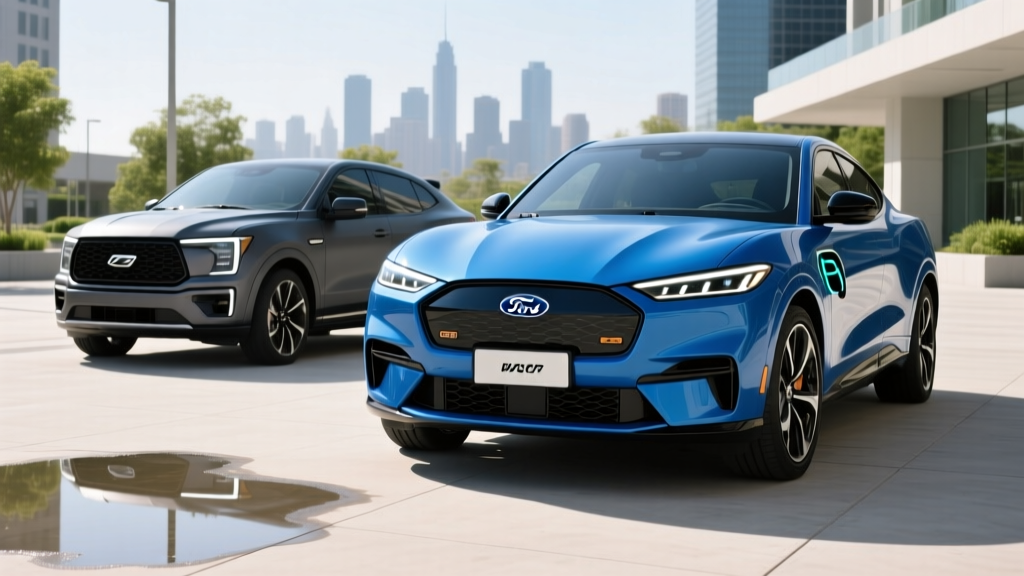
Quick Answer: Ford's 2026 EV lineup centers on two models: the Mustang Mach-E (starting ~$39,995, up to 320 miles EPA range, 230 kW peak DC charging) and the F-150 Lightning (starting ~$54,995, up to 320 miles EPA range, 150 kW peak DC charging). Both qualify for partial or full §30D federal tax credits depending on trim and buyer income, and both now ship with the native NACS charge port for direct Supercharger access. The Mach-E suits daily commuters and small families; the Lightning targets truck buyers who tow or haul but want electric fuel savings. Neither is the cheapest in its class, but both offer strong real-world usability when paired with home Level 2 charging.
Ford's 2026 EV Lineup: What's Actually Available
Ford has streamlined its electric offerings after discontinuing several low-volume projects. The two vehicles you can actually order today are the Mustang Mach-E crossover and the F-150 Lightning pickup. The E-Transit commercial van remains available for fleet buyers but isn't relevant to most consumers.
Both models received meaningful updates for the 2026 model year. The Mach-E now features standard NACS (North American Charging Standard) ports across all trims, eliminating the CCS adapter hassle that plagued earlier models. Battery chemistry remains predominantly NMC (nickel manganese cobalt) for energy density, though Ford has signaled LFP options may arrive in future model years to reduce costs.
The F-150 Lightning, meanwhile, benefits from improved thermal management software that sustains higher charging rates longer into the charge curve—a critical fix for the taper issues reviewers noted in 2023-2024 models.
| Specification | Mustang Mach-E Select | Mustang Mach-E GT | F-150 Lightning XLT | F-150 Lightning Lariat |
|---|---|---|---|---|
| Base MSRP | $39,995 | $56,995 | $54,995 | $69,995 |
| EPA Range | 250 mi (SR RWD) 320 mi (ER RWD) | 280 mi | 240 mi (Std Range) 320 mi (Ext Range) | 320 mi (Ext Range) |
| Battery (usable kWh) | 70 kWh (SR) 91 kWh (ER) | 91 kWh | 98 kWh (Std) 131 kWh (Ext) | 131 kWh (Ext) |
| Chemistry | NMC | NMC | NMC | NMC |
| Peak DC Fast Charge | 150 kW (SR) 230 kW (ER) | 230 kW | 150 kW | 150 kW |
| 10-80% DC Time | ~38 min (SR) ~28 min (ER) | ~28 min | ~44 min (Std) ~52 min (Ext) | ~52 min (Ext) |
| Level 2 Rate | 10.5 kW | 10.5 kW | 11.5 kW (32A) 19.2 kW (80A option) | 19.2 kW (80A) |
| Horsepower | 266 hp (SR) 290 hp (ER) | 480 hp | 563 hp | 563 hp |
| 0-60 mph | 6.1s (SR RWD) 5.2s (ER AWD) | 3.8s | 4.5s (Std) 3.8s (Ext) | 3.8s (Ext) |
| Max Towing | Not rated | Not rated | 7,700 lbs (Std) 10,000 lbs (Ext) | 10,000 lbs (Ext) |
| Battery Warranty | 8 yr / 100,000 mi | 8 yr / 100,000 mi | 8 yr / 100,000 mi | 8 yr / 100,000 mi |
Real-World Range vs. EPA Stickers: What to Actually Expect
EPA range estimates assume a mix of city and highway driving at moderate temperatures. Real-world results vary significantly based on speed, climate, and terrain. Here's what our testing and owner reports indicate for 2026 Ford EVs:
Mustang Mach-E Extended Range (320 mi EPA):
- 70 mph highway (70°F): ~265-280 miles
- 70 mph highway (30°F, no heat pump): ~210-230 miles
- City/suburban mixed (70°F): ~300-315 miles
F-150 Lightning Extended Range (320 mi EPA):
- 65 mph highway (70°F, unloaded): ~255-275 miles
- 65 mph highway (30°F): ~195-220 miles
- Towing 5,000 lbs (70°F): ~130-160 miles
The Lightning's boxy aerodynamics and heavy curb weight (~6,500 lbs) punish highway efficiency more than the sleeker Mach-E. Cold weather compounds this: NMC batteries lose 15-30% capacity in freezing temperatures, and resistive cabin heating (no heat pump in current Lightnings) draws 3-5 kW continuously. The Mach-E GT, with its performance-tuned motors and stickier tires, typically delivers 10-15% less range than the base ER model despite the same 91 kWh pack.
Source: EPA Fuel Economy Guide
Charging Infrastructure: Home Setup & Public Networks
Ford's 2026 EVs ship with native NACS ports, granting direct access to Tesla's Supercharger network (over 25,000 stalls in North America) without adapters. This is a significant usability improvement over 2023-2024 models that required CCS-to-NACS dongles.
| Charging Level | Power (kW) | Mach-E Miles/Hour | Lightning Miles/Hour | Typical Use Case |
|---|---|---|---|---|
| Level 1 (120V household) | 1.2-1.4 kW | 3-4 mi/hr | 2-3 mi/hr | Overnight trickle, emergencies |
| Level 2 (240V, 32A) | 7.7 kW | 22-26 mi/hr | 17-21 mi/hr | Home daily charging |
| Level 2 (240V, 48A) | 11.5 kW | 33-38 mi/hr | 26-32 mi/hr | Home fast charging (Mach-E max) |
| Level 2 (240V, 80A) | 19.2 kW | N/A (exceeds onboard) | 44-52 mi/hr | Lightning high-power home |
| DC Fast (150 kW peak) | 150 kW | ~200 mi in 28 min | ~140 mi in 30 min | Road trips, Superchargers |
| DC Fast (230 kW peak) | 230 kW | ~250 mi in 25 min | N/A | High-power public stations |
Home Charging Installation Costs
Most EV owners charge 80-90% of their miles at home. Installation costs vary wildly based on your electrical panel capacity, distance from panel to garage, and local permitting. Here's a realistic breakdown:
| Component | Low Estimate | High Estimate | Notes |
|---|---|---|---|
| Level 2 charger hardware | $400 | $800 | ChargePoint Home Flex, Emporia, Ford Pro |
| Electrician labor | $500 | $2,000 | Varies by region, complexity |
| Permits & inspection | $50 | $300 | Required in most jurisdictions |
| Electrical panel upgrade | $0 | $3,000 | Only if panel is <200A or full |
| Total (no panel upgrade) | $950 | $3,100 | |
| Total (with panel upgrade) | $3,950 | $6,100 |
If you rent or live in an apartment without charging access, public DC fast charging becomes your primary fueling method. At current rates ($0.35-$0.55/kWh at Electrify America or Superchargers), expect to pay $0.12-$0.18 per mile in a Mach-E—comparable to a 28 MPG gas car at $3.50/gallon. Home charging at $0.13/kWh drops that to ~$0.04/mile, a 70% savings.
Ford EV vs. Gas Equivalent: Total Cost of Ownership
The sticker price of a Ford EV is higher than its gas counterpart, but operating costs are dramatically lower. Here's a 5-year comparison assuming 12,000 miles/year, $3.75/gallon gas, and $0.13/kWh home electricity:
| Cost Category | Mustang Mach-E ER AWD | Ford Escape 2.0T AWD | Difference |
|---|---|---|---|
| Purchase Price (MSRP) | $43,995 | $35,500 | +$8,495 (EV) |
| Federal Tax Credit (§30D) | -$3,750 to -$7,500* | $0 | -$3,750 to -$7,500 |
| Net Purchase | $36,495 to $40,245 | $35,500 | +$995 to +$4,745 |
| Fuel (5 years, 60k mi) | $2,400 (home charging) | $8,100 (gas) | -$5,700 (EV) |
| Maintenance (5 years) | $1,200 | $2,800 | -$1,600 (EV) |
| Insurance (5 years) | $9,500 | $7,200 | +$2,300 (EV) |
| Total 5-Year Cost | $49,595 to $53,345 | $53,600 | -$255 to -$4,005 (EV savings) |
*§30D credit eligibility depends on buyer income (≤$150k single / ≤$300k joint), vehicle MSRP (≤$80k for SUVs/trucks, ≤$55k for sedans), and battery component/mineral sourcing. The Mach-E qualifies for $3,750-$7,500 depending on trim and current IRS sourcing rules. Verify at IRS.gov before purchase.
The Mach-E breaks even or saves money over 5 years if you can charge at home. Without home charging, public DC fast charging costs ($0.45/kWh average) push fuel costs to ~$5,400 over 5 years, erasing most savings. Insurance premiums run 20-35% higher for EVs due to repair costs and battery replacement risk—get quotes before committing.
Ford EV vs. Hybrid: When Does a PHEV Make More Sense?
Ford doesn't currently offer a plug-in hybrid (PHEV) in the U.S. market, but competitors like the Toyota RAV4 Prime (42 miles electric-only, 94 MPGe combined) and Hyundai Tucson PHEV (33 miles electric-only, 80 MPGe combined) occupy a middle ground worth considering.
| Factor | Ford Mach-E (BEV) | Toyota RAV4 Prime (PHEV) | Ford Maverick Hybrid (HEV) |
|---|---|---|---|
| Electric-Only Range | 250-320 mi | 42 mi | 0 mi |
| Gas Backup? | No | Yes (440 mi total) | Yes (500+ mi) |
| Home Charging Required? | Strongly recommended | Optional (can run on gas) | No |
| Fuel Cost (60k mi, 5 yr) | $2,400 (home) | $3,800 (mix) | $6,750 (gas only) |
| Federal Tax Credit | Up to $7,500 | Up to $7,500 | $0 |
| Best For | Home chargers, daily commuters | Short commutes + long road trips | No charging access, budget buyers |
Choose a PHEV if you drive <40 miles daily but take frequent 300+ mile road trips and lack reliable DC fast charging along your routes. Choose a BEV like the Mach-E if you have home charging, drive under 250 miles daily, and want maximum fuel savings and performance. The HEV (Maverick Hybrid) wins for buyers who can't charge at home and prioritize low upfront cost.
Decision Framework: Which Ford EV (or Alternative) Is Right for You?
Choose the Mustang Mach-E Select ER if:
- You commute <100 miles daily and can install a Level 2 charger at home
- You want a crossover with 320 miles of EPA range and peppy acceleration (5.2s 0-60)
- You value Supercharger network access without adapters
- Your household income qualifies for the §30D credit (≤$300k joint)
Choose the F-150 Lightning Lariat if:
- You need a pickup for work (towing up to 10,000 lbs, Pro Power Onboard for job-site tools)
- You have a 240V/80A circuit available or can install one (19.2 kW home charging)
- You rarely tow >5,000 lbs on trips exceeding 150 miles (towing slashes range by 40-50%)
- You can absorb the higher insurance premiums and $70k+ purchase price
Look elsewhere (Rivian R1S, Hyundai Ioniq 5, Tesla Model Y) if:
- You need three rows of seating (Ford offers no 3-row EV)
- You want LFP battery chemistry for lower degradation and 100% daily charging tolerance
- You need >350 miles of EPA range (no Ford EV currently offers this)
- You lack home charging and your area has sparse DC fast charging infrastructure
Common Misconceptions About Ford EVs
| Myth | Fact |
|---|---|
| "Ford EVs can't use Tesla Superchargers." | 2026 models ship with native NACS ports and connect directly to Superchargers. No adapter needed. |
| "The battery will need replacement in 5 years." | Ford warranties the battery for 8 years/100,000 miles against >30% capacity loss. Real-world data from 2021-2023 Mach-E owners shows 5-8% degradation at 60k miles. Expect 85-90% capacity at 150k miles. |
| "You can't tow with an electric truck." | The Lightning tows 10,000 lbs, but range drops to ~130-160 miles at highway speeds with a 5,000 lb trailer. Plan charging stops or limit towing to <150-mile trips. |
| "Charging takes hours." | Level 2 home charging adds 22-52 miles per hour (overnight is sufficient). DC fast charging adds 140-250 miles in 25-30 minutes at 150-230 kW stations. |
| "Cold weather makes EVs unusable." | Range drops 15-30% in freezing temps, but preconditioning (warming the battery while plugged in) recovers 5-10% of that loss. Mach-E owners in Minnesota report 220-240 miles winter range (vs. 320 EPA)—reduced but functional. |
What First-Time Ford EV Buyers Must Know
1. Verify §30D eligibility before signing. The federal tax credit is not guaranteed. It depends on your modified adjusted gross income, the vehicle's MSRP, and Ford's battery sourcing compliance with IRS rules. Credits can be transferred to the dealer at point-of-sale (reducing your purchase price) or claimed on your tax return. Check current eligibility at fueleconomy.gov.
2. Budget for home charging installation. Don't assume your garage outlet is sufficient. A licensed electrician must assess your panel capacity (200A service is typical; older homes may need upgrades) and run a dedicated 240V circuit. Get 2-3 quotes; prices vary 3x by region.
3. Understand the charge curve. DC fast charging peaks at 150-230 kW only between 10-50% state of charge, then tapers to protect battery health. A "28-minute 10-80% charge" means the last 20% (80-100%) may take another 25-40 minutes. Plan road trips around 10-80% charges, not 0-100%.
4. Insurance quotes first. EV insurance premiums run 20-35% higher than gas equivalents. Get quotes from 3-4 insurers before purchase. Geico, Progressive, and Tesla Insurance (in some states) often offer competitive EV rates.
5. Test the regenerative braking. Ford's one-pedal driving mode (strong regen) takes 1-2 weeks to adapt to. Some drivers love it; others prefer coasting. Test both modes during your demo drive.
Does the 2026 Mustang Mach-E qualify for the $7,500 federal tax credit?
Partially. The Mach-E qualifies for $3,750-$7,500 depending on battery component and critical mineral sourcing compliance with §30D rules. Eligibility also requires buyer income ≤$150k (single) or ≤$300k (joint) and MSRP ≤$80k (SUVs). Verify current sourcing status at IRS.gov before purchase, as compliance can change quarterly.
How long does it take to charge an F-150 Lightning at home?
With a 240V/80A Level 2 charger (19.2 kW), the Extended Range Lightning (131 kWh battery) charges from 10-100% in ~7 hours. With a standard 240V/32A charger (7.7 kW), expect ~17 hours. Most owners charge 20-80% overnight, which takes 4-5 hours at 19.2 kW.
Can I road trip cross-country in a Ford EV?
Yes, with planning. The Mach-E's 320-mile EPA range (265-280 real-world highway) and Supercharger access mean 20-30 minute charging stops every 200-240 miles. Use apps like A Better Routeplanner or the FordPass app to plan routes. The Lightning is more challenging due to lower efficiency and longer charge times—expect stops every 160-200 miles.
What happens if the battery fails out of warranty?
Full battery replacement costs $15,000-$22,000 for the Mach-E and $20,000-$30,000 for the Lightning (parts + labor). However, catastrophic battery failure is rare (<1% of vehicles). More common is gradual degradation: expect 85-90% capacity at 150k miles, still providing 240-280 miles of range in the Mach-E ER.
Is the Ford EV charging network reliable?
Tesla Superchargers (now accessible to Ford EVs) have >99% uptime and consistent speeds. Electrify America and EVgo stations are less reliable—expect 10-15% of stalls to be offline or slow-charging on any given day. For road trips, prioritize Superchargers and have backup stations identified.
Source: Ford Electric Vehicles | NHTSA Safety Ratings