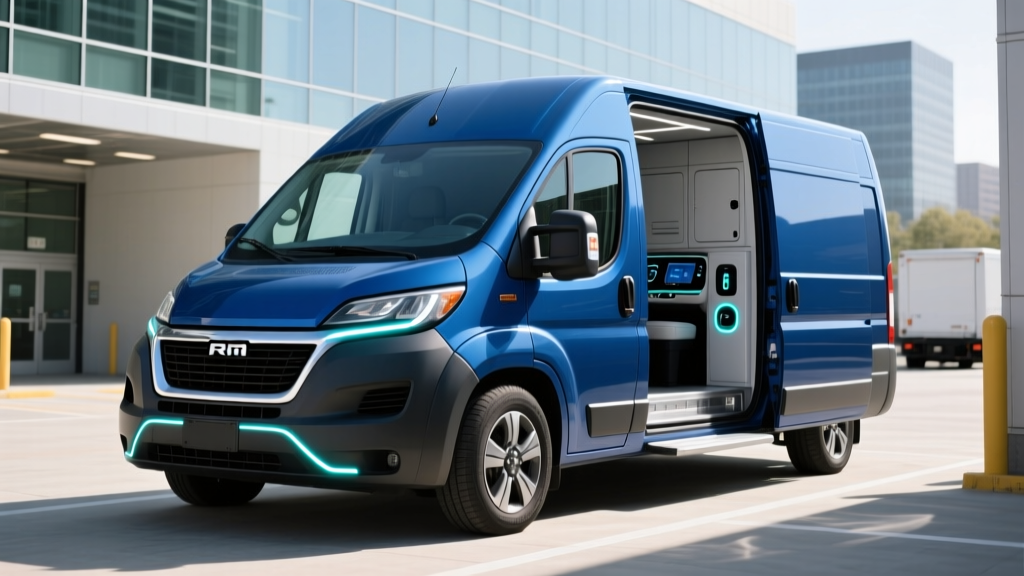
Quick Answer: Is the Ram ProMaster EV Cargo Van Right for Your Fleet?
The 2026 Ram ProMaster EV cargo van delivers an EPA-estimated 162 miles of range from a 110 kWh usable battery pack, making it purpose-built for last-mile delivery and urban commercial routes under 120 miles per day. Starting at approximately $62,000 MSRP (before federal and state incentives), it costs roughly $15,000–$20,000 more upfront than the gas ProMaster, but fleet operators typically recoup that premium within 3–5 years through fuel and maintenance savings on stop-and-go routes. It charges at up to 150 kW DC fast charging (10–80% in roughly 42 minutes) and accepts 11 kW Level 2 AC for overnight depot charging. If your routes are predictable, depot-based, and under 150 miles daily, the ProMaster EV is a strong TCO play. If you run long-haul intercity routes or operate in extreme cold without garage parking, the gas ProMaster remains the safer bet.
Ram ProMaster EV Cargo Van: Core Specs at a Glance
| Specification | 2026 Ram ProMaster EV |
|---|---|
| EPA Range | 162 miles |
| Battery (Usable) | 110 kWh, NMC lithium-ion |
| Motor Output | 270 hp / 302 lb-ft torque |
| DC Fast Charge (Peak) | 150 kW (CCS1) |
| 10–80% DC Charge Time | ~42 minutes |
| Level 2 AC Charge Rate | 11 kW (~7.5 hours 0–100%) |
| Payload Capacity | ~2,800 lbs (varies by config) |
| Cargo Volume | Up to 463 cu ft (high-roof, extended) |
| Base MSRP | ~$62,000 (cargo van, low roof) |
| Battery Warranty | 8 years / 100,000 miles |
| Commercial Tax Credit (§45W) | Up to $7,500 (GVWR-dependent) |
Stellantis engineered the ProMaster EV on a dedicated electric platform shared with the Citroën ë-Jumpy and Peugeot e-Expert in Europe, adapted for North American commercial duty. The 162-mile EPA figure assumes mixed urban and suburban driving at moderate speeds. In real-world fleet testing, expect 130–145 miles on highway-heavy routes at sustained 65+ mph, and as low as 105–120 miles in sub-30°F winter conditions with cabin heating active. The ProMaster EV does not currently offer an optional heat pump, relying on resistive heating, which draws significantly from the pack in cold weather.
ProMaster EV vs. Gas ProMaster: The Numbers That Matter
The gas-powered 2026 Ram ProMaster with the 3.6L Pentastar V6 starts around $44,000 MSRP and returns roughly 16 MPG combined in city delivery use. Let's compare the real operating costs over five years and 100,000 miles of urban delivery driving.
| Cost Factor | ProMaster EV | Gas ProMaster V6 |
|---|---|---|
| Base MSRP | $62,000 | $44,000 |
| Federal Tax Credit (§45W Commercial) | Up to $7,500 | $0 |
| Effective Purchase Price | ~$54,500 | $44,000 |
| Fuel/Energy Cost (100k mi, $3.50/gal, $0.14/kWh) | $2,380 | $21,875 |
| Maintenance (5 yr / 100k mi) | ~$2,500 | ~$7,200 |
| 5-Year Total (purchase + fuel + maint.) | ~$59,380 | ~$73,075 |
| Cost Per Mile (operating) | ~$0.049 | ~$0.291 |
The math favors the EV decisively for high-mileage urban fleets. The $19,375 fuel savings alone over 100,000 miles nearly covers the entire price premium, and maintenance savings from eliminating oil changes, transmission fluid, spark plugs, and exhaust system repairs add another $4,700. These figures assume depot charging at commercial electricity rates (~$0.14/kWh). Fleets paying higher commercial rates or relying on public DC fast charging will see reduced but still meaningful savings.
For context, the ProMaster EV's efficiency is rated at approximately 2.0 kWh/mile in urban delivery cycles — typical for a full-size cargo van of this weight class. That translates to roughly 40 MPGe combined per EPA data on commercial electric vehicles.
Charging Infrastructure: What Your Depot Needs
The ProMaster EV uses a CCS1 connector for DC fast charging and a J1772 inlet for Level 2 AC. Fleet depot charging is the backbone of commercial EV operations, and the infrastructure investment is non-trivial.
| Charging Level | Power | Miles Added per Hour | Best Use Case |
|---|---|---|---|
| Level 1 (120V) | 1.4 kW | ~3 mi/hr | Emergency top-off only |
| Level 2 (240V, 48A) | 11 kW | ~22 mi/hr | Overnight depot charging (primary) |
| DC Fast Charge | 150 kW peak | ~180 mi/hr (peak) | Mid-day top-up, opportunity charging |
A full 0–100% Level 2 charge takes approximately 10 hours at 11 kW, which aligns well with overnight depot schedules. For a fleet of five vans, you'll need five Level 2 chargers (or a smart load-management system that cycles fewer chargers), plus potential electrical panel upgrades.
| Component | Per-Stall Cost Range | Notes |
|---|---|---|
| Commercial Level 2 Charger (hardwired, 48A) | $1,500–$3,500 | Networked units (ChargePoint, EVgo) cost more |
| Electrical Panel / Transformer Upgrade | $3,000–$15,000 | Depends on existing service capacity |
| Wiring, Conduit, Trenching (per stall) | $2,000–$6,000 | Longer runs = higher cost |
| Permits & Utility Coordination | $1,000–$4,000 | Varies by municipality |
| Total per Depot Stall (estimated) | $7,500–$28,500 | Multi-stall installs reduce per-unit cost |
Many utilities offer commercial EV charging rebates that cover 50–100% of make-ready infrastructure costs. Check with your local utility before budgeting. The federal §30C Alternative Fuel Infrastructure Tax Credit may also cover up to 30% of charger installation costs (capped at $100,000 per item for commercial property), though eligibility depends on census-tract requirements — consult a tax professional and reference IRS guidance on §30C.
Charging-curve reality check: The ProMaster EV's 150 kW peak rate is not sustained across the entire session. Expect peak speeds between 10–50% SoC, tapering significantly above 80%. A 10–80% session takes ~42 minutes, but pushing to 100% on DC fast charging adds another 35+ minutes. For fleet operations, program vehicles to charge to 80–85% overnight on Level 2 to preserve battery longevity and reduce peak demand charges.
Federal Tax Credits and Incentives: What Fleets Actually Qualify For
The ProMaster EV falls under the §45W Commercial Clean Vehicle Credit, not the consumer §30D credit. This is a critical distinction that many buyers get wrong.
- Credit amount: Up to $7,500 for vehicles under 14,000 lbs GVWR; up to $40,000 for heavier vehicles (ProMaster EV falls under the $7,500 tier)
- Eligible buyers: Businesses, tax-exempt organizations, and government entities — not individual consumers buying for personal use
- MSRP cap: None for commercial credit (unlike §30D consumer rules)
- Income cap: None — business entity eligibility is based on tax liability
- Battery sourcing: Must meet domestic-content and critical-mineral thresholds that tighten annually through 2029
- Point-of-sale transfer: Available beginning 2024 — the credit can be transferred to the dealer at purchase, reducing the upfront invoice price
- Stacking: Can be combined with state/local commercial EV incentives and utility rebates
For the ProMaster EV, most qualifying commercial buyers can expect $7,500 at point of sale, bringing the effective price to ~$54,500. Some states offer additional commercial EV rebates — California's CARB programs, for example, can add $5,000–$15,000 depending on fleet size and air-district requirements. Always verify current-year rules with the IRS §45W page and your tax advisor, as battery-sourcing requirements change annually.
Myths vs. Facts: Common Misconceptions About Electric Cargo Vans
| Myth | Fact |
|---|---|
| "The battery will need replacing in 5 years and cost $30,000." | NMC batteries in commercial vans are warrantied for 8 years/100,000 miles at 70%+ capacity retention. Real-world fleet data from European ë-Jumpy deployments shows ~8–12% degradation at 100,000 miles. Full replacement cost is estimated at $18,000–$25,000, but most packs outlast the vehicle's service life. |
| "162 miles isn't enough range for a work van." | Fleet GPS data from the American Trucking Associations shows 70%+ of last-mile delivery routes are under 100 miles daily. The 162-mile range covers most urban delivery, service-call, and shuttle applications with margin. |
| "Electric vans can't handle payloads." | The ProMaster EV retains ~2,800 lbs payload capacity. The battery adds weight low in the chassis, maintaining a stable center of gravity. Cargo volume is unchanged from the gas model. |
| "You need DC fast chargers at every depot." | Overnight Level 2 charging at 11 kW fully replenishes the 110 kWh pack in ~10 hours. DC fast chargers are only needed for mid-day opportunity charging on extended routes. |
| "Cold weather makes EV vans unusable." | Range drops 20–35% in sub-freezing conditions. Fleets in northern climates should spec routes at ~105 miles max in winter and precondition the battery while plugged in to minimize losses. |
Decision Framework: Should You Buy the ProMaster EV?
Choose the Ram ProMaster EV if:
- Your daily routes are under 120 miles (or under 100 miles in winter climates)
- You have depot or warehouse access where Level 2 chargers can be installed
- Your fleet runs stop-and-go urban delivery, service calls, or shuttle routes
- You plan to keep vehicles 5+ years / 100,000+ miles to maximize TCO savings
- Your business qualifies for the §45W commercial tax credit
- You want to reduce fleet emissions for ESG reporting or municipal contract requirements
Stick with the gas ProMaster if:
- Your routes regularly exceed 150 miles daily without mid-day charging access
- You operate in rural areas or charging deserts with no depot charging option
- Your fleet turns over vehicles every 2–3 years (you won't recoup the price premium)
- You tow or carry near-max payloads on hilly terrain in extreme cold
- Your business cannot utilize the §45W tax credit (insufficient tax liability, no point-of-sale transfer option)
First-Time Commercial EV Buyer Checklist
If this is your fleet's first electric vehicle, here's what to prepare before signing a purchase order:
- Audit your routes. Pull 90 days of GPS telematics data. If 90%+ of daily routes fall under 120 miles, the ProMaster EV is viable. Flag any outlier days that exceed range — those may need a gas backup vehicle.
- Assess your electrical service. Contact a licensed commercial electrician to evaluate your depot's panel capacity. A 5-van fleet needs roughly 55 kW of continuous Level 2 draw — many commercial buildings can accommodate this, but older facilities may need a transformer upgrade.
- Engage your utility early. Many utilities offer demand-response programs, time-of-use rates, and make-ready rebates for commercial EV charging. Enrolling before installation can save $5,000–$20,000 per depot.
- Plan for driver training. Regenerative braking changes driving feel. One-pedal driving in the ProMaster EV can reduce brake wear substantially, but drivers need 1–2 weeks to adapt. Budget for a short orientation session.
- Model your real TCO. Use your actual electricity rate, actual route mileage, and actual maintenance history — not generic averages. The savings case strengthens with higher daily mileage and weaker with higher electricity costs.
- Verify tax credit eligibility. Confirm with your CPA that your entity qualifies for §45W, that the specific VIN meets current-year battery sourcing rules, and whether point-of-sale transfer is available from your dealer.
Ownership Costs Beyond the Purchase Price
Insurance for the ProMaster EV runs 10–20% higher than the gas equivalent, driven by higher repair costs for battery-adjacent damage and specialized technician requirements. Expect annual commercial auto premiums of roughly $2,800–$4,200 per van depending on your fleet's claims history and operating region.
Tire wear is another cost factor often overlooked. The ProMaster EV's instant torque and heavier curb weight (~5,500 lbs) accelerate tire wear by roughly 15–20% compared to the gas model. Budget for tire replacement every 30,000–35,000 miles instead of the 40,000–50,000 miles typical for the gas ProMaster.
On the savings side, brake life extends dramatically with regenerative braking. Fleet operators report brake pad life of 80,000–120,000 miles on electric vans, versus 30,000–50,000 miles on gas equivalents in stop-and-go service. At $400–$600 per axle replacement, this saves $1,500–$3,000 over the vehicle's life.
Frequently Asked Questions
What is the real-world range of the Ram ProMaster EV cargo van?
The EPA rates the ProMaster EV at 162 miles. In real-world urban delivery use at moderate temperatures, expect 135–150 miles. Highway-dominant routes at 65+ mph drop this to roughly 115–130 miles. In sub-freezing weather with cabin heat, plan for 105–120 miles. Fleet managers should design routes around 75% of these figures to maintain a safety margin.
How long does it take to charge the ProMaster EV at a depot?
On a hardwired 11 kW Level 2 charger, a full 0–100% charge takes approximately 10 hours — well-suited to overnight depot schedules. On a 150 kW DC fast charger, a 10–80% session takes about 42 minutes, with significant tapering above 80% SoC.
Does the ProMaster EV qualify for the $7,500 federal tax credit?
Yes, but under the §45W Commercial Clean Vehicle Credit, not the consumer §30D credit. Qualifying business entities can claim up to $7,500, and the credit may be transferred to the dealer at point of sale. Eligibility depends on battery-sourcing requirements that change annually — verify with your tax professional and the IRS.
How does the ProMaster EV compare to the Ford E-Transit?
The Ford E-Transit offers 126 miles of EPA range from a 68 kWh battery, starting around $55,000 MSRP. The ProMaster EV provides significantly more range (162 mi) and a larger battery (110 kWh) but at a higher starting price (~$62,000). For fleets needing more daily range, the ProMaster EV has the edge. For budget-sensitive fleets with sub-100-mile routes, the E-Transit's lower entry price may be preferable.
What is the battery replacement cost for the ProMaster EV?
Full battery pack replacement is estimated at $18,000–$25,000 (parts and labor), though this is rarely needed within the 8-year/100,000-mile warranty period. Real-world degradation data from Stellantis's European electric van platforms shows approximately 8–12% capacity loss at 100,000 miles under normal commercial use. The warranty guarantees at least 70% capacity retention.
Can the ProMaster EV handle cold-weather routes?
Yes, but with planning. Expect 20–35% range loss in sub-30°F conditions due to resistive cabin heating and battery chemistry limitations. Preconditioning the battery while plugged in (available via the Ram Commercial Connect app) recovers some of this loss. Fleets in Minnesota, Maine, or similar climates should cap winter routes at ~105 miles and consider garage parking to reduce cold-soak effects.