The Short Answer
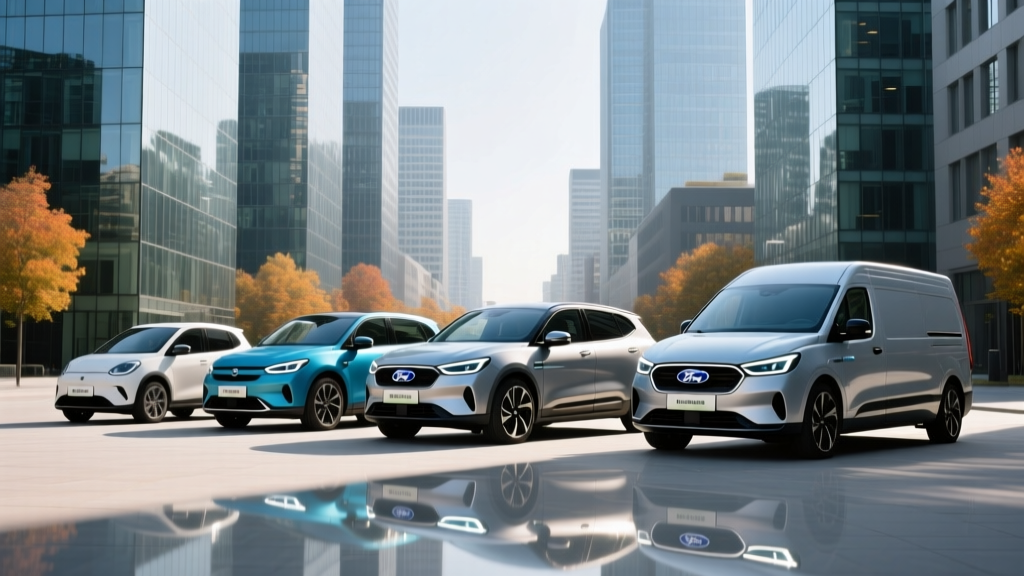
Ford's Europe EV strategy pivoted from a slow, platform-sharing transition to a dedicated-EV offensive built on Volkswagen's MEB architecture and Ford's own global platforms. As of the 2026 model year, the European lineup centers on the Ford Explorer EV (compact SUV, ~290 mi WLTP), the Ford Capri EV (sportback coupe, ~310 mi WLTP), and the commercial E-Transit van. Ford initially planned an all-electric European passenger lineup by 2030, then walked that back in 2024–2025 to include hybrids alongside EVs in response to softer consumer demand and delayed charging infrastructure. For buyers, this means more choice but also more complexity in understanding which models are fully electric versus mild-hybrid or plug-in hybrid.
Ford's European EV Timeline: From All-In to Pragmatic
Ford announced in 2021 that its European passenger vehicle lineup would be fully electric by 2030. That commitment was aggressive — arguably too aggressive for a market where EV adoption rates vary wildly between Norway (over 80% EV share) and Italy (under 5%). By mid-2024, Ford publicly revised the target, acknowledging that hybrid vehicles would remain part of the European mix through the end of the decade. The company cited "shifting consumer demand" and regulatory uncertainty as factors.
The strategic backbone, however, remained intact. Ford invested over $2 billion in its Cologne, Germany plant to convert it into the Ford Cologne Electrification Center, which now produces the Explorer EV and Capri on VW's MEB platform. This partnership — once controversial among Ford loyalists — gave Ford access to proven 77 kWh and 84 kWh (usable) battery packs and a mature 800V-capable architecture, rather than spending years developing a ground-up European EV platform from scratch.
For the commercial side, the E-Transit remains Ford's volume electric van in Europe, with a 68 kWh usable battery and approximately 196 mi of WLTP range — enough for most urban delivery routes but requiring route planning for longer hauls.
The 2026 European EV Lineup: Specs and Pricing
| Model | Battery (usable kWh) | WLTP Range | Real-World Range Est. | Peak DC Charge | 10–80% Time | 0–100 km/h | HP | Starting Price (€) |
|---|---|---|---|---|---|---|---|---|
| Explorer EV Standard Range | 59 kWh (NMC) | ~230 mi (370 km) | ~190–210 mi | 135 kW | ~28 min | 8.9 s | 170 hp | ~€42,000 |
| Explorer EV Extended Range | 77 kWh (NMC) | ~290 mi (470 km) | ~240–260 mi | 175 kW | ~25 min | 7.9 s | 286 hp | ~€48,000 |
| Explorer EV AWD Extended | 79 kWh (NMC) | ~275 mi (440 km) | ~230–250 mi | 175 kW | ~25 min | 5.3 s | 340 hp | ~€55,000 |
| Capri EV Standard Range | 59 kWh (NMC) | ~255 mi (410 km) | ~210–230 mi | 135 kW | ~28 min | 8.7 s | 170 hp | ~€44,000 |
| Capri EV Extended Range | 77 kWh (NMC) | ~310 mi (500 km) | ~260–280 mi | 175 kW | ~25 min | 7.4 s | 286 hp | ~€50,000 |
| E-Transit (Commercial) | 68 kWh (NMC) | ~196 mi (315 km) | ~150–170 mi loaded | 115 kW | ~34 min | N/A | 269 hp | ~€52,000 |
Note: WLTP range figures typically overstate real-world driving range by 10–20% compared to mixed driving. Cold weather (below 40°F / 5°C) can reduce range by an additional 15–25% due to cabin heating demand and reduced battery chemistry efficiency. Highway driving at sustained 75+ mph (120+ km/h) also cuts range significantly versus the WLTP combined cycle.
Charging Reality: What Ford Europe EV Owners Actually Experience
The MEB platform underpinning the Explorer and Capri supports up to 175 kW DC fast charging on extended-range trims. That's competitive with the VW ID.4 and Hyundai Ioniq 5's earlier architecture but falls short of the 250–350 kW peaks offered by vehicles on 800V platforms like the Hyundai/Kia E-GMP or Porsche Taycan.
Here's what charging actually looks like across levels:
| Level | Power | Connector | Miles Added per Hour | Typical Use Case |
|---|---|---|---|---|
| Level 1 (Domestic Outlet) | ~2.3 kW | Schuko / Type 2 | ~8–10 mi/hr | Overnight top-up; not viable as primary |
| Level 2 (Home Wallbox / Public AC) | 7.4–11 kW | Type 2 (Mennekes) | ~25–40 mi/hr | Primary home charging; 0–100% in 7–10 hours |
| DC Fast (Public) | 50–175 kW | CCS2 | ~150–500 mi/hr (peak) | Road trips; 10–80% in 25–34 min |
The critical detail most spec sheets bury: peak charge rate is not sustained charge rate. The Explorer EV Extended Range may peak at 175 kW, but the charge curve tapers significantly above 60% state of charge. Expect the average charging power during a 10–80% session to be closer to 100–120 kW. That's the difference between a theoretical "15-minute charge" and a realistic 25-minute stop.
Level 2 home charging at 11 kW (three-phase, common in European homes) will fully replenish the 77 kWh battery in roughly 7.5 hours — practical for overnight charging. However, many older European apartments lack dedicated parking with electrical access. If you're in a flat without a garage or assigned spot, your charging strategy depends entirely on public infrastructure reliability, which varies enormously between, say, Amsterdam (dense, reliable) and rural Romania (sparse, unreliable).
EV vs. Gas vs. Hybrid: Real Cost Comparison for European Buyers
Ford's revised strategy — keeping hybrids in the European lineup alongside EVs — reflects a genuine buyer dilemma. Let's compare approximate five-year ownership costs for a compact SUV buyer in Germany choosing between the Explorer EV Extended Range, a comparable gasoline Kuga (Escape), and the Kuga PHEV.
| Cost Factor | Explorer EV Ext. Range | Kuga 1.5 EcoBoost (Gas) | Kuga PHEV |
|---|---|---|---|
| Purchase Price (approx.) | €48,000 | €35,000 | €42,000 |
| Government Incentive (Germany, 2026) | ~€4,500 (BAFA, income-dependent) | None | None (PHEV subsidies ended 2023) |
| Effective Purchase Price | ~€43,500 | €35,000 | €42,000 |
| Energy/Fuel (5 yr, 75,000 km total) | ~€4,500 (home charging avg.) | ~€9,400 (7.0 L/100 km, €1.80/L) | ~€5,800 (mixed EV/gas driving) |
| Maintenance (5 yr) | ~€1,200 | ~€2,800 | ~€2,200 |
| Insurance (5 yr avg.) | ~€5,500 | ~€4,200 | ~€4,800 |
| Estimated Depreciation (5 yr) | ~€22,000 | ~€15,000 | ~€19,000 |
| 5-Year Total Cost of Ownership | ~€76,700 | ~€66,400 | ~€73,800 |
The EV wins on energy and maintenance costs — electricity per kilometer is roughly a third of gasoline in most European markets, and EVs eliminate oil changes, spark plugs, and many wear items. But the higher upfront price, steeper depreciation (driven by rapid EV price competition and battery technology evolution), and elevated insurance premiums narrow the gap substantially. Over five years, the gas Kuga remains cheaper in total cost for most buyers unless annual mileage exceeds 20,000 km, at which point the EV's fuel savings compound meaningfully.
The PHEV occupies a middle ground: lower fuel costs than gas if you charge regularly and drive under 40 km on most days, but with the maintenance complexity of two powertrains. Ford's decision to keep PHEV options alongside full EVs reflects this economic reality for buyers who can't reliably charge at home.
Common Misconceptions About Ford's European EV Push
| Myth | Fact |
|---|---|
| "Ford's European EVs are just rebadged Volkswagens." | The Explorer and Capri use VW's MEB platform and battery modules, but Ford designed its own body structure, interior, suspension tuning, software layer (SYNC with Ford-specific UI), and exterior design. Driving dynamics and cabin experience are distinctly Ford-engineered. Think of it like sharing a chassis — similar to how the Toyota GR86 and Subaru BRZ share a platform but drive differently. |
| "Ford abandoned its European EV commitment." | Ford walked back the 2030 all-electric target but continued investing in EV production at Cologne. The Explorer and Capri launched on schedule. What changed was the acknowledgment that some segments (larger SUVs, commercial) may need hybrid bridges. The EV commitment evolved; it wasn't abandoned. |
| "The E-Transit isn't practical for real delivery work." | With 68 kWh usable and 196 mi WLTP range, the E-Transit covers the majority of urban last-mile delivery routes (typically 60–100 mi/day). Fleet operators like Royal Mail and various DPD franchises have deployed E-Transits at scale. The limitation is intercity routes and cold-weather operation, where range drops to ~150 mi. |
| "European EV incentives cover most of the purchase price." | Most European national EV subsidies have been reduced or eliminated since 2022. Germany's BAFA program was cut significantly; France's bonus écologique has income caps and a ~€4,000 maximum. The UK offers no direct purchase subsidy for new EVs as of 2026. Company-car tax advantages (Benefit-in-Kind in the UK, Dienstwagenbesteuerung in Germany) remain the strongest financial incentive for EVs, but these apply only to fleet/business buyers. |
| "Ford's EV battery will need expensive replacement within a few years." | Ford warranties the Explorer/Capri battery for 8 years / 160,000 km with a guaranteed minimum 70% state of health. Real-world data from MEB-platform vehicles (VW ID.3/ID.4, Skoda Enyaq) shows degradation of approximately 5–8% over the first 100,000 km, well within warranty thresholds. Complete battery replacement costs remain high (€12,000–€18,000 out of warranty) but are rarely needed within the vehicle's typical ownership life. |
What First-Time EV Buyers Need to Know Before Choosing a Ford Europe EV
If you're considering a Ford Explorer EV, Capri, or E-Transit as your first electric vehicle, the ownership experience differs from gas cars in ways that go beyond the spec sheet:
Home charging is the make-or-break factor. If you have access to a dedicated parking spot with a wallbox (7.4–11 kW), daily EV ownership is genuinely effortless — you plug in at night and wake up with a full battery every morning. If you rely solely on street parking and public chargers, the experience ranges from manageable (in cities like Oslo or Amsterdam with dense, reliable networks) to frustrating (in areas with broken chargers, high public charging rates of €0.50–€0.79/kWh, or limited availability).
Route planning replaces fuel stops. On a 500 km road trip in the Explorer EV Extended Range, you'll need one DC fast-charging stop of approximately 25–30 minutes. Apps like A Better Routeplanner and Ford's built-in navigation handle this well, but it's a behavioral shift from pulling into any petrol station for a 3-minute refill. In winter, add 5–10 minutes to each stop due to reduced charging speeds in cold batteries.
Preconditioning matters. Both the Explorer and Capri support battery preconditioning — warming the battery pack before you arrive at a DC charger to optimize charging speed. If you skip this (or if the ambient temperature is below freezing and preconditioning wasn't activated), expect your 10–80% charge time to stretch from 25 minutes to 35–40 minutes. This is physics, not a Ford-specific limitation — all NMC lithium-ion batteries charge slower when cold.
Tire costs are higher. EVs are heavier (the Explorer EV Extended Range weighs approximately 2,100 kg) and deliver instant torque. Expect tire wear 15–25% faster than on a comparable gas SUV. Budget for premium tires (Michelin Pilot Sport EV, Continental EcoContact 6 Q) at €200–€300 per corner, replaced every 30,000–40,000 km.
Decision Framework: Is a Ford Europe EV Right for You?
Choose the Ford Explorer EV if:
- You have home charging access (wallbox or dedicated outlet)
- Your daily driving is under 250 km (most commutes and errands)
- You take 2–4 road trips per year and are comfortable with one charging stop per 300 km
- You value lower per-km energy costs and reduced maintenance over lowest total purchase price
- You qualify for a company-car tax benefit that significantly reduces effective cost (UK BiK, German 0.5% rule)
Choose the Ford Capri EV if:
- You want the Explorer's mechanical package with a sportier design and slightly better range (aerodynamic advantage)
- You prioritize driving dynamics — the lower, sleeker body and available AWD provide sharper handling
- You don't need maximum cargo space (the sportback roofline cuts rear headroom and trunk height vs. the Explorer)
Choose a Ford Hybrid (Kuga PHEV or mild-hybrid) instead if:
- You lack reliable home or workplace charging
- You regularly drive routes exceeding 400 km without convenient DC fast-charging infrastructure
- You live in an apartment without dedicated parking and public chargers in your area are sparse or unreliable
- Your budget prioritizes lowest upfront purchase price over per-km operating cost
- You frequently tow (the Kuga PHEV can tow up to 1,500 kg; EV towing drastically cuts range)
Wait or look elsewhere if:
- You need a large 7-seat electric SUV — Ford's European lineup doesn't offer one; consider the VW ID. Buzz or Tesla Model X
- You want LFP battery chemistry for maximum longevity and daily 100% charging — Ford's European EVs currently use NMC, which benefits from charging to 80% for daily use
- You need sub-20-minute 10–80% DC charging — look at 800V-platform vehicles like the Hyundai Ioniq 5 (peak 240 kW, ~18 min)
Where Ford's European EV Strategy Goes From Here
Ford's next major European EV decisions hinge on two factors: the evolution of EU CO₂ fleet-emission penalties (which financially compel automakers to sell more EVs) and consumer demand signals. The company has signaled interest in a smaller, more affordable EV — potentially built on a next-generation platform — to compete in the €25,000–€30,000 segment that the Renault 5 E-Tech and upcoming VW ID.2 target. However, no specific model has been confirmed for European production as of early 2026.
On the commercial side, the E-Transit Custom (smaller van, ~205 mi WLTP range, 64 kWh battery) joined the lineup in 2024 and addresses the high-volume light-commercial segment where electrification makes the strongest economic case: predictable urban routes, depot charging, and fleet operators who can calculate exact per-km savings.
The broader takeaway: Ford's European EV strategy is no longer a straight line to all-electric. It's a pragmatic multi-powertrain approach that gives buyers genuine choice — but demands more homework to determine which powertrain fits your specific driving patterns, charging access, and budget. The numbers above should give you a concrete starting point for that calculation.
Frequently Asked Questions
Is the Ford Explorer EV sold in the United States?
No. The Ford Explorer EV is a European-market vehicle built in Cologne, Germany. It is not available in North America and shares no mechanical components with the larger, gas-powered Ford Explorer sold in the US. American buyers looking for a comparable Ford EV should consider the Mustang Mach-E (EPA range up to 312 mi, starting ~$43,995) or the Ford F-150 Lightning.
What's the real-world range of the Ford Explorer EV in winter?
In cold-weather conditions (below 5°C / 41°F), expect the Explorer EV Extended Range to deliver approximately 200–230 mi (320–370 km) of real-world range, down from the ~240–260 mi you'd see in moderate temperatures. The reduction comes from cabin heating demand (no waste heat from an engine, so the EV must generate heat electrically) and slower electrochemical reactions in cold battery cells. Using the seat heaters and steering wheel heater instead of full cabin heat can recover 10–15 mi of range.
Does Ford's European EV battery warranty cover degradation?
Yes. Ford warranties the high-voltage battery for 8 years or 160,000 km (whichever comes first) against defects and excessive capacity loss. The warranty guarantees the battery will retain at least 70% of its original usable capacity. If state of health drops below that threshold within the warranty period, Ford will repair or replace the battery at no cost. This is consistent with industry standards (VW, Hyundai, and Tesla offer similar 70% thresholds over 8 years).
Can I charge a Ford Explorer EV at Tesla Superchargers?
In Europe, Tesla has opened many Supercharger stations to non-Tesla vehicles via the CCS2 connector, which the Explorer EV uses. However, not all Supercharger locations are open to non-Tesla cars, and pricing for non-Tesla vehicles is typically 15–25% higher than Tesla-member rates. Use the Tesla app to check station availability and pricing. For reliable pan-European DC fast charging, networks like Ionity, Fastned, and Shell Recharge offer broader CCS2 compatibility.
How does the Ford Capri EV compare to the VW ID.5?
Both ride on the MEB platform with similar battery options (59 kWh / 77 kWh). The Capri EV Extended Range offers ~310 mi WLTP range and 286 hp versus the ID.5 Pro's ~310 mi WLTP and 286 hp — mechanically near-identical. The differentiation is design and interior: the Capri has a sportier, lower-roof profile with a more driver-focused cabin, while the ID.5 offers slightly more rear headroom and cargo volume. Pricing is in the same €48,000–€55,000 band. Test-drive both; the choice comes down to aesthetics and ergonomics rather than specs.