Quick Answer: Is There a Ford Escape Electric Vehicle?
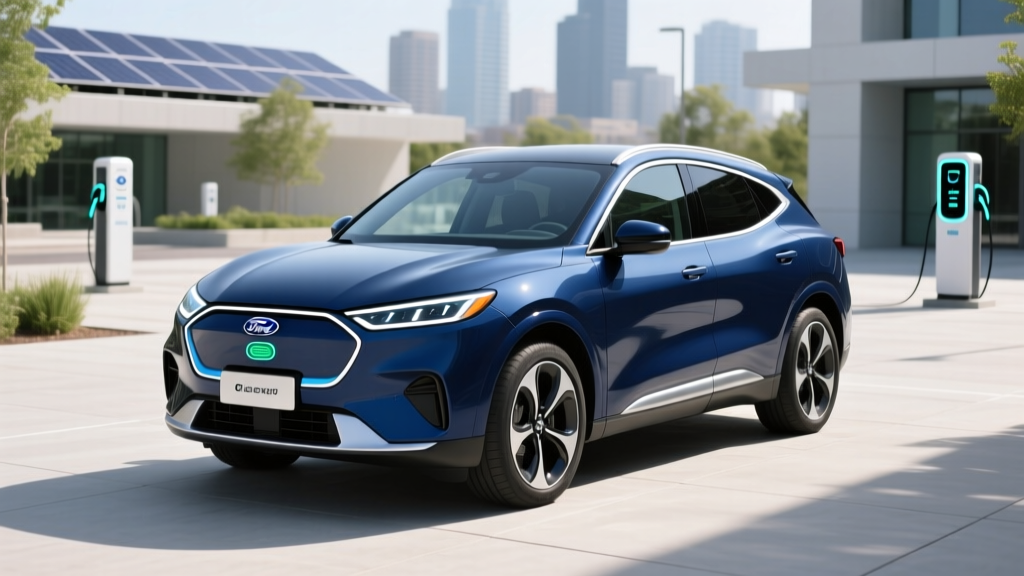
As of 2026, Ford does not sell a fully electric (battery-electric) Escape. The electrified option in the Escape lineup is the Ford Escape Plug-In Hybrid (PHEV), which pairs a 2.5-liter four-cylinder engine with an electric motor and a 14.4 kWh battery pack, delivering an EPA-estimated 37 miles of electric-only range and an EPA-estimated 105 MPGe combined when operating in EV mode. If you're searching for a fully electric Ford SUV, the closest current model is the Ford Mustang Mach-E. If you want a plug-in compact crossover with electric-only commuting capability and a gas engine for longer trips, the Escape PHEV is a practical fit.
Ford Escape PHEV: 2026 Specs and Electric-Only Range
The Escape PHEV operates as a front-wheel-drive plug-in hybrid, using a 2.5-liter Atkinson-cycle four-cylinder engine combined with an electric motor for a total system output of 210 horsepower. The 14.4 kWh lithium-ion battery pack (liquid-cooled) enables the 37-mile EV-only figure. Once that electric buffer is depleted, the vehicle transitions to hybrid operation, returning an EPA-estimated 40 MPG combined.
| Specification | 2026 Ford Escape PHEV |
|---|---|
| Powertrain | 2.5L I4 + electric motor (PHEV) |
| Total System Horsepower | 210 HP |
| Battery Capacity | 14.4 kWh (lithium-ion, liquid-cooled) |
| EPA Electric-Only Range | 37 miles |
| EPA MPGe (EV mode) | 105 MPGe combined |
| EPA MPG (hybrid mode) | 40 MPG combined |
| 0-60 mph | ~8.5 seconds |
| Level 1 Charging (120V) | ~1.4 kW, full charge in ~10-11 hours |
| Level 2 Charging (240V) | ~3.3 kW, full charge in ~3.5 hours |
| DC Fast Charging | Not supported |
| Base MSRP | ~$35,500 (before incentives) |
| Federal Tax Credit (§30D) | Up to $3,750 (see eligibility below) |
| Battery Warranty | 8 years / 100,000 miles |
Real-world range note: The 37-mile EPA estimate assumes moderate temperatures and mixed driving. Expect roughly 30-33 miles in highway-heavy commuting at 70+ mph, and as low as 25-28 miles in freezing temperatures (below 32°F), where cabin heating and battery chemistry reduce EV efficiency. In mild-weather city driving with regenerative braking, some owners report achieving the full 37 miles or slightly more.
Escape PHEV vs. Gas Escape vs. Full EV: Cost and Efficiency Compared
The core question for Escape shoppers is whether to choose the conventional gas model, the PHEV, or step up to a full battery-electric vehicle like the Mustang Mach-E. Here's how the numbers stack up.
| Metric | Escape Gas (2.0L EcoBoost AWD) | Escape PHEV (FWD) | Mustang Mach-E (Select RWD) |
|---|---|---|---|
| Base MSRP | ~$34,000 | ~$35,500 | ~$42,000 |
| EPA Combined Efficiency | 26 MPG | 105 MPGe (EV) / 40 MPG (hybrid) | 104 MPGe |
| Electric-Only Range | 0 miles | 37 miles | ~250 miles (full BEV) |
| Annual Fuel/Energy Cost* | ~$2,100 | ~$900-$1,300 | ~$700-$900 |
| Federal Tax Credit (§30D) | $0 | Up to $3,750 | Up to $7,500 |
| Home Charging Needed | No | Recommended (Level 1 works) | Essential (Level 2 recommended) |
*Annual costs assume 12,000 miles/year, $3.50/gallon gas, $0.15/kWh electricity. Actual costs vary by region and driving mix. Source: fueleconomy.gov.
Real Costs and Savings: 5-Year Ownership Breakdown
Upfront price is only part of the equation. Here's a five-year cost comparison assuming 12,000 miles/year, 70% of Escape PHEV miles driven on electricity, and home charging at $0.15/kWh.
| Cost Category | Escape Gas | Escape PHEV | Mustang Mach-E |
|---|---|---|---|
| Purchase Price (base) | $34,000 | $35,500 | $42,000 |
| Federal Tax Credit | $0 | -$3,750 | -$7,500 |
| Effective Purchase | $34,000 | $31,750 | $34,500 |
| 5-Year Fuel/Energy | $10,500 | $5,500 | $4,000 |
| 5-Year Maintenance (est.) | $3,500 | $3,000 | $2,000 |
| 5-Year Insurance (est.) | $7,500 | $7,500 | $9,000 |
| Home Charger Install | $0 | $0-$1,200 | $500-$1,500 |
| 5-Year Total (est.) | $55,500 | $47,750-$48,950 | $49,500-$51,000 |
Key takeaway: The Escape PHEV delivers the lowest five-year total cost among the three options in this scenario, largely because it avoids the higher insurance premiums and upfront costs of a full EV while still slashing fuel expenses. However, if you drive more than 12,000 miles annually or have access to free/cheap workplace charging, the Mach-E's fuel savings widen further.
Federal tax credit caveat: The Escape PHEV qualifies for up to $3,750 under IRS §30D, not the full $7,500. This is because the credit splits into two halves — $3,750 for battery-component sourcing and $3,750 for critical-mineral sourcing — and the Escape PHEV's smaller battery and supply-chain composition typically meet only one threshold. Eligibility also depends on your adjusted gross income (capped at $150,000 single / $300,000 joint) and the vehicle's MSRP (capped at $80,000 for SUVs). Consult a tax professional for your specific situation, and check current-year rules at irs.gov, as sourcing requirements tighten annually.
Charging the Escape PHEV at Home: What You Actually Need
Unlike a full battery-electric vehicle, the Escape PHEV does not require a Level 2 home charger to be practical — but one significantly improves the ownership experience.
Level 1 (standard 120V outlet): The included charging cord delivers approximately 1.4 kW, replenishing the 14.4 kWh battery in roughly 10-11 hours. This works if you can plug in overnight at home and your daily commute falls within the 37-mile EV range. No electrician or panel upgrade needed — just a dedicated 15-amp or 20-amp outlet near your parking spot.
Level 2 (240V outlet or wall charger): At approximately 3.3 kW (the vehicle's onboard charger limit), a full charge takes about 3.5 hours. This is useful if you make multiple short trips per day and want to recharge between drives, or if you simply prefer faster top-ups. Installation costs vary:
| Item | Estimated Cost |
|---|---|
| Level 2 EVSE (240V wall charger, 32A) | $300-$600 |
| Electrician labor (outlet install or hardwire) | $400-$1,200 |
| Permit (where required) | $50-$200 |
| Electrical panel upgrade (if needed, 200A service) | $1,500-$3,000 |
| Total (typical, no panel upgrade) | $750-$2,000 |
Panel upgrade reality: The Escape PHEV's 3.3 kW draw is modest — it adds roughly 14 amps at 240V. Most homes with a modern 200-amp panel will not require an upgrade. However, if your panel is older (100-amp service) or already near capacity with other high-draw appliances (electric range, dryer, HVAC), a licensed electrician should perform a load calculation before installation.
No DC fast charging: The Escape PHEV does not support DC fast charging. This is standard for PHEVs — their smaller batteries and lower charge rates make DCFC unnecessary. You will not use public fast-charging networks (Electrify America, EVgo, etc.) with this vehicle.
Common Misconceptions About the Ford Escape Electric Vehicle
| Myth | Fact |
|---|---|
| "There's a fully electric Ford Escape." | Ford does not currently produce a battery-electric Escape. The electrified option is the PHEV. For a full EV, look at the Mustang Mach-E or the upcoming electric Explorer (not sold in the U.S. as of 2026). |
| "PHEVs are just complicated — more things to break." | PHEV powertrains are well-established. Ford's hybrid synergy drive system has been in production since 2004. The 8-year/100,000-mile battery warranty reflects manufacturer confidence. |
| "37 miles of EV range isn't enough." | The average U.S. one-way commute is approximately 16 miles (U.S. Census Bureau). A 37-mile EV range covers most daily round-trips without using gasoline. |
| "I need a special home charger to own a PHEV." | Level 1 charging (standard wall outlet) fully replenishes the Escape PHEV overnight. A Level 2 charger is a convenience upgrade, not a requirement. |
| "The $3,750 tax credit applies to everyone." | §30D credits have income caps ($150K single / $300K joint), MSRP caps, and battery-sourcing requirements. Eligibility varies — verify at irs.gov or with a tax professional. |
Decision Framework: Should You Buy the Escape PHEV?
Choose the Ford Escape PHEV if:
- Your daily driving is under 40 miles and you can charge at home (even a standard outlet).
- You want to reduce fuel costs without committing to a full EV.
- You take regular road trips where charging infrastructure is sparse or unreliable.
- You live in a cold climate where EV range loss would significantly impact a short-range BEV.
- You want the lowest total cost of ownership in a compact crossover.
Choose a full EV (Mustang Mach-E or similar) if:
- You have reliable home Level 2 charging and your daily driving exceeds 40 miles.
- You want zero tailpipe emissions and maximum energy savings.
- You qualify for the full $7,500 federal tax credit.
- You're comfortable planning road-trip charging stops using DC fast-charging networks.
Choose the gas Escape if:
- You cannot charge at home or at work.
- Your budget is strictly limited to the lowest upfront price.
- You drive very few miles annually (under 5,000), where fuel savings don't offset the PHEV premium.
First-Time EV Buyer Essentials: What to Know Before You Decide
If the Escape PHEV is your first step into electrified driving, here are the practical realities that spec sheets don't always convey:
Cold-weather range loss is real but manageable. In temperatures below freezing, expect the Escape PHEV's EV range to drop by 20-30%, landing around 25-28 miles. This is less dramatic than in a full EV because the gas engine can provide cabin heat without draining the battery. Preconditioning the cabin while plugged in (using the FordPass app) mitigates some of this loss.
Your driving pattern determines your savings. If 80%+ of your miles fall within EV range, you'll spend very little on gasoline. If you frequently exceed 37 miles per day without charging in between, you'll operate in hybrid mode more often, reducing the economic advantage over the gas Escape.
Maintenance is lower, not zero. The PHEV still has an internal combustion engine requiring oil changes, coolant service, and air filter replacements — though at longer intervals than a conventional gas car due to the engine running less frequently. Brake wear is significantly reduced thanks to regenerative braking.
Insurance is comparable to the gas Escape. Unlike full EVs, which often carry 15-25% higher insurance premiums due to repair costs and battery replacement risk, the Escape PHEV's insurance costs are generally in line with its gas counterpart.
Frequently Asked Questions
Will Ford make a fully electric Escape?
Ford has not announced a battery-electric Escape as of early 2026. The company's electric SUV strategy currently centers on the Mustang Mach-E and the next-generation electric Explorer (available in Europe, not confirmed for U.S. sale). If a fully electric compact crossover is a priority, the Mach-E remains Ford's offering in this segment.
How long does the Escape PHEV battery last?
Ford warrants the high-voltage battery for 8 years or 100,000 miles (whichever comes first), covering defects and capacity loss below a specified threshold. Real-world data from Ford's hybrid/PHEV fleet suggests these batteries typically retain 85-90%+ capacity after 100,000 miles under normal use. Full replacement costs, if out of warranty, range from approximately $4,000 to $6,000 including labor.
Can I charge the Escape PHEV at a public charging station?
You can use public Level 2 (J1772 connector) stations, but the 3.3 kW onboard charge rate means it's slow — expect roughly 12 miles of EV range added per hour. DC fast chargers are not compatible. For most PHEV owners, home charging is the primary and most practical method.
Does the Escape PHEV qualify for HOV lane access?
This varies by state. California, for example, offers Clean Air Vehicle decals for qualifying PHEVs, but the program has income caps and application limits. Check your state's DMV or environmental agency for current rules.
What's the difference between the Escape PHEV and the Escape Hybrid?
The Escape Hybrid (HEV) is a conventional hybrid that cannot be plugged in and has no electric-only range — it uses a small battery to assist the gas engine for improved MPG (approximately 39 MPG combined). The PHEV has a larger battery, a plug, and 37 miles of EV-only driving. The PHEV costs more upfront but offers lower operating costs if you charge regularly.