The Short Answer on Ford's Electric Truck Prototype
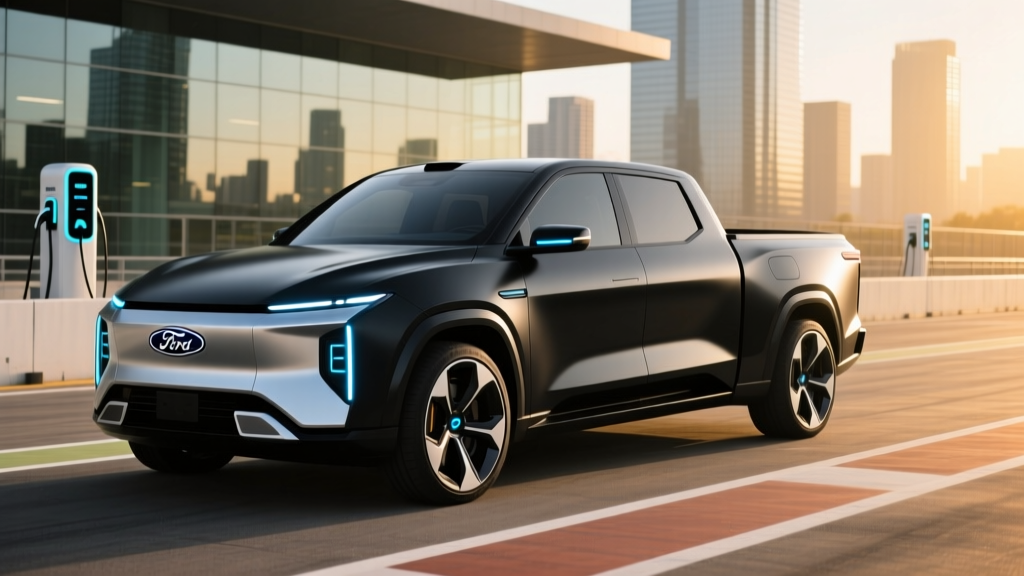
Ford's next-generation electric truck prototype — internally called the T3 ("Trust the Truck") — is an all-new, ground-up electric pickup scheduled for production at Ford's under-construction BlueOval City facility in Tennessee. As of early 2026, the T3 is still in pre-production testing and is not yet available for purchase. Ford has confirmed the vehicle will sit on a dedicated EV architecture (not a modified F-150 Lightning platform), target a larger battery pack than the Lightning's 131 kWh extended-range option, and offer improved towing and range. Expected production start is late 2026 or early 2027. If you need an electric truck today, the F-150 Lightning remains Ford's current offering, with an EPA-estimated range of up to 320 miles and a starting MSRP around $54,995 for the 2026 model year.
What Is the T3 Prototype, Exactly?
The T3 is Ford's code name for a next-generation electric pickup that represents a clean-sheet redesign rather than an evolution of the current F-150 Lightning. Where the Lightning adapted an existing F-150 body-on-frame architecture for electric power — a pragmatic but compromise-laden approach — the T3 is being engineered from the ground up as an EV. Ford CEO Jim Farley has described it publicly as the company's most important product launch of the decade.
Key engineering goals for the T3 platform include:
- Dedicated EV skateboard architecture — lower center of gravity, optimized weight distribution, and a flat floor enabling more interior and frunk volume
- Higher-capacity battery options — expected to exceed the Lightning's 131 kWh usable extended-range pack, potentially in the 140–160 kWh range based on supply-chain reporting
- Improved DC fast-charging capability — the Lightning peaks at roughly 150 kW on its extended-range pack; the T3 is expected to target 250+ kW peak charge rates
- Enhanced towing capacity — the Lightning maxes at 10,000 lbs (with the Max Tow package); Ford has signaled the T3 will push beyond this figure
- New electrical architecture — a centralized computing platform enabling over-the-air updates and more advanced ADAS features
Ford has invested heavily in this program. BlueOval City, the $5.6 billion manufacturing campus in Stanton, Tennessee, is purpose-built for T3 production and is expected to reach an annual capacity of approximately 250,000 units when fully ramped, according to Ford's investor disclosures.
How the T3 Compares to the Current F-150 Lightning and Gas F-150
Until the T3 reaches production, buyers choosing a Ford truck face a three-way decision: the current Lightning, a gas F-150, or waiting. Here's how the numbers stack up based on 2026 model-year data from fueleconomy.gov and Ford's published specifications.
| Specification | F-150 Lightning (Extended Range) | F-150 Gas (3.5L EcoBoost 4WD) | T3 Prototype (Estimated) |
|---|---|---|---|
| EPA Range | 320 mi | ~520 mi (26-gal tank, 20 MPG combined) | 350–400+ mi (preliminary target) |
| Battery / Fuel Capacity | 131 kWh usable (NMC) | 26 gal gasoline | ~140–160 kWh (estimated, NMC) |
| Peak DC Fast Charge | ~150 kW | N/A | 250+ kW (target) |
| 10–80% DC Charge Time | ~41 min | ~5 min (refuel) | ~20–25 min (target) |
| Max Towing Capacity | 10,000 lbs | 14,000 lbs | 12,000+ lbs (target) |
| 0–60 mph | ~3.8 sec (Extended Range) | ~5.5 sec | TBD |
| Horsepower | 580 hp | 400 hp | TBD (likely 600+ hp) |
| Starting MSRP | ~$54,995 | ~$42,000 (XLT 4WD) | TBD (est. $55,000–$65,000) |
| Federal Tax Credit (§30D) | Up to $7,500 (eligibility varies) | $0 | Likely eligible (U.S.-built) |
Real-World Range Reality Check
The Lightning's 320-mile EPA figure is measured under ideal mixed-driving conditions. In our experience and consistent with third-party testing, expect ~240–270 miles at sustained highway speeds (70–75 mph), and potentially ~200–220 miles in sub-freezing temperatures due to battery thermal demands and cabin heating. Towing cuts range dramatically — plan for 120–160 miles when pulling a 5,000+ lb trailer. The T3's larger battery target should mitigate this, but physics remains physics: towing and cold weather hit every EV hard.
Real Costs: Electric Truck vs. Gas Truck Ownership
The purchase price tells only part of the story. For truck buyers who keep their vehicles five years and drive 15,000 miles annually, total cost of ownership (TCO) is where the electric-vs-gas calculus gets decided.
| Cost Category | F-150 Lightning (Extended Range) | F-150 Gas (3.5L EcoBoost 4WD) |
|---|---|---|
| Purchase Price (base MSRP) | $54,995 | $42,000 |
| Federal Tax Credit (§30D) | –$7,500 (if eligible) | $0 |
| Net Purchase Cost | $47,495 | $42,000 |
| Fuel / Energy (75,000 mi) | $4,500–$6,750 (home + public mix) | $9,375 ($3.50/gal, 20 MPG) |
| Maintenance (5 yr) | $1,200–$1,800 | $3,500–$4,500 |
| Insurance (5 yr avg) | $9,000–$11,000 | $7,000–$9,000 |
| Estimated 5-Yr Depreciation | $22,000–$28,000 | $18,000–$22,000 |
| Total 5-Yr Cost (est.) | $84,000–$95,000 | $80,000–$87,000 |
Key takeaway: The Lightning's energy and maintenance savings recover roughly $5,000–$8,000 over five years compared to gas, but higher insurance premiums and steeper depreciation (a persistent issue for most EVs as battery technology advances rapidly) narrow the gap. The T3, if priced aggressively and built at BlueOCity's scale, could shift this equation — particularly if Ford achieves lower manufacturing costs on the dedicated EV platform.
Energy costs vary enormously by charging behavior. Home Level 2 charging at the national average of ~$0.16/kWh costs roughly $0.06 per mile for the Lightning (using ~2.0 kWh/mi or 50 MPGe equivalent, per EPA data). DC fast charging at $0.40–$0.50/kWh pushes that to $0.10–$0.13 per mile — approaching gas costs. If you cannot charge at home, the economic case for any electric truck weakens substantially.
What First-Time EV Truck Buyers Must Know
If you're considering an electric pickup — whether the current Lightning or the upcoming T3 — these realities are non-negotiable:
Home Charging Is Essential, Not Optional
A Level 2 home charger (240V, 40–48 amps / 9.6–11.5 kW) is the backbone of practical EV truck ownership. Expect to pay $800–$1,500 for the charger hardware and $1,000–$3,000 for professional installation depending on your electrical panel's capacity. A 200-amp service panel is typically sufficient; older homes with 100-amp panels may need a $2,000–$4,000 panel upgrade. The Lightning's onboard charger accepts up to 11.3 kW on Level 2, adding roughly 30 miles of range per hour — enough for a full overnight replenishment.
Towing and Payload Cut Range in Half
This is the most underappreciated limitation of electric trucks. Aerodynamic drag and the mass of a loaded trailer force the battery to work exponentially harder. Plan conservatively: a 320-mile range truck pulling a 6,000-lb camper may deliver just 130–160 miles before needing a charge. For frequent heavy towers, a gas or diesel truck remains the pragmatic choice until charging infrastructure catches up along major towing corridors.
Cold Weather Demands Planning
Lithium-ion batteries lose efficiency in cold temperatures, and cabin heating draws significant energy. Expect a 20–35% range reduction in sustained sub-30°F conditions. Both the Lightning and T3 use (or will use) active thermal management and heat pumps to mitigate this, but preconditioning the battery while plugged in is critical to preserving range and enabling fast DC charging in winter.
The §30D Tax Credit Has Strings Attached
The federal EV tax credit under IRS §30D can deliver up to $7,500, but eligibility depends on multiple factors that change annually:
- MSRP caps: Trucks/vans/SUVs must have an MSRP at or below $80,000
- Buyer income limits: Modified AGI cannot exceed $150,000 (single) / $300,000 (joint)
- Battery sourcing requirements: Critical minerals and battery components must meet escalating domestic/free-trade-partner thresholds — these tighten each year through 2032
- Point-of-sale transfer: As of 2024, eligible buyers can transfer the credit to the dealer at purchase for an immediate price reduction rather than waiting for a tax refund
The T3, built in Tennessee, is highly likely to qualify for at least partial credit at launch — but verify exact eligibility at the time of purchase, as sourcing rules evolve. Consult a tax professional for your specific situation.
| Myth | Fact |
|---|---|
| "Electric trucks can't tow anything useful." | The Lightning tows up to 10,000 lbs. The T3 targets 12,000+. The limitation is range while towing, not capability. |
| "You'll need to replace the battery for $20,000 in a few years." | Ford warranties the Lightning battery for 8 years/100,000 miles with a 70% capacity retention threshold. Real-world degradation data from Lightning owners shows ~5–8% loss over 3 years/60,000 miles. |
| "Charging takes too long for road trips." | The Lightning's 10–80% charge takes ~41 minutes at a 150 kW DC station. The T3's 250+ kW target could cut this to 20–25 minutes — comparable to a meal break. |
| "Electric trucks are worse in winter." | Range drops 20–35% in cold, but EVs start reliably in any temperature, and preconditioning while plugged in mitigates much of the loss. AWD electric trucks have excellent traction with instant torque. |
| "The T3 is basically a redesigned Lightning." | The T3 uses an entirely new dedicated EV architecture — different platform, different factory, different electrical systems. It shares very little with the current Lightning beyond the Blue Oval badge. |
Should You Wait for the T3 or Buy Now?
This is the core decision facing Ford truck buyers in 2026. The answer depends on your timeline, use case, and risk tolerance.
Decision Framework: Wait or Buy Now
Buy the F-150 Lightning now if:
- You need a truck within the next 6 months
- Your daily driving is under 200 miles and you have home charging
- You tow occasionally but not frequently over long distances
- You want to lock in current §30D tax credit eligibility before sourcing rules tighten further
- You value a proven platform with established service networks and real-world ownership data
Wait for the T3 prototype to become a production truck if:
- Your current truck is functional and you can wait 12–18 months
- Range is your primary concern and you want 350+ miles
- You need faster DC charging for regular road trips or commercial use
- You tow frequently and need the extra range buffer a larger battery provides
- You want the latest ADAS and software-defined vehicle features that the T3's new electrical architecture enables
Choose a gas or hybrid F-150 instead if:
- You cannot install a home charger (apartment, street parking, no garage access)
- You regularly tow heavy trailers over 200+ mile routes
- You drive in remote areas with sparse DC fast-charging infrastructure
- Your annual mileage is low enough that fuel savings won't offset the EV price premium
Frequently Asked Questions
When will the Ford T3 electric truck be available to buy?
Ford has targeted a production start at BlueOval City in late 2026 or early 2027. First customer deliveries would likely follow in the first half of 2027. Exact timing depends on construction progress, supply-chain readiness, and production ramp — all of which have historically slipped for new EV platforms. Treat any date as preliminary until Ford opens reservations.
How much will the T3 cost?
Ford has not published official pricing. Based on the Lightning's current positioning ($54,995–$96,000+ depending on trim) and Ford's stated goal of making the T3 its highest-volume truck, industry analysts expect a base MSRP in the $55,000–$65,000 range for entry-level trims, with premium trims reaching $80,000+. The §30D tax credit's $80,000 MSRP cap for trucks will likely influence Ford's pricing strategy for higher trims.
Will the T3 use the same charging connector as the Lightning?
The current F-150 Lightning uses the CCS1 connector, but Ford has committed to transitioning its entire North American EV lineup to the NACS (Tesla-style) connector by 2025–2026. The T3 will almost certainly launch with a native NACS port, giving it direct access to Tesla's Supercharger network — currently the largest and most reliable DC fast-charging network in the U.S. with over 25,000 stalls.
Can the T3 power my home during an outage?
The current F-150 Lightning offers Ford Intelligent Backup Power, which can supply up to 9.6 kW to a home through a professionally installed transfer switch — enough to run essential circuits for approximately 3–10 days depending on consumption. Ford has indicated the T3 will retain and likely expand this vehicle-to-home (V2H) capability, but specific power output and integration details have not been confirmed.
Is the F-150 Lightning being discontinued when the T3 launches?
Ford has not confirmed the Lightning's future post-T3 launch. The Lightning is built at the Rouge Electric Vehicle Center in Dearborn, Michigan, while the T3 will be built at BlueOval City in Tennessee. It's possible Ford produces both concurrently during a transition period, or that the T3 effectively replaces the Lightning. Ford's production decisions will depend on demand, factory capacity, and profitability.
How does electric truck maintenance compare to gas?
EVs eliminate oil changes, transmission fluid service, spark plugs, exhaust system repairs, and many other ICE maintenance items. Regenerative braking significantly extends brake pad life. The Lightning's scheduled maintenance over 5 years/75,000 miles typically costs $1,200–$1,800 (cabin air filters, tire rotations, fluid top-offs) versus $3,500–$4,500 for a gas F-150. Tires, however, wear faster on EVs due to higher vehicle weight and instant torque — budget for a tire replacement around 30,000–40,000 miles.
The Bottom Line for Truck Buyers
The Ford T3 electric truck prototype represents a genuine generational leap over the Lightning — a dedicated EV platform with more range, faster charging, and greater towing capability. But "prototype" is the operative word: it isn't real yet for buyers. If your truck needs are immediate, the 2026 F-150 Lightning is a capable, proven electric pickup with strong real-world ownership data, meaningful fuel and maintenance savings for home-chargers, and available tax credits. If you can wait and your use case demands maximum range and charging speed, the T3 is worth watching closely — just don't plan your purchase around an unconfirmed timeline. Either way, run the numbers for your specific driving patterns, electricity rates, and charging access before committing.