Quick Answer: Is the 2026 Ford Mustang Mach-E in Electric Blue Worth It?
The 2026 Ford Mustang Mach-E (available in the signature Ford Electric Blue paint) starts at approximately $42,995 for the Select RWD trim with a 75.7 kWh LFP battery and an EPA-estimated 250 miles of range. The Extended Range AWD model pushes to 320 miles EPA with a 91 kWh NMC pack, starting around $53,995. DC fast charging peaks at 150 kW (10–80% in roughly 35 minutes for the standard pack). Federal §30D tax-credit eligibility depends on battery sourcing, MSRP caps, and buyer income — consult the IRS §30D page before assuming a full $7,500 credit. Real-world highway range drops to roughly 210–230 miles (Select) and 270–290 miles (Extended Range), with additional 15–30% loss in cold weather below 32°F.
Ford Electric Blue: More Than Just a Paint Code
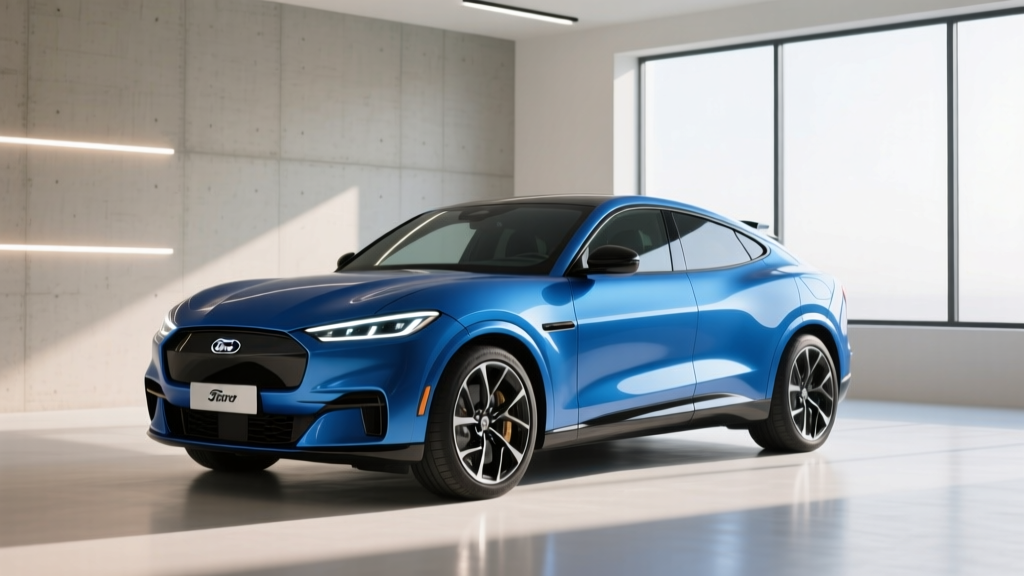
"Ford Electric Blue" is a signature exterior color Ford introduced for its electrified lineup, most prominently on the Mustang Mach-E. It is not a separate model or trim — it is a premium metallic paint option available across Select, Premium, California Route 1, and GT trims. The color has become shorthand among Mach-E shoppers for the EV identity Ford is building, but the buying decision underneath that paint is the same one every Mach-E buyer faces: which battery, which drivetrain, and what real-world range and charging experience you will actually get.
For 2026, the Mach-E lineup continues with two battery options, RWD and AWD configurations, and a GT performance variant producing up to 480 horsepower and a 3.5-second 0–60 mph time. The core question for buyers eyeing a Ford Electric Blue Mach-E is whether the EV ownership math — purchase price, charging infrastructure, insurance, and maintenance — works better than the gas or hybrid alternatives they are cross-shopping.
2026 Mustang Mach-E Specs: Range, Battery, and Charging
Here are the exact numbers Ford publishes, paired with real-world expectations based on highway driving, cold climates, and sustained DC charging behavior.
| Specification | Select RWD (Std Range) | Premium AWD (Ext Range) | GT (Ext Range AWD) |
|---|---|---|---|
| Battery Capacity (usable) | 75.7 kWh (LFP) | 91 kWh (NMC) | 91 kWh (NMC) |
| EPA Range | 250 mi | 320 mi | 280 mi |
| Real-World Highway Range | ~210–230 mi | ~270–290 mi | ~230–250 mi |
| Cold-Weather Range (below 32°F) | ~175–200 mi | ~225–250 mi | ~190–215 mi |
| Peak DC Fast Charge | 150 kW | 150 kW | 150 kW |
| 10–80% DC Charge Time | ~35 min | ~41 min | ~41 min |
| Level 2 (240V) Charge Rate | 10.5 kW | 10.5 kW | 10.5 kW |
| Level 2 0–100% Time | ~8.5 hrs | ~10 hrs | ~10 hrs |
| Horsepower | 266 hp | 346 hp | 480 hp |
| 0–60 mph | 6.3 sec | 5.1 sec | 3.5 sec |
| MPGe (Combined) | 101 MPGe | 98 MPGe | 84 MPGe |
| Base MSRP (2026) | $42,995 | $53,995 | $62,995 |
| Battery/Powertrain Warranty | 8 yr / 100,000 mi | 8 yr / 100,000 mi | 8 yr / 100,000 mi |
Real-World Range Reality Check
The EPA sticker on the Extended Range Premium says 320 miles. On a 75°F day at 65 mph on flat terrain, you may see 290–300 miles. At 80 mph, in 40°F weather with the heater running, expect closer to 225–240 miles. LFP batteries (Select trim) tolerate frequent 100% charging better than NMC, which benefits from daily charging to 80–90% and 100% only before road trips. Always precondition the battery before DC fast charging to hit peak kW — skipping preconditioning can cut charge speed by 30–50% in cold weather.
EV vs Gas vs Hybrid: What Are You Actually Comparing?
Most Mach-E shoppers cross-shop the Toyota RAV4 Hybrid, Honda CR-V Hybrid, and the gas-powered Ford Explorer. Here is how the numbers stack up on an annual basis, assuming 12,000 miles per year and national average fuel/electricity prices.
| Metric | 2026 Mach-E (Ext Range) | Toyota RAV4 Hybrid | Ford Explorer (Gas, AWD) |
|---|---|---|---|
| Base MSRP | $53,995 | $33,975 | $39,500 |
| Fuel/Energy Cost per Year | ~$600 (home charging) | ~$1,350 (39 MPG combined) | ~$2,400 (23 MPG combined) |
| Annual Maintenance | ~$300 | ~$500 | ~$650 |
| 5-Year Fuel/Energy Total | $3,000 | $6,750 | $12,000 |
| 5-Year Maintenance Total | $1,500 | $2,500 | $3,250 |
| EPA Combined Efficiency | 98 MPGe | 39 MPG | 23 MPG |
The Mach-E costs roughly $20,000 more upfront than a RAV4 Hybrid. However, the annual energy and maintenance savings of approximately $1,400–$2,800 narrow that gap over a 5–7 year ownership horizon. The EPA fueleconomy.gov comparison tool lets you plug in your local electricity rate and gas price to get a personalized number. If you pay $0.30/kWh for public DC fast charging exclusively (no home charging), your annual energy cost climbs to roughly $1,500 — erasing much of the fuel-cost advantage.
Total Ownership Cost Breakdown: 5-Year Projection
| Cost Category | Mach-E Premium AWD | RAV4 Hybrid AWD |
|---|---|---|
| Purchase Price (MSRP) | $53,995 | $33,975 |
| Federal Tax Credit (§30D est.) | Up to $7,500* | $0 |
| Effective Purchase Price | ~$46,495 | $33,975 |
| 5-Year Energy/Fuel | $3,000 | $6,750 |
| 5-Year Maintenance | $1,500 | $2,500 |
| 5-Year Insurance (est. avg) | $9,500 | $7,000 |
| Home Charger Install (Level 2) | $1,200–$2,500 | $0 |
| Estimated 5-Year Total Cost | ~$61,695–$62,995 | ~$50,225 |
*Federal §30D credit eligibility requires meeting MSRP caps (SUVs: $80,000), buyer income limits ($150K single / $300K joint AGI), and battery critical-mineral and component sourcing thresholds that shift annually. Verify current-year rules at irs.gov or with a tax professional. Point-of-sale transfer is available through registered dealers, reducing the purchase price directly at signing.
Insurance is the often-overlooked cost. EV insurance premiums run 15–25% higher than equivalent gas vehicles due to battery replacement costs and specialized repair requirements. Get quotes before purchasing — the Mach-E's insurance delta versus a RAV4 Hybrid can be $400–$600 per year depending on your state, driving record, and coverage level.
Home Charging: Do You Have Access, and What Will It Cost?
The single biggest ownership variable is whether you can charge at home. Roughly 80% of EV charging happens at a residence, and without home access, the convenience and cost advantages of an EV shrink considerably.
| Charging Level | Power | Miles of Range Added per Hour | Typical Use Case |
|---|---|---|---|
| Level 1 (120V outlet) | ~1.4 kW | 3–5 mi/hr | Overnight top-up, low-mileage drivers |
| Level 2 (240V, home) | 7–11.5 kW | 20–35 mi/hr | Daily charging, full overnight refill |
| DC Fast Charge (public) | 50–350 kW | 150–250+ mi in 30 min | Road trips, emergency top-ups |
A Level 2 home charger (such as the Ford Charge Station Pro or a ChargePoint Home Flex) costs $500–$800 for the equipment. Professional installation by a licensed electrician typically runs $600–$1,700 depending on the distance from your electrical panel, whether a panel upgrade from 100A to 200A is needed (add $1,500–$3,000 if required), and local permit fees ($50–$200).
| Component | Low Estimate | High Estimate |
|---|---|---|
| Level 2 Charger Unit | $500 | $800 |
| Electrician Labor & Wiring | $600 | $1,700 |
| Electrical Panel Upgrade (if needed) | $1,500 | $3,000 |
| Permit & Inspection | $50 | $200 |
| Total (no panel upgrade) | $1,150 | $2,700 |
| Total (with panel upgrade) | $2,650 | $5,700 |
If you live in an apartment or condo without dedicated parking and charging access, rely on public DC fast charging networks like Electrify America, EVgo, or the expanding Tesla Supercharger network (the 2026 Mach-E ships with a NACS charge port for native access). Public DC fast charging costs $0.30–$0.55/kWh in most metro areas — roughly double the cost of home charging at the national average residential rate of $0.16/kWh.
Common EV Misconceptions: Fact vs Fiction
| Myth | Fact |
|---|---|
| "EV batteries need replacing every few years." | The Mach-E's battery is warrantied for 8 years / 100,000 miles against capacity loss below 70%. Real-world data from earlier model-year Mach-Es shows roughly 5–8% degradation at 60,000 miles. Full battery replacement (if ever needed out of warranty) runs $12,000–$18,000. |
| "EVs don't work in cold weather." | Range drops 15–30% below freezing due to battery chemistry and cabin heating demands. A Mach-E Extended Range that gets 300 miles at 70°F may deliver 220–240 miles at 20°F. Preconditioning while plugged in mitigates some of this loss. EVs start reliably in cold — unlike gas engines, there is no cold-crank issue. |
| "You can't take an EV on a road trip." | The Mach-E Extended Range with NACS access can use Tesla Superchargers (150+ kW), Electrify America, and other networks. A 600-mile trip requires 2 charging stops of roughly 25–35 minutes each. Plan with apps like A Better Routeplanner for realistic stop timing. |
| "EVs are worse for the environment because of battery mining." | Lifecycle analyses from Argonne National Laboratory and the ICCT show EVs produce 50–70% fewer lifecycle emissions than gas cars in the US grid mix, even accounting for battery manufacturing. The grid continues to get cleaner, improving the EV equation over time. |
| "The federal tax credit is $7,500 for everyone." | §30D has MSRP caps ($80K for SUVs like the Mach-E), AGI income limits ($150K single, $300K joint), and battery sourcing requirements that change annually. Not every buyer qualifies for the full amount. Always verify on irs.gov. |
Decision Framework: Should You Buy the Ford Electric Blue Mach-E?
Buy the Mach-E if:
- You have home charging access (garage, driveway, or workplace Level 2) — this is where 80%+ of your charging will happen at the lowest cost.
- Your daily driving is under 80 miles round-trip — even the Standard Range model covers this easily with buffer for errands and detours.
- You want a sporty crossover with real performance (480 hp GT, 3.5s 0–60) without gas costs.
- You qualify for some or all of the §30D credit, narrowing the price gap versus hybrid competitors.
- You value NACS Supercharger access — the 2026 Mach-E's native NACS port eliminates the adapter hassle of earlier model years.
Look at a Hybrid or Gas Vehicle if:
- You cannot charge at home or work — exclusive reliance on public DC fast charging is expensive ($0.30–$0.55/kWh) and time-consuming.
- You regularly drive 300+ miles in a single day in regions with sparse charging infrastructure (rural routes, some Midwest and Mountain West corridors).
- Your budget is under $35,000 — a RAV4 Hybrid or CR-V Hybrid delivers strong fuel economy (39–40 MPG) at a significantly lower purchase price with no charging dependency.
- You live in extreme cold (frequent sub-zero °F temps) and have no garage — range loss and charging slowdowns become significant daily inconveniences.
What First-Time EV Buyers Should Know Before Signing
If the Ford Electric Blue Mach-E is your first EV, these ownership realities are not always obvious on the showroom floor:
- kW vs kWh matters. kW (kilowatts) measures power — how fast you charge. kWh (kilowatt-hours) measures energy — how big the battery is. A 91 kWh battery charged at 10.5 kW takes roughly 8.5 hours from empty to full. A 150 kW DC fast charger fills it much faster but only up to ~80%, after which the charge curve tapers sharply to protect the battery.
- LFP vs NMC chemistry affects your habits. The Select trim uses LFP (lithium iron phosphate), which is heavier but tolerates frequent 100% charges and has a longer cycle life. The Extended Range uses NMC (nickel manganese cobalt), which offers more energy density (longer range) but benefits from daily charging limited to 80–90%.
- Precondition before fast charging. Use the Mach-E's navigation to route to a DC fast charger — the car will automatically warm the battery for optimal charge speed. Arriving at a 150 kW charger with a cold battery may limit you to 50–75 kW.
- Regenerative braking changes how you drive. The Mach-E offers one-pedal driving mode, where lifting off the accelerator slows the car significantly and recaptures energy. Most EV owners prefer this mode after a brief adjustment period.
- Tire wear is higher on EVs. The Mach-E's weight (~4,800 lbs for Extended Range AWD) and instant torque accelerate tire wear by roughly 20–30% versus a comparable gas crossover. Budget for tire replacement every 30,000–40,000 miles instead of 50,000+.
- BlueCruise is Level 2, not self-driving. Ford's BlueCruise hands-free highway assist operates on pre-mapped divided highways. You must remain attentive — the system monitors your eyes. It does not handle city streets, construction zones, or adverse weather autonomously.
SAE Automation Level: BlueCruise
Ford BlueCruise is a Level 2 driver-assistance system. The driver must remain engaged and ready to take over at any moment. It is not Level 4 autonomous driving (which describes driverless robotaxis like Waymo operating in geofenced areas). Hands-free does not mean attention-free.
Frequently Asked Questions
Is Ford Electric Blue a specific Mach-E trim?
No. Ford Electric Blue is an exterior paint color available across multiple Mach-E trims (Select, Premium, GT). It is not a separate model, special edition, or performance package.
Does the 2026 Mach-E qualify for the full $7,500 federal tax credit?
It depends. The Mach-E is assembled in Mexico, and §30D battery sourcing and critical-mineral requirements determine the credit amount — which can be $0, $3,750, or $7,500 depending on the model year's sourcing compliance. Buyer income must be under $150K (single) or $300K (joint) AGI, and the MSRP must be under $80,000 (SUV cap). Check the latest eligibility list on fueleconomy.gov and confirm with your dealer and tax professional.
How long does it take to charge a Mach-E at home overnight?
On a Level 2 (240V) home charger at 10.5 kW, the Standard Range (75.7 kWh) battery charges from 10–100% in roughly 7–8 hours. The Extended Range (91 kWh) takes about 9–10 hours. Both easily refill overnight for daily driving needs of 40–80 miles.
What is the real-world range of the Mach-E on a road trip?
Expect roughly 85–92% of the EPA sticker at highway speeds (70–75 mph) in mild weather. For the Extended Range AWD (320 mi EPA), plan for 270–290 real highway miles before needing to charge. In winter, subtract another 15–25% depending on temperature and cabin heating use.
Can I use Tesla Superchargers with the 2026 Mach-E?
Yes. The 2026 Mustang Mach-E comes equipped with a native NACS (North American Charging Standard) charge port, giving direct access to Tesla's Supercharger network without an adapter. This is one of the Mach-E's strongest practical advantages for road-trip charging.
How much does it cost to charge a Mach-E per mile?
At the national average residential electricity rate of ~$0.16/kWh and the Mach-E's efficiency of roughly 3.0 miles/kWh, home charging costs about $0.053 per mile. At a public DC fast charger averaging $0.40/kWh, the cost rises to roughly $0.133 per mile. For comparison, a gas crossover at 25 MPG and $3.40/gallon costs about $0.136 per mile.