Quick Answer: Is the Ford E-Transit Electric Blue the Right Fleet Van?
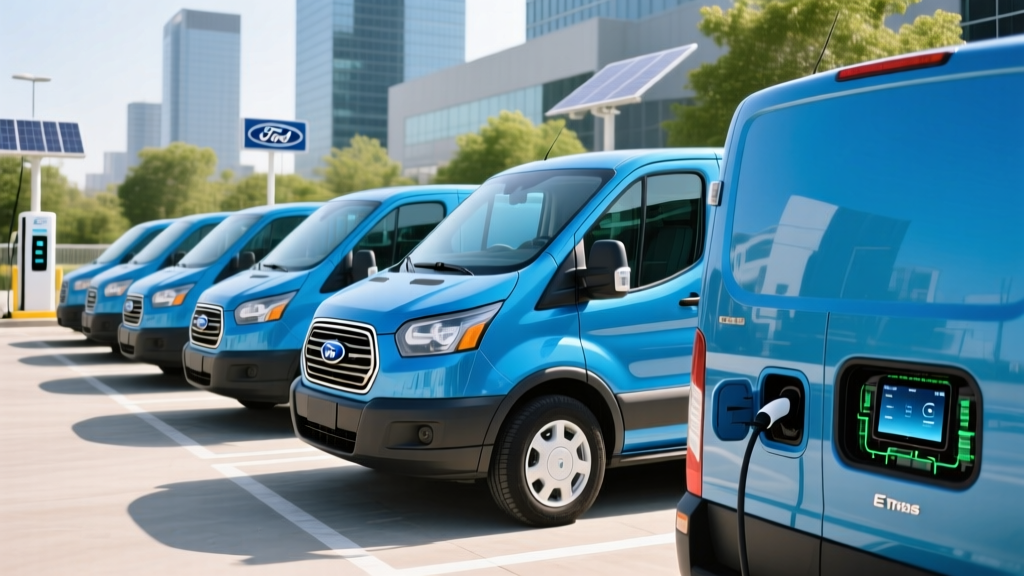
The 2026 Ford E-Transit (available in Ford's signature Electric Blue fleet colorway) delivers a 126-mile EPA range, 126 kW peak DC fast charging, and 266 hp / 317 lb-ft of torque from a 68 kWh usable LFP battery pack. Starting at $46,895 MSRP before the §30D commercial tax credit, it is best suited for urban and suburban fleet routes under 80 miles per day with reliable depot charging. Fleets that exceed 120 miles daily without mid-day charging or operate in extreme cold should compare against the gas Transit or wait for extended-range variants.
Range, Battery & Efficiency: The Numbers That Matter
The E-Transit's 68 kWh usable lithium iron phosphate (LFP) battery is paired with a rear-mounted electric motor producing 266 hp and 317 lb-ft of torque. Ford's choice of LFP chemistry is deliberate: it sacrifices some energy density for longer cycle life (typically 3,000+ cycles vs ~1,500 for NMC), lower degradation, and reduced thermal runaway risk — all critical for commercial duty cycles.
EPA Range: 126 miles (cutaway/chassis cab variants may rate lower)
Real-World Expectation: 95–110 miles in mixed urban/suburban driving with moderate payload. In cold weather (below 32°F), expect a 20–30% reduction, yielding roughly 80–95 miles. Highway-speed runs (70+ mph) with a full 3,800-lb payload can drop usable range to ~85 miles.
Efficiency: ~2.0–2.4 kWh/mile loaded (per fueleconomy.gov)
This range profile makes the E-Transit a purpose-built last-mile and metro-area workhorse, not a long-haul vehicle. Ford has been transparent about this positioning: the van is designed around the finding that most commercial fleet vans drive under 75 miles per day.
Charging Speed & Depot Setup
Charging infrastructure is the make-or-break factor for E-Transit adoption. Here's what the van supports:
| Charging Level | Power (kW) | Time / Rate | Best Use |
|---|---|---|---|
| Level 1 (120V AC) | ~1.4 kW | ~4 mi/hr added | Emergency/trickle only |
| Level 2 (240V AC, 48A) | 11.5 kW | ~10–11 hours (0–100%) | Overnight depot charging |
| DC Fast Charging | 126 kW peak | ~45 min (10–80%) | Mid-day top-up, opportunity charging |
The 126 kW peak DC rate is modest compared to passenger EVs like the Hyundai Ioniq 5 (240 kW) but adequate for fleet depots that charge overnight on Level 2. The charge curve tapers significantly above 80% SoC — a 10–80% session takes roughly 45 minutes, but 80–100% can add another 30+ minutes. For fleet managers, programming vehicles to charge to 80–90% overnight and using DC fast charging for mid-day top-ups maximizes battery longevity.
The E-Transit uses a CCS1 connector for DC fast charging and a J1772 inlet for Level 2. Ford Pro's charging management software allows fleet managers to schedule charging windows, monitor energy use, and optimize electricity costs (charging during off-peak utility rates can cut fuel costs by 40–60% vs unmanaged charging).
Total Cost of Ownership: E-Transit vs Gas Transit
The upfront price premium of the E-Transit is offset by dramatically lower fuel and maintenance costs. Here's a realistic 5-year / 100,000-mile comparison for a metro delivery route averaging 60 miles/day, 250 days/year:
| Cost Category | Ford E-Transit (EV) | Ford Transit 250 (Gas, 3.5L V6) |
|---|---|---|
| Base MSRP (cargo van, low roof) | $46,895 | $45,565 |
| Federal §30D Commercial Credit | Up to $7,500* | $0 |
| Net Purchase Price | ~$39,395 | $45,565 |
| Fuel/Energy (5 yr, 75,000 mi) | ~$4,500 (at $0.13/kWh avg) | ~$13,125 (at $3.50/gal, 16 MPG) |
| Maintenance (5 yr) | ~$1,800 | ~$5,500 |
| Insurance (5 yr avg) | ~$11,500 | ~$9,800 |
| 5-Year Total | ~$57,195 | ~$74,000 |
*The IRS §30D credit up to $7,500 applies to qualifying commercial EVs. Fleet buyers purchasing through a business entity may instead qualify under the §45W commercial clean vehicle credit. Consult a tax professional for entity-specific eligibility, battery sourcing requirements, and MSRP/income caps.
The E-Transit saves roughly $16,800 over 5 years in this scenario, even factoring in slightly higher commercial EV insurance premiums. The break-even point vs a gas Transit typically arrives between years 2 and 3 for high-utilization fleets.
Common Misconceptions About Electric Fleet Vans
| Myth | Fact |
|---|---|
| "126 miles of range isn't enough for any real business." | The average US commercial van drives 60–74 miles/day (US Census vehicle-use data). The E-Transit covers 85%+ of typical fleet routes with margin. |
| "EV batteries need replacing every few years." | Ford warranties the E-Transit battery for 8 years / 100,000 miles with a capacity retention threshold of 70%. LFP chemistry typically degrades ~1–2% per year under normal fleet use. |
| "Depot charging costs more than gas." | At the national commercial average of $0.11–0.15/kWh, the E-Transit's energy cost is roughly $0.06–0.08/mile vs $0.22/mile for a 16 MPG gas Transit at $3.50/gal. |
| "You can't tow or carry heavy loads with an EV van." | The E-Transit has a max payload of 3,880 lbs (cargo van) and a 7,500-lb max towing capacity. Payload does reduce range, but torque delivery is instant and strong. |
| "Cold weather makes EV vans useless." | Range drops 20–30% below freezing. For a 126-mi EPA van, that means ~88–100 real-world miles in winter. Fleets in northern climates should plan routes conservatively and use preconditioning to mitigate loss. |
Real-World Ownership: What Fleet Managers Actually Deal With
Home vs Depot Charging Access
Unlike passenger EVs, commercial vans almost always charge at a fleet depot or yard. This is an advantage: Level 2 depot chargers (typically 11.5–19.2 kW per stall) can fully replenish an E-Transit overnight. However, installing 10+ Level 2 chargers at a single site may require a commercial panel upgrade or dedicated transformer, costing $15,000–$80,000+ depending on existing electrical capacity. Utility make-ready programs (offered by PG&E, ConEd, Xcel, and others) can offset 50–100% of infrastructure costs.
Climate & Driving Pattern Considerations
- Warm-climate urban fleets (LA, Phoenix, Miami): Ideal E-Transit use case. Minimal range loss, consistent daily routes, overnight depot charging covers all needs.
- Cold-climate fleets (Chicago, Minneapolis, Boston): Plan for 20–30% winter range loss. The E-Transit includes a resistive cabin heater (not a heat pump), which draws significant energy. Preconditioning while plugged in is essential.
- Highway-heavy or rural routes: If daily routes exceed 100 miles with sustained 65+ mph driving, the E-Transit's range is insufficient without mid-day DC charging. Consider a PHEV or gas van for these routes.
Driver Experience & ADAS
The E-Transit includes Ford Co-Pilot360 as standard: automatic emergency braking, lane-keeping assist, and a rearview camera. Available adaptive cruise control reduces driver fatigue on highway segments. Note that these are SAE Level 2 driver-assistance features — the driver must remain fully engaged at all times. There is no "self-driving" capability.
Decision Framework: Should You Spec the E-Transit Electric Blue?
Choose the Ford E-Transit (Electric Blue) If:
- Your average daily route is under 80 miles (with margin for cold weather)
- You have or can install depot Level 2 charging (overnight turnaround)
- Your fleet operates primarily in urban or suburban environments
- You want to lock in lower per-mile energy costs and reduce maintenance downtime
- Your business can utilize the §30D or §45W federal tax credit and any applicable state/utility incentives
- You value instant torque, quiet operation, and zero tailpipe emissions in dense metro areas
Look at the Gas Transit or a PHEV Alternative If:
- Daily routes regularly exceed 120 miles with no mid-day charging opportunity
- Your fleet operates in rural areas far from DC fast chargers
- You cannot install depot charging and must rely entirely on public infrastructure
- Your routes involve sustained high-speed highway towing at max capacity in winter conditions
- Your capital budget cannot absorb the upfront cost premium even with tax credits
Spec Summary: 2026 Ford E-Transit Cargo Van
| EPA Range | 126 miles |
| Battery (Usable) | 68 kWh, LFP chemistry |
| Motor Output | 266 hp / 317 lb-ft |
| 0–60 mph | ~8.0 sec (unloaded, est.) |
| Max Payload | 3,880 lbs (low-roof cargo van) |
| Max Towing | 7,500 lbs |
| DC Fast Charge (Peak) | 126 kW (CCS1) |
| 10–80% DC Charge Time | ~45 minutes |
| Level 2 Onboard Charger | 11.5 kW (J1772) |
| Base MSRP (Cargo Van, Low Roof) | $46,895 |
| Federal Tax Credit | Up to $7,500 (§30D) or §45W commercial credit |
| Battery Warranty | 8 years / 100,000 miles (70% capacity retention) |
| Bumper-to-Bumper Warranty | 3 years / 36,000 miles |
FAQ: Ford E-Transit Electric Blue Fleet Ownership
What does a first-time EV fleet buyer need to know before ordering?
Start with a route audit. GPS-log your current vans for 30 days to capture real daily mileage, idle time, and stop frequency. If 90%+ of routes fall under 100 miles, the E-Transit is a strong candidate. Next, contact your utility about commercial EV charging rates and make-ready infrastructure programs — many utilities will fund the wiring to your site. Finally, consult a tax professional about whether your fleet qualifies for the §30D credit (point-of-sale or annual return) or the §45W commercial credit, as the rules differ by entity type and vehicle use.
How does the E-Transit compare to the Mercedes-Benz eSprinter or BrightDrop Zevo?
The eSprinter offers a larger battery option (~113 kWh usable, ~200+ mile EPA range) but starts above $70,000. The BrightDrop Zevo 600 targets a similar range profile to the E-Transit but with limited service network availability as of 2026. The E-Transit's advantage is Ford Pro's existing commercial service infrastructure — over 600 certified EV dealers nationwide — and its lower entry price.
Does the Electric Blue color affect resale or fleet branding?
Electric Blue is a Ford commercial fleet color option that photographs well for branded wraps and stands out in urban delivery contexts. Color does not materially affect commercial van resale value; vehicle condition, mileage, and battery state of health (SoH) are the dominant factors.
Can I charge the E-Transit at public DC fast chargers?
Yes. The CCS1 connector is compatible with Electrify America, EVgo, and most non-Tesla DC networks. However, at 126 kW peak, the E-Transit won't take full advantage of 350 kW chargers — it will charge at its max rate of ~126 kW. For fleet operations, depot Level 2 charging is far more cost-effective than regular public DC charging.
What happens to the battery after the 8-year warranty expires?
LFP batteries typically retain 80–85% capacity after 10 years of commercial cycling. Full battery replacement on the E-Transit is estimated at $12,000–$18,000 (parts and labor) based on current Ford commercial EV service pricing, though this cost is expected to decline. Most fleet operators will cycle vehicles out of primary service before battery replacement becomes necessary.