The Short Answer
When Ford CEO Jim Farley revealed that taking apart rival EVs — including models from Tesla and Chinese automakers like BYD — exposed shocking inefficiencies in wiring, weight, and manufacturing complexity, he wasn't just talking shop. For buyers, the real takeaway is this: not all EVs are engineered equally, and platform efficiency directly impacts your real-world range, charging speed, repair costs, and long-term ownership value. A teardown-efficient EV typically delivers 5-15% better real-world range per kWh of battery, charges faster on DC, and costs less to insure and maintain. Use this guide to translate those engineering differences into your purchase decision.
What Ford's Teardown Really Exposed About EV Efficiency
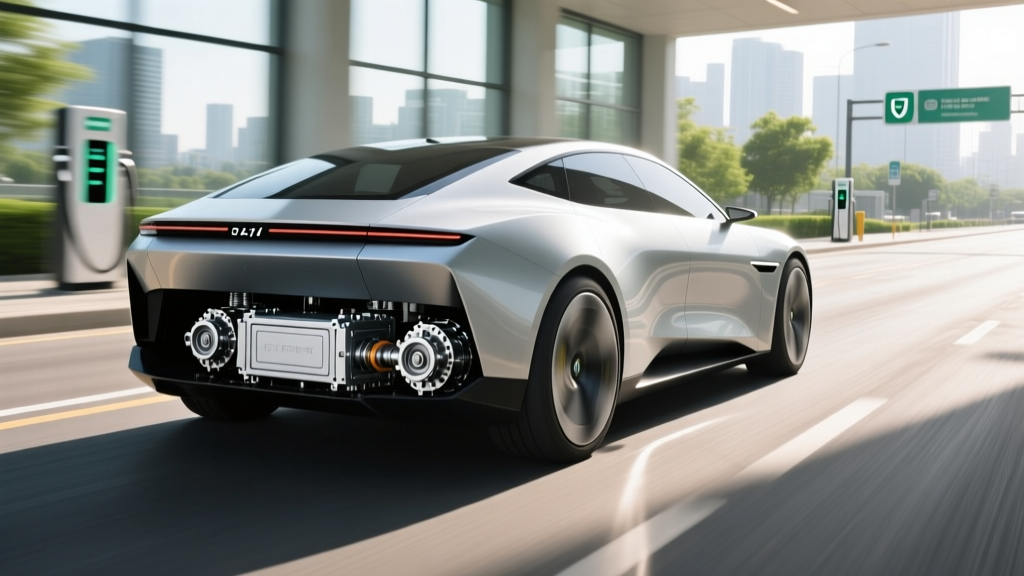
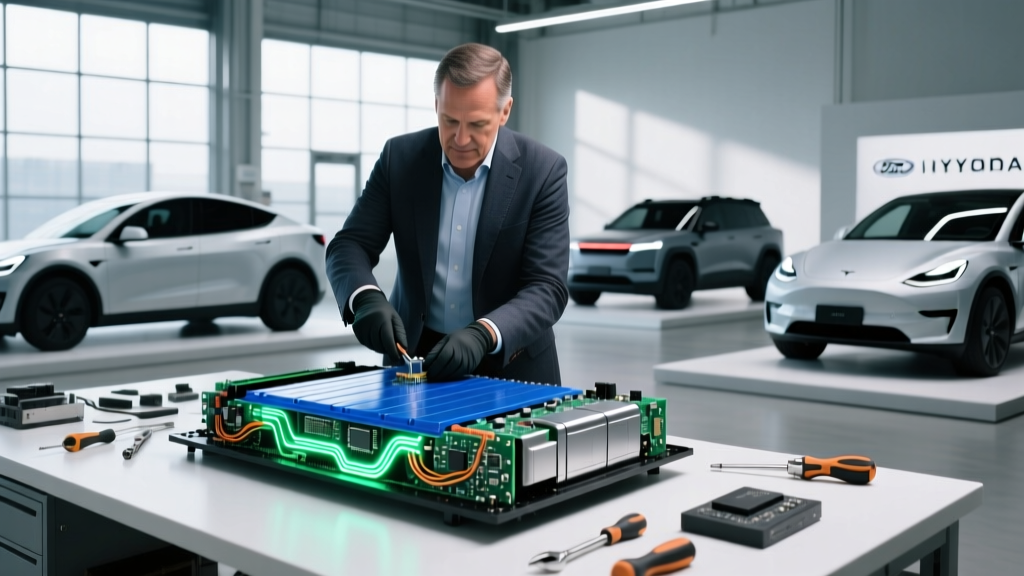
In a series of candid interviews and industry presentations, Ford CEO Jim Farley described how his engineering team systematically disassembled competitor electric vehicles to benchmark their designs. The findings were stark. Some rival platforms — particularly from legacy automakers adapting ICE chassis for electric power — suffered from excessive wiring harness weight, redundant cooling loops, and suboptimal battery-to-chassis integration. In contrast, purpose-built EV platforms like Tesla's structural battery pack and BYD's e-Platform 3.0 showed dramatically fewer parts, shorter wire runs, and more compact power electronics.
Why does this matter to a buyer? Because platform efficiency is the invisible variable that determines how far you actually go on a charge, how quickly you recharge on a road trip, and how much you pay for insurance and repairs over five years. An EV with a 75 kWh battery on an efficient platform can outperform a 90 kWh battery on a bloated one.
The numbers back this up. According to fueleconomy.gov, the efficiency spread between the best and worst EVs in a given class can exceed 30%. A 2025 Tesla Model Y Rear-Wheel Drive achieves roughly 122 MPGe combined (roughly 28 kWh/100mi), while comparably sized competitors on older platforms can dip to 84-95 MPGe (35-40 kWh/100mi). That gap means real money and real range.
The Efficiency Gap: How It Hits Your Wallet
Let's translate engineering teardowns into ownership economics. The table below compares a highly efficient EV platform against a less efficient competitor in the midsize crossover segment — both with similar EPA range stickers but very different energy consumption profiles.
| Metric | Efficient Platform EV | Legacy Platform EV |
|---|---|---|
| Battery Capacity (usable) | 75 kWh (LFP) | 91 kWh (NMC) |
| EPA Range | 310 miles | 305 miles |
| EPA Efficiency | 122 MPGe (28 kWh/100mi) | 95 MPGe (36 kWh/100mi) |
| Peak DC Fast Charge | 250 kW | 175 kW |
| 10–80% DC Charge Time | ~22 minutes | ~34 minutes |
| Real-World Highway Range (70 mph) | ~265 miles | ~230 miles |
| Cold-Weather Range Loss (20°F) | ~25% (~233 mi) | ~35% (~200 mi) |
| Annual Charging Cost (12k mi, $0.14/kWh) | $470 | $605 |
| Curb Weight | 4,300 lbs | 4,950 lbs |
| Estimated 5-Year Insurance Premium | ~$9,800 | ~$11,400 |
The efficient-platform EV uses a smaller, lighter battery to achieve the same EPA range — which means lower vehicle weight, faster charging (because the battery can accept higher C-rates without thermal stress), and less energy wasted per mile. Over five years and 60,000 miles, the electricity savings alone total roughly $675, but the real gains come from faster road-trip charging (12 fewer minutes per DC session), lower tire wear (lighter vehicle), and typically lower insurance premiums because lighter vehicles cause less collision damage.
EV vs. Gas vs. Hybrid: The Real Cost Comparison
Efficiency inside the EV segment is one thing — but how does an EV stack up against a gas car or a hybrid for total cost? Here's a 5-year/60,000-mile breakdown for a midsize crossover in each category, assuming $3.40/gallon gas, $0.14/kWh home electricity, and no federal tax credit applied (to show baseline economics — your actual savings may be higher with the §30D federal EV tax credit).
| Cost Category | Efficient EV ($42,000 MSRP) | Hybrid ($38,000 MSRP) | Gas Vehicle ($35,000 MSRP) |
|---|---|---|---|
| Purchase Price | $42,000 | $38,000 | $35,000 |
| Federal Tax Credit | Up to $7,500* | $0 | $0 |
| Net Purchase | $34,500 | $38,000 | $35,000 |
| Fuel/Energy (5 yr) | $2,350 | $4,850 | $7,100 |
| Maintenance (5 yr) | $1,800 | $3,200 | $3,800 |
| Insurance (5 yr) | $9,800 | $8,400 | $8,000 |
| 5-Year Total Cost | $48,450 | $54,450 | $53,900 |
*§30D credit eligibility depends on MSRP caps ($55,000 for cars, $80,000 for SUVs/trucks), buyer income limits ($150K single / $300K joint), and battery critical-mineral sourcing requirements. Verify at irs.gov before purchasing. Point-of-sale transfer is available at participating dealers.
The efficient EV wins on 5-year total cost — but only if you qualify for the tax credit and have access to affordable home charging. Without the credit, the EV's total cost rises to $55,950, putting it behind both the hybrid and gas options. This is the nuance that teardown-level analysis reveals: the cheapest EV to buy isn't always the cheapest to own, and vice versa.
What First-Time EV Buyers Must Know Before Shopping
Ford's teardown findings highlight that you can't just compare EV spec sheets and assume equivalent quality. Here's what actually matters when you're shopping:
Dedicated EV Platform vs. Adapted ICE Chassis
Vehicles built on dedicated EV architectures (Hyundai E-GMP, VW MEB, Tesla, GM Ultium, BYD e-Platform 3.0) generally offer better weight distribution, more interior space per exterior foot, faster charging, and more efficient thermal management than vehicles where a battery was shoehorned into a modified gas-car platform. Ask the dealer directly: "Is this a dedicated EV platform?"
Battery Chemistry: LFP vs. NMC
Lithium Iron Phosphate (LFP) batteries are heavier and less energy-dense than Nickel Manganese Cobalt (NMC) cells, but they last longer (3,000+ cycles vs. ~1,500-2,000), tolerate daily 100% charging, and are cheaper to replace. For daily commuters who charge at home, LFP is often the smarter long-term bet. For road-trippers who need maximum range per pound, NMC still leads.
Charging Curve Reality
Peak DC fast-charge kW is a marketing number — sustained charging speed is what matters. A vehicle that peaks at 250 kW but tapers sharply above 60% SoC may actually charge slower 10-80% than one peaking at 200 kW with a flatter curve. Look for published 10-80% charge times, not just peak kW.
Home Charging Access Is Non-Negotiable
If you can't install a Level 2 (240V) home charger, EV ownership becomes significantly more expensive and inconvenient. Public DC fast charging costs 2-4x more per kWh than home charging ($0.35-$0.55/kWh vs. $0.10-$0.18/kWh at home), and relying on it exclusively can accelerate battery degradation due to frequent high-power charging. Budget $500-$2,000 for a Level 2 home charger installation (equipment plus electrician), and check whether your electrical panel needs a 200-amp upgrade ($1,500-$3,000 additional).
Myths vs. Facts: Common EV Misconceptions
| Myth | Fact |
|---|---|
| "All EVs with 300-mile range are equal" | Efficiency varies by up to 30%. A 300-mile EV at 28 kWh/100mi costs $1,680 less to fuel over 5 years than one at 36 kWh/100mi. |
| "Bigger battery = better EV" | Bigger batteries add weight, cost, and charging time. A smaller battery on an efficient platform often delivers more real-world usability. |
| "EVs don't work in cold weather" | Cold reduces range 15-35% depending on the platform's heat pump and thermal management. Efficient platforms with standard heat pumps lose ~20% at 20°F; those without can lose 35%+. |
| "EV maintenance is zero" | EVs still need tire rotations, cabin air filters, brake fluid checks, and wiper fluid. But they skip oil changes, spark plugs, and transmission fluid — saving ~$1,400 over 5 years. |
| "The $7,500 tax credit applies to everyone" | §30D has income caps ($150K/$300K), MSRP caps, and critical-mineral sourcing rules that change annually. Many popular EVs qualify for partial or zero credit. Always verify at irs.gov. |
| "DC fast charging ruins batteries" | Occasional DC fast charging (road trips) has minimal impact. Daily DC fast charging can accelerate degradation by 1-3% over 5 years compared to Level 2 home charging. |
Your Decision Framework: Which EV Path Fits You?
IF you have home charging access AND drive under 40 miles/day:
→ Choose an LFP-battery EV on a dedicated platform (e.g., Tesla Model 3 RWD, Hyundai Ioniq 5 Standard Range). Charge to 100% daily. Prioritize efficiency (kWh/100mi) over maximum range. Total cost of ownership will likely beat gas and hybrid.
IF you road-trip frequently (5+ trips over 200 miles/year):
→ Prioritize 10-80% DC charge time under 25 minutes and NACS connector compatibility for Tesla Supercharger access. Look for 300+ miles EPA range with a heat pump. Consider a PHEV as an alternative if charging infrastructure on your routes is sparse.
IF you cannot install home charging:
→ A PHEV (plug-in hybrid) like the Toyota RAV4 Prime or Hyundai Tucson PHEV may be a better fit — you get 30-42 miles of electric-only range for daily errands plus a gas engine for longer trips, and you're not dependent on daily public charging. Alternatively, a conventional hybrid avoids the charging problem entirely.
IF you live in a cold climate (regularly below 25°F):
→ Insist on a heat pump (standard on Tesla, Hyundai E-GMP, some VW MEB trims — optional or absent on others). Add 20-25% to your range requirement to compensate for winter losses. Garage parking helps enormously.
IF you're budget-focused and the tax credit is essential:
→ Check current §30D eligibility at irs.gov before committing. Battery sourcing requirements shift — a model that qualifies in January may not in July. Point-of-sale transfer at the dealer reduces your out-of-pocket immediately, but you must meet income limits.
What Ford's Teardown Means for the EVs You Can Buy Today
Ford's teardown exercise wasn't academic — it directly influenced the company's shift toward its own dedicated EV architecture and its decision to delay some vehicle launches to re-engineer for cost and efficiency. For buyers, the lesson is that the EV market is bifurcating: vehicles designed from the ground up as electric are pulling ahead in every measurable ownership metric, while adapted platforms are falling behind.
When you test-drive, look beyond the touchscreen and 0-60 time. Ask about the platform. Check the kWh/100mi efficiency on the Monroney sticker. Look up the 10-80% charge time. Verify the battery chemistry. These are the engineering truths that Ford's teardowns exposed — and they're the numbers that will determine whether your EV ownership experience is a savings story or a frustration story.
According to IIHS, EVs on dedicated platforms also tend to score higher in crash tests due to their lower center of gravity and rigid battery structures used as chassis members. Safety, efficiency, and cost all trace back to the same engineering decisions that teardowns reveal.
Frequently Asked Questions
Does a more efficient EV platform really save that much money?
Yes. Over 5 years and 60,000 miles, a 30% efficiency gap (e.g., 28 vs. 36 kWh/100mi) translates to roughly $1,680 in electricity savings at $0.14/kWh. Add in faster charging, less tire wear, and potentially lower insurance, and the total advantage can exceed $2,500.
Should I avoid EVs built on adapted gas-car platforms?
Not necessarily — some are well-executed. But they tend to be heavier, charge slower, and offer less interior space relative to their exterior size. If two EVs are priced similarly, the dedicated-platform vehicle is almost always the better long-term buy.
How do I find out which platform an EV uses?
Manufacturer press pages and enthusiast publications document platform architecture. Key dedicated platforms in 2025-2026 include Tesla (custom), Hyundai/Kia E-GMP, GM Ultium, VW MEB, and BYD e-Platform 3.0. If the automaker doesn't prominently advertise the platform, it's likely adapted.
Is LFP battery chemistry really better for daily driving?
For most commuters, yes. LFP batteries tolerate daily 100% charges without accelerated degradation, last 2-3x longer in cycle life, and are cheaper to replace ($6,000-$10,000 vs. $10,000-$18,000 for NMC). The trade-off is 10-15% less range per pound, which matters more for road-trippers.
What if my home electrical panel can't support a Level 2 charger?
A panel upgrade from 100A to 200A typically costs $1,500-$3,000 including permits and electrician labor. Some utilities offer rebates. If a panel upgrade is cost-prohibitive, a 120V Level 1 charger adds roughly 3-5 miles per hour of charging — sufficient for low-mileage drivers who park overnight.