The Quick Answer
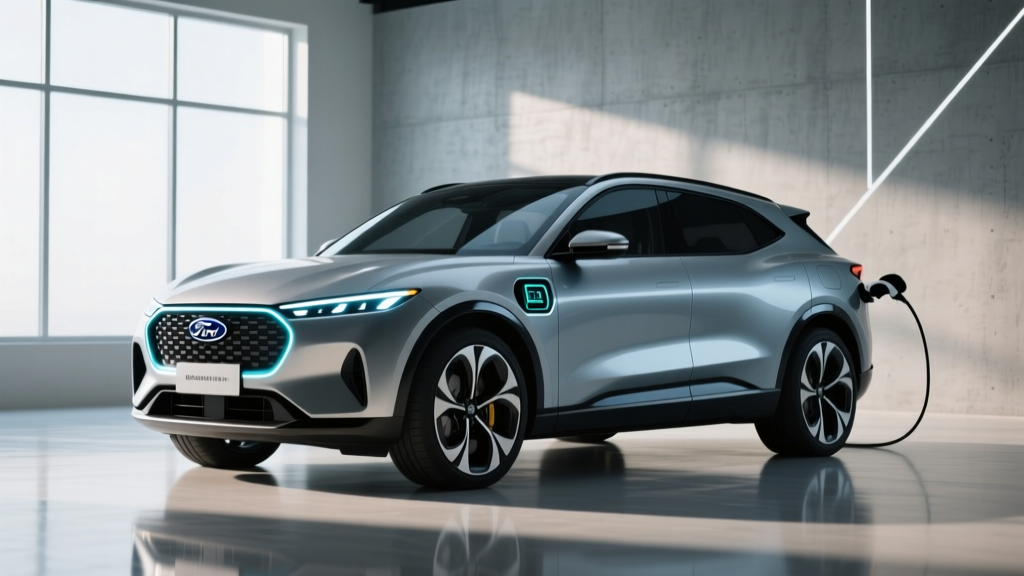
Ford's canceled three-row electric SUV prototype revealed online was a next-generation, battery-electric family hauler planned on a dedicated EV architecture (not the Explorer-based platform). Ford scrapped the program in 2024–2025, citing shifting market demand, high development costs, and a strategic pivot toward smaller, more affordable EVs and hybrid offerings. The prototype images that surfaced show a sleek, mid-to-large crossover with seating for six or seven. It was never priced, never EPA-rated, and will never reach production. If you're shopping for a three-row electric SUV today, your best alternatives include the Kia EV9 (EPA range up to 304 miles, starting ~$54,900), the Rivian R1S (up to 410 miles, ~$79,900), and the Hyundai Ioniq 9 (up to ~335 miles, ~$52,000). Plug-in hybrid three-row options like the Toyota Grand Highlander Hybrid offer a bridge solution starting around $45,000.
What the Prototype Actually Was
The images circulating online show a fully realized prototype vehicle — not a concept sketch or a clay model. Based on reporting from Reuters and industry outlets, this three-row electric SUV was part of Ford's "Model e" division pipeline, intended to ride on a flexible EV platform developed in partnership with Volkswagen's MEB architecture (and potentially a next-generation Ford-specific platform). The prototype featured:
- Body style: Three-row crossover SUV, estimated 195–200 inches in length
- Target battery: Likely 100+ kWh usable capacity, NMC chemistry
- Projected range: Internal targets reportedly in the 300–350 mile EPA range
- Charging architecture: Expected 800V system for DC fast charging at 200+ kW peak
- Seating: Six- or seven-passenger configurations
- Production timeline: Originally targeted for 2025–2026 launch, now canceled
Ford CEO Jim Farley confirmed the company was cutting several large EV programs to refocus capital on smaller, more profitable electric vehicles and expand its hybrid lineup. The three-row SUV was one of the casualties. Instead, Ford is leaning into the F-150 Lightning, Mustang Mach-E, and a planned affordable midsize electric pickup, while offering hybrid versions of popular nameplates like the Explorer and Bronco.
Why Ford Killed It — And What That Means for Buyers
The cancellation reflects a broader industry reality that every prospective EV buyer should understand:
Market Demand Shifted
Through 2024 and 2025, large premium EVs faced slowing sales growth while smaller, more affordable models and hybrids surged. The Kia EV9 launched in the U.S. at a relatively accessible price point, undercutting the likely $60,000+ MSRP Ford would have needed for this three-row SUV. Consumer preference data showed families still hesitant about pure-electric large SUVs due to range concerns on road trips and limited public charging infrastructure in suburban and rural areas.
The Economics Didn't Work
Large battery packs (100+ kWh) are expensive. At 2025–2026 battery cell costs, a 110 kWh NMC pack adds roughly $12,000–$15,000 in raw materials alone. Combined with development costs for a new platform, Ford projected thin or negative margins at a price point consumers would accept. By contrast, hybridizing existing ICE platforms costs a fraction of the R&D investment.
Ford Pivoted to Hybrids
For families who want electrification without range anxiety, Ford is now emphasizing plug-in hybrid and conventional hybrid options. The Explorer Hybrid and upcoming next-generation Explorer PHEV offer partial electrification at lower sticker prices — a pragmatic response to market signals.
Your Real Alternatives: 3-Row EVs and PHEVs in 2026
Since Ford's canceled three-row electric SUV will never reach dealer lots, here's what you can actually buy today. This comparison covers the main contenders across EV and PHEV categories:
| Model | Powertrain | EPA Range / MPG | Battery (kWh) | DC Fast Charge (Peak kW) | 10–80% Time | 0–60 mph | Base MSRP |
|---|---|---|---|---|---|---|---|
| Kia EV9 (Long Range RWD) | BEV | 304 mi EPA | 100.0 kWh (NMC) | ~210 kW | ~24 min | 7.8 sec | $54,900 |
| Kia EV9 (GT-Line AWD) | BEV | 270 mi EPA | 100.0 kWh (NMC) | ~210 kW | ~24 min | 5.0 sec | $63,900 |
| Hyundai Ioniq 9 (Long Range) | BEV | ~335 mi EPA | 110.3 kWh (NMC) | ~240 kW | ~20 min | ~7.0 sec | ~$52,000 |
| Rivian R1S (Dual Motor Standard) | BEV | ~270 mi EPA | ~95 kWh (NMC) | ~200 kW | ~21 min | ~5.0 sec | ~$79,900 |
| Rivian R1S (Max Pack) | BEV | ~410 mi EPA | ~149 kWh (NMC) | ~200 kW | ~38 min | ~5.0 sec | ~$89,900 |
| Toyota Grand Highlander Hybrid | HEV | 36 MPG combined | 1.4 kWh (NiMH) | N/A | N/A | ~7.5 sec | $45,120 |
| Mazda CX-90 PHEV | PHEV | 26 mi electric + 25 MPG | 17.8 kWh (NMC) | N/A (Level 2 only) | ~2.5 hr L2 | ~6.8 sec | $50,690 |
Sources: fueleconomy.gov, manufacturer spec sheets. EPA figures as published; real-world range varies 10–20% depending on temperature, speed, and terrain.
Real Costs: EV vs. Hybrid vs. Gas for a Family Hauler
Choosing between a three-row BEV, PHEV, or gas vehicle isn't just about the sticker price. Here's a 5-year total cost of ownership (TCO) comparison for a family driving 15,000 miles/year, assuming home Level 2 charging access:
| Cost Category | Kia EV9 LR RWD ($54,900) | Toyota Grand Highlander Hybrid ($45,120) | Gas 3-Row SUV (e.g., Ford Explorer, $40,000) |
|---|---|---|---|
| Purchase Price (MSRP) | $54,900 | $45,120 | $40,000 |
| Federal Tax Credit (§30D) | Up to $7,500 (see eligibility) | $0 (not a BEV/PHEV with sufficient battery) | $0 |
| Effective Purchase Price | ~$47,400 | $45,120 | $40,000 |
| Fuel/Energy (5 yr / 75,000 mi) | ~$3,750 (home charging at $0.13/kWh, 3.0 mi/kWh) | ~$6,944 ($3.50/gal, 36 MPG) | ~$11,250 ($3.50/gal, 23 MPG) |
| Maintenance (5 yr) | ~$1,500 (no oil changes, brake regen savings) | ~$3,500 | ~$4,200 |
| Insurance (5 yr avg) | ~$10,500 (EV premium ~15–20%) | ~$8,750 | ~$8,000 |
| Estimated Depreciation (5 yr) | ~$22,000 (EV depreciation stabilizing) | ~$18,000 | ~$19,000 |
| 5-Year TCO Estimate | ~$85,150 | ~$82,314 | ~$82,450 |
Key takeaway: With the §30D federal tax credit applied, the EV9's 5-year cost is competitive with a hybrid and gas SUV, primarily due to dramatically lower fueling and maintenance costs. However, the EV requires home charging access to achieve these savings. Public DC fast charging at $0.40–$0.60/kWh would increase the EV's fuel cost to $5,000–$7,500 over five years, narrowing the advantage.
Federal Tax Credit Eligibility (§30D) — What You Need to Know
The IRS §30D clean vehicle credit offers up to $7,500 for qualifying new EVs, but eligibility depends on several factors that change frequently:
- MSRP caps: SUVs must have an MSRP at or below $80,000
- Buyer income limits: AGI must not exceed $150,000 (single), $225,000 (head of household), or $300,000 (joint) — verify current limits at IRS.gov
- Battery sourcing: Critical minerals and battery components must meet phased-in domestic/free-trade sourcing requirements that tighten annually
- Point-of-sale transfer: As of 2024+, you can transfer the credit to the dealer at purchase, reducing your out-of-pocket cost immediately
Always verify eligibility with a tax professional and check IRS.gov for current-year rules. The Kia EV9's credit status depends on battery sourcing compliance at time of purchase.
Real-World Ownership: What First-Time EV Buyers Must Know
If you're considering a three-row electric SUV like the EV9 or Ioniq 9 after reading about Ford's canceled prototype, here are the practical realities no brochure will tell you:
Home Charging Is Non-Negotiable for Cost Savings
A Level 2 home charger (240V, 32–48 amps) adds roughly 25–35 miles of range per hour of charging and costs $800–$2,500 installed (equipment + electrician + permit). For a 100 kWh battery, a full charge from empty takes 8–10 hours on Level 2 — ideal for overnight replenishment. Without home charging, you'll rely on public DC fast chargers and Level 2 destination chargers, which increases fueling costs by 2–4x and adds time to your routine.
Real-World Range vs. EPA Sticker
The EPA range figure assumes a mix of city and highway driving at moderate temperatures. In practice:
- Highway driving (70–80 mph): Expect 10–15% less than EPA. A 304-mile EV9 may deliver 260–275 miles on a flat highway run.
- Cold weather (below 32°F): Range drops 20–30% due to battery resistance and cabin heating. That same 304-mile EV9 could deliver 210–240 miles in a Midwest winter.
- Preconditioning: Warming the battery while plugged in before a DC fast charge session restores charging speed and recovers some range. Most modern EVs do this automatically when you set a departure time.
DC Fast Charging Curves Matter
A "210 kW peak" charge rate doesn't mean sustained speed. Lithium-ion batteries accept peak power only between roughly 10–50% state of charge, then taper progressively. The EV9's 10–80% time of ~24 minutes reflects this curve. Charging from 80–100% can take an additional 20–30 minutes at dramatically reduced power. Plan road trips around 10–80% charges for the best time efficiency.
Insurance Costs More for EVs
EV insurance premiums run 15–25% higher than comparable gas vehicles, driven by higher repair costs (specialized parts, high-voltage safety protocols, certified technician requirements). Shop quotes before purchasing — the difference between insurers can be $500–$1,000/year.
Decision Framework: Which 3-Row Electrified SUV Is Right for You?
If/Then Guide for 3-Row Family SUV Buyers
Choose a three-row BEV (Kia EV9, Hyundai Ioniq 9) if:
- You have reliable home Level 2 charging access (garage or driveway with 240V outlet)
- Most daily driving is under 60 miles round-trip (commute, school runs, errands)
- You take 1–3 road trips per year and can plan DC fast-charger stops along major corridors
- You want the lowest per-mile fueling cost and minimal maintenance
- You qualify for the §30D federal tax credit (income and sourcing requirements met)
Choose a PHEV (Mazda CX-90 PHEV) if:
- You can charge at home but frequently drive 200+ miles in a day without time to stop
- You want 20–30 miles of electric-only range for daily errands with gas-engine backup for road trips
- You live in an area with sparse public DC fast-charging infrastructure
- You want lower upfront cost and don't qualify for the full $7,500 EV credit
Choose a conventional hybrid (Toyota Grand Highlander Hybrid) if:
- You have no access to home or workplace charging
- You frequently tow (hybrids maintain power output under load better than some EVs in sustained high-speed towing)
- You want the lowest purchase price with solid fuel economy and no charging dependency
- You live in an extreme cold climate where EV range loss is a consistent winter concern
Wait for future Ford three-row EVs if:
- You're a loyal Ford buyer willing to wait until 2027–2028 for a potential revived program on Ford's next-gen EV platform
- You're content with a Ford Explorer Hybrid or gas Explorer in the interim
Common Misconceptions About Large EVs — Debunked
| Myth | Fact |
|---|---|
| "A 3-row EV can't handle family road trips" | The Kia EV9 (304 mi EPA) covers most U.S. family trip legs (200–250 mi) on a single charge. A 15–20 minute DC fast charge at a rest stop adds 150+ miles. Plan routes through Electrify America or Tesla Supercharger corridors (with NACS adapter). |
| "EV batteries need replacing every 5 years" | Modern NMC and LFP batteries are warrantied for 8 years/100,000 miles at 70%+ capacity retention (fueleconomy.gov). Real-world data shows most EV batteries retain 85–90% capacity at 100,000 miles with normal use. |
| "Charging an EV costs as much as gas" | At the U.S. average electricity rate of ~$0.16/kWh (2025), charging a 100 kWh EV9 costs ~$16 for a full charge yielding ~280 real-world miles. That's equivalent to $1.14/gallon gas. Public DC fast charging is more expensive but still typically below gas cost per mile. |
| "EVs are worse in winter" | EVs start instantly in cold weather (no cranking), and preconditioning while plugged in means a warm cabin without idling. Range drops 20–30% in sub-freezing temps, but heat pump-equipped models (EV9, Ioniq 9) recover some efficiency. Plan for shorter winter range; don't avoid EVs entirely. |
| "Ford's canceled SUV means EVs are failing" | Ford's pivot reflects product-line economics, not EV failure. U.S. EV sales continued growing through 2025, with models like the Tesla Model Y, Hyundai Ioniq 5, and Chevy Equinox EV selling strongly. Ford is investing in smaller, more affordable EVs and hybrids — a market correction, not a retreat. |
The Bottom Line for 3-Row SUV Shoppers
Ford's canceled three-row electric SUV prototype revealed online is a fascinating look at what could have been — but it changes nothing about what you can buy today. The three-row EV market in 2026 offers real, tested options with proven range, charging speed, and family practicality. The Kia EV9 remains the value leader at ~$54,900 with over 300 miles of range. The Hyundai Ioniq 9 pushes range further. Rivian offers premium capability for those with larger budgets. And for buyers not ready to go fully electric, PHEV and hybrid options from Mazda and Toyota provide meaningful fuel savings without range compromise.
The right choice depends on your charging access, driving patterns, budget, and climate. Use the decision framework above, verify tax credit eligibility with the IRS, and test-drive at least two options before committing.
Will Ford ever build a three-row electric SUV?
Ford has not announced a replacement program. CEO Jim Farley indicated the company will revisit larger EVs once battery costs decline further and its next-generation platform is ready, likely no earlier than 2028. For now, Ford's electrified family-SUV strategy centers on the Explorer Hybrid and potential PHEV variants.
What's the cheapest three-row electric SUV available in 2026?
The Kia EV9 starts at approximately $54,900 for the Long Range RWD trim, making it the most affordable dedicated three-row BEV on the U.S. market. With the §30D federal tax credit (if eligible), the effective price drops to ~$47,400.
Can I tow with a three-row electric SUV?
The Kia EV9 is rated for up to 5,000 lbs of towing capacity (AWD trims). However, towing significantly reduces range — expect a 40–50% reduction at highway speeds with a loaded trailer. For frequent heavy towing, a PHEV or hybrid may be more practical.
Do three-row EVs qualify for the $7,500 federal tax credit?
Possibly, but eligibility depends on MSRP (must be ≤$80,000 for SUVs), buyer income limits, and battery-component/critical-mineral sourcing rules that tighten each year. Check IRS.gov for the current-year qualified vehicle list and consult a tax professional before relying on the credit in your purchase decision.
How long does it take to charge a three-row EV at home?
On a Level 2 home charger (240V, 40 amps / 9.6 kW), a 100 kWh battery like the EV9's charges from empty to full in roughly 10–11 hours. Most owners charge from 20–80% daily, which takes 6–7 hours overnight — more than sufficient for daily use.