Quick Answer: Is the Ford Bronco EV Available Yet?
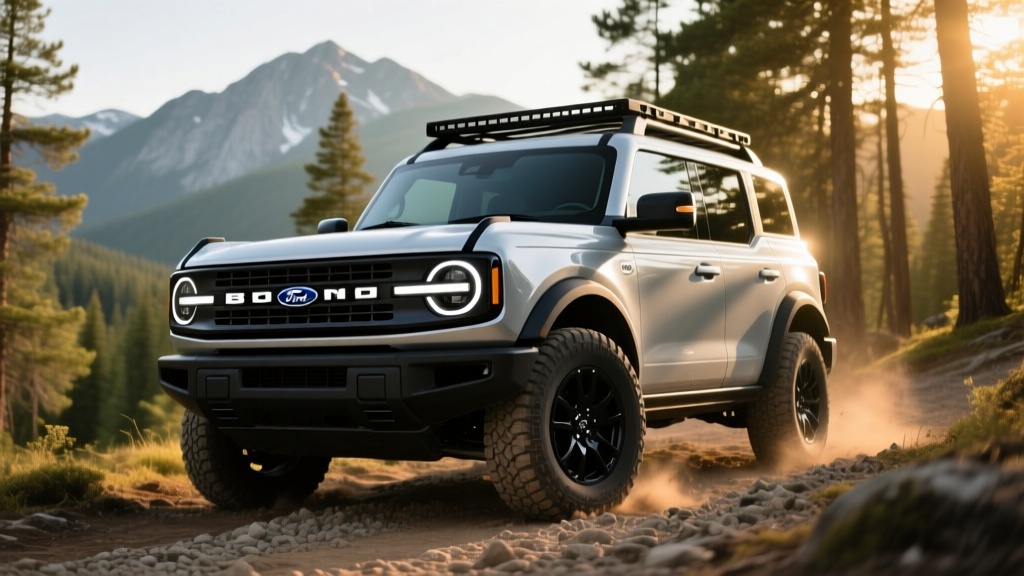
As of early 2026, the Ford Bronco EV remains an announced but unreleased vehicle. Ford has confirmed that an all-electric Bronco is in development, built on a dedicated EV platform, but the company has not published final EPA range, battery capacity, pricing, or an on-sale date. If you need an electric SUV today, alternatives like the Rivian R1S, Tesla Model Y, or Hyundai Ioniq 5 are available now. If you can wait and want a rugged, off-road-capable electric SUV with Bronco branding, this guide covers every confirmed detail, realistic expectations based on Ford's current EV powertrain technology, and the ownership math you should run before reserving one.
What Ford Has Confirmed (and What Remains Speculative)
Ford first signaled an electric Bronco during its 2022–2023 EV roadmap presentations, and CEO Jim Farley has referenced an "adventure-family" EV lineup that logically includes a Bronco EV. However, Ford restructured its EV strategy in mid-2024, delaying several next-generation electric vehicles to prioritize hybrids and smaller, more affordable EVs. The Bronco EV survived those cuts but shifted to a later timeline.
Here is what we can confirm versus what remains preliminary:
- Confirmed: A battery-electric Bronco is in development on a dedicated EV architecture (not a modified ICE platform).
- Confirmed: It will target serious off-road capability, consistent with the Bronco brand identity — not just a lifted crossover.
- Unconfirmed / Estimated: Exact battery kWh, EPA range, peak DC fast-charge rate, motor output (HP and lb-ft), 0–60 time, MSRP by trim, and on-sale date.
Because final specifications have not been published by Ford or the EPA, every number below is an informed estimate based on Ford's existing EV technology (particularly the F-150 Lightning and upcoming next-gen platform) and competitive benchmarks. We will flag estimates clearly.
Estimated Specs: Battery, Range, and Charging
Ford's next-generation EV platform is expected to support both NMC (nickel manganese cobalt) and LFP (lithium iron phosphate) battery chemistries, similar to the approach Tesla and Rivian use to offer standard-range and extended-range variants.
| Spec | Standard Range (Est.) | Extended Range (Est.) |
|---|---|---|
| Battery Chemistry | LFP | NMC |
| Usable Battery Capacity | ~85 kWh | ~110 kWh |
| EPA Range (Est.) | ~250–270 mi | ~310–340 mi |
| Peak DC Fast Charge Rate | ~175 kW | ~210–250 kW |
| 10–80% DC Fast Charge Time | ~30 min | ~25 min |
| Level 2 Home Charging (kW) | 11.5 kW (~19 kW AC onboard charger) | 11.5–19.2 kW |
| Drivetrain | Dual-motor AWD | Dual-motor AWD |
| Estimated Horsepower | ~400 HP | ~500+ HP |
| 0–60 mph (Est.) | ~5.5 sec | ~4.0 sec |
| Towing Capacity (Est.) | ~5,000 lbs | ~7,000 lbs |
Real-World Range Reality Check
EPA estimates for boxy, off-road-oriented SUVs tend to be optimistic compared to real-world highway and trail driving. The current gas Bronco's aerodynamics are poor (a ~0.45 drag coefficient), and an EV version will face the same physics. Expect:
- Highway driving at 75 mph: ~15–20% below EPA estimate (e.g., an EPA 320-mile model may deliver ~255–270 miles on a road trip).
- Cold weather (below 32°F): ~20–30% range reduction without preconditioning; LFP chemistry is slightly more cold-sensitive than NMC.
- Off-road / low-speed trail use: Range impact is less severe than highway driving because speeds are low and regen braking helps, but accessory loads (winch, lights, HVAC in extreme temps) will draw from the pack.
For comparison, the Rivian R1S (Dual-Motor, Large Pack) carries an EPA rating of up to 352 miles but typically delivers 280–310 miles in mixed real-world driving, per owner reports and independent testing.
Ford Bronco EV vs. Gas Bronco vs. Rivian R1S
The most common buyer question: should you get a gas Bronco, wait for the Bronco EV, or look at the Rivian R1S? Here is a data-driven comparison.
| Metric | Ford Bronco EV (Ext. Range Est.) | 2025 Ford Bronco (Gas, Badlands) | 2025 Rivian R1S (Dual-Motor, Large) |
|---|---|---|---|
| Base MSRP | ~$60,000–$70,000 (est.) | $52,495 | $79,900 |
| Federal Tax Credit (§30D) | Up to $7,500 (if eligible) | $0 | $0 (MSRP exceeds $80K SUV cap) |
| Energy/Fuel Cost per Mile | ~$0.04–$0.06 (home L2) | ~$0.18–$0.22 (gas, 17 MPG combined) | ~$0.04–$0.06 (home L2) |
| Annual Fuel/Energy (15K mi) | ~$600–$900 | ~$2,700–$3,300 | ~$600–$900 |
| Annual Maintenance (Est.) | ~$300–$500 | ~$800–$1,200 | ~$300–$500 |
| EPA Range / Tank Range | ~310–340 mi (est.) | ~340 mi (17.3-gal tank, 17 MPG) | Up to 352 mi |
| Off-Road Capability | Expected: high (eAWD, locking diffs, G.O.A.T. modes) | Proven: excellent | Proven: very good |
The gas Bronco wins on upfront cost and proven off-road pedigree. The Bronco EV's potential advantage is dramatically lower per-mile operating cost and instant torque for rock crawling — electric motors deliver peak torque at 0 RPM, which is a genuine advantage on technical trails. The Rivian R1S is the most capable electric competitor today but costs significantly more and currently does not qualify for the federal EV tax credit due to its MSRP exceeding the IRS §30D $80,000 SUV cap.
Total Cost of Ownership: 5-Year Breakdown
EVs typically cost more upfront but save money on fuel and maintenance. Here is a realistic 5-year / 75,000-mile projection for the Bronco EV versus the gas Bronco Badlands.
| Cost Category | Bronco EV (Est.) | Gas Bronco Badlands |
|---|---|---|
| Purchase Price (MSRP) | $65,000 | $52,495 |
| Federal Tax Credit | –$7,500 (if eligible) | $0 |
| Effective Purchase Price | $57,500 | $52,495 |
| Home Charger Install (Level 2) | $1,200–$2,500 | $0 |
| Fuel / Energy (75K miles) | $3,000–$4,500 | $13,500–$16,500 |
| Maintenance (5 years) | $1,500–$2,500 | $4,000–$6,000 |
| Insurance (5 years, est.) | $9,000–$12,000 | $7,500–$10,000 |
| Estimated Depreciation | $20,000–$28,000 | $15,000–$22,000 |
| Total 5-Year Cost (Est.) | ~$72,000–$86,000 | ~$73,000–$90,000 |
Key takeaways from this projection:
- Fuel savings are the biggest EV advantage. At $3.50/gallon and 17 MPG combined, the gas Bronco burns roughly $0.21/mile. Home-charged EV electricity at $0.13/kWh and ~2.0 kWh/mile works out to ~$0.05/mile — a savings of $0.16/mile, or $12,000 over 75,000 miles.
- Insurance is typically 15–25% higher for EVs due to higher repair costs and battery replacement risk. Get quotes before committing.
- Depreciation is the wild card. EV depreciation has been volatile (steep drops in 2023–2024 due to price wars and Tesla cuts). The Bronco badge may hold value better than average, but this is unproven for an EV variant.
- The tax credit is not guaranteed. §30D eligibility depends on battery component sourcing, critical mineral requirements, MSRP caps ($80,000 for SUVs), and buyer income limits ($300K joint / $150K single for new vehicles). Check current IRS guidance at time of purchase.
Off-Road EV Ownership: What Trail Runners Need to Know
The Bronco EV's defining promise is off-road capability without tailpipe emissions. But trail driving in an EV introduces unique considerations that gas Bronco owners never think about:
Advantages of Electric on the Trail
- Instant torque at 0 RPM: No need to build revs for rock crawling. Electric motors deliver maximum torque from a standstill, giving precise low-speed control.
- No stall risk: You cannot stall an electric motor in a low-traction situation the way you can lug a gas engine.
- Quiet operation: Significantly less noise on trails — better for wildlife observation and a more serene experience.
- Vehicle-to-Load (V2L) potential: If Ford includes V2L (as the F-150 Lightning does with Pro Power Onboard), the Bronco EV could power camp lights, tools, or a fridge at a campsite — a genuine utility advantage.
Challenges of Electric on the Trail
- No jerry can rescue: If you run out of battery on a remote trail, you cannot walk out with a fuel can. Recovery requires a tow or a portable EV charger (which are slow and expensive).
- Charging infrastructure near trails: Most popular off-road areas (Moab, Rubicon Trail, Ouray) have limited DC fast-charging options. Plan routes around charging or bring a generator-compatible trailer.
- Underbody battery vulnerability: The battery pack sits low. Ford will need robust skid plates — this is a non-negotiable engineering requirement, and we will need to see Ford's approach before evaluating trail readiness.
- Cold-weather trail use: Battery efficiency drops significantly below freezing. Winter wheeling in Colorado or Montana could reduce range by 25–30%.
Common Misconceptions About the Bronco EV
| Myth | Fact |
|---|---|
| "The Bronco EV is available to order now." | It has not entered production. Ford has not opened reservations as of early 2026. Any website claiming to take orders is not an authorized Ford channel. |
| "EVs can't off-road — they'll break on rocks." | The Rivian R1S and GMC Hummer EV have proven that EVs can handle serious off-road terrain. The key is underbody protection and suspension articulation, not powertrain type. |
| "The battery will need replacing in 5 years." | Modern EV batteries (both NMC and LFP) are warrantied for 8 years / 100,000 miles at minimum capacity retention (typically 70%). Real-world degradation data shows most packs retain 85–90% capacity at 100K miles. |
| "I'll save $7,500 no matter what." | The §30D credit has income caps, MSRP caps, battery-sourcing requirements, and must be transferred at point-of-sale or claimed on your tax return. Consult a tax professional and check IRS rules before assuming eligibility. |
| "It will charge in 10 minutes." | No production EV charges 0–100% in 10 minutes. Expect 10–80% in roughly 25–30 minutes at a compatible DC fast charger, with significant taper above 80%. |
Decision Framework: Should You Wait or Buy Now?
Choose to Wait for the Ford Bronco EV If:
- You specifically want the Bronco brand and design language in an electric package.
- You have reliable home charging access (garage or driveway with a 240V circuit) and do not depend solely on public charging.
- Your daily driving is under 80 miles round-trip, and longer road trips are occasional rather than weekly.
- You are willing to wait until late 2027 or 2028 (realistic estimate) for delivery.
- Off-road capability is important to you and you want EV torque advantages on the trail.
Choose an Available EV SUV Now If:
- You need a vehicle within the next 3–6 months.
- You want proven EPA range data, real-world owner reviews, and established charging compatibility.
- Your budget is under $55,000 — the Bronco EV will likely start above $60,000.
- You primarily drive on-road and do not need serious off-road capability (consider the Hyundai Ioniq 5, Tesla Model Y, or Chevrolet Equinox EV).
Choose the Gas Bronco If:
- You frequently drive in remote areas with zero charging infrastructure.
- You need to tow heavy loads over long distances (towing dramatically reduces EV range — expect a 40–50% reduction when towing near max capacity).
- You want a proven, battle-tested platform with decades of aftermarket support and known repair costs.
- Your budget is closer to $45,000–$55,000.
What First-Time EV Buyers Should Know Before Reserving
If the Bronco EV will be your first electric vehicle, prepare for these ownership realities:
Home Charging Is Essential
Public DC fast charging works for road trips, but 80–90% of EV charging happens at home. Budget $1,200–$2,500 for a Level 2 home charger installation (240V, 48-amp circuit). If your electrical panel is maxed out or you have a 100-amp service panel, a panel upgrade to 200 amps can add $1,500–$3,500. Consult a licensed electrician for an exact quote — panel capacity varies enormously by home.
Understand kW vs. kWh
This is the single most common EV confusion:
- kWh (kilowatt-hours) = energy capacity. Think of it as the size of the "fuel tank." A ~110 kWh battery holds ~110 kWh of energy.
- kW (kilowatts) = power rate. Think of it as how fast fuel flows into the tank. A 250 kW DC fast charger can theoretically deliver 250 kWh per hour — but charging slows above 80% to protect the battery (this is called the charge curve).
Preconditioning Matters
When you navigate to a DC fast charger, the vehicle's thermal management system warms or cools the battery to its optimal charging temperature. This preconditioning can shave 5–10 minutes off your 10–80% charge time. Without it, a cold battery may charge at a fraction of its peak kW rate.
Charging Speed Is Not a Flat Line
A "250 kW peak charge rate" does not mean 250 kW sustained from 0–100%. The charge curve typically peaks between 10–30% state of charge, then tapers progressively. The 10–80% time is the metric that matters — it reflects the usable fast-charging window. Charging from 80–100% at a DC fast charger is painfully slow and should generally be avoided unless necessary.
Frequently Asked Questions
When will the Ford Bronco EV be available?
Ford has not announced an official on-sale date. Based on the company's revised EV timeline (which pushed several models to 2027–2028), a realistic estimate is late 2027 at the earliest, with deliveries extending into 2028. We will update this article when Ford publishes official timing.
Will the Bronco EV qualify for the $7,500 federal tax credit?
It depends. Under current IRS §30D rules, the vehicle must meet battery component and critical mineral sourcing requirements, have an MSRP at or below $80,000 (SUV cap), and the buyer must fall within income limits ($300K joint / $150K single / $225K head of household). These rules are subject to legislative change. Always verify eligibility at the time of purchase.
How much will the Ford Bronco EV cost?
Ford has not published pricing. Based on the gas Bronco lineup ($38K–$70K+) and the EV premium Ford applied to the F-150 Lightning vs. the gas F-150, expect a starting MSRP in the $55,000–$65,000 range for a base model, with fully loaded trims (Wildtrak or Badlands equivalent) reaching $75,000–$80,000.
Can I take the Bronco EV off-road without damaging the battery?
Ford will need to engineer dedicated underbody skid plates for the battery pack — this is a baseline requirement for the Bronco brand. The Rivian R1S and GMC Hummer EV both use armored battery enclosures and have proven capable on serious trails. We will evaluate Ford's approach when detailed engineering specs are released.
Will the Bronco EV have a removable roof and doors like the gas Bronco?
This has not been confirmed. The gas Bronco's removable roof and doors are a core part of its identity, and Ford is aware that enthusiasts expect this feature. However, EV packaging (wiring, structural rigidity, waterproofing for battery systems) may complicate a fully removable setup. Watch for Ford's official reveal for this detail.
How does the Bronco EV compare to the Rivian R1S for off-roading?
The Rivian R1S is the current benchmark for electric off-road SUVs, with proven capability on the Rubicon Trail and in Moab. It offers quad-motor torque vectoring, up to 14.9 inches of ground clearance, and a wading depth of over 3 feet. The Bronco EV will need to match or exceed these figures to compete. Ford's advantage is the Bronco brand cachet and potentially lower pricing, but Rivian has a multi-year head start on real-world trail validation.