The Short Answer: Ford's Most Affordable EV in 2026
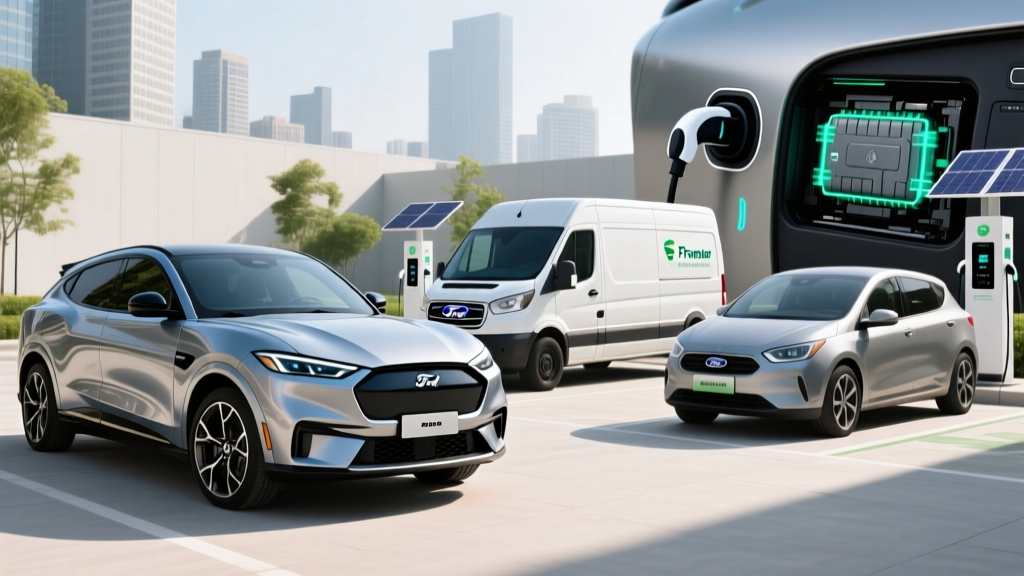
If you're searching for a Ford affordable EV, the 2026 Mustang Mach-E Select starts at $37,995 MSRP (before incentives) with an EPA-estimated 250 miles of range on the Standard Range battery. After applying the federal §30D tax credit — which the Mach-E has consistently qualified for thanks to its US-assembled LFP battery pack — the effective starting price can drop to roughly $30,495 for eligible buyers. That positions the Mach-E as one of the most accessible electric SUVs on the market, undercutting the Hyundai Ioniq 5 and Kia EV6 while offering comparable range and charging speeds. For commercial buyers, the E-Transit cargo van starts at $46,895 and serves a completely different use case. There is no Ford EV sedan cheaper than the Mach-E currently in production.
2026 Mustang Mach-E: Full Spec Breakdown
The Mach-E remains Ford's primary consumer electric vehicle, and the 2026 model year brings subtle but meaningful updates to battery chemistry availability and charging hardware. Here is the exact spec sheet across the two most affordable trims:
| Specification | Select RWD (Std Range) | Select RWD (Ext Range) | Premium RWD (Ext Range) |
|---|---|---|---|
| Base MSRP | $37,995 | $42,995 | $47,495 |
| Battery Capacity (usable) | 72 kWh (LFP) | 91 kWh (NMC) | 91 kWh (NMC) |
| EPA Range | 250 mi | 320 mi | 310 mi |
| Real-World Highway Range* | ~210-225 mi | ~270-290 mi | ~260-280 mi |
| Peak DC Fast Charge | 150 kW | 150 kW | 150 kW |
| 10-80% DCFC Time | ~36 min | ~45 min | ~45 min |
| Level 2 Charge Rate | 10.5 kW | 10.5 kW | 10.5 kW |
| Horsepower | 266 hp | 266 hp | 290 hp |
| 0-60 mph | 6.3 sec | 6.5 sec | 6.1 sec |
| MPGe (Combined) | 101 MPGe | 101 MPGe | 98 MPGe |
| Battery Warranty | 8 yr / 100,000 mi | 8 yr / 100,000 mi | 8 yr / 100,000 mi |
*Real-world highway range assumes 70-75 mph sustained driving in moderate temperatures (55-75°F). Expect 15-25% further reduction in sub-30°F conditions due to battery heating demands and increased cabin energy use. Source: fueleconomy.gov.
Real-World Range Reality Check
The EPA sticker says 250 miles on the Standard Range model, but that number assumes a mix of city and highway driving at moderate temperatures. On a pure highway trip at 75 mph in summer, expect roughly 215-225 miles before needing to stop. In winter conditions (below 30°F), that figure can drop to 175-195 miles. If your daily commute is under 60 miles round-trip, even the Standard Range model provides ample buffer — but if you regularly drive 200+ miles without access to reliable DC fast charging, the Extended Range battery's ~280 real-world highway miles is worth the $5,000 premium.
Mach-E vs. Gas and Hybrid: 5-Year Cost Comparison
The purchase price is only the opening move. To determine whether a Ford affordable EV actually saves money, we need to model total cost of ownership against Ford's own gas and hybrid alternatives — the Ford Escape (gas) and Escape Hybrid.
| Cost Factor (5 yr / 75,000 mi) | Mach-E Select (Std Range) | Escape Hybrid AWD | Escape Gas AWD |
|---|---|---|---|
| Purchase Price (after incentives) | $30,495 | $34,500 | $31,000 |
| Fuel / Electricity | $3,900 (home charging) | $7,200 | $9,750 |
| Maintenance | $1,800 | $3,600 | $4,200 |
| Insurance (avg) | $9,250 | $7,500 | $7,250 |
| Estimated Depreciation | $14,500 | $15,800 | $16,200 |
| 5-Year Total | $59,945 | $68,600 | $68,400 |
Assumptions: electricity at $0.14/kWh national average, gas at $3.40/gal, Escape Hybrid at 39 MPG combined, Escape gas at 28 MPG combined. Tax credit applied to Mach-E for eligible buyers. Insurance averages from industry data — individual quotes vary significantly by state, age, and driving record. Source: fueleconomy.gov.
The Mach-E wins on fuel and maintenance by a wide margin — you'll never change oil, replace spark plugs, or service a transmission. However, EV insurance premiums run 20-30% higher on average due to costly battery repairs after collisions. The Mach-E's depreciation has also stabilized considerably since the steep 2023-2024 price cuts that battered early adopters' resale values.
Federal Tax Credit: What the Mach-E Actually Qualifies For
The §30D federal tax credit is the single biggest lever making a Ford affordable EV genuinely affordable — but eligibility is not universal. Here is the current checklist based on IRS rules:
§30D Credit Requirements (2026 Tax Year)
- Vehicle MSRP cap: SUVs must be ≤$80,000 — all Mach-E trims qualify
- Buyer income cap: AGI ≤$150,000 (single), ≤$225,000 (head of household), ≤$300,000 (joint)
- Final assembly: Must be in North America — Mach-E is built in Cuautitlán, Mexico (qualifies)
- Battery sourcing: Critical minerals and battery components must meet phased percentage thresholds from US/FTA partners — Ford's LFP pack from CATL has met recent-year thresholds, but verify at purchase via the IRS qualified vehicles list
- Point-of-sale transfer: You can transfer the credit to the dealer for an upfront price reduction rather than waiting for tax filing
- Credit amount: Up to $7,500 depending on sourcing compliance — confirm exact amount with dealer and tax professional
Critical caveat: The Mach-E has historically qualified for the full $7,500, but battery-sourcing rules tighten annually. Always verify the specific model year and trim on the IRS qualified-vehicles list before signing paperwork. State incentives (Colorado, California, Massachusetts, and others) may stack on top — check your state's energy office for current programs.
Charging the Mach-E: Home and Public Reality
A Ford affordable EV is only affordable to operate if you can charge it cheaply. That means understanding your charging options and their real costs.
| Charging Level | Power (kW) | Miles Added per Hour | Use Case |
|---|---|---|---|
| Level 1 (120V outlet) | 1.2-1.4 kW | 3-4 mi/hr | Emergency/top-up only |
| Level 2 (240V home) | 10.5 kW | ~30 mi/hr | Daily primary charging |
| DC Fast (public) | Up to 150 kW peak | ~200 mi in 36 min (10-80%) | Road trips |
Home charging is where the economics work. At the $0.14/kWh national average, filling the Mach-E's 72 kWh Standard Range battery from 10% to 90% costs roughly $8.06 — equivalent to about 230 miles of driving. The same distance in a 28 MPG gas car at $3.40/gallon costs $27.93.
Level 2 home charger installation typically costs $1,200-$2,800 depending on your electrical panel's capacity. If your panel is 200 amps and has spare breaker slots, expect the lower end. A panel upgrade to 200A adds $1,500-$3,000. Always get a quote from a licensed electrician before committing to the vehicle.
Public DC fast charging at networks like Electrify America or EVgo typically costs $0.35-$0.48/kWh — roughly 2.5-3x the cost of home charging. If you cannot charge at home and must rely entirely on public chargers, the Mach-E's fuel-cost advantage over a hybrid narrows significantly. This is the most common ownership mistake first-time EV buyers make.
Common Misconceptions About Ford's Affordable EV
| Myth | Fact |
|---|---|
| "The battery will need replacement in 5 years" | Ford warranties the battery for 8 years/100,000 miles with a 70% capacity retention guarantee. Real-world degradation data from early 2021-2022 Mach-E owners shows ~5-8% capacity loss at 60,000-80,000 miles — well within warranty thresholds. |
| "You can't drive an EV in winter" | Range drops 15-25% in sub-30°F weather. A 250-mile EPA Mach-E becomes roughly a 190-mile car in deep cold. That's a meaningful reduction but still sufficient for most commutes. Preconditioning while plugged in recovers some efficiency. |
| "The Mach-E doesn't qualify for tax credits anymore" | As of current IRS guidance, the Mach-E remains on the qualified vehicles list. However, sourcing rules evolve — always verify at time of purchase. |
| "Charging takes hours on road trips" | At a 150 kW DC fast charger, the Standard Range Mach-E goes from 10% to 80% in roughly 36 minutes. That's a realistic rest stop. However, charging slows dramatically above 80% — the 80-100% top-off can take as long as the 10-80% fill. Plan to charge to 80% and go. |
| "EV maintenance is free" | No oil changes or transmission service, but you still replace tires (EVs wear tires 20-30% faster due to instant torque and heavier weight), cabin air filters, brake fluid, wiper blades, and coolant. Budget ~$350-500/year in maintenance. |
Decision Framework: Is the Mach-E the Right Ford Affordable EV for You?
Choose the Mach-E If:
- You have access to Level 2 home charging (garage or driveway with 240V circuit)
- Your daily driving is under 120 miles round-trip
- You qualify for the §30D tax credit (income within caps)
- You want an SUV with modern ADAS (Ford BlueCruise hands-free driving on divided highways — Level 2, driver must remain attentive)
- You value low running costs over the lowest possible purchase price
Choose the Escape Hybrid Instead If:
- You live in an apartment or lack reliable home/workplace charging access
- You regularly drive 300+ miles between stops in areas with sparse DC fast-charging infrastructure
- You frequently tow (the Escape Hybrid tows up to 1,500 lbs; the Mach-E is rated for 0 lbs towing on most trims)
- Your budget is strictly under $30,000 out the door with no incentive dependency
Wait or Look Elsewhere If:
- You need a sub-$25,000 EV — Ford has announced a next-generation affordable electric platform, but as of 2026, no smaller Ford EV is available for purchase
- You need AWD for severe winter conditions — the Mach-E offers AWD (GT and Premium trims), but it adds $3,000+ and reduces range by ~15 miles
Frequently Asked Questions
Is there a cheaper Ford EV than the Mustang Mach-E?
Not for consumer purchase. The E-Transit commercial van starts at $46,895 and is designed for fleet use with a 126-mile EPA range — not practical for personal driving. Ford has discussed a next-generation affordable EV on a new platform, but it remains announced/unreleased as of 2026. The Mach-E Select at $37,995 is the entry point.
Does the Mach-E use NACS (Tesla) or CCS for charging?
The 2026 Mach-E ships with the NACS (North American Charging Standard) port natively, following Ford's transition that began with the 2025 model year. This gives direct access to Tesla Supercharger stalls (now open to Ford EVs via the NACS agreement) without an adapter — a significant advantage for road-trip charging infrastructure. If you purchase a 2024 model used, it will have CCS and require Ford's NACS adapter for Supercharger access.
How much does it cost to charge the Mach-E at home per month?
For a driver covering 1,000 miles per month (national average) with the Standard Range model at ~3.0 miles/kWh and $0.14/kWh electricity, expect roughly $47/month in charging costs. The equivalent gas car at 28 MPG and $3.40/gallon costs $121/month. That's a $74/month savings, or $888/year — though your exact rate depends on your utility's pricing and whether you have access to off-peak/time-of-use rates.
What is the Mach-E's LFP battery, and does it matter?
The Standard Range Mach-E uses a lithium iron phosphate (LFP) battery, which trades some energy density (hence 250 vs 320 miles of range) for longer cycle life, greater thermal stability, and lower cost. LFP batteries tolerate regular 100% charging better than NMC — Ford actually recommends periodic full charges for LFP to keep the battery management system calibrated. The Extended Range models use NMC chemistry for higher energy density. If you plan to keep the vehicle 8-10+ years, LFP's longevity advantage is meaningful.
Is Ford BlueCruise self-driving?
No. BlueCruise is an SAE Level 2 driver-assistance system — it can manage steering, acceleration, and braking on pre-mapped divided highways (over 130,000 miles of Hands-Free Blue Zones). However, the driver must remain attentive, and a driver-monitoring camera ensures your eyes are on the road. This is fundamentally different from Level 4 robotaxi services like Waymo, which operate without a human driver in defined urban zones. BlueCruise is a convenience feature, not a replacement for an engaged driver.
What happens to the Mach-E's range in extreme cold?
In temperatures below 20°F, expect a 20-30% range reduction compared to the EPA sticker. A 250-mile Standard Range Mach-E may deliver 175-200 miles in deep winter, depending on cabin heat usage and whether you precondition the battery while plugged in. This is a physics limitation of all current lithium-ion EVs, not unique to Ford. If you live in the upper Midwest or Northeast and regularly drive long distances in winter, the Extended Range model's larger buffer is strongly recommended.