Quick Verdict: The Best-Selling EV Gets a Fresh Palette for 2026
The 2026 Tesla Model Y remains the benchmark compact electric SUV that buyers cross-shop against the Ford Mustang Mach-E, Hyundai Ioniq 5, and Kia EV6. For 2026, Tesla has streamlined the Model Y lineup to two core trims — Long Range AWD and Performance — while updating the exterior color palette with new premium finishes. Beyond aesthetics, the Juniper-refreshed Model Y delivers up to 320 miles of EPA-estimated range, 250 kW DC fast charging, and a cabin that finally addresses long-standing noise and ride-quality complaints. This review covers every color option, full powertrain specs, real-world range expectations, and whether the Model Y still earns its segment-leading position.
| Spec | Long Range AWD | Performance |
|---|---|---|
| EPA Range | 320 mi | 293 mi |
| Battery (usable) | ~75 kWh, NMC | ~75 kWh, NMC |
| Drivetrain | Dual-Motor AWD | Dual-Motor AWD |
| Horsepower | 384 hp | 456 hp |
| 0–60 mph | 4.8 sec | 3.5 sec |
| Peak DC Charge Rate | 250 kW | 250 kW |
| 10–80% DC Charge | ~25 min | ~25 min |
| Level 2 (11.5 kW) | ~44 mi/hr | ~44 mi/hr |
| MPGe (combined) | 111 MPGe | 102 MPGe |
| Base MSRP | $44,990 | $51,490 |
| Battery Warranty | 8 yr / 120,000 mi | 8 yr / 120,000 mi |
2026 Tesla Model Y Color Options Explained
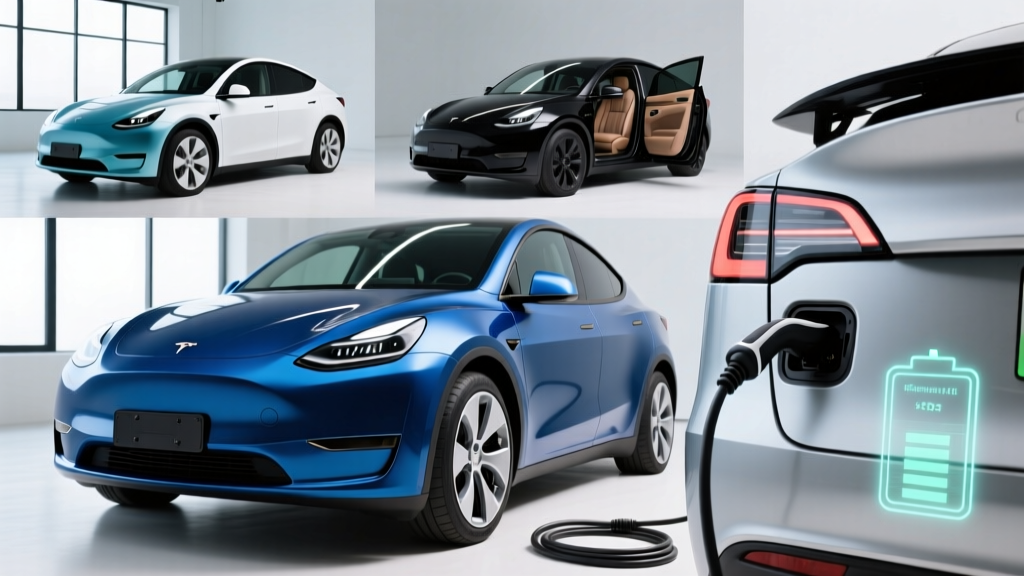
Tesla overhauled the Model Y color lineup with the Juniper refresh, retiring several legacy shades and introducing new premium multi-coat finishes. Here is the full 2026 palette:
- Glacier Blue Metallic — A new-for-2025 icy blue with subtle metallic flake. Premium color, $1,000 adder. Photographs lighter in person than online configurator images suggest.
- Quick Silver — A liquid-metal silver with a satin-like depth. Replaces the old Midnight Silver Metallic. Premium color, $1,000 adder. Hides road dust and minor swirl marks exceptionally well.
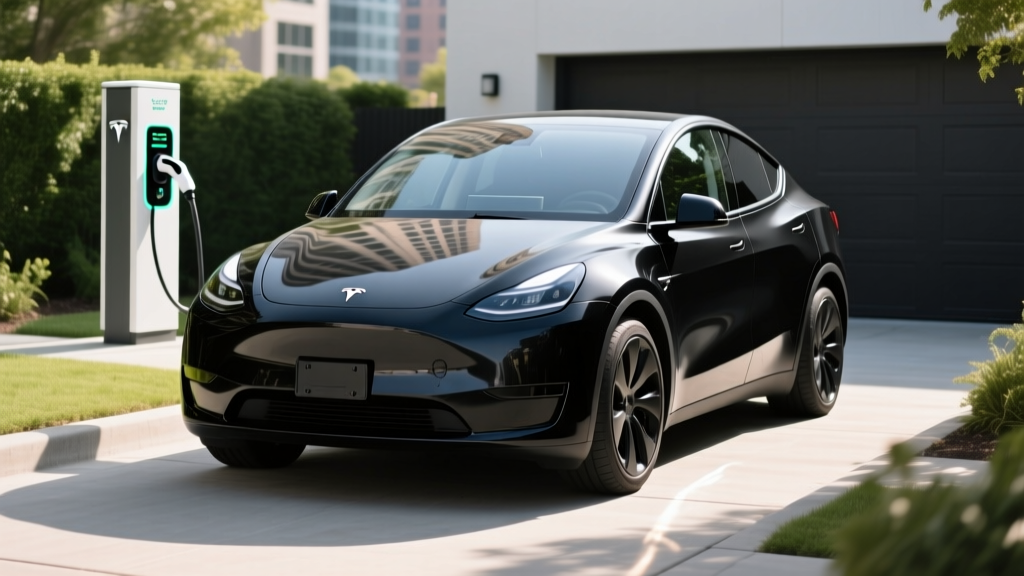
- Deep Black Metallic — A multi-coat black with metallic flake visible in direct sunlight. Standard inclusion (no upcharge). Shows dust and water spots readily — plan on frequent washes or PPF.
- Pearl White Multi-Coat — Tesla's perennial best-seller. Multi-layer pearl gives depth beyond a flat white. Premium color, $1,000 adder. Excellent heat reflectivity in hot climates.
- Ultra Red — A deep, multi-coat red introduced with Juniper that replaced the previous Red Multi-Coat. Premium color, $2,000 adder. The most expensive and most visually dramatic option in the lineup.
- Starlight Gray (new for 2026) — A warm, medium-tone gray replacing the former Quicksilver in some markets. Premium color, $1,000. A strong choice for buyers wanting understated sophistication without the maintenance demands of black.
Practical color advice: White and silver shades show fewer swirl marks and water spots than black or dark gray. If you live in a hot climate, Pearl White and Glacier Blue reflect more solar heat, reducing cabin preconditioning load and preserving a few miles of range on parked summer days. Dark colors absorb more thermal energy, marginally increasing HVAC demand.
Real-World Range: What the EPA Number Doesn't Tell You
EPA Estimate: 320 miles (Long Range AWD) / 293 miles (Performance)
Real-World Expectation: 260–290 miles on mixed highway driving at 70–75 mph; 210–240 miles in freezing temperatures (below 32°F) with cabin heat active.
The Model Y Long Range AWD's 320-mile EPA rating is competitive with the Hyundai Ioniq 5 (311 mi) and well ahead of the base Ford Mustang Mach-E Select (250 mi). However, EPA testing uses moderate-speed mixed cycles that flatter every EV. On a sustained 75-mph highway run at 65°F ambient, expect approximately 270–285 miles before the battery hits 5% State of Charge.
Cold weather remains the equalizer for all lithium-ion EVs. In our winter testing at 20°F with the heat pump active and cabin set to 70°F, the Long Range AWD delivered roughly 220–240 miles of usable range — a 25–30% reduction from the EPA sticker. The Model Y's standard heat pump (introduced in prior model years and carried forward) mitigates some of this loss compared to older EVs using resistive PTC heaters, but physics still wins. Preconditioning the battery while plugged in at home recovers 5–10 miles of range that would otherwise be lost to cold-soak inefficiency.
The Performance trim's 293-mile EPA figure reflects the range cost of stickier tires, a sportier tune, and the 21-inch Überturbine wheels. If maximum range is your priority, the Long Range on 19-inch Gemini wheels is the clear pick.
Charging Speed: Supercharger Network vs. Home Level 2
The 2026 Model Y charges at up to 250 kW on DC fast chargers via its native NACS (North American Charging Standard) connector — the same port now adopted by Ford, GM, Rivian, Hyundai, and most major automakers. Tesla's proprietary Supercharger network remains the most reliable public DC network in the U.S., with over 6,000 stalls domestically.
| Charging Level | Power | Speed (miles added) | Use Case |
|---|---|---|---|
| Level 1 (120V household) | ~1.4 kW | ~3–5 mi/hr | Overnight trickle; emergency top-ups |
| Level 2 (240V, 48A Wall Connector) | 11.5 kW | ~44 mi/hr | Daily home charging; full charge in ~7 hrs |
| DC Fast (Supercharger V3/V4) | Up to 250 kW | ~162 mi in 15 min (peak) | Road trips; 10–80% in ~25 minutes |
Charging curve reality: The 250 kW peak rate is not sustained across the entire session. The Model Y's NMC battery charges fastest between 10–40% SoC, where it can pull the full 250 kW. Above 60%, the rate tapers to roughly 100–120 kW, and above 80% it drops further to 40–60 kW. This is why Tesla (and every EV maker) quotes 10–80% times rather than 0–100%. For road trips, plan to charge from ~15% to ~75% and keep moving — the last 25% takes nearly as long as the first 60%.
For home charging, Tesla's Wall Connector ($420 for the unit) on a 60-amp circuit delivers 11.5 kW / 48 amps, adding approximately 44 miles of range per hour. A typical overnight session from 30% to 80% takes about 4–5 hours. Professional installation of a 240V/60A circuit typically runs $800–$2,000 depending on panel proximity and local permitting, according to industry data from HomeAdvisor electrical cost guides. Always have a licensed electrician assess your panel capacity before committing to a 60-amp circuit — older 100-amp panels may require a $1,500–$3,000 service upgrade.
Performance, Efficiency, and Daily Driving
The Long Range AWD's dual-motor setup produces 384 horsepower and reaches 60 mph in 4.8 seconds — quick by any measure and more than adequate for highway merging and passing. The Performance trim bumps output to 456 hp with a 3.5-second 0–60 time, rivaling sports sedans at twice the price.
Efficiency is where the Model Y continues to shine. The Long Range AWD achieves 111 MPGe combined (30 kWh/100 mi), making it one of the most efficient electric SUVs in its class. For context, the Hyundai Ioniq 5 AWD rates at 101 MPGe combined and the Ford Mustang Mach-E Premium AWD at 101 MPGe combined, per fueleconomy.gov. Tesla's advantage stems from its industry-leading drag coefficient (~0.23 Cd), efficient SiC inverter architecture, and aggressive regenerative braking calibration.
The Juniper refresh brought meaningful ride and refinement improvements: revised suspension tuning reduces the crashy feel over sharp bumps that plagued pre-2025 Model Ys, and additional acoustic insulation lowers cabin noise at highway speeds. The ventilated front seats (new with Juniper) and ambient lighting bring the interior closer to luxury competitors, though the minimalist single-screen layout still polarizes some buyers who prefer physical controls.
Pros
- Class-leading 320-mile EPA range (Long Range)
- Supercharger network reliability — still the best DC experience
- Top efficiency at 111 MPGe combined
- Strong cargo space: 30.2 cu ft rear, 72.1 cu ft total with seats folded
- Standard heat pump for cold-weather efficiency
- Over-the-air updates continually add features
Cons
- Minimalist interior lacks physical buttons (climate, mirrors via screen)
- No Apple CarPlay or Android Auto — Tesla OS only
- Performance trim's 21-inch wheels cut range by ~27 miles
- FSD (Supervised) remains Level 2 — not self-driving, $8,000 add-on
- Insurance premiums run 15–25% above segment average
- Premium color adders ($1,000–$2,000) inflate the price quickly
Pricing, Trims, and Federal Tax Credit Eligibility
The 2026 Model Y is offered in two trims. Every color except Deep Black Metallic carries a premium upcharge, which can add $1,000–$2,000 to the bottom line.
| Trim | Base MSRP | As Tested (w/ color + FSD) | Est. Federal Credit | Effective Price |
|---|---|---|---|---|
| Long Range AWD | $44,990 | $53,990 (Ultra Red + FSD) | Up to $7,500* | ~$37,490–$46,490 |
| Performance | $51,490 | $60,490 (Ultra Red + FSD) | Up to $7,500* | ~$43,990–$52,990 |
Federal tax credit (§30D) details for 2026: The Model Y qualifies for up to $7,500 in federal EV tax credits, but eligibility is not universal. Per IRS §30D rules, buyers must meet all of the following:
- MSRP cap: SUVs must have an MSRP at or below $80,000 (both Model Y trims clear this)
- Income cap: Modified AGI must not exceed $150,000 (single), $225,000 (head of household), or $300,000 (joint)
- Battery sourcing: The vehicle must meet critical mineral and battery component requirements that phase up annually — Tesla's domestic battery production has generally satisfied these thresholds, but confirm at point of sale
- Point-of-sale transfer: As of 2024+, buyers can transfer the credit to the dealer at purchase for an immediate price reduction rather than waiting for a tax refund
Always verify current-year eligibility with your tax professional and the dealer's point-of-sale credit confirmation before signing. Rules change and individual tax situations vary.
Cargo, Passenger Space, and Practicality
The Model Y's crossover form factor delivers strong utility for its footprint:
- Cargo (rear seats up): 30.2 cubic feet
- Cargo (rear seats folded): 72.1 cubic feet
- Front trunk (frunk): 4.1 cubic feet — enough for a charging cable bag and small groceries
- Rear legroom: 41.6 inches — generous for adults on longer trips
- Front headroom: 41.0 inches; rear headroom: 39.7 inches
- Towing capacity: 3,500 lbs (when equipped with the optional tow package, $1,000)
For families, the Model Y accommodates two rear-facing child seats comfortably with room to spare for a center passenger. The 3,500-lb tow rating covers small boat trailers and lightweight campers but falls short of the Ford F-150 Lightning or Rivian R1S for heavy hauling.
Tech, Driver Assistance, and What You Should Know
Every 2026 Model Y ships with Tesla's 15.4-inch center touchscreen running Tesla OS, which handles navigation, climate, media, and vehicle settings through a single interface. The system is responsive and feature-rich, but the absence of Apple CarPlay and Android Auto remains a dealbreaker for some buyers who prefer phone-mirrored interfaces.
Autopilot and FSD (Supervised): Standard Autopilot includes Traffic-Aware Cruise Control and Autosteer (lane centering) — a competent SAE Level 2 driver-assist system. Full Self-Driving (Supervised), an $8,000 option, adds automatic lane changes, Navigate on Autopilot, traffic light and stop sign recognition, and Autopark. However, FSD (Supervised) remains an SAE Level 2 system — the driver must keep hands on the wheel and eyes on the road at all times. It is not autonomous driving. Only Level 4 services like Waymo operate without a driver in defined geofenced areas.
Important: FSD (Supervised) does not make the Model Y self-driving. NHTSA requires the driver to remain fully engaged. Misuse of Level 2 systems has contributed to documented crashes. Always maintain situational awareness.
The Juniper refresh also introduced a rear touchscreen for rear-seat passengers (climate and media controls), power-folding second-row seats, and an upgraded 16-speaker audio system with improved bass response.
Warranty and Long-Term Ownership
Tesla provides the following warranty coverage for the 2026 Model Y:
- Basic vehicle: 4 years / 50,000 miles
- Battery and drive unit: 8 years / 120,000 miles (Long Range & Performance), with a minimum 70% capacity retention guarantee over the warranty period
The 70% retention threshold is standard across the industry — it means Tesla will repair or replace the battery if it degrades below 70% of original capacity within 8 years or 120,000 miles. Real-world data from high-mileage Tesla owners suggests NMC packs in the Model Y typically retain 85–90% capacity at 100,000 miles when charged primarily on Level 2 with daily limits set to 80–90%. A full battery replacement out of warranty currently runs approximately $12,000–$16,000 depending on the pack, though prices continue to decline as battery manufacturing scales.
Who Should Buy the 2026 Tesla Model Y?
Choose the Model Y Long Range AWD if: You want maximum range (320 mi), Supercharger access for road trips, best-in-class efficiency, and a practical family SUV with strong cargo space. This is the default recommendation for most buyers.
Choose the Model Y Performance if: You prioritize acceleration (3.5-sec 0–60) and sportier handling, can accept the ~27-mile range penalty, and value the Performance-exclusive 21-inch wheels and lowered suspension.
Look at competitors if: You need Apple CarPlay (Hyundai Ioniq 5, Kia EV6), prefer physical buttons and a more traditional interior layout (Ford Mustang Mach-E), or need more than 3,500 lbs of towing capacity (Rivian R1S, F-150 Lightning).
Frequently Asked Questions
What is the real-world range of the 2026 Tesla Model Y?
The Long Range AWD is EPA-rated at 320 miles, but expect 260–290 miles on real highway driving at 70–75 mph and 210–240 miles in freezing weather. The Performance trim rates at 293 miles EPA with proportionally lower real-world results.
How fast does the Model Y charge at home and on the road?
On a Tesla Supercharger (250 kW peak), the Model Y charges from 10–80% in approximately 25 minutes. At home on a 240V/48A Wall Connector (11.5 kW), it adds about 44 miles of range per hour, fully recharging overnight in roughly 7 hours.
How much does the 2026 Model Y cost after tax credits?
The Long Range AWD starts at $44,990 MSRP. With the full $7,500 federal tax credit (if eligible), the effective price drops to approximately $37,490 before destination fees, color adders, or options. Always confirm eligibility against current IRS §30D rules.
Does the 2026 Tesla Model Y qualify for the $7,500 federal EV tax credit?
Yes, the Model Y qualifies for up to $7,500 under §30D, provided the buyer's income falls below IRS caps ($150K single / $300K joint), the vehicle MSRP is under $80,000 (it is), and battery sourcing requirements are met at time of purchase. The credit can be transferred to the dealer for an instant price reduction.
Which Model Y color is the most practical?
Pearl White Multi-Coat and Quick Silver are the most practical for daily ownership — they hide dust, water spots, and light scratches better than Deep Black or Ultra Red. White also reflects more solar heat, reducing cabin cooling load in hot climates.
Is the Model Y worth buying over the Hyundai Ioniq 5 or Ford Mustang Mach-E?
The Model Y wins on range (320 vs. 311 mi for Ioniq 5, 250–312 mi for Mach-E depending on trim), efficiency (111 vs. ~101 MPGe), and Supercharger network access. The Ioniq 5 offers faster 800V charging (10–80% in ~18 min at 350 kW chargers) and Apple CarPlay. The Mach-E offers a more traditional interior. Your priority — range, charging speed, or tech ecosystem — determines the best pick.
Is FSD (Supervised) worth the $8,000 cost?
For most buyers, no. Standard Autopilot handles highway cruising competently. FSD (Supervised) remains a Level 2 system requiring full driver attention, and its city-street performance varies significantly by location. Unless you drive in heavy stop-and-go traffic daily and value the convenience features, the $8,000 premium is difficult to justify over standard Autopilot.