The Short Answer on Ford's $30K Electric Pickup
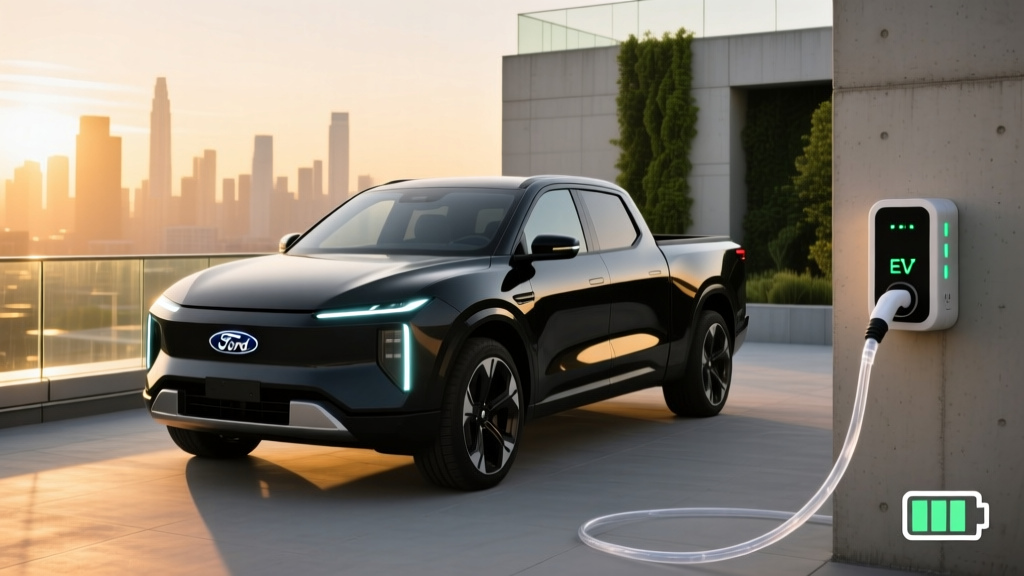
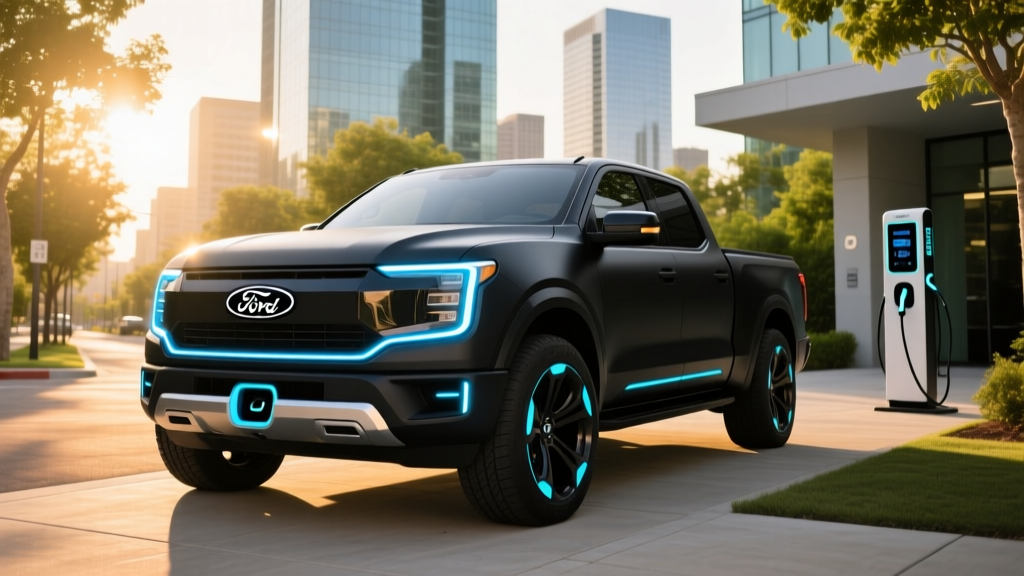
Ford's next-generation electric pickup, widely referred to as the "Ford 30K electric pickup," is a compact, affordable EV truck built on Ford's new universal EV platform. Announced for production starting in 2027, it targets a starting MSRP near $30,000 (before incentives) and aims to undercut rivals like the Chevrolet Silverado EV and Rivian R2 in price. As of early 2026, Ford has not released finalized EPA range, battery capacity, or horsepower figures. What we do know: it will use a smaller battery pack than the F-150 Lightning, likely feature LFP (lithium iron phosphate) chemistry to keep costs down, and should qualify for the full $7,500 federal tax credit under current IRS §30D rules — potentially bringing the effective price into the low $20,000s. If you're shopping now, this truck is not yet available for order. If you can wait, it could reshape the affordable EV truck segment.
What Is the Ford $30K Electric Pickup?
In March 2024, Ford CEO Jim Farley confirmed that the company was developing a new family of electric vehicles on a flexible, cost-reduced platform — and that one of those vehicles would be a small pickup truck priced around $30,000. The project is led by Ford's "skunkworks" EV team in Irvine, California, headed by former Tesla and Apple engineer Alan Clarke.
The goal is straightforward: build an electric truck that competes not with the $60,000+ F-150 Lightning, but with compact gas pickups like the Ford Maverick Hybrid ($29,495 base) and the Hyundai Santa Cruz. Think of it as an electric Maverick — a unibody, car-based truck optimized for urban and suburban use, light hauling, and daily commuting rather than heavy towing.
Ford has confirmed the vehicle will ride on its new "universal EV platform," which is designed to support multiple body styles at significantly lower manufacturing cost than the dedicated BEV architecture underpinning the F-150 Lightning and Mustang Mach-E. Production is slated to begin in 2027, likely at Ford's Louisville Assembly Plant or another retooled facility.
Estimated Specs: Range, Battery, and Charging
Because Ford has not published a full spec sheet, the numbers below are informed estimates based on industry reporting, Ford's platform statements, and segment benchmarks. Treat them as preliminary — final figures will come closer to launch.
| Specification | Estimated (Preliminary) | Segment Benchmark |
|---|---|---|
| Base MSRP | ~$30,000 | Ford Maverick Hybrid: $29,495 |
| Battery Capacity (usable) | ~55–65 kWh | Hyundai Ioniq 5 Standard: 58 kWh |
| Battery Chemistry | LFP (expected) | Tesla Model 3 RWD: LFP |
| EPA Range (est.) | 230–280 miles | F-150 Lightning Std Range: 240 mi |
| Peak DC Fast Charge Rate | ~150 kW (est.) | VW ID.4: 170 kW peak |
| 10–80% DC Charge Time | ~28–35 minutes (est.) | Chevy Equinox EV: ~30 min |
| Level 2 Home Charging | ~11 kW / 7.7 kW onboard | Typical for segment |
| Horsepower | ~200–250 hp (est.) | Maverick Hybrid: 191 hp |
| 0–60 mph | ~6.5–8.0 seconds (est.) | Maverick Hybrid: ~7.8 sec |
| Towing Capacity | ~1,500–2,000 lbs (est.) | Maverick: 2,000 lbs |
| Drivetrain | RWD standard, AWD optional | Typical for compact truck |
| Battery Warranty | 8 yr / 100,000 mi (expected) | Federal minimum for EVs |
Real-World Range Expectations
EPA Estimate: ~230–280 miles (preliminary, depending on trim and battery size).
Real-World Highway: Expect roughly 190–240 miles at sustained 70–75 mph. Pickup truck aerodynamics are inherently less efficient than sedans, and a compact truck bed creates drag.
Cold Weather (below 32°F): LFP batteries are more susceptible to cold-weather range loss than NMC chemistries. Plan for 20–30% reduction in winter, meaning a 250-mile EPA truck could deliver 175–200 miles in freezing conditions without preconditioning. A heat pump (if equipped) will help.
LFP Battery Chemistry: What It Means for Buyers
Ford has signaled that its next-gen affordable EVs will likely use lithium iron phosphate (LFP) battery cells, similar to the approach Tesla took with the Model 3 Standard Range. Here's why that matters:
| Factor | LFP (Expected) | NMC (F-150 Lightning) |
|---|---|---|
| Cost per kWh | Lower (~$80–100/kWh) | Higher (~$120–140/kWh) |
| Energy Density | Lower — heavier for same capacity | Higher — lighter, more range per kg |
| Cycle Life | 3,000+ cycles to 80% SoH | ~1,500–2,000 cycles to 80% SoH |
| Cold-Weather Performance | Weaker — more range loss below freezing | Better — less degradation in cold |
| Recommended Charge Habit | Can charge to 100% daily | Best kept at 80% for daily use |
| Cobalt/Nickel Content | Zero cobalt, zero nickel | Contains cobalt and nickel |
The big practical takeaway: LFP batteries are cheaper to manufacture and last longer over thousands of charge cycles, but they sacrifice some energy density and cold-weather efficiency. For a $30,000 truck aimed at daily commuting and light-duty use, the trade-off makes sense. If you live in Minnesota or Maine, though, winter range will be noticeably impacted.
Cost of Ownership: EV Truck vs. Gas Compact Truck
The whole point of a $30,000 electric pickup is to offer lower total cost of ownership than a gas alternative. Here's how the numbers stack up over five years and 75,000 miles, comparing the Ford 30K EV truck (estimated) against the Ford Maverick Hybrid — its closest internal-combustion rival.
| Cost Category (5 yr / 75K mi) | Ford 30K EV (Est.) | Maverick Hybrid |
|---|---|---|
| Purchase Price (base MSRP) | $30,000 | $29,495 |
| Federal Tax Credit (§30D) | −$7,500 (if eligible) | $0 |
| Effective Purchase Price | $22,500 | $29,495 |
| Fuel / Electricity | $2,800–$3,600 | $5,400–$6,200 |
| Maintenance | $800–$1,200 | $2,000–$2,800 |
| Insurance (avg.) | $7,500–$9,000 | $6,000–$7,500 |
| Estimated 5-Year Total | $33,600–$36,300 | $42,895–$45,995 |
Key assumptions: Electricity at $0.14/kWh national average for home charging, with some public DC fast charging mixed in. Gas at $3.40/gallon. Maverick Hybrid at 42 MPG combined (source: fueleconomy.gov). EV efficiency estimated at 3.0–3.5 miles/kWh. Insurance premiums for EVs tend to run 15–25% higher than comparable gas vehicles due to higher repair costs — get quotes before buying.
The effective price gap widens significantly if you qualify for the full $7,500 federal EV tax credit under IRS §30D rules. However, eligibility is not guaranteed — it depends on your income, the vehicle's MSRP, and battery component/critical mineral sourcing requirements that tighten each year. Always confirm current-year eligibility on the IRS website or with a tax professional before counting the credit into your budget.
Federal Tax Credit Eligibility: What You Need to Know
Under current §30D rules, the Ford 30K electric pickup should be well-positioned for the full credit, but several conditions apply:
- MSRP Cap: Pickup trucks must have an MSRP at or below $80,000. A $30,000 truck clears this easily.
- Buyer Income Cap: Modified adjusted gross income (MAGI) must not exceed $150,000 (single), $225,000 (head of household), or $300,000 (joint filers).
- Battery Sourcing: Increasing percentages of critical minerals and battery components must be sourced from the U.S. or free-trade-agreement countries. These thresholds tighten annually — 2027 rules may be stricter than 2026.
- Point-of-Sale Transfer: Since 2024, buyers can transfer the credit to the dealer at purchase, reducing the out-of-pocket price immediately rather than waiting for a tax refund.
- Final Assembly: Vehicle must undergo final assembly in North America. Ford's U.S. plants should satisfy this requirement.
The critical-mineral and battery-component sourcing requirements are the wildcard. Ford's LFP cells may be sourced from CATL (China), which could trigger Foreign Entity of Concern (FEOC) restrictions that phase in through 2027. Ford has been working to onshore battery supply chains, but this is the biggest risk to full credit eligibility. Monitor IRS guidance as the launch approaches.
Home Charging and Real-World Ownership
A compact EV truck in the $30,000 range will be purchased by many first-time EV buyers. Here's what you need to plan for:
Level 2 Home Charging Is Essential
With a ~60 kWh battery, charging on a standard 120V outlet (Level 1) would take roughly 50+ hours from empty — impractical for daily use. A Level 2 home charger (240V, 32–48 amps) will replenish the battery in 6–8 hours, meaning you wake up to a full charge every morning.
| Item | Cost Range |
|---|---|
| Level 2 Charger (hardware) | $300–$700 |
| Electrician labor (240V outlet or hardwire) | $500–$2,000 |
| Electrical panel upgrade (if needed, 100A → 200A) | $1,500–$3,500 |
| Permit and inspection | $100–$400 |
| Total (no panel upgrade) | $900–$3,100 |
| Total (with panel upgrade) | $2,400–$6,600 |
If you live in an apartment or lack off-street parking, home charging may not be feasible. Public DC fast charging is an option, but relying on it exclusively costs more (typically $0.30–$0.50/kWh vs. $0.12–$0.16/kWh at home) and adds wear to the battery over time. Factor this into your decision honestly.
Driving Patterns That Favor This Truck
The Ford 30K EV pickup will be ideal for buyers whose daily driving looks like this:
- Round-trip commute under 80 miles
- Access to Level 2 charging at home or work
- Occasional road trips under 200 miles, or willingness to plan DC fast-charge stops
- Light cargo and towing needs (under 2,000 lbs)
- Mild-to-moderate climate, or acceptance of winter range loss
Myths vs. Facts: Common Misconceptions
| Myth | Fact |
|---|---|
| "A $30K EV truck won't have enough range to be practical." | An estimated 230–280 miles EPA covers the average American's weekly driving (~275 miles) with home charging. For road trips, DC fast charging adds ~150–180 miles in 30 minutes. |
| "The battery will need replacing in a few years." | LFP batteries are rated for 3,000+ charge cycles before hitting 80% capacity — that's roughly 700,000+ miles of driving. Federal law mandates an 8-year/100,000-mile battery warranty minimum. |
| "EVs are worse in cold weather, so this truck won't work up north." | Cold weather does reduce range by 20–30% (more for LFP), and preconditioning while plugged in mitigates this. Many EV owners in cold climates find them perfectly usable with planning. |
| "The $7,500 tax credit goes to everyone." | Eligibility depends on income caps, MSRP caps, battery sourcing rules, and North American assembly. Not every buyer qualifies. Check IRS §30D for current rules. |
| "I can just plug it into a regular outlet." | Level 1 (120V) charging adds roughly 3–5 miles per hour — fine for overnight top-ups on a small battery but inadequate as a primary charging strategy for daily use. |
Decision Framework: Should You Wait or Buy Now?
Wait for the Ford 30K Electric Pickup If:
- You want an affordable electric truck and don't need one before 2027–2028
- Your daily commute is under 80 miles and you have home charging access
- You want to maximize tax credit savings (effective price potentially in the low $20Ks)
- You don't need heavy towing (over 2,000 lbs) or long-haul road trip capability
- You prefer LFP battery longevity and can accept cold-weather range trade-offs
Buy Something Else Now If:
- You need a truck immediately — the Ford 30K EV won't be available until 2027 at the earliest
- Consider the Ford Maverick Hybrid ($29,495): 42 MPG combined, available now, no charging needed, proven reliability
- Consider the F-150 Lightning (from ~$55,000): If you need full-size truck capability, 240–320 mi range, and 7,700-lb towing
- Consider the Chevrolet Silverado EV (from ~$39,900): Larger and pricier, but available sooner with 340+ mi range options
- You live in a charging desert with no reliable public DC fast-charging network and no home charging option
- You regularly tow over 3,000 lbs — a compact EV truck won't serve this use case
Frequently Asked Questions
When will the Ford $30K electric pickup be available?
Ford has targeted production starting in 2027. Reservations or pre-orders have not yet opened as of early 2026. Expect a formal reveal with finalized specs sometime in late 2026 or early 2027.
Will it qualify for the $7,500 federal tax credit?
It should, based on its expected MSRP (under $80,000 cap), North American assembly, and Ford's battery sourcing plans. However, critical-mineral and FEOC rules tighten each year. Confirm eligibility at purchase time via IRS.gov or your tax professional.
How does it compare to the Ford Maverick Hybrid?
The Maverick Hybrid starts at $29,495, gets 42 MPG combined, and requires no charging infrastructure. The 30K EV truck will likely cost a similar amount before incentives but offer lower per-mile energy costs, less maintenance, and zero tailpipe emissions. The Maverick is the pragmatic choice today; the EV truck is the bet on lower long-term running costs — if you have home charging.
What's the difference between kW and kWh?
kW (kilowatts) measures power — how fast energy flows, like the flow rate of a gas pump. A 150 kW charger delivers energy faster than a 50 kW charger. kWh (kilowatt-hours) measures energy — the total amount stored in the battery, like gallons in a fuel tank. A 60 kWh battery holds 60 kilowatt-hours of energy. Never confuse the two.
Can I tow with this truck?
Estimated towing capacity is 1,500–2,000 lbs, similar to the Maverick. This is sufficient for a small utility trailer, a couple of dirt bikes, or a light pop-up camper. It is not a heavy-haul vehicle — if you need to tow a boat or large trailer, look at the F-150 Lightning or a gas truck.
What about insurance costs?
EV insurance premiums typically run 15–25% higher than comparable gas vehicles. For a $30,000 EV truck, expect annual premiums in the $1,500–$1,800 range depending on your state, driving record, and insurer. Get quotes from multiple providers before purchasing.
Is this truck a body-on-frame or unibody design?
All reporting points to a unibody architecture, similar to the Maverick. This keeps weight and cost down while providing car-like ride quality. Traditional body-on-frame construction is reserved for larger trucks like the F-150 Lightning.