The Florida EV Incentive Reality: No State Credit, But Plenty Else
If you're shopping for an electric vehicle in Florida and searching for a Florida electric car tax credit, here's the straight answer: Florida does not offer a state-level tax credit or rebate for purchasing a new or used EV. Unlike states such as Colorado (up to $5,000 state credit) or California (CVRP rebates up to $7,000 for income-qualified buyers), Florida's legislature has not enacted a direct purchase incentive for electric vehicles.
That doesn't mean Florida buyers are left paying full sticker. The federal IRS §30D Clean Vehicle Credit still applies to qualifying buyers and vehicles, certain Florida utilities offer rebates, and the operational savings of driving electric still tilt the total-cost-of-ownership math in your favor — provided you buy the right vehicle and charge smart. Let's run the real numbers.
Federal §30D Tax Credit: What Florida Buyers Actually Qualify For
The federal Clean Vehicle Credit can reduce your tax liability by up to $7,500 for a new EV or $4,000 for a qualifying used EV. But "up to" is doing heavy lifting. Eligibility hinges on three moving targets that shift annually: your income, the vehicle's MSRP, and where the battery materials come from.
§30D Eligibility Checklist (2026 Rules)
- Buyer income caps (modified AGI): $300,000 joint filers / $225,000 head of household / $150,000 single filers
- Vehicle MSRP caps: $80,000 for SUVs, pickups, and vans / $55,000 for sedans, hatchbacks, and wagons
- Battery sourcing requirements: Critical minerals and battery components must meet escalating domestic/free-trade-agreement percentages — vehicles that don't comply may lose $3,750 or the full $7,500
- Point-of-sale transfer: As of 2024, you can transfer the credit to the dealer at purchase, reducing your out-of-pocket price immediately (you still must meet income limits when you file)
- Final assembly: Vehicle must undergo final assembly in North America — check the VIN at fueleconomy.gov
- Used EV credit: 30% of sale price, max $4,000, on vehicles under $25,000 from a licensed dealer; buyer income caps are half the new-vehicle thresholds
Vehicles that typically qualify for the full or partial $7,500 in 2026 include the Tesla Model Y (Long Range and Performance), Ford F-150 Lightning, Chevrolet Equinox EV, and Cadillac Lyriq. The Hyundai Ioniq 5 and Kia EV6, assembled in South Korea, generally do not qualify for the new-vehicle credit (though they may qualify if leased, since the leasing entity claims the commercial credit under §45W). Always verify current eligibility on the IRS website before purchasing — battery-sourcing rules tighten each year.
Florida Utility Rebates and Local Incentives
Note: State and local incentive programs change frequently. The utility rebates listed below reflect programs active as of early 2026. Confirm current availability with your provider before relying on these figures in your purchase budget.
While the state itself doesn't offer a Florida electric car tax credit, several utilities and municipalities provide meaningful rebates:
- Orlando Utilities Commission (OUC): Has historically offered rebates up to $500 for residential Level 2 charger installation and off-peak charging incentive programs
- JEA (Jacksonville): Offers time-of-use rates that significantly reduce per-kWh charging costs during overnight hours (as low as ~$0.06/kWh off-peak vs. ~$0.13/kWh standard)
- Duke Energy Florida: Has run EV charger rebate programs (up to $500 for Level 2 equipment) and offers off-peak rate plans
- Tampa Electric (TECO): Time-of-use plans can cut overnight home charging costs substantially
- FPL (Florida Power & Light): Offers an EV rate program with off-peak charging as low as ~$0.05–$0.07/kWh overnight, plus occasional charger rebates
Florida also has no state income tax, which doesn't directly reduce your EV purchase price but does mean more of the federal credit benefits you without state-tax interaction complications.
5-Year Total Cost of Ownership: EV vs. Gas in Florida
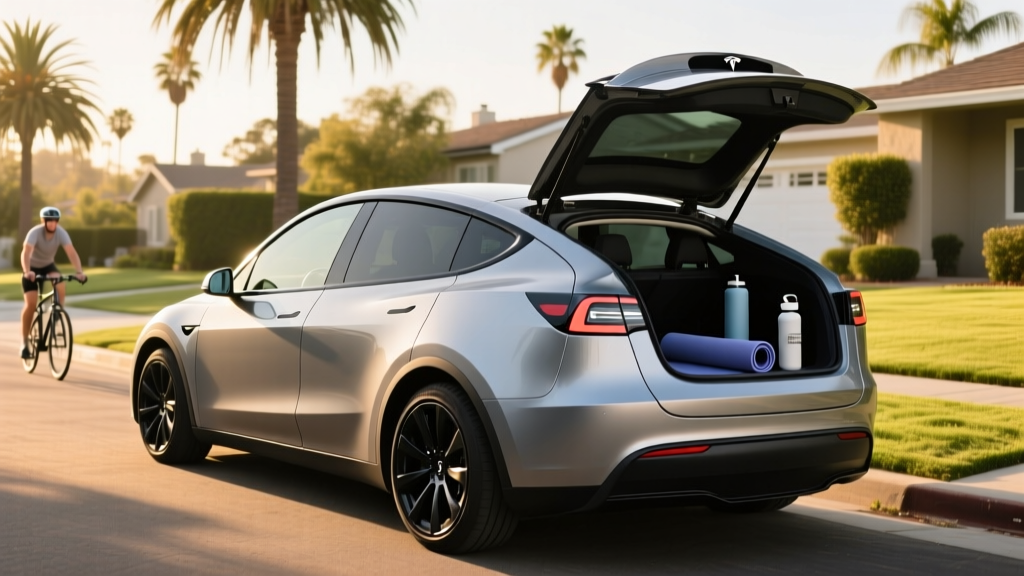
Let's model a realistic 5-year, 75,000-mile ownership scenario comparing a popular EV against a comparable gas vehicle. We'll use the 2026 Tesla Model Y Long Range AWD ($46,630 MSRP, EPA 320 miles, 75 kWh usable battery) versus the 2026 Toyota RAV4 AWD LE ($31,895 MSRP, EPA 30 MPG combined).
| Cost Category | Tesla Model Y LR AWD | Toyota RAV4 AWD LE |
|---|---|---|
| Purchase Price (MSRP) | $46,630 | $31,895 |
| Federal Tax Credit (§30D) | −$7,500 | $0 |
| Effective Purchase Price | $39,130 | $31,895 |
| Florida Sales Tax (6%) | $2,798 (on pre-credit price) | $1,914 |
| Fuel / Electricity (75k mi) | $3,375 (home charging at $0.12/kWh avg) | $7,500 (at $3.00/gal, 30 MPG) |
| Maintenance (5 years) | $1,800 | $3,500 |
| Insurance (5 years) | $11,500 | $8,000 |
| Estimated Depreciation | $18,000 (~46% of net) | $12,000 (~38%) |
| Total 5-Year Cost | $76,603 | $64,809 |
| Cost Per Mile | $1.02 | $0.86 |
Key takeaway: Even after the $7,500 federal credit, the Model Y costs roughly $11,800 more over 5 years in this scenario. The EV wins decisively on fuel and maintenance — saving about $5,825 combined — but gives it back in higher insurance premiums and steeper depreciation. If you can charge primarily at home on FPL's off-peak rate (~$0.06/kWh), your electricity cost drops to roughly $1,688 over 5 years, narrowing the gap by another $1,687.
This is why the "EVs are always cheaper" narrative is incomplete. The math works best when you: (1) qualify for the full federal credit, (2) charge at home on cheap off-peak electricity, (3) keep the car 7+ years to ride out the depreciation curve, and (4) drive enough annual miles for fuel savings to compound.
Charging vs. Gas: The Per-Mile Cost Breakdown
| Fueling Method | Rate / Price | Efficiency | Cost Per Mile |
|---|---|---|---|
| Home Level 2 (FL avg, ~$0.12/kWh) | $0.12/kWh | 3.5 mi/kWh (Model Y) | $0.034 |
| Home Level 2 (FPL off-peak, ~$0.06/kWh) | $0.06/kWh | 3.5 mi/kWh | $0.017 |
| Public DC Fast (avg ~$0.40/kWh) | $0.40/kWh | 3.5 mi/kWh | $0.114 |
| Tesla Supercharger (avg ~$0.30/kWh) | $0.30/kWh | 3.5 mi/kWh | $0.086 |
| Gas — RAV4 (30 MPG, $3.00/gal) | $3.00/gal | 30 MPG | $0.100 |
| Gas — RAV4 (30 MPG, $3.50/gal) | $3.50/gal | 30 MPG | $0.117 |
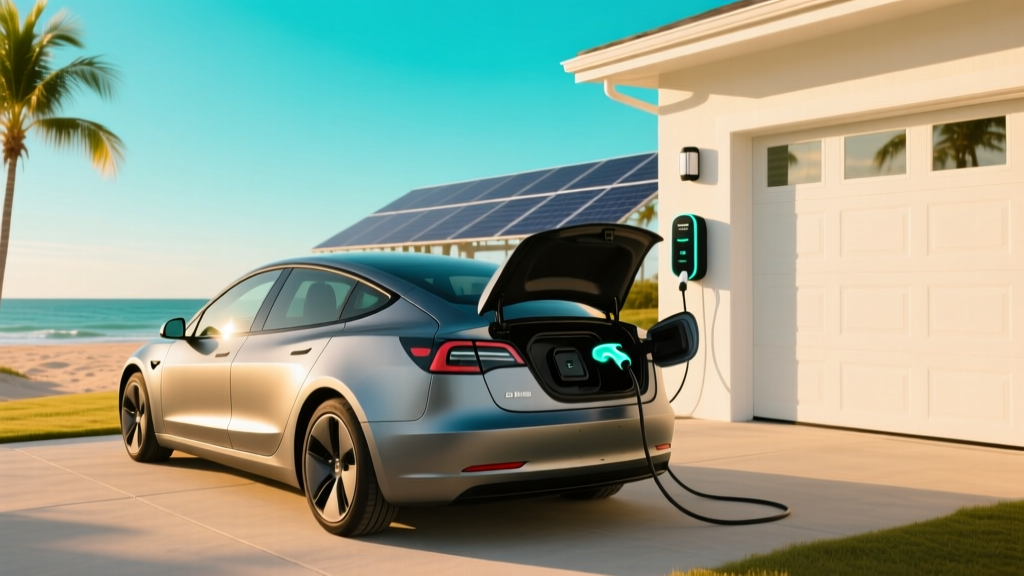
Home charging in Florida is a decisive win — at the statewide average of ~$0.12/kWh, you're paying roughly one-third the per-mile cost of gasoline. But if you rely exclusively on public DC fast charging ( Electrify America, EVgo, etc.), your per-mile cost actually exceeds gasoline at current Florida fuel prices. This is the single biggest reason home Level 2 charging is essentially mandatory for EV cost savings.
Florida's flat terrain and warm climate are a hidden efficiency advantage. Unlike northern states where cold weather can reduce range by 20–30% and sap battery efficiency, Florida EV owners typically achieve 90–100% of their EPA-rated range year-round. A Model Y rated at 320 miles EPA will realistically deliver 290–310 miles in Florida summer highway driving (with A/C running) — far better than the 220–250 miles you'd see in a Minnesota January.
Maintenance Savings: Where EVs Genuinely Win
| Service Item | EV (Model Y) | Gas (RAV4) |
|---|---|---|
| Oil Changes | $0 (none required) | $750 (10 changes × $75) |
| Brake Pads/Rotors | $200 (regen braking extends life to 80k+ mi) | $800 (2 pad replacements + 1 rotor) |
| Transmission Fluid | $0 (single-speed, sealed) | $300 (fluid exchange) |
| Cabin Air Filter | $150 (2 replacements) | $150 (2 replacements) |
| Tire Rotation/Replacement | $1,200 (EVs are heavier; tires wear ~20% faster) | $900 |
| Coolant/Other Fluids | $100 | $400 |
| Miscellaneous (wipers, 12V battery) | $150 | $200 |
| Total 5-Year Maintenance | $1,800 | $3,500 |
The maintenance savings are real — roughly $1,700 over 5 years — driven primarily by eliminated oil changes, dramatically extended brake life thanks to regenerative braking, and fewer mechanical systems that can fail. The one area where EVs cost more is tires: the Model Y weighs 4,400 lbs and delivers instant torque, which accelerates tread wear. Budget for a tire replacement around 30,000–40,000 miles.
The Insurance Reality: EVs Cost More to Insure
This is where many EV cost calculators conveniently gloss over the numbers. Based on 2026 Florida rate data, insuring a Tesla Model Y averages $2,300/year compared to roughly $1,600/year for a RAV4 — a premium of about 44%. Over five years, that's an additional $3,500 in insurance costs.
Why are EVs more expensive to insure?
- Higher repair costs: Battery packs are expensive to replace after collision damage; even minor underbody impacts can total a pack. Specialized high-voltage training is required for body shops.
- Higher vehicle values: A $46,000 EV carries higher comprehensive and collision exposure than a $32,000 gas car.
- Parts scarcity: EV-specific components (inverter, onboard charger, battery modules) have longer lead times, increasing rental-car reimbursement costs for insurers.
- Total-loss frequency: Insurers are more likely to declare an EV a total loss after battery-area damage due to safety protocols and replacement cost.
Not all EVs carry the same insurance penalty. A Chevrolet Equinox EV or Nissan Leaf typically costs much less to insure than a Tesla, since Tesla's direct-to-consumer repair ecosystem and high parts costs drive up claims. Always get an insurance quote on the specific EV model before purchasing — the variance between models is significant.
EV Depreciation and Resale Value in 2026
Depreciation remains the largest hidden cost of EV ownership and the category where gas vehicles currently hold an edge. According to industry data, the average EV retains roughly 45–55% of its value after 5 years, compared to 55–65% for comparable gas vehicles. The Tesla Model Y, as one of the best-selling EVs with strong brand recognition, performs better than average — expect roughly 50–55% retention.
Several factors are reshaping EV depreciation:
- Price wars: Tesla's repeated price cuts since 2023 hammered resale values for existing owners. A Model Y purchased for $58,000 in 2022 may now be worth $28,000–$32,000 — a brutal 45–50% loss in just three years.
- Battery health perception: Used-EV buyers remain cautious about battery degradation, even though most modern packs retain 85–92% capacity at 100,000 miles. This perception gap depresses resale values.
- Tax credit headwinds: When a new EV qualifies for $7,500 off, the used version effectively competes against a lower new-car price, compressing its resale value.
- Technology obsolescence: Faster-charging newer models (350 kW peak vs. older 150 kW vehicles) make 2020–2022 EVs feel dated.
If depreciation is your top concern, consider buying a 2–3-year-old EV that has already absorbed its steepest value drop, or plan to keep your EV for 8–10 years, where the depreciation curve flattens and the cumulative fuel/maintenance savings become substantial.
The Verdict: Is an EV Worth It in Florida?
Choose an EV in Florida if:
- You can install a Level 2 home charger and access off-peak utility rates
- You qualify for the full $7,500 federal §30D credit
- You drive 12,000+ miles/year (fuel savings compound faster)
- You plan to keep the vehicle 7+ years (ride out depreciation)
- You value the driving experience: instant torque, quiet cabin, one-pedal driving
Stick with gas or hybrid if:
- You live in an apartment or condo without charging access
- Your income exceeds the §30D caps or the vehicle doesn't qualify
- You drive fewer than 8,000 miles/year (fuel savings don't offset higher insurance)
- You trade vehicles every 3–4 years (depreciation will sting)
- You frequently tow heavy loads or drive 400+ miles between stops (Florida's charging infrastructure is improving but still has gaps in rural Panhandle areas)
Florida's lack of a state electric car tax credit is a missed opportunity compared to peer states, but the combination of the federal §30D credit, utility off-peak rates, zero state income tax, and ideal EV-driving climate still makes the Sunshine State a solid place to own electric — if you run the math honestly.
Frequently Asked Questions
Does Florida offer any state tax credit for buying an electric car?
No. Florida does not have a state-level EV tax credit, rebate, or purchase incentive as of 2026. Buyers can only access the federal IRS §30D Clean Vehicle Credit (up to $7,500) and any local utility rebates for charger installation or off-peak charging.
How much does it really cost to own an EV over 5 years in Florida?
For a Tesla Model Y Long Range with the $7,500 federal credit applied, expect roughly $76,000–$78,000 total over 5 years and 75,000 miles, including purchase, tax, electricity, insurance, maintenance, and depreciation. That's approximately $1.00–$1.05 per mile all-in. A comparable gas SUV costs roughly $64,000–$66,000 over the same period. The gap narrows significantly if you charge on off-peak utility rates and keep the vehicle longer.
Do I qualify for the $7,500 federal EV tax credit?
You qualify if your modified adjusted gross income is under $300,000 (joint), $225,000 (head of household), or $150,000 (single), AND the vehicle's MSRP is under $80,000 (SUVs/trucks/vans) or $55,000 (cars), AND the vehicle meets battery critical-mineral and component sourcing requirements, AND it was assembled in North America. Verify specific vehicle eligibility at fueleconomy.gov and consult a tax professional for your situation.
How much do I save on fuel and maintenance driving an EV in Florida?
Home-charging an EV in Florida at the average rate of ~$0.12/kWh costs about $0.034/mile, versus $0.10/mile for a 30-MPG gas vehicle at $3.00/gallon — saving roughly $4,000–$5,000 over 75,000 miles. Add ~$1,700 in maintenance savings (no oil changes, fewer brake replacements, no transmission fluid). Total operational savings: approximately $5,700–$6,500 over 5 years.
Are EVs more expensive to insure in Florida?
Yes, typically 25–50% more expensive than comparable gas vehicles. A Model Y averages ~$2,300/year in Florida versus ~$1,600/year for a RAV4. The higher cost is driven by expensive battery repairs, specialized labor, and higher vehicle values. Get a quote before buying — insurance premiums vary significantly between EV models.
How well do EVs hold their value compared to gas cars?
EVs currently depreciate faster, retaining roughly 45–55% of value after 5 years versus 55–65% for gas vehicles. Tesla price cuts, rapid technology advancement, and buyer concern about used battery health contribute. Buying a 2–3-year-old used EV or committing to 8+ years of ownership are the best strategies to mitigate depreciation losses.