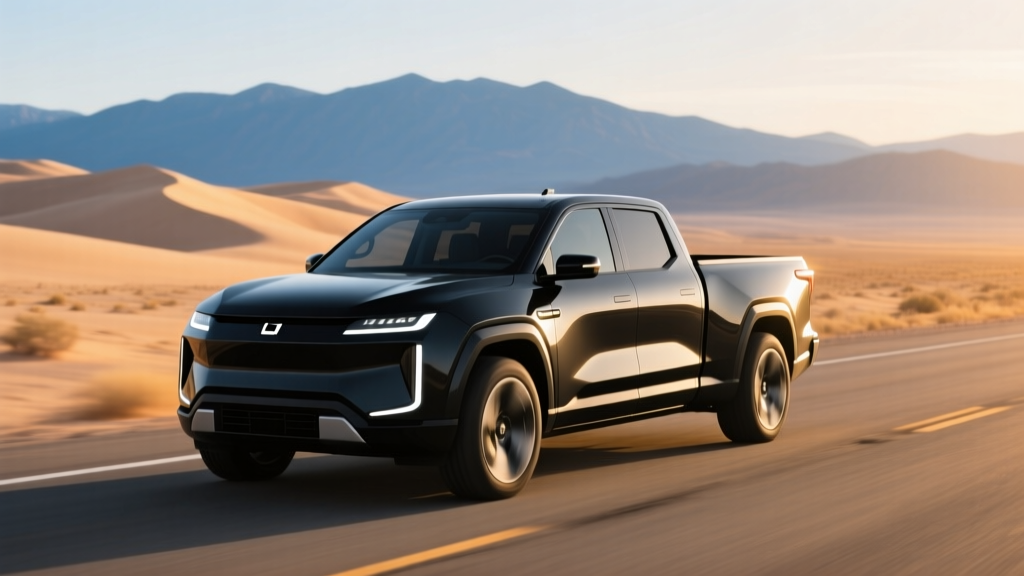
If you've been searching for a Fisker truck, you're not alone. The Fisker Alaska — a compact-to-midsize electric pickup unveiled in mid-2023 — generated genuine excitement with promises of aggressive pricing, a 340-mile target range, and a distinctive design from automotive legend Henrik Fisker. But as of 2026, no Fisker truck has ever reached a customer's driveway. Fisker Inc. filed for bankruptcy in late 2024, and the Alaska was never produced.
This article breaks down exactly what the Fisker Alaska promised, why it failed, what preliminary specs looked like, and — most importantly — which EV trucks you can actually buy today that fill the same niche.
What Was the Fisker Alaska? A Brief History
Fisker Inc. — the Henrik Fisker-led startup, not to be confused with the earlier Fisker Automotive that built the Karma — revealed the Alaska concept alongside its Ocean SUV and Pear compact car at a product showcase in mid-2023. The Alaska was positioned as a "rugged yet sustainable" electric pickup targeting the growing compact truck segment.
Key promises at announcement included:
- A starting price around $35,000 (before incentives)
- An estimated range of up to 340 miles with the extended battery pack
- A dual-motor AWD powertrain producing roughly 400+ horsepower
- A 4-foot bed with an expandable "Houdini" tailgate system
- Production targeted for late 2024 or 2025 via Magna Steyr contract manufacturing
None of this materialized. Fisker's financial situation deteriorated rapidly through 2024. The company struggled to deliver even its flagship Ocean SUV in meaningful volumes, faced recalls, ran out of cash, and ultimately filed for Chapter 11 bankruptcy. The Alaska, Pear, and Ronin programs were all cancelled.
Fisker Alaska: Preliminary Specifications (Announced)
The following table reflects the specifications Fisker published at announcement. These were targets, not EPA-certified figures, and the vehicle never reached validation testing.
| Specification | Detail (Preliminary) |
|---|---|
| EPA Range (target) | Up to 340 mi (extended pack, est.) |
| Battery Capacity | ~75 kWh (std) / ~113 kWh (ext) — chemistry not confirmed |
| Drivetrain | Dual-motor AWD (Sport trim); single-motor RWD planned for base |
| Horsepower | ~400 hp (dual-motor target) |
| 0-60 mph | ~5.0 sec (est., dual-motor) |
| Max DC Fast Charge | Not officially disclosed; ~150 kW target rumored |
| Bed Length | ~4 ft (expandable with Houdini tailgate) |
| Towing Capacity | Not disclosed |
| Base MSRP (announced) | ~$35,000 (base RWD, est.) |
| Production Status | Cancelled — Fisker Inc. bankrupt 2024 |
Why the Fisker Truck Never Happened
The Alaska's cancellation wasn't a standalone event — it was part of a systemic collapse. Here's the timeline of what went wrong:
Cash Burn and Delivery Failures
Fisker's Ocean SUV launched to mixed reviews and slow deliveries. By early 2024, the company was burning cash faster than it could raise capital. Inventory piled up at ports, and Fisker was forced into fire-sale pricing on the Ocean to generate revenue.
Magna Partnership Dissolution
Fisker had contracted with Magna Steyr (the Austrian contract manufacturer behind the BMW 5 Series Touring and Jaguar I-PACE) to build its vehicles. As Fisker's financial situation deteriorated, Magna halted production. Without a manufacturing partner and no capital to build its own factory, Fisker had no path to producing the Alaska.
Bankruptcy and Asset Liquidation
Fisker Inc. filed for Chapter 11 bankruptcy protection in late 2024. The company's remaining assets — including intellectual property, prototypes, and design data — were liquidated or sold. The Alaska program was terminated entirely. As of 2026, no entity has announced plans to revive the Fisker truck nameplate.
EV Trucks You Can Actually Buy in 2026
If the Fisker Alaska's value proposition — a compact, affordable electric pickup with decent range — appealed to you, here are the real alternatives available now.
| Model | EPA Range | Starting MSRP | 0-60 mph | Max Tow | §30D Credit |
|---|---|---|---|---|---|
| Ford Maverick (HEV/PHEV) | N/A (hybrid) | ~$28,000 | ~7.0 sec | 2,000 lb | PHEV: check eligibility |
| Rivian R1T (Dual-Motor) | ~270-420 mi | ~$71,700 | 4.5 sec | 11,000 lb | Exceeds MSRP cap |
| Chevrolet Silverado EV (WT) | ~270-400 mi | ~$55,000 | ~5.5 sec | 10,000 lb | Check sourcing rules |
| Tesla Cybertruck (AWD) | ~320-340 mi | ~$81,630 | 4.1 sec | 11,000 lb | Exceeds MSRP cap |
| Ford F-150 Lightning | ~240-320 mi | ~$55,000 | ~4.0 sec (Ext.) | 10,000 lb | Eligible (verify sourcing) |
The closest match to what the Alaska promised — a compact, affordable electric pickup — simply doesn't exist yet in pure EV form. The Ford Maverick fills the size-and-price niche beautifully as a hybrid (with a PHEV variant expected), while the F-150 Lightning and Silverado EV offer full electric capability at higher price points. The EPA's fueleconomy.gov database provides certified range and efficiency figures for all current models.
Federal Tax Credit Rules for EV Trucks (2026)
Under IRS §30D rules, the federal clean vehicle credit offers up to $7,500 — but eligibility for trucks involves several constraints:
- MSRP Cap for pickups/SUVs/vans: $80,000 (trucks classified as light trucks qualify for the higher cap vs. $55,000 for sedans)
- Buyer Income Cap: AGI must not exceed $150,000 (single) / $225,000 (head of household) / $300,000 (joint)
- Battery Sourcing: Critical minerals and battery components must meet phased-in domestic/free-trade-agreement sourcing thresholds — this disqualifies some models even within the price cap
- Point-of-Sale Transfer: Eligible buyers can transfer the credit to the dealer at purchase, reducing the purchase price directly
- FEOC Restriction: Vehicles with battery components from a "foreign entity of concern" (certain Chinese manufacturers) are disqualified
Because the Fisker Alaska was never produced, it never received §30D certification. For currently available trucks, always verify eligibility using the IRS's official clean vehicle credit lookup tool before purchasing. Tax professionals can help confirm your personal eligibility based on income and filing status.
What We Can Learn from the Fisker Truck's Failure
The Alaska's story carries important lessons for EV shoppers evaluating startup automakers:
Reservations Are Not Production
Fisker accepted refundable deposits for the Alaska, as many EV startups do. A reservation does not guarantee the vehicle will be built. Always assess a company's manufacturing partnerships, cash runway, and delivery track record before placing significant deposits.
Contract Manufacturing Has Limits
Fisker's reliance on Magna Steyr was smart in theory — it avoided the billions required to build a factory. But contract manufacturers prioritize profitable partnerships. When Fisker couldn't guarantee volume or payments, Magna walked away.
Aggressive Pricing Is a Red Flag
A $35,000 electric pickup with 340 miles of range would have been extraordinary — perhaps too extraordinary. For context, no current EV truck comes close to that price-to-range ratio. When startup pricing seems too good to be true, it usually is.
Fisker Truck: Frequently Asked Questions
Is Fisker still making the Alaska truck?
No. Fisker Inc. filed for bankruptcy in late 2024 and all vehicle programs — including the Alaska, Pear, and Ronin — were cancelled. No Fisker truck has ever been produced or delivered to a customer.
Can I still buy a Fisker vehicle?
The Fisker Ocean SUV was produced in limited numbers (roughly 10,000-12,000 units) before production halted. Some remain available on the used market, but be aware that parts availability, software updates, and warranty support are extremely limited following the bankruptcy. Proceed with significant caution.
What was the Fisker Alaska supposed to cost?
Fisker announced a target starting price of approximately $35,000 for the base single-motor RWD model, with dual-motor AWD trims estimated around $45,000-$50,000. These prices were never validated against actual production costs.
Is there any chance the Fisker truck gets revived?
As of 2026, no buyer has publicly announced plans to acquire and revive the Alaska program. While Fisker's IP was part of the bankruptcy estate, the tooling, prototypes, and Magna manufacturing agreement no longer exist in actionable form. A revival is highly unlikely.
What's the best affordable EV truck alternative?
The Ford F-150 Lightning (starting ~$55,000, eligible for the §30D credit on qualifying trims) offers the best combination of price, range, capability, and manufacturer stability among full-size electric trucks. For a compact truck at a lower price point, the Ford Maverick Hybrid (~$28,000) delivers outstanding efficiency without full electric capability. Watch for upcoming compact EV truck announcements from Hyundai (Santa Cruz EV rumored) and Stellantis.
Did the Fisker Alaska qualify for the $7,500 tax credit?
The Alaska never reached production or received IRS §30D certification. Had it been produced, its sub-$80,000 MSRP would have cleared the price cap, but battery sourcing requirements and Fisker's supply chain would have determined actual eligibility — which we'll never know.