Fisker Inc. filed for Chapter 11 bankruptcy in June 2024, halting production of the Fisker Ocean and leaving early adopters with unanswered questions about software support, parts availability, and long-term ownership viability. By early 2026, the brand's assets had been partially liquidated, and the Ocean exists only as a discontinued model on the used-EV market. This review examines the Fisker Ocean's specifications, real-world capabilities, and the practical risks of buying into an orphaned EV platform.
Fisker Ocean Specifications at a Glance
| Specification | Ocean Sport (Base) | Ocean Ultra / Extreme |
|---|---|---|
| EPA Range | 250 miles | 360 miles |
| Battery Capacity (Usable) | ~80 kWh (LFP) | ~113 kWh (NMC) |
| Battery Chemistry | LFP (Lithium Iron Phosphate) | NMC (Nickel Manganese Cobalt) |
| Drivetrain | Single-Motor FWD | Dual-Motor AWD |
| Horsepower | 275 hp | 550 hp (Hyper Range mode) |
| 0–60 mph | 6.9 seconds | 3.7 seconds |
| Max DC Fast Charge | ~175 kW (est.) | 250 kW |
| 10–80% DC Charge Time | ~38 minutes | ~30 minutes |
| Level 2 Home Charging | 11 kW (~32 mi/hr) | 11 kW (~32 mi/hr) |
| MPGe (Combined) | ~100 MPGe | ~87 MPGe |
| Efficiency (kWh/100 mi) | ~34 kWh/100 mi | ~39 kWh/100 mi |
| Cargo Volume (rear seats up) | 22.6 cu ft (behind 2nd row) | |
| Cargo Volume (seats folded) | ~58 cu ft | |
| Front Legroom | 41.7 inches | |
| Rear Legroom | 38.2 inches | |
| Battery Warranty (Original) | 10 yr / 100,000 mi (now void — see below) | |
Sources: fueleconomy.gov, Fisker Inc. press specifications (2023–2024 model year). Note: Fisker did not publish full usable kWh figures for all trims; values above reflect reported net capacity from independent testing.
Charging Performance: What the Numbers Actually Mean
The Fisker Ocean Ultra and Extreme support up to 250 kW peak DC fast charging on CCS1-equipped stations. However, peak rate is not sustained rate. The Ocean's charging curve holds near 250 kW only between approximately 10% and 35% state of charge, then tapers progressively. From 60% to 80%, the rate drops to roughly 100–120 kW. This is typical for NMC batteries of this size but means the advertised 10–80% time of ~30 minutes requires a preconditioned battery and a functional 350 kW-class charger.
| Charging Level | Power (kW) | Miles Added per Hour | Notes |
|---|---|---|---|
| Level 1 (120V household) | ~1.4 kW | ~4 mi/hr | Emergency/trickle only |
| Level 2 (240V, 48A home) | 11.5 kW | ~32 mi/hr | Full overnight charge in ~10–12 hrs |
| DC Fast (peak) | 250 kW (Ultra/Extreme) | ~650 mi/hr (theoretical) | Sustained only at low SoC; tapers above 60% |
| DC Fast (10–80% avg) | ~150 kW effective | — | ~30 min (Ultra/Extreme), ~38 min (Sport) |
The Ocean Sport's LFP battery charges at a lower peak rate (~175 kW estimated) but benefits from LFP's tolerance for routine 100% charging without the same degradation concerns as NMC. For daily driving, a Level 2 home charger at 11 kW refills the Extreme's 113 kWh pack in roughly 10–11 hours — acceptable for overnight charging but slower than some competitors with onboard chargers rated at 19.2 kW.
The Bankruptcy Problem: Warranty, Software, and Parts Risk
When Fisker Inc. entered bankruptcy in mid-2024, the company's stated 10-year/100,000-mile battery warranty and 6-year/60,000-mile vehicle warranty became effectively unbacked. As of 2026, no successor entity has assumed warranty obligations for the approximately 10,000–12,000 Oceans produced. This is the single most significant ownership risk.
Software and connectivity: The Ocean's 17.1-inch rotating infotainment screen, over-the-air update capability, and connected features (remote climate control, navigation, Fisker app integration) depend on backend servers. Post-bankruptcy, some owners reported intermittent connectivity and stalled OTA updates. Third-party service networks have attempted to fill gaps, but proprietary diagnostics remain a challenge.
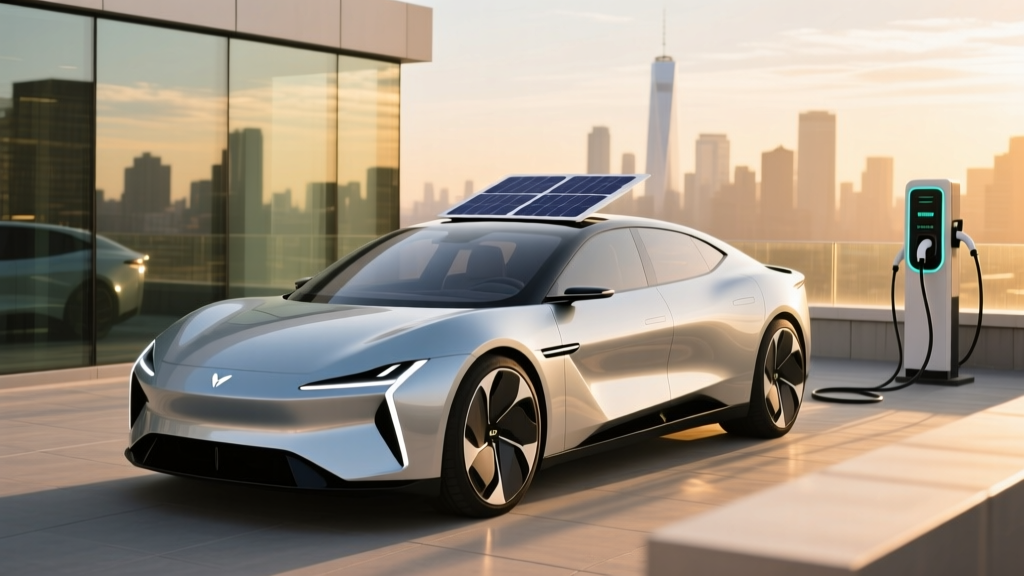
Parts availability: Collision repair parts (bumpers, glass, lighting assemblies) are increasingly scarce. The Ocean's unique components — including its solar roof panel (Extreme trim) and California Mode retractable rear glass — have no cross-platform equivalents. Insurance claims for collision damage may result in total-loss declarations where parts cannot be sourced.
Independent service: A small network of independent EV shops has begun supporting the Ocean, but factory-trained technician availability is essentially zero. The Magna Steyr-built platform (shared underpinnings with no other production vehicle) complicates mechanical service.
Pricing, Tax Credits, and Used-Market Reality
The Fisker Ocean launched with MSRPs ranging from $37,499 (Sport, before destination) to $68,999 (Extreme). By the time of the bankruptcy fire sale in mid-2024, Fisker was offering the Ocean Extreme for as low as $29,999 through its "Peregrine" clearance pricing — a staggering discount that reflected desperation, not value.
| Trim | Original MSRP | 2024 Fire-Sale Price | 2026 Used Market (est.) | Federal §30D Credit (New) |
|---|---|---|---|---|
| Ocean Sport | $37,499 | ~$24,999 | $18,000–$23,000 | Was eligible (up to $7,500) |
| Ocean Ultra | $52,999 | ~$29,999 | $25,000–$32,000 | Was eligible (up to $7,500) |
| Ocean Extreme | $68,999 | ~$29,999 | $28,000–$38,000 | Was eligible (up to $7,500) |
| Ocean One (Launch Ed.) | $68,999 | ~$37,999 | $30,000–$40,000 | Was eligible (up to $7,500) |
Federal tax credit note: When purchased new, qualifying Oceans were eligible for up to $7,500 under IRS §30D, subject to buyer income caps ($150K single / $300K joint AGI), the $80,000 MSRP cap for SUVs, and critical-mineral/battery-component sourcing requirements. The credit was available as a point-of-sale transfer through registered dealers. On the used market in 2026, the used clean vehicle credit (up to $4,000 or 30% of sale price, whichever is lower) may apply if purchased from a licensed dealer, subject to a $25,000 maximum sale price, buyer income caps ($75K single / $150K joint), and the vehicle being at least two model years old. Consult a tax professional for eligibility.
How the Ocean Compares to Competitors You Can Still Buy
The Ocean's closest rivals in size, range, and original price bracket were the Hyundai Ioniq 5, Tesla Model Y, Ford Mustang Mach-E, and Volkswagen ID.4. Here's how they stack up from a 2026 ownership perspective:
| Metric | Fisker Ocean Extreme | Hyundai Ioniq 5 Long Range AWD | Tesla Model Y LR AWD | Ford Mustang Mach-E ER AWD |
|---|---|---|---|---|
| EPA Range | 360 mi | 305 mi | 320 mi | 312 mi |
| Max DC Charge | 250 kW | 240 kW (800V) | 250 kW | 150 kW |
| 10–80% Time | ~30 min | ~18 min | ~25 min | ~40 min |
| 0–60 mph | 3.7 sec | 5.0 sec | 4.8 sec | 5.1 sec |
| Battery Warranty | Void (company defunct) | 10 yr / 100,000 mi | 8 yr / 120,000 mi | 8 yr / 100,000 mi |
| Service Network | Independent only | Nationwide dealer | Service centers + mobile | Nationwide dealer |
| Parts Availability | Limited / scarce | Readily available | Available (some delays) | Readily available |
The Ioniq 5's 800V architecture delivers faster real-world charging (18 min 10–80% sustained on 350 kW stations), and Hyundai's dealer network and warranty remain intact. The Model Y benefits from Tesla's Supercharger network (now open to NACS-equipped non-Teslas as well) and ongoing software support. The Ocean wins on raw EPA range and peak horsepower, but those advantages are hollow without a functioning support ecosystem.
Pros
- Class-leading 360-mile EPA range (Extreme/Ultra)
- 550 hp dual-motor AWD with 3.7-second 0–60
- Distinctive design with available solar roof (Extreme)
- Spacious interior with 38.2" rear legroom and flat floor
- Available California Mode (retractable rear glass for open-air feel)
- Deeply discounted on used market
Cons
- Manufacturer bankrupt — no warranty backing
- Parts scarcity; collision damage may total the vehicle
- Software/connectivity issues emerging post-bankruptcy
- No factory-trained service network
- Resale value highly uncertain and likely depressed
- CCS1-only charging (no native NACS; adapters available)
- Infotainment software was buggy even at launch
Who Should (and Shouldn't) Consider the Ocean in 2026
This EV suits: Mechanically inclined early adopters who want maximum range at a bargain price, accept the orphan-brand risk, have access to independent EV service, and primarily drive in regions with robust CCS charging infrastructure (Electrify America, EVgo). If you can self-insure against a potential $15,000+ battery replacement and tolerate software quirks, the Ocean Extreme at ~$30,000–$35,000 used is a lot of range and performance per dollar.
This EV does not suit: Buyers who prioritize peace of mind, active warranties, reliable dealer service, predictable resale value, or who live in areas with limited independent EV repair options. Families relying on a single vehicle should look at the Ioniq 5, Model Y, or Mach-E instead — the ownership risk profile of an orphaned brand is simply too high for a primary family hauler.
- Buy the Ocean if: You find an Extreme under $35K with low miles, you have a trusted independent EV shop nearby, you can afford an uninsured battery failure, and you value 360-mile range above all else.
- Buy an Ioniq 5 instead if: You want the fastest real-world charging, a backed warranty, and a proven dealer network.
- Buy a Model Y instead if: You travel frequently and need reliable Supercharger access, OTA updates, and strong resale value.
- Buy a Mach-E instead if: You want Ford dealer service everywhere and solid (if not class-leading) range and charging.
Lessons from Fisker's Collapse
Fisker's trajectory — from SPAC-fueled $10 billion valuation in 2021 to Chapter 11 in 2024 — illustrates the capital-intensive reality of EV manufacturing. The Ocean was a competent vehicle undermined by production delays, quality-control issues at launch, insufficient dealer/service infrastructure, and cash burn that outpaced revenue. The startup attempted to compete with legacy OEMs on range and design without their manufacturing scale or service networks.
For prospective EV buyers, the Fisker case underscores three principles: (1) warranty value depends on the warrantor's solvency; (2) parts and service infrastructure matter as much as the vehicle itself; and (3) a bargain price on a bankrupt brand's EV reflects risk, not just opportunity.
Frequently Asked Questions
Is Fisker completely out of business in 2026?
Yes. Fisker Inc. completed its Chapter 11 bankruptcy process in 2024–2025, with remaining assets liquidated. No new Fisker vehicles are being produced, and no successor company has announced plans to revive the brand or support existing vehicles as of early 2026.
What is the real-world range of the Fisker Ocean?
The Ocean Extreme/Ultra achieves 360 miles EPA. Real-world highway range at 70 mph is approximately 290–310 miles in mild weather. In cold conditions (below 32°F), expect 240–270 miles highway. The Sport trim delivers roughly 210–230 miles real-world highway from its 250-mile EPA rating.
How fast does the Fisker Ocean charge?
DC fast charging peaks at 250 kW on Ultra/Extreme trims, with a 10–80% time of approximately 30 minutes on a 350 kW-class station. Home Level 2 charging at 11 kW adds roughly 32 miles per hour, fully recharging the 113 kWh pack in about 10–11 hours.
Can I still get the Fisker Ocean serviced?
Only through independent EV repair shops. No authorized Fisker service centers remain operational. Parts availability — particularly for collision repair and proprietary components — is limited and worsening over time.
Does the Fisker Ocean qualify for any tax credits in 2026?
As a used vehicle, the Ocean may qualify for the used clean vehicle credit of up to $4,000 (or 30% of sale price, whichever is less) if purchased from a licensed dealer for $25,000 or less. Buyer income caps apply ($75K single / $150K joint). The vehicle must be at least two model years old. Verify current eligibility on irs.gov and with a tax professional.
Is the Fisker Ocean worth buying vs. a Tesla Model Y or Hyundai Ioniq 5?
On paper, the Ocean Extreme offers more range and power than both competitors. In practice, the lack of warranty, service infrastructure, and parts support make it a high-risk purchase. For most buyers, the Ioniq 5 (faster real-world charging, intact warranty) or Model Y (Supercharger network, software support) is the more rational choice. The Ocean is viable only for risk-tolerant buyers who find one at a steep discount.
What happens to the Fisker Ocean's solar roof if it breaks?
The solar roof panel on the Extreme trim is a proprietary component with no current aftermarket replacement source. If damaged, repair options are extremely limited. The panel contributes only marginal range (roughly 1–2 miles per day in ideal conditions), so a non-functional solar roof has minimal impact on daily usability.
Will the Fisker Ocean's software continue to work?
Existing onboard software functions (navigation, climate control, drive modes) continue to operate. However, cloud-dependent features (OTA updates, remote app connectivity, real-time traffic) have experienced intermittent disruptions since the bankruptcy. There is no entity committed to maintaining backend infrastructure long-term.