The Fisker Car That Almost Was: Ocean EV Retrospective
If you've been searching for a "Fisker car" in 2026, you're likely encountering one of two scenarios: you've spotted a Fisker Ocean on the road and want to know what it is, or you're researching used EVs and found heavily discounted Ocean listings. Either way, you need the full picture — because Fisker Inc. filed for bankruptcy in June 2024, and the brand no longer exists as a going concern.
This isn't a traditional new-car review. The Fisker Ocean is no longer in production, and no new Fisker vehicles are available for purchase. What follows is a data-driven retrospective on the Ocean's specifications, a clear-eyed assessment of what ownership looks like in 2026, and a framework for deciding whether a used Ocean makes sense versus established alternatives.
| Specification | Ocean Sport (FWD) | Ocean Ultra / Extreme (AWD) |
|---|---|---|
| Battery Capacity (usable) | 113 kWh (NMC, Hyper Range) | 113 kWh (NMC, Hyper Range) |
| EPA Range | 250 miles | 360 miles (Ultra) / 350 miles (Extreme) |
| Drivetrain | Single-motor FWD | Dual-motor AWD |
| Horsepower | 275 hp | 550 hp |
| 0-60 mph | 6.9 sec | 3.7 sec |
| Max DC Fast Charge | ~170 kW (peak) | ~170 kW (peak) |
| Level 2 Charge Rate | 10.5 kW | 10.5 kW |
| EPA Efficiency | ~80 MPGe | ~84 MPGe (Ultra) |
| Cargo Volume (rear seats up) | ~32 cu ft | ~32 cu ft |
| Cargo Volume (rear seats folded) | ~68 cu ft | ~68 cu ft |
| Original Base MSRP | $37,499 | $61,499 (Ultra) |
| Production Status (2026) | Discontinued — company bankrupt June 2024 | |
Range and Efficiency: EPA Numbers vs. Reality
Real-World Expectation: 280–310 miles highway (Ultra); 200–220 miles highway (Sport). Cold-weather (below 32°F) can reduce range by 20–30%, bringing the Ultra down to ~220–250 miles in winter conditions.
The Fisker Ocean Ultra's 360-mile EPA estimate was among the highest of any production SUV when it launched, achieved partly through its 113 kWh usable NMC (nickel manganese cobalt) battery pack and standard heat pump. The EPA's fueleconomy.gov database listed the Ultra at approximately 84 MPGe combined, competitive with the Tesla Model Y Long Range.
However, real-world highway testing told a more nuanced story. The Ocean's boxy styling, 5,200+ lb curb weight, and relatively wide tires created more aerodynamic drag and rolling resistance than its sleeker competitors. In sustained 70-75 mph highway driving, owners and reviewers consistently reported 280–310 miles before needing to charge — a 14–22% shortfall from the EPA figure. This is typical for large, upright EVs but worth knowing before planning road trips.
Cold-weather performance was a particular concern. Without the benefit of a large established fleet's winter data, Ocean owners in northern climates reported 20–30% range loss in sub-freezing temperatures — consistent with NMC chemistry norms but still a meaningful reduction. The standard heat pump helped cabin efficiency but couldn't fully offset battery chemistry limitations in extreme cold.
Charging Speed: The Ocean's Biggest Weakness
| Charging Level | Power | Speed / Time |
|---|---|---|
| Level 1 (120V household) | ~1.4 kW | ~3–4 miles per hour |
| Level 2 (240V home/public) | 10.5 kW | ~25–30 miles per hour; 0–100% in ~11 hours |
| DC Fast Charge (CCS) | ~170 kW peak | 10–80% in ~35–40 minutes |
Charging speed was the Ocean's most significant competitive disadvantage. While rivals like the Hyundai Ioniq 5 (peaking at ~240 kW, 10–80% in ~18 minutes) and Tesla Model Y (peaking at ~250 kW on V3 Superchargers) set new benchmarks, the Ocean's ~170 kW peak rate and conservative charge curve meant 10–80% sessions took 35–40 minutes on a capable CCS charger.
The charge curve also tapered earlier than competitors. Owners reported peak rates only sustained between roughly 10–40% state of charge, with a significant taper beginning around 55–60% SoC. Above 80%, charging slowed to under 50 kW — making those last 20% painfully slow on road trips. For daily home charging on Level 2, the 10.5 kW onboard charger was adequate, replenishing a depleted pack in about 11 hours overnight.
Connector compatibility is another 2026 concern. The Ocean shipped with a CCS1 connector. As the industry shifts to NACS (Tesla's standard), Ocean owners need a CCS-to-NACS adapter to access Tesla Supercharger networks — adapters are available from third parties for ~$150–$250, but compatibility and warranty implications should be verified.
Performance and Driving Dynamics
The Ocean Ultra's dual-motor AWD powertrain produced 550 hp and delivered a 3.7-second 0–60 mph time — genuinely quick for a two-row SUV and competitive with the Tesla Model Y Performance. The single-motor Sport, at 275 hp and 6.9 seconds, was adequate for daily driving but unremarkable in its class.
Ride quality drew praise from early reviewers, with a well-tuned suspension that balanced comfort and composure. However, the Ocean's heavy curb weight (over 5,200 lbs for the Ultra) was noticeable during aggressive cornering and braking. Regenerative braking offered multiple levels but lacked a true one-pedal driving mode that brought the vehicle to a complete stop — a feature buyers expected in this segment.
Fisker equipped the Ocean with its Fisker Intelligent Pilot ADAS suite, featuring adaptive cruise control, lane-keeping assist, and automated emergency braking. This is a Level 2 driver-assistance system — the driver must remain fully engaged at all times. It is not autonomous or "self-driving." Reviews noted the system was competent but not class-leading compared to Tesla Autopilot, GM Super Cruise, or Ford BlueCruise.
Interior, Tech, and the Solar Roof
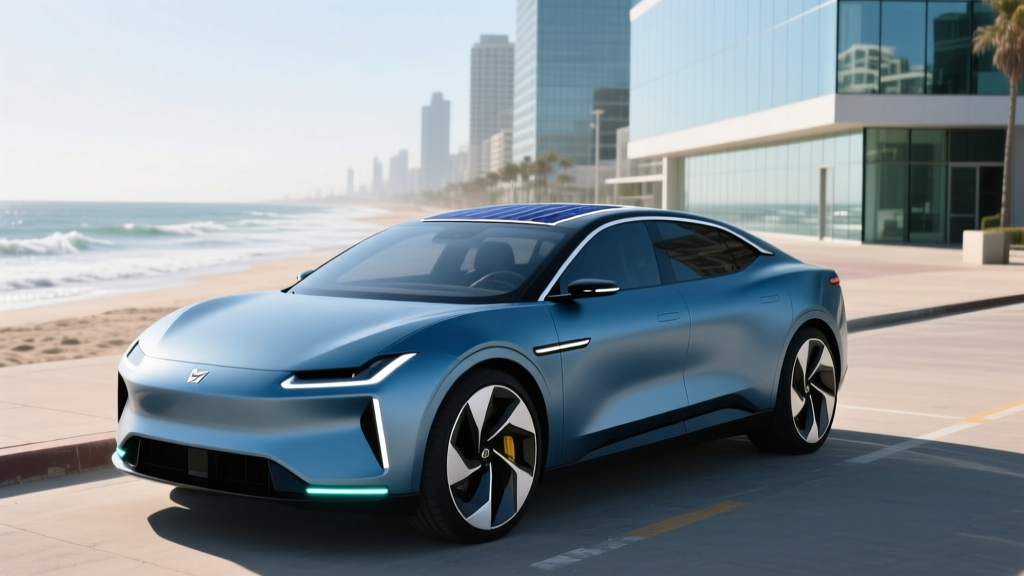
The Ocean's interior was its most polarizing feature. The headline innovation was the available California Mode, which simultaneously lowered all windows and retracted the rear glass for an open-air experience — unique in the EV SUV segment. The Extreme trim included a full-length solar roof (Fisker called it the "SolarSky") that Fisker estimated could add up to 1,500 miles of range per year under ideal conditions. In practice, real-world solar contribution was modest — roughly 2–4 miles per day in sunny climates — useful for offsetting vampire drain but not a meaningful range extender.
The 17.1-inch rotating central touchscreen (Revolve screen on Ultra/Extreme trims) was visually impressive but drew criticism for slow response times, a confusing interface, and a heavy reliance on touch controls for basic functions like climate adjustment. Software bugs were a persistent complaint throughout the Ocean's short production run.
Passenger space was generous: approximately 41 inches of front legroom and 38 inches rear, with a flat floor thanks to the skateboard platform. Cargo volume of ~32 cu ft behind the rear seats (expanding to ~68 cu ft with seats folded) was competitive with the Model Y. A small front trunk (frunk) added a few additional cubic feet for charging cables and small items.
Pricing, Tax Credits, and the Bankruptcy Impact
| Trim | Original MSRP | Est. 2026 Used Price | Federal Tax Credit (Used EV, §25E) |
|---|---|---|---|
| Sport (FWD) | $37,499 | $15,000–$20,000 | Up to $4,000 (30% of sale price, income caps apply) |
| Ultra (AWD) | $61,499 | $22,000–$30,000 | Up to $4,000 |
| Extreme (AWD) | $68,999 | $25,000–$35,000 | Up to $4,000 |
Fisker's original pricing was aggressive — the Sport at $37,499 undercut most competitors. However, the new-vehicle federal tax credit (§30D, up to $7,500) was not available for the Ocean at the time of sale because the battery's critical minerals and components did not meet the sourcing requirements established under the Inflation Reduction Act. This was a major competitive disadvantage versus vehicles like the Tesla Model Y and Ford Mustang Mach-E that did qualify.
Today, as a used EV, the Ocean may qualify for the §25E used clean vehicle credit — up to $4,000 or 30% of the sale price (whichever is less). Per IRS guidelines, buyers must meet income caps ($75,000 single / $150,000 married filing jointly), purchase from a licensed dealer, and the vehicle must have a sale price of $25,000 or less. Many Ocean used listings now fall within this threshold, but verify eligibility with a tax professional before relying on the credit.
The bankruptcy's practical impact is severe. Fisker Inc. ceased operations, leaving no manufacturer to honor the original 6-year/60,000-mile bumper-to-bumper warranty or the 8-year/100,000-mile battery warranty. These warranties are effectively void. Third-party extended warranties may be available but are unlikely to cover Fisker-specific components. Parts availability — especially body panels, the proprietary solar roof, and the Revolve screen — is limited and expected to worsen over time. Insurance companies have reported difficulty sourcing replacement parts, leading to higher premiums or total-loss declarations for minor damage.
Should You Buy a Used Fisker Ocean in 2026?
- 360-mile EPA range (Ultra) is still competitive
- Distinctive design with California Mode open-air feature
- Strong performance: 550 hp, 3.7-sec 0–60 (Ultra)
- Depressed used pricing — potential value if risk-tolerant
- Generous cargo and passenger space
- Heat pump standard for cold-climate efficiency
- Manufacturer bankrupt — no warranty support, no OTA updates
- Parts scarcity: body panels, screens, proprietary components
- Slow DC charging (~170 kW peak, 35–40 min 10–80%)
- Software bugs were never fully resolved; no future fixes coming
- CCS connector requires adapter for Tesla Supercharger access
- Insurance costs elevated; some carriers decline coverage
- Resale value highly uncertain and likely to continue declining
- You're risk-tolerant and have access to a trusted independent EV mechanic
- You want maximum range per dollar and accept the orphan-brand risk
- You primarily charge at home and rarely need DC fast charging
- You can self-insure or find a carrier willing to cover the vehicle
- You need reliable warranty coverage and dealer service access
- You road-trip frequently and need fast, widely compatible charging
- You want ongoing software updates and long-term parts support
- You plan to own the vehicle 5+ years and care about resale value
Frequently Asked Questions
Is Fisker still in business in 2026?
No. Fisker Inc. filed for Chapter 11 bankruptcy in June 2024 and subsequently liquidated. No new Fisker vehicles are being produced, and the company provides no warranty, service, or software support. (Note: This is the Henrik Fisker–led company founded in 2016, not the original Fisker Automotive that produced the Karma in 2011–2012 — a separate, also-defunct venture.)
What is the real-world range of the Fisker Ocean?
The Ultra AWD is EPA-rated at 360 miles, but expect 280–310 miles in real-world highway driving at 70+ mph. In cold weather (below 32°F), range can drop to 220–250 miles. The Sport FWD is EPA-rated at 250 miles, with real-world highway driving yielding roughly 200–220 miles.
How fast does the Fisker Ocean charge?
On DC fast charging, the Ocean peaks at approximately 170 kW (CCS connector), taking about 35–40 minutes from 10–80% SoC. On Level 2 home charging (240V), it charges at 10.5 kW, adding roughly 25–30 miles per hour. An adapter is needed for Tesla Supercharger access in 2026.
Does the Fisker Ocean qualify for any EV tax credit?
As a used vehicle, the Ocean may qualify for the federal §25E used clean vehicle credit — up to $4,000 or 30% of sale price (whichever is less). Buyers must meet income caps ($75K single / $150K joint), purchase from a dealer, and the sale price must be $25,000 or less. It did not qualify for the §30D new-vehicle credit when sold new due to battery sourcing requirements. Always verify with a tax professional.
Can I still get the Fisker Ocean serviced?
Fisker's authorized service network dissolved with the bankruptcy. Some independent EV shops and former Fisker service partners may offer basic maintenance (tire rotations, brake fluid, cabin filters). However, proprietary component repairs — battery, powertrain electronics, solar roof, infotainment — are extremely difficult to source parts for. This is the single largest ownership risk.
How does the Fisker Ocean compare to the Tesla Model Y?
The Ocean Ultra offered more EPA range (360 vs ~310 miles) and a more distinctive design, but the Model Y charges significantly faster (~250 kW peak vs ~170 kW), has access to the Supercharger network natively (or via NACS), receives ongoing OTA updates, has widespread parts availability, and retains stronger resale value. For most buyers in 2026, the Model Y is the lower-risk choice.
What battery chemistry does the Fisker Ocean use?
The Ocean uses an NMC (nickel manganese cobalt) lithium-ion battery with 113 kWh of usable capacity, supplied by CATL. NMC offers high energy density (enabling the 360-mile range) but is more sensitive to thermal stress and degradation than LFP (lithium iron phosphate) chemistry. Without warranty support, long-term battery health monitoring is the owner's responsibility.
Sources: EPA fueleconomy.gov for range and efficiency data; IRS.gov for §25E used EV credit rules; NHTSA.gov for safety and recall records.