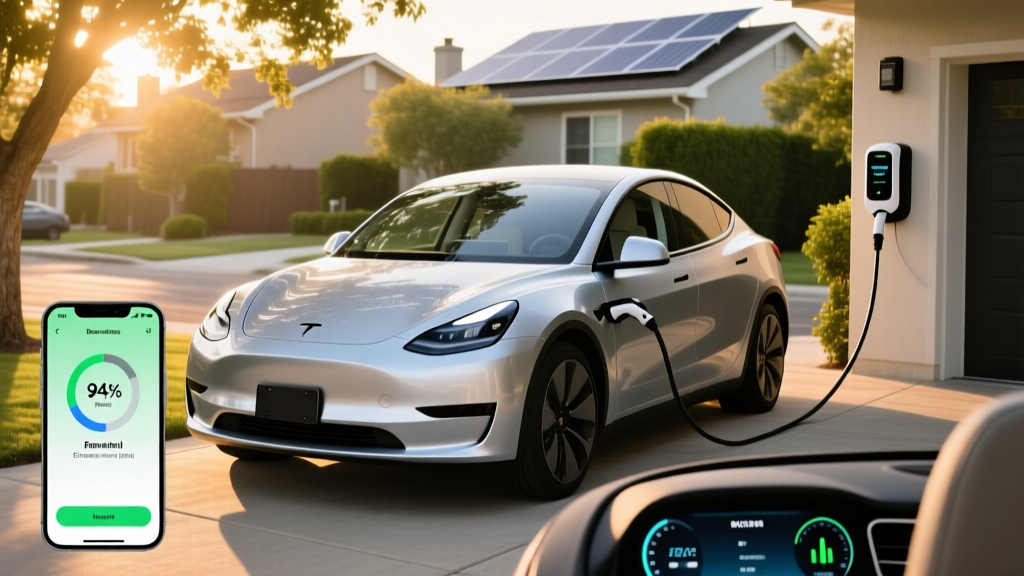
If you've been searching for a Fisker Ocean in 2026, you've likely noticed something unsettling: the company that built this stylish electric SUV no longer exists in any meaningful operational capacity. Fisker Inc. filed for Chapter 11 bankruptcy in late 2024, liquidated its remaining inventory at steep discounts, and effectively ceased vehicle production after building roughly 11,000 units. Yet the Ocean itself — with its 340-mile EPA range, solar roof, and striking design — remains one of the most compelling EV SUVs ever brought to market. The question for 2026 isn't whether the Ocean is a good electric vehicle. It's whether you should buy one from the used market, what ownership looks like without manufacturer support, and how it stacks up against competitors that come with a warranty you can actually use.
This review covers the Fisker Ocean's full specification set, real-world performance data gathered before Fisker's collapse, and a frank assessment of what buying one means today. If you're considering a discounted leftover or a pre-owned Ocean, this is the data-driven breakdown you need.
Fisker Ocean Specs at a Glance
| Specification | Ocean Sport (FWD) | Ocean Ultra / Extreme (AWD) |
|---|---|---|
| EPA Range | 250 miles | 340 miles (Extreme w/ Hyper Range) |
| Battery Capacity | ~80 kWh usable (LFP) | ~113 kWh usable (NMC) |
| Horsepower | 275 hp | 564 hp |
| 0-60 mph | 6.9 seconds | 3.7 seconds |
| Drivetrain | Single-motor FWD | Dual-motor AWD |
| Peak DC Fast Charge | ~170 kW | ~250 kW |
| 10-80% DCFC Time | ~35 minutes | ~30 minutes |
| Level 2 Home Charge Rate | 10.5 kW | 10.5 kW |
| EPA Efficiency (MPGe) | ~94 MPGe combined | ~88 MPGe combined |
| Cargo Volume (rear seats up) | 32.7 cu ft | 32.7 cu ft |
| Cargo Volume (rear seats down) | 65.3 cu ft | 65.3 cu ft |
| Original Base MSRP | $37,499 | $68,999 (Ultra) / $69,999 (Extreme) |
| Battery/Powertrain Warranty | 6 years / 75,000 miles (original — now effectively void) | |
Sources: EPA / fueleconomy.gov, Fisker Inc. press specifications (archived).
Real-World Range: What the EPA Numbers Don't Tell You
EPA Sticker: 340 miles
Real-World Highway (70-75 mph, moderate climate): ~270-290 miles
Real-World Cold Weather (below 32°F, mixed driving): ~220-250 miles
City / Suburban (regenerative braking optimized): ~310-330 miles
The 340-mile figure was achievable under ideal conditions. Expect 15-20% reduction at sustained highway speeds and up to 30% in freezing temperatures — consistent with NMC chemistry behavior across the industry.
The Fisker Ocean Extreme's 340-mile EPA rating was genuinely competitive at launch, rivaling the Tesla Model Y Long Range (330 miles EPA) and edging past the Ford Mustang Mach-E Extended Range (312 miles EPA). The 113 kWh usable battery pack — one of the largest in any production SUV — gave it a genuine long-distance advantage.
However, independent testing by Edmunds and other outlets consistently showed the Ocean falling short of its EPA sticker on highway loops, typically returning 270-290 miles in fair weather. This isn't unusual — most EVs lose 10-20% of EPA-rated range at sustained 70+ mph speeds due to aerodynamic drag — but the Ocean's relatively tall, boxy profile amplified this effect. In cold weather, the NMC battery pack suffered the typical 20-30% range loss seen across the industry, dropping real-world range to roughly 220-250 miles. The Ocean's heat pump helped mitigate cabin energy draw, but it couldn't fully offset the physics of cold-soaked battery chemistry.
The Sport trim's smaller LFP (lithium iron phosphate) battery delivered a more modest 250-mile EPA rating. LFP chemistry is more resilient to cold-weather degradation and tolerates regular 100% charging without accelerated degradation — a meaningful advantage for daily commuters who don't need the Ultra's range.
Charging Speed: Adequate but Not Class-Leading
| Charging Level | Rate | Ocean Sport (FWD) | Ocean Ultra/Extreme (AWD) |
|---|---|---|---|
| Level 1 (120V household) | ~1.4 kW | ~4 miles/hr | ~4 miles/hr |
| Level 2 (240V home) | 10.5 kW | ~25 miles/hr / 8-100% in ~8 hrs | ~28 miles/hr / 8-100% in ~11 hrs |
| DC Fast Charge (peak) | 170 kW (Sport) / 250 kW (Ultra) | 10-80% in ~35 min | 10-80% in ~30 min |
The Ocean's DC fast-charging performance was a known weak point even before Fisker's financial troubles. The Ultra and Extreme trims peaked at approximately 250 kW — respectable on paper — but the charge curve tapered aggressively. In real-world testing at Electrify America and other 350 kW-capable stations, the Ocean typically sustained peak rate for only the first 10-15% of the session before stepping down. A 10-80% charge took roughly 30 minutes, which was slower than the Hyundai Ioniq 5 (18 minutes at 350 kW chargers) and the Tesla Model Y (roughly 25 minutes on V3 Superchargers).
For home Level 2 charging, the 10.5 kW onboard charger was adequate. On a 48-amp Level 2 circuit (the most common home installation), a full overnight charge replenished the battery completely. Most owners reported 25-28 miles of range added per hour of Level 2 charging, which is sufficient for daily commuting needs but slower than competitors like the Rivian R1S (up to 11.5 kW) or the BMW iX (up to 11 kW with optional equipment).
Critical note for 2026 buyers: The Ocean uses the CCS1 connector, not Tesla's NACS. While CCS remains widely supported at Electrify America, EVgo, and ChargePoint stations, the industry's rapid shift to NACS means future CCS charger availability could decline. Fisker never released a NACS adapter for the Ocean, and third-party CCS-to-NACS adapters (like those offered by Ford and Rivian for Tesla Supercharger access) were not validated for the Ocean before Fisker's collapse. This is a genuine long-term ownership risk.
Performance and Driving Dynamics
The Ocean Ultra and Extreme trims delivered genuine sports-SUV acceleration. The dual-motor AWD powertrain produced 564 horsepower in Boost mode, launching the 5,400-pound SUV from 0-60 mph in 3.7 seconds — faster than a Porsche Cayenne S and only marginally behind the Tesla Model Y Performance (3.5 seconds). The single-motor Sport, at 275 hp and 6.9 seconds to 60 mph, was adequate for commuting but unremarkable in this segment.
Where the Ocean struggled was refinement. Early-production vehicles (2023 model year) drew widespread criticism for software bugs, inconsistent build quality, and suspension tuning that felt unsettled over rough pavement. Fisker issued multiple over-the-air updates that improved throttle response, regenerative braking calibration, and infotainment stability, but the company's bankruptcy left many planned software improvements undelivered. Owners report that the 17.1-inch rotating center display — marketed as the "Revolve" screen — remains prone to occasional freezing and that the digital instrument cluster lacks the polish of Tesla's or Rivian's interfaces.
The Ocean's California Mode (which opened all windows simultaneously with one button) and the solar roof (SolarSky) were standout features. The solar roof added roughly 1-2 miles of range per day in full sun — negligible for range but a clever trickle-charge feature for maintaining the 12V auxiliary battery and reducing vampire drain during extended parking.
Pricing, Tax Credits, and What You'll Actually Pay in 2026
| Trim | Original MSRP | 2026 Used Market (est.) | Federal §30D Credit (New) |
|---|---|---|---|
| Ocean Sport | $37,499 | $18,000 - $24,000 | Was eligible (up to $7,500) |
| Ocean Ultra | $68,999 | $28,000 - $38,000 | Was eligible (up to $7,500) |
| Ocean Extreme | $69,999 | $30,000 - $40,000 | Was eligible (up to $7,500) |
| Ocean One (launch edition) | $69,999 | $30,000 - $42,000 | Was eligible (up to $7,500) |
During Fisker's liquidation in late 2024, remaining Ocean inventory sold for as low as $24,999 (Ultra trim) through auction channels — a staggering discount from the original MSRP. By early 2026, used Ocean pricing has stabilized somewhat but remains well below comparable Model Y or Ioniq 5 listings, reflecting buyer wariness about orphaned-vehicle risk.
Federal tax credit status: The Fisker Ocean was eligible for the full $7,500 §30D federal tax credit when purchased new, as it met the MSRP cap (under $80,000 for SUVs), was assembled in North America (Austria, via Magna Steyr — though this was a point of regulatory complexity), and satisfied battery component and critical mineral sourcing thresholds. However, the §30D credit applies only to new vehicle purchases. If you're buying a used Ocean in 2026, you may qualify for the §25E used clean vehicle credit — up to $4,000 or 30% of the sale price (whichever is less) — subject to income caps ($75,000 single / $150,000 joint) and a vehicle sale price cap of $25,000. See IRS §30D and §25E guidelines for current eligibility rules and consult a tax professional before purchasing.
Interior, Cargo, and Daily Practicality
The Ocean's interior was designed to impress, and in many ways it does. The cabin uses recycled and vegan materials extensively — a core part of Fisker's brand identity — with a minimalist aesthetic that avoids the stark emptiness of a Tesla interior. Front seats are comfortable for long drives, and rear legroom (38.4 inches) is generous for the segment, though headroom is slightly compromised by the solar roof's internal hardware.
Cargo capacity is a genuine strength: 32.7 cubic feet behind the second row and 65.3 cubic feet with the rear seats folded, which is competitive with the Model Y (30.2 / 72.0 cu ft) and exceeds the Hyundai Ioniq 5 (27.2 / 59.3 cu ft). The Ocean also includes a small front trunk (frunk), though at roughly 1.5 cubic feet it's only useful for charging cables or a small bag.
Where practicality suffers is in serviceability. With Fisker defunct, there is no authorized dealer network for body repairs, warranty service, or proprietary parts. Independent EV shops can handle brake pads, tire rotations, and cabin air filters, but proprietary components — the SolarSky roof, the Revolve display, the specific battery management system — have no established aftermarket supply chain. Several owner communities have begun organizing parts-sharing networks, but this is early-stage and unreliable for critical repairs.
The Biggest Risk: Owning an Orphaned EV
Fisker Inc. ceased operations in late 2024. This means:
• No active warranty coverage — the original 6-year/75,000-mile battery warranty is effectively void
• No OTA software updates — the vehicle's software is frozen at its last deployed version
• Limited parts availability — proprietary components (displays, solar roof, BMS) have no new supply chain
• No authorized service centers — all maintenance must go through independent shops
• Insurance complications — some carriers have increased premiums or declined coverage for orphaned EVs
• Charging network access — CCS connector may face reduced infrastructure as NACS dominates
This is the central calculus for any 2026 Ocean purchase. The vehicle itself is mechanically sound — the Magna Steyr assembly in Austria ensured solid build fundamentals, and the battery packs (sourced from CATL for the Sport and from a different supplier for the Ultra/Extreme) are industry-standard chemistry with no known systemic defects. But an EV is not just hardware. It's software, connectivity, warranty infrastructure, and a parts ecosystem. The Ocean now lacks all of these.
Battery replacement cost, should the pack degrade below acceptable levels or suffer a fault, is estimated at $15,000-$22,000 based on the pack size and current NMC/LFP pricing — with no warranty to absorb that cost. For context, a Tesla Model Y battery replacement runs $12,000-$16,000, but Tesla's warranty and service network remain fully operational.
Pros and Cons
- Class-leading 340-mile EPA range (Extreme)
- Striking design with SolarSky roof
- Spacious cargo area (32.7 cu ft rear up)
- Strong acceleration (3.7 sec 0-60, Ultra)
- Deeply discounted used pricing in 2026
- Vegan/recycled interior materials
- Potential §25E used-EV credit eligibility
- No warranty, no manufacturer support
- Frozen software — no future OTA updates
- CCS connector in a shifting-NACS world
- Proprietary parts increasingly scarce
- Insurance may be costly or unavailable
- DC fast charging slower than key rivals
- Early build-quality issues never fully resolved
- Resale value highly uncertain
Fisker Ocean vs. Key Competitors
| Attribute | Fisker Ocean Extreme | Tesla Model Y LR (2023) | Hyundai Ioniq 5 LR (2023) | Ford Mach-E ER (2023) |
|---|---|---|---|---|
| EPA Range | 340 mi | 330 mi | 303 mi | 312 mi |
| Used Price (2026 est.) | $30K-$40K | $32K-$40K | $28K-$35K | $28K-$36K |
| DCFC 10-80% | ~30 min | ~25 min | ~18 min | ~35 min |
| Warranty Status | Void (company defunct) | Active (Tesla) | Active (Hyundai) | Active (Ford) |
| Connector | CCS1 | NACS | CCS1 (NACS adapter avail.) | CCS1 (NACS adapter avail.) |
| Software Updates | Frozen | Active OTA | Active OTA | Active OTA |
| 0-60 mph | 3.7 sec | 4.8 sec | 5.1 sec | 5.1 sec |
The Ocean's range advantage is real, but the ownership-risk column tells the story. A similarly priced used Model Y gives you active Supercharger access (NACS), ongoing software updates, and a fully operational service network. The Ioniq 5 offers the fastest DC charging in the segment and Hyundai's backing. The Mach-E, while slower to charge, has Ford's infrastructure and a CCS-to-NACS adapter pathway.
Who Should (and Shouldn't) Buy a Fisker Ocean in 2026
Consider the Ocean if:
- You're an EV-experienced owner comfortable with independent maintenance and no warranty safety net
- You find an Ultra/Extreme at $30K or below and can absorb potential battery replacement cost
- You primarily drive in moderate climates where cold-weather range loss is minimal
- You have reliable home Level 2 charging and rarely depend on public DCFC
- You value the design, solar roof, and cargo space enough to accept the risks
Look elsewhere if:
- This is your first EV and you want a supported ownership experience
- You need reliable long-distance DC fast charging for road trips
- You want ongoing software improvements and active safety feature updates
- You can't absorb a $15K-$22K battery replacement if needed
- You want predictable resale value
Frequently Asked Questions
What is the real-world range of the Fisker Ocean?
The Ocean Extreme (113 kWh NMC battery) is EPA-rated at 340 miles, but expect roughly 270-290 miles in real-world highway driving and 220-250 miles in freezing temperatures. The Sport trim (80 kWh LFP) is rated at 250 miles EPA with similar proportional reductions.
How fast does the Fisker Ocean charge?
On DC fast chargers, the Ultra/Extreme peaks at ~250 kW with a 10-80% time of about 30 minutes. The Sport peaks at ~170 kW with a 10-80% time of roughly 35 minutes. At home on Level 2 (10.5 kW), expect a full charge in 8-11 hours depending on trim.
Does the Fisker Ocean qualify for the federal EV tax credit?
The §30D new-vehicle credit is no longer applicable since the Ocean is only available used. However, buyers may qualify for the §25E used clean vehicle credit (up to $4,000) if the sale price is $25,000 or less and buyer income is under $75,000 (single) or $150,000 (joint). Consult IRS §25E guidelines and a tax professional.
Is the Fisker Ocean worth buying vs. a Tesla Model Y or Hyundai Ioniq 5?
For most buyers, no. The Model Y and Ioniq 5 offer active warranties, ongoing software updates, established service networks, and (for Tesla) NACS/Supercharger access. The Ocean's deep discount is tempting, but the orphaned-vehicle risk — no warranty, frozen software, scarce parts — makes it suitable only for experienced EV owners who can self-manage maintenance and absorb repair costs.
What are the biggest problems with the Fisker Ocean?
The most significant issue is Fisker's bankruptcy, which voided all warranties and halted software updates. Pre-bankruptcy, owners reported software glitches (frozen displays, inconsistent regen braking), slow DC charging relative to competitors, and build-quality inconsistencies on early-production vehicles. The CCS connector is also a long-term concern as the industry shifts to NACS.
Can I still get the Fisker Ocean serviced?
Only through independent mechanics and EV specialty shops. There is no authorized Fisker service network. Routine maintenance (tires, brakes, cabin filters) is straightforward, but proprietary component repairs (SolarSky roof, Revolve display, battery management faults) may be difficult or impossible to address as parts supplies dwindle.
What is the Fisker Ocean's towing capacity?
The Ocean is rated to tow up to 4,000 pounds (Ultra/Extreme AWD), which is competitive with the Model Y (3,500 lbs) but below the Rivian R1S (7,700 lbs). Towing significantly reduces range — expect a 30-40% reduction when pulling near max capacity.