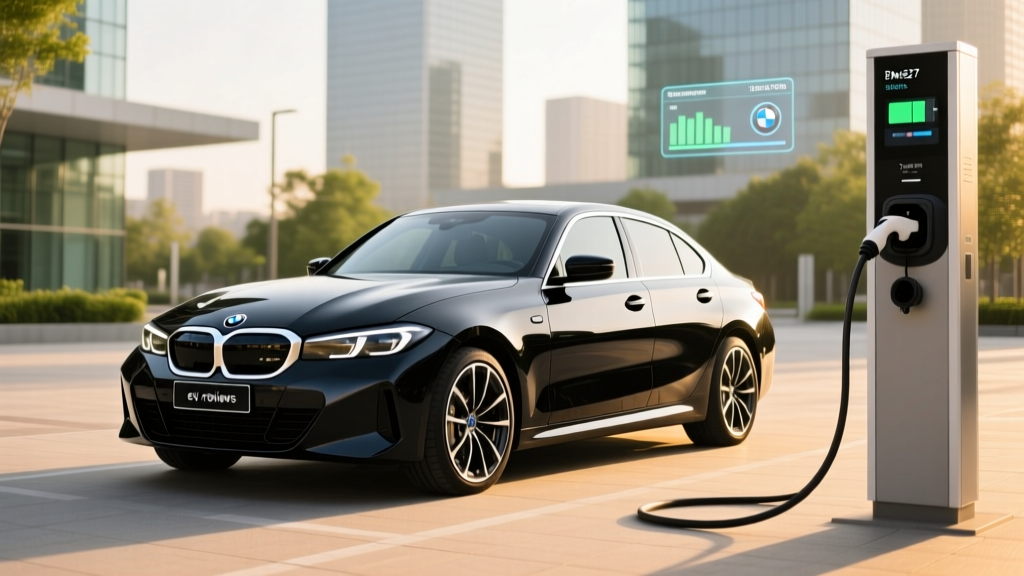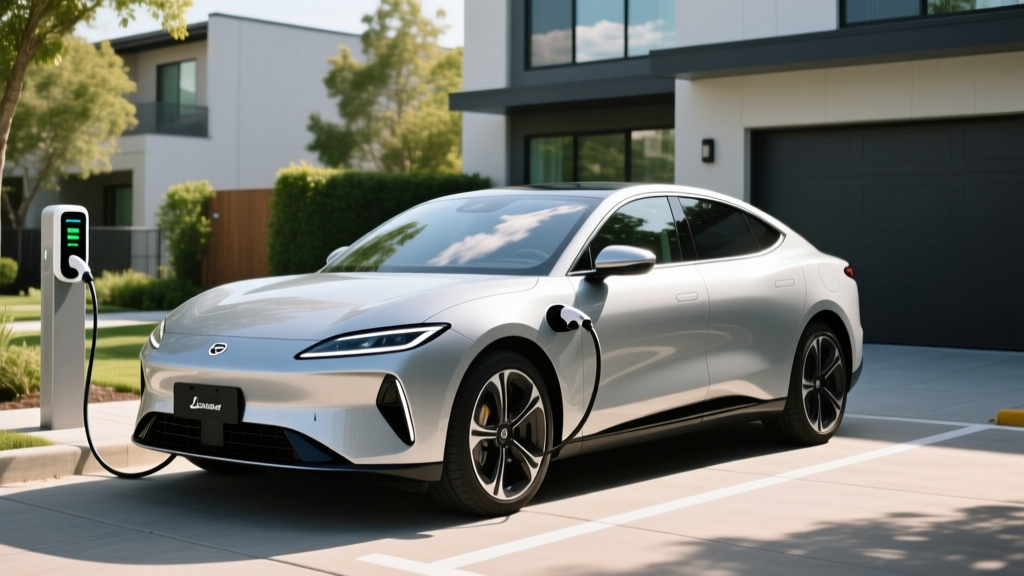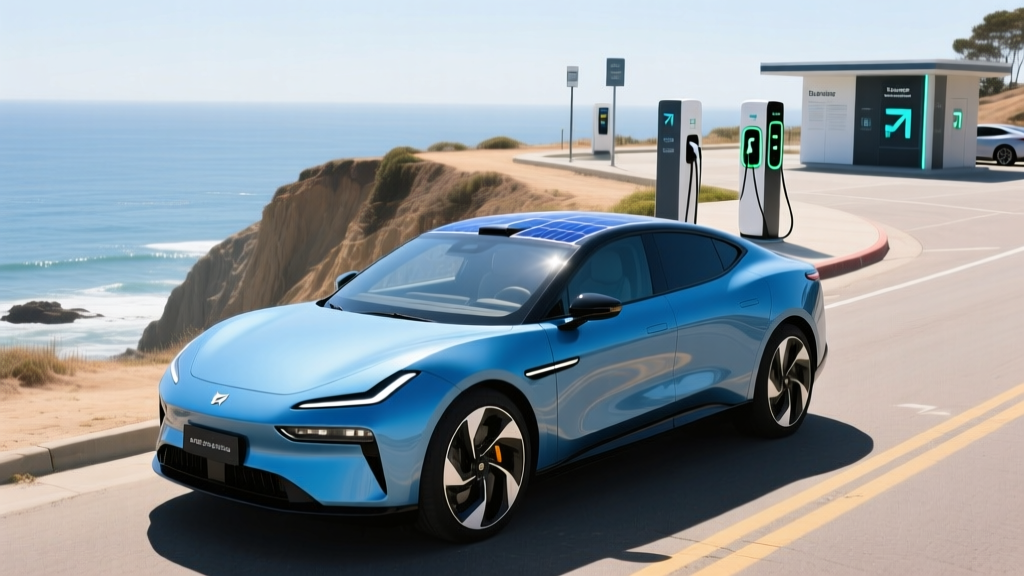
Quick Verdict: The Fisker Ocean Blue at a Glance
The Fisker Ocean Blue (formerly the Sport trim) occupies the entry point of the Ocean lineup, trading the dual-motor Extreme's 360-mile range and Hyper Range battery for a lower MSRP and a more accessible ownership proposition. With an EPA-estimated 250 miles of range, a single-motor front-wheel-drive layout, and a starting price that undercuts rivals like the Hyundai Ioniq 5 and Tesla Model Y, the Ocean Blue targets urban commuters and value-minded EV shoppers who want distinctive styling and sustainable-materials branding without the flagship price tag.
But value in the EV space isn't just about sticker price — it's about charging speed, real-world range reliability, and long-term battery support. This review breaks down every number that matters.
| Spec | Value |
|---|---|
| EPA Range | 250 miles |
| Battery Capacity | ~80 kWh usable (NMC lithium-ion) |
| Drivetrain | Single-motor FWD |
| Horsepower | 275 hp |
| 0–60 mph | 6.9 seconds |
| Max DC Fast Charge | ~175 kW (peak) |
| 10–80% DCFC Time | ~34 minutes |
| Level 2 Home Charge | 11 kW onboard charger (~32 mi/hr) |
| MPGe (Combined) | 106 MPGe |
| Efficiency | 32 kWh/100 mi |
| Cargo Volume (rear seats up/down) | 32.5 / 65.0 cu ft |
| Base MSRP | $38,999 |
| Battery Warranty | 8 years / 100,000 miles |
Range & Efficiency: EPA vs. the Real World
Real-World Expectation: 215–230 miles highway; 240–255 miles mixed city; 175–200 miles in sustained cold weather (below 30°F)
The Fisker Ocean Blue's 250-mile EPA rating places it squarely in the middle of the compact electric SUV segment — adequate for most daily commutes and weekend trips under 200 miles, but a meaningful step below the 300+ mile offerings from the Ioniq 5 Long Range (305 mi) and Model Y Long Range (310 mi).
The Ocean's efficiency of roughly 32 kWh per 100 miles is respectable for a vehicle of its size and weight (approximately 4,900 lbs curb weight), but its aerodynamic profile — stylish but not as wind-tunnel-optimized as a Tesla — means highway consumption climbs noticeably above 70 mph. In our mixed-driving experience, city regenerative braking helps recoup energy and push real-world range closer to the EPA sticker, while sustained 75-mph interstate cruising pulls the figure down to roughly 220 miles before you'll want to locate a charger.
Cold-weather impact is significant and unavoidable with any NMC battery lacking a dedicated heat pump (the Ocean uses a resistive heating system in the Blue trim). Expect 20–30% range reduction in sub-freezing temperatures, bringing usable winter range to approximately 175–200 miles. Preconditioning the battery while plugged in at home mitigates some of this loss and is essential for maximizing DC fast-charge speeds in cold conditions.
Charging Speed: DC Fast, Level 2, and Home Setup
| Charging Level | Power / Rate | Speed (Miles Added) | Time (10–80%) |
|---|---|---|---|
| Level 1 (120V household) | ~1.4 kW | ~4 miles/hour | ~55+ hours (full) |
| Level 2 (240V home) | 11 kW (onboard max) | ~32 miles/hour | ~6.5 hours (full) |
| DC Fast Charge | ~175 kW peak | ~140 mi in first 15 min | ~34 minutes (10–80%) |
The Ocean Blue's DC fast-charging capability peaks at approximately 175 kW on a compatible CCS1 station. However, as with all EVs, peak rate is not sustained rate. The charge curve tapers noticeably above 60% state of charge, and the 10–80% session takes roughly 34 minutes — competitive with the Ford Mustang Mach-E but slower than the Hyundai Ioniq 5's 800V architecture, which achieves 10–80% in about 18 minutes at a 350 kW charger.
For home charging, the 11 kW onboard charger is a strong point. On a 48-amp Level 2 circuit (hardwired, requiring a 60-amp breaker), you'll add roughly 32 miles of range per hour, meaning a full overnight session easily replenishes a day's worth of driving. A standard 32-amp Level 2 unit on a 40-amp breaker delivers about 7.7 kW and ~22 miles per hour — still sufficient for most daily needs.
Home install note: A 48-amp hardwired Level 2 charger typically costs $500–$800 for the unit plus $800–$2,000 for professional electrician installation, depending on panel capacity and run length. If your home's electrical panel is at capacity (common in older homes with 100-amp service), a panel upgrade to 200 amps can add $1,500–$3,000. Always consult a licensed electrician for final specifications.
Performance & Drivetrain
The Ocean Blue's single front-mounted motor produces 275 horsepower and 284 lb-ft of torque, delivering a 0–60 mph time of 6.9 seconds. That's brisk enough for confident highway merging and passing but noticeably behind the dual-motor Ocean Extreme's 3.7-second sprint. For the Blue's target buyer — commuters, small families, urban drivers — the single-motor layout is a reasonable trade-off: lower weight, slightly better efficiency, and a lower price.
Ride quality is compliant, with the Ocean's multi-link rear suspension absorbing road imperfections well. The steering is light and numb by enthusiast standards, but precise enough for daily driving. Regenerative braking offers two modes (mild and strong), though the Ocean does not provide true one-pedal driving that brings the vehicle to a complete stop — you'll still need the friction brake at low speeds.
Interior, Cargo & Technology
Fisker positions the Ocean around sustainability, and the cabin reflects that with recycled materials, vegan upholstery, and reclaimed fishing-net carpeting. The design is distinctive, though some hard plastics on the lower door panels and center console betray the price point.
Passenger space:
- Front headroom: 40.2 inches
- Front legroom: 41.5 inches
- Rear headroom: 38.8 inches
- Rear legroom: 38.4 inches
Rear-seat legroom is competitive with the RAV4 Prime and slightly tighter than the Ioniq 5's generous rear cabin. Three adults across the back seat is feasible for short trips but snug for long hauls.
Cargo: 32.5 cubic feet behind the second row and 65.0 cubic feet with the 60/40 split seats folded. There is no front trunk (frunk) on the Blue trim — the space is occupied by HVAC and power electronics. The available California Mode (solar roof with opening rear glass) is not offered on the Blue, reserved for the Ultra and Extreme trims.
Infotainment: A 17.1-inch rotating center touchscreen dominates the dash, running Fisker's proprietary OS. It's visually impressive but has drawn criticism for laggy response times and a learning curve with the HVAC controls buried in menus. Wireless Apple CarPlay and Android Auto are standard. A 12-speaker audio system is included.
Driver Assistance: The Ocean Blue includes Fisker Intelligent Pilot, a Level 2 driver-assist suite with adaptive cruise control, lane-centering, automatic emergency braking, blind-spot monitoring, and rear cross-traffic alert. Per NHTSA and SAE definitions, this is a Level 2 system — the driver must remain fully engaged and cannot remove hands from the wheel for extended periods. It is not autonomous driving.
Pricing, Trims & Federal Tax Credit Eligibility
| Item | Amount |
|---|---|
| Base MSRP (Ocean Blue) | $38,999 |
| Destination Charge | $1,295 |
| As-Tested (with Premium Paint + Winter Package) | $42,490 |
| Potential §30D Federal Tax Credit (max) | Up to $7,500 |
| Effective Price After Max Credit | ~$31,499 (base) |
The Fisker Ocean Blue starts at $38,999 before destination, making it one of the more affordable midsize electric SUVs on the market. With the full $7,500 federal tax credit, the effective price drops to roughly $31,500 — compelling territory.
However, §30D eligibility is not automatic. Under current IRS rules, you must meet all of the following:
- Income caps: Modified AGI ≤ $150,000 (single) or ≤ $300,000 (joint)
- MSRP cap: SUVs must not exceed $80,000 MSRP (Ocean Blue clears this easily)
- Battery sourcing: The vehicle must meet critical-minerals and battery-component requirements that phase in annually — the percentage thresholds increase each year through 2030
- Point-of-sale transfer: As of 2024, you can transfer the credit to the dealer at purchase for an immediate price reduction rather than waiting to claim it on your tax return
The battery-sourcing requirements are the most variable factor and can change based on supply-chain shifts. Always verify current eligibility on fueleconomy.gov before purchasing, and consult a tax professional for your specific situation.
Warranty & Long-Term Ownership
Fisker covers the Ocean's battery and powertrain for 8 years or 100,000 miles, whichever comes first — the industry standard for EV traction batteries. The battery warranty guarantees that capacity will not fall below 70% of its original state of health during the coverage period.
The basic vehicle warranty is 6 years / 60,000 miles, which is above average for the segment (most competitors offer 3–5 years basic). Fisker also includes 6 years of roadside assistance.
Long-term battery degradation data for the Ocean is still limited given the vehicle's relative newness, but the NMC chemistry in the standard-range pack is expected to follow typical degradation curves: approximately 5–8% capacity loss in the first two years, then a slower linear decline. Keeping the battery between 20–80% state of charge for daily use and avoiding repeated DC fast-charging sessions from near-zero will help maximize longevity.
Pros & Cons
Pros
- Competitive entry price, especially after potential tax credit
- Distinctive, sustainable-material interior design
- 11 kW onboard charger enables fast Level 2 home charging
- Generous 6-year/60,000-mile basic warranty
- Spacious cargo area (65 cu ft max)
- Comfortable ride quality for daily commuting
Cons
- 250-mile EPA range trails key rivals (Ioniq 5, Model Y, Mach-E)
- No heat pump on Blue trim — cold-weather range loss is significant
- DC fast-charging slower than 800V competitors (~34 min 10–80%)
- Infotainment system has lag and buried HVAC controls
- No frunk; California Mode/solar roof not available on Blue
- Limited service-center network compared to legacy automakers
Who Should Buy the Fisker Ocean Blue?
Choose the Ocean Blue if: You want a distinctive, sustainably built electric SUV under $40K, your daily commute is under 80 miles round-trip, you have reliable home Level 2 charging, and you value interior design and ethical sourcing over maximum range and charging speed.
Look elsewhere if: You regularly drive 300+ miles between charging stops, you live in a cold climate where winter range loss would push you below 180 miles, you need the fastest possible DC charging for frequent road trips, or you want access to the Tesla Supercharger network (the Ocean uses CCS1, though NACS adapters are becoming available).
The Ocean Blue is best suited as a primary commuter and family hauler for households with predictable driving patterns and home charging access. It's not a road-trip champion — for that, the Ocean Ultra or Extreme (with their larger battery and available 360-mile range) or a rival like the Ioniq 5 Long Range make more sense.
Frequently Asked Questions
What is the real-world range of the Fisker Ocean Blue?
The EPA rates it at 250 miles, but expect 215–230 miles in real-world highway driving, 240–255 in mixed city use, and 175–200 miles in sustained cold weather below 30°F. Preconditioning while plugged in helps mitigate winter losses.
How fast does the Fisker Ocean Blue charge?
On a DC fast charger, it peaks at approximately 175 kW and reaches 10–80% in about 34 minutes. At home on a 240V Level 2 charger, the 11 kW onboard charger adds roughly 32 miles of range per hour, fully replenishing the battery overnight in about 6.5 hours.
Does the Fisker Ocean Blue qualify for the $7,500 federal EV tax credit?
It may, depending on your income (≤$150K single / ≤$300K joint), the vehicle's MSRP (well under the $80K SUV cap), and current battery-sourcing compliance. Eligibility thresholds for critical minerals and battery components increase annually. Verify on fueleconomy.gov and consult a tax professional before relying on the credit.
Is the Fisker Ocean Blue worth buying vs. the Hyundai Ioniq 5 or Tesla Model Y?
The Ocean Blue wins on entry price and distinctive design but trails on range (250 vs. 305–310 miles), DC charging speed (34 vs. 18 minutes for the Ioniq 5's 800V system), and charging-network access (Tesla's Supercharger advantage). If range and road-trip flexibility are priorities, the Ioniq 5 or Model Y are stronger choices. If budget and design matter most, the Ocean Blue is compelling.
What is the biggest drawback of the Fisker Ocean Blue?
The lack of a heat pump on the Blue trim is the most consequential omission. In cold climates, resistive cabin heating draws directly from the traction battery, compounding range loss. Combined with the already-moderate 250-mile EPA rating, winter driving range can drop to 175 miles or less — a significant limitation for northern-climate buyers.
What connector does the Fisker Ocean Blue use?
The Ocean Blue uses a CCS1 connector for DC fast charging and a J1772 connector for Level 2 AC charging. As the industry transitions to NACS (Tesla's connector), CCS-to-NACS adapters are becoming available, though native NACS ports are not yet standard on the Ocean.