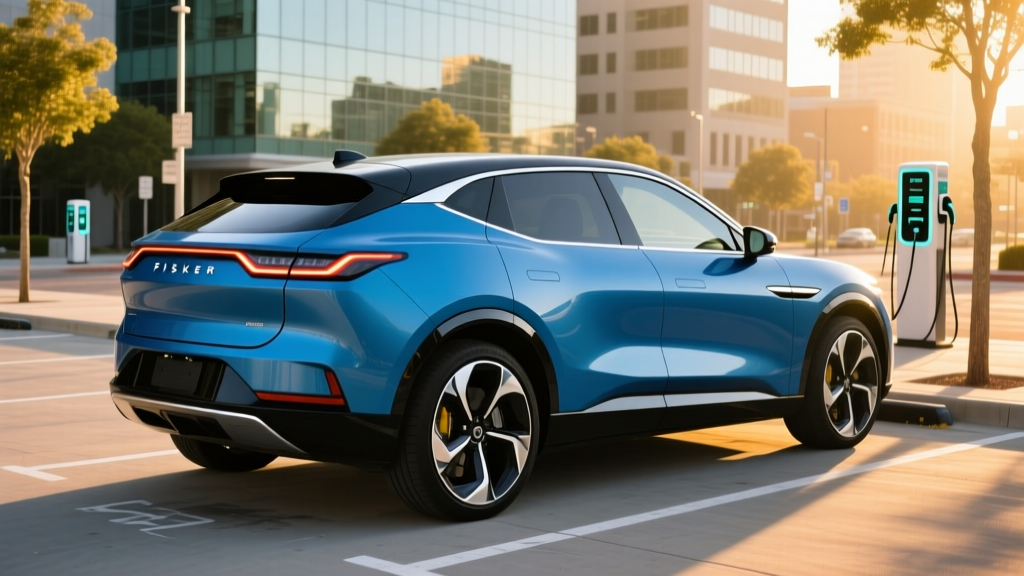
The Fisker Ocean Bankruptcy: An Orphaned EV Worth Considering?
When Fisker Inc. filed for Chapter 11 bankruptcy in June 2024, it left thousands of Ocean SUV owners with an orphaned vehicle and prospective buyers with a complicated decision. By early 2025, the remaining inventory of unregistered Fisker Oceans — once priced above $68,000 — flooded the used market at steep discounts, with some examples selling between $25,000 and $40,000 depending on trim and mileage. For 2026 shoppers, the Fisker Ocean bankruptcy represents both a cautionary tale and a potential value play — if you understand exactly what you're getting.
This guide dissects the Fisker Ocean's real specifications, ownership realities in a post-bankruptcy landscape, and whether the math works for different buyer profiles. We'll cover EPA range versus real-world performance, charging infrastructure compatibility, the federal tax credit situation for used examples, and the long-term service outlook.
Fisker Ocean Specifications: The Numbers That Matter
| Specification | Ocean Sport (FWD) | Ocean Ultra / Extreme (AWD) |
|---|---|---|
| EPA Range | 250 miles | 360 miles (Ultra) / 350 miles (Extreme) |
| Battery Capacity (Usable) | ~71 kWh (LFP) | ~113 kWh (NMC) |
| Battery Chemistry | LFP (Lithium Iron Phosphate) | NMC (Nickel Manganese Cobalt) |
| Peak DC Fast Charge | ~170 kW | ~250 kW |
| 10–80% DC Charge Time | ~33 minutes | ~30 minutes |
| Level 2 Home Charging | ~10.5 kW (37 mi/hr) | ~10.5 kW (37 mi/hr) |
| 0–60 mph | 6.9 seconds | 3.7 seconds (Ultra/Extreme) |
| Horsepower | 275 hp | 550 hp |
| Drivetrain | Single Motor FWD | Dual Motor AWD |
| MPGe (Combined) | ~100 MPGe | ~95 MPGe |
| Efficiency (kWh/100 mi) | ~34 kWh/100 mi | ~36 kWh/100 mi |
| Cargo Volume (rear seats up) | 32.5 cu ft | 32.5 cu ft |
| Cargo Volume (rear seats folded) | 68.3 cu ft | 68.3 cu ft |
| Rear Legroom | 38.2 inches | 38.2 inches |
| Original Base MSRP (2023) | $37,499 | $68,999 (Ultra) / $68,999 (Extreme) |
| Typical Used Price (2026) | $22,000–$28,000 | $32,000–$42,000 |
Sources: EPA Fueleconomy.gov, manufacturer specifications. Used pricing reflects Q1 2026 market averages.
Real-World Range: What the EPA Sticker Doesn't Tell You
EPA Estimated Range: 250 miles (Sport FWD) / 360 miles (Ultra AWD)
Real-World Expectation: Expect approximately 210–230 miles highway in the Sport and 300–330 miles highway in the Ultra under moderate conditions (65–70 mph, 60–75°F). In cold weather (below 32°F), range drops 20–30%, meaning the Ultra may deliver 220–260 miles on a full charge during winter highway driving. City driving with regenerative braking recovers range closer to EPA estimates.
The Fisker Ocean Ultra's 360-mile EPA rating was among the highest of any production EV at launch, thanks to its massive 113 kWh NMC battery pack. However, real-world testing by multiple outlets showed that highway driving at 75+ mph consumed energy at rates closer to 38–40 kWh/100 miles, reducing effective range to roughly 285–310 miles. Cold weather compounds this — the Ocean lacks a heat pump on the Sport trim (standard on Ultra/Extreme), meaning cabin heating in freezing temperatures draws directly from the traction battery without the efficiency gains a heat pump provides.
For context, a 300-mile road trip in the Ultra is feasible in mild weather without a charging stop, but plan for one DC fast-charge session if temperatures drop below 40°F or if you're driving at sustained interstate speeds. The Sport trim's 250-mile EPA figure makes it strictly a commuter and city vehicle for most owners — road trips require careful planning.
Charging Performance: DC Fast and Home Level 2
Charging speed remains a critical concern for any EV buyer, and the Fisker Ocean's capabilities are competitive but not class-leading in 2026.
| Charging Level | Ocean Sport (FWD) | Ocean Ultra / Extreme (AWD) |
|---|---|---|
| Level 1 (120V, 12A) | ~1.4 kW / 4 mi/hr | ~1.4 kW / 4 mi/hr |
| Level 2 (240V, 48A) | ~10.5 kW / 37 mi/hr | ~10.5 kW / 37 mi/hr |
| DC Fast Charge (Peak) | ~170 kW | ~250 kW |
| DC 10–80% Time | ~33 minutes | ~30 minutes |
| DC 10–80% Miles Added | ~150 miles | ~250 miles |
| Connector Type | CCS1 | CCS1 |
The Ocean uses the CCS1 connector standard, which remains widely supported across Electrify America, EVgo, and ChargePoint DC fast-charging networks. However, with the industry's shift toward Tesla's NACS connector (adopted by Ford, GM, Rivian, and others starting in 2024–2025), CCS-only vehicles may see reduced access to new charger installations over the coming years. Fisker Ocean owners will likely need a CCS-to-NACS adapter for future compatibility with Tesla Superchargers — if third-party adapters prove reliable for the Ocean's specific charging protocol.
The Ultra's 250 kW peak charge rate sounds impressive, but real-world charging curves tell a more nuanced story. The Ocean sustains peak rates only between roughly 15–40% state of charge, then tapers progressively. From 60–80%, expect rates to drop to 80–100 kW, which is why the 10–80% time sits at around 30 minutes rather than the theoretical minimum. This is typical behavior for large NMC packs but worth understanding for road-trip planning: the second half of any charging session takes disproportionately longer.
Home Level 2 charging at 10.5 kW replenishes the Ultra's 113 kWh pack from empty in roughly 11–12 hours, or overnight for most daily driving needs. The Sport's smaller 71 kWh pack charges fully in about 7 hours. A standard 48-amp Level 2 home charger (requiring a 60-amp circuit) costs $500–$800 for equipment and $800–$2,000 for professional installation depending on panel capacity and run distance.
Federal Tax Credit Eligibility After Bankruptcy
| Scenario | Ocean Sport | Ocean Ultra/Extreme |
|---|---|---|
| Original MSRP (2023) | $37,499 | $68,999 |
| Typical 2026 Used Price | $22,000–$28,000 | $32,000–$42,000 |
| Federal Used EV Credit (§25E) | Up to $4,000 | Up to $4,000 |
| Effective Price After Credit | $18,000–$24,000 | $28,000–$38,000 |
| New Vehicle Credit (§30D) | Not available — Fisker is defunct, no new inventory | |
The federal new-vehicle EV tax credit (IRS §30D, up to $7,500) is no longer applicable to the Fisker Ocean. Fisker Inc. ceased operations, and no new vehicles are being manufactured or sold through authorized dealers. Any remaining "new" unregistered examples sold through liquidation channels may not qualify because the manufacturer cannot certify battery sourcing requirements or provide the necessary IRS documentation.
However, the federal used EV tax credit (IRS §25E) remains a viable path. This credit provides up to $4,000 (or 30% of the sale price, whichever is less) for qualifying pre-owned EVs purchased from a licensed dealer. Key eligibility requirements per IRS guidelines:
- Price cap: Sale price must not exceed $25,000. This limits the credit primarily to Ocean Sport models or high-mileage Ultra examples.
- Income limits (2026): Modified adjusted gross income must not exceed $75,000 (single), $112,500 (head of household), or $150,000 (joint filers).
- Dealer sale required: Private-party purchases do not qualify.
- Vehicle age: Must be at least two model years old (2023 Oceans qualify in 2026).
- First transfer since new: The credit can only be claimed once per vehicle VIN after its original sale.
- Point-of-sale transfer: The credit can be applied at purchase to reduce the upfront cost.
For an Ocean Sport purchased at $24,000 from a qualifying dealer, the full $4,000 credit brings the effective cost to $20,000 — extraordinary value for an EV with 250 miles of range, modern tech, and 275 hp. Ultra and Extreme models typically exceed the $25,000 price cap, making them ineligible for the used credit in most transactions.
Ownership After Bankruptcy: Service, Parts, and Software
The practical reality of owning a Fisker Ocean in 2026 extends far beyond specifications. The bankruptcy created several ownership challenges that buyers must weigh:
Service and Parts: Fisker operated a direct-to-consumer model without a traditional dealer network. Post-bankruptcy, authorized service centers have closed. Owners rely on independent EV mechanics, mobile technicians, and a dwindling supply of OEM parts. Body panels, proprietary components (like the California Mode solar roof on the Extreme trim), and replacement glass may require extended sourcing times or aftermarket alternatives. The NHTSA maintains safety recall records, but enforcement of recalls without a manufacturer is uncertain.
Software and Connectivity: The Ocean's 17.1-inch rotating infotainment screen, over-the-air update capability, and connected features depended on Fisker's cloud infrastructure. While some third-party companies have stepped in to maintain basic connectivity services, OTA updates have ceased entirely. The vehicle's software will not receive new features, bug fixes, or security patches. Driver-assist systems (adaptive cruise control, lane-keeping assist) remain functional but frozen at their final update state — these are SAE Level 2 systems requiring full driver attention, not autonomous driving capabilities.
Warranty Status: Fisker originally offered a 6-year/60,000-mile bumper-to-bumper warranty and an 8-year/100,000-mile battery and powertrain warranty. Post-bankruptcy, these warranties are effectively unenforceable — there is no entity to honor claims. Some state lemon-law protections or credit-card chargeback provisions may offer limited recourse for recent purchasers, but for 2026 used buyers, the vehicle is sold as-is. Budget for potential out-of-pocket repairs, particularly for the battery management system, thermal management components, and electronic control units.
Insurance: Insuring an orphaned EV brand can be challenging. Some carriers have increased premiums due to parts-availability concerns and uncertain repair costs. Shop quotes from multiple insurers before purchasing — premiums vary widely, from competitive to prohibitively expensive.
Pros and Cons: An Honest Assessment
Pros
- Exceptional value: Ocean Sport at ~$20,000 (after used credit) offers 250-mile range and modern features at a price point unmatched by any new EV.
- Ultra's massive range: 360-mile EPA rating (300+ real-world) eliminates range anxiety for most trips without charging stops.
- Strong performance: Ultra's 3.7-second 0–60 and 550 hp rival sports sedans, with dual-motor AWD providing confident all-weather traction.
- Spacious interior: 38.2 inches of rear legroom and 68.3 cu ft of cargo space with seats folded exceed competitors like the Hyundai Ioniq 5 and Ford Mustang Mach-E.
- Distinctive design: Henrik Fisker's styling stands out in a segment of conservative crossovers.
- Solar roof (Extreme): Adds roughly 1–2 miles of range per day in optimal sun — minor but unique.
Cons
- No warranty coverage: Battery, powertrain, and bumper-to-bumper warranties are void — all repair risk falls on the owner.
- Parts scarcity: Proprietary components, body panels, and replacement parts are increasingly difficult to source.
- No software updates: Infotainment, driver-assist, and BMS software are frozen permanently; no new features or security patches.
- CCS-only charging: As the industry adopts NACS, CCS charger availability may decline at new installations.
- Resale uncertainty: Depreciation is steep and unpredictable for a defunct brand — future resale value is a gamble.
- Sport trim lacks heat pump: Cold-weather range loss is more severe on the FWD model.
- Insurance variability: Some carriers charge premiums 20–40% above comparable EVs from active manufacturers.
Fisker Ocean vs. Competitors: Is It Worth Buying?
At its 2026 used-market pricing, the Fisker Ocean competes against both used EVs and new entry-level models. Here's how it stacks up:
| Attribute | Fisker Ocean Ultra (Used) | Hyundai Ioniq 5 (New 2026) | Tesla Model Y LR (New 2026) |
|---|---|---|---|
| Price | $32,000–$42,000 | ~$44,000 (before credit) | ~$48,000 (before credit) |
| EPA Range | 360 mi | 310 mi | 330 mi |
| DC Fast Charge (Peak) | 250 kW | 240 kW | 250 kW |
| 0–60 mph | 3.7 sec | 5.0 sec (AWD) | 4.8 sec |
| Warranty | None (void) | 5yr/60k + 10yr/100k battery | 4yr/50k + 8yr/120k battery |
| Tax Credit Eligible | Used credit only (§25E, if ≤$25k) | Up to $7,500 (§30D) | Up to $7,500 (§30D) |
| Software Updates | None (frozen) | Active OTA | Active OTA |
| Service Network | Independent shops only | Hyundai dealer network | Tesla service + mobile |
Choose the Fisker Ocean if:
- You want maximum range and performance at the lowest possible price and accept the warranty/service risk.
- You have access to a trusted independent EV mechanic and can self-manage maintenance.
- You plan to own the vehicle 3+ years and aren't concerned about near-term resale value.
- You find an Ocean Sport under $25,000 and qualify for the $4,000 used-EV credit.
Choose a competitor (Ioniq 5, Model Y, EV6) if:
- You need warranty protection, an active dealer/service network, and ongoing software support.
- You qualify for the $7,500 new-vehicle tax credit, narrowing the price gap significantly.
- You want predictable resale value and lower insurance premiums.
- You prefer NACS charging compatibility for Tesla Supercharger access.
Frequently Asked Questions
What is the real-world range of the Fisker Ocean?
The Ocean Sport delivers approximately 210–230 miles on the highway in mild weather (versus its 250-mile EPA rating). The Ocean Ultra achieves 300–330 miles highway in similar conditions (versus 360 EPA). Cold weather (below 32°F) reduces range by 20–30%, so expect 150–180 miles from the Sport and 220–260 miles from the Ultra in winter highway driving. City driving with regenerative braking recovers efficiency closer to EPA estimates.
How fast does the Fisker Ocean charge at home and on DC fast chargers?
On a Level 2 home charger (240V, 48A), the Ocean charges at approximately 10.5 kW, adding about 37 miles of range per hour. A full charge of the Ultra's 113 kWh battery takes 11–12 hours; the Sport's 71 kWh battery charges in about 7 hours. On DC fast chargers, the Ultra peaks at 250 kW (10–80% in ~30 minutes), while the Sport peaks at 170 kW (10–80% in ~33 minutes). Charging slows significantly above 80% state of charge due to battery protection protocols.
How much does a Fisker Ocean cost after tax credits in 2026?
Used Fisker Ocean Sport models typically sell for $22,000–$28,000. If purchased from a licensed dealer for $25,000 or less, the federal used-EV credit (§25E) can reduce the effective price by up to $4,000, bringing the cost to $18,000–$24,000 (income limits apply). Ultra and Extreme models sell for $32,000–$42,000 but generally exceed the $25,000 price cap for the used credit. The new-vehicle credit (§30D) is not available because Fisker is defunct.
Does the Fisker Ocean qualify for the federal EV tax credit?
The new-vehicle federal tax credit (§30D, up to $7,500) is not available for the Fisker Ocean — the manufacturer is bankrupt and cannot certify compliance with battery-sourcing and critical-mineral requirements. However, the used-EV credit (§25E, up to $4,000) may apply if the vehicle is purchased from a licensed dealer for $25,000 or less, the buyer meets income limits ($75k single / $150k joint for 2026), and the vehicle is at least two model years old. Consult a tax professional and verify eligibility at IRS.gov before purchasing.
Is it worth buying a Fisker Ocean vs. a Hyundai Ioniq 5 or Tesla Model Y?
The Fisker Ocean offers superior range (360 vs. 310–330 miles), faster acceleration (3.7 vs. 4.8–5.0 seconds), and a lower entry price on the used market. However, competitors provide active warranties, established service networks, ongoing software updates, NACS charging compatibility, and eligibility for the $7,500 new-vehicle tax credit. If you value peace of mind, predictable ownership costs, and long-term support, the Ioniq 5 or Model Y are safer choices. If you prioritize upfront value and can absorb repair risk, the Ocean is compelling.
What are the biggest risks of buying a Fisker Ocean after bankruptcy?
The primary risks include: no warranty coverage for battery or powertrain failures (replacement costs $15,000–$25,000+), difficulty sourcing proprietary parts (body panels, electronic modules, the solar roof on Extreme trims), frozen software with no future updates or security patches, potentially higher insurance premiums, CCS-only charging as the industry shifts to NACS, and unpredictable resale depreciation. Budget $2,000–$5,000 annually for potential out-of-pocket repairs and maintenance.
Can I still get software updates or connected services for the Fisker Ocean?
No. Fisker's cloud infrastructure has been decommissioned, and over-the-air updates have permanently ceased. The vehicle's infotainment, navigation, driver-assist systems, and battery management software are frozen at their final version. Some third-party companies have attempted to maintain basic app connectivity, but functionality is limited and unreliable. Features like remote preconditioning, OTA-based recall fixes, and new feature rollouts will never arrive.
Final Verdict: Who Should Buy the Fisker Ocean in 2026?
The Fisker Ocean bankruptcy created a rare market anomaly: a well-equipped, long-range EV selling at a fraction of its original MSRP. For the right buyer — someone mechanically inclined, financially prepared for repair risk, and unbothered by frozen software — the Ocean Sport at $20,000 (after the used-EV credit) is arguably the best range-per-dollar EV available. The Ultra's 360-mile EPA rating and 3.7-second 0–60 time at $35,000 is similarly compelling for performance-oriented buyers willing to accept the orphaned-brand risk.
But this is not a vehicle for everyone. If you need warranty protection, dealer service, active software development, or predictable resale value, spend more on a new Ioniq 5, Model Y, or EV6 and claim the $7,500 federal credit. The Fisker Ocean is a calculated bet — one that rewards informed buyers who understand exactly what they're purchasing and what they're giving up.