The Fisker Kar.A: What It Promised and What Actually Happened
The Fisker Kar.A was announced as a compact electric SUV with a solar roof, targeting an EPA range above 300 miles and a sub-$40,000 price point. Positioned against the Tesla Model Y, Ford Mustang Mach-E, and Hyundai Ioniq 5, it generated significant interest from EV shoppers looking for something different. However, as of 2026, the Kar.A never reached production — and Fisker Inc. filed for bankruptcy in mid-2024, effectively ending the vehicle's development.
This review examines the Kar.A's announced specifications, what they would have meant for real-world ownership, and why understanding the gap between concept and production matters for anyone evaluating EV startups.
Announced Specifications at a Glance
| Spec | Fisker Kar.A (Announced) |
|---|---|
| EPA Range (Target) | ~300 miles (single-motor), ~350 miles (dual-motor AWD) |
| Battery Capacity | ~80 kWh usable (NMC chemistry, announced) |
| Peak DC Fast Charge | ~200 kW (announced) |
| 10-80% DC Charge Time | ~25 minutes (estimated) |
| Level 2 Home Charging | ~11 kW / ~35 miles per hour |
| 0-60 mph | ~5.5 sec (single-motor), ~3.8 sec (dual-motor AWD) |
| Horsepower | ~275 hp (single-motor), ~540 hp (dual-motor) |
| Drivetrain | RWD (base), AWD dual-motor (optional) |
| Cargo Volume | ~30 cu ft (rear seats up), ~65 cu ft (folded) |
| Base MSRP (Target) | $38,999 (before incentives) |
| Battery Warranty | 8 years / 100,000 miles (announced) |
Range and Efficiency: The Real-World Reality Check
Real-World Expectation: Had the Kar.A reached production, expect ~240-270 miles on highway trips at 70+ mph, and ~200-230 miles in cold weather (below 32°F). Solar roof contribution: ~1-2 miles of range per day under ideal conditions — a marginal supplement, not a meaningful range extender.
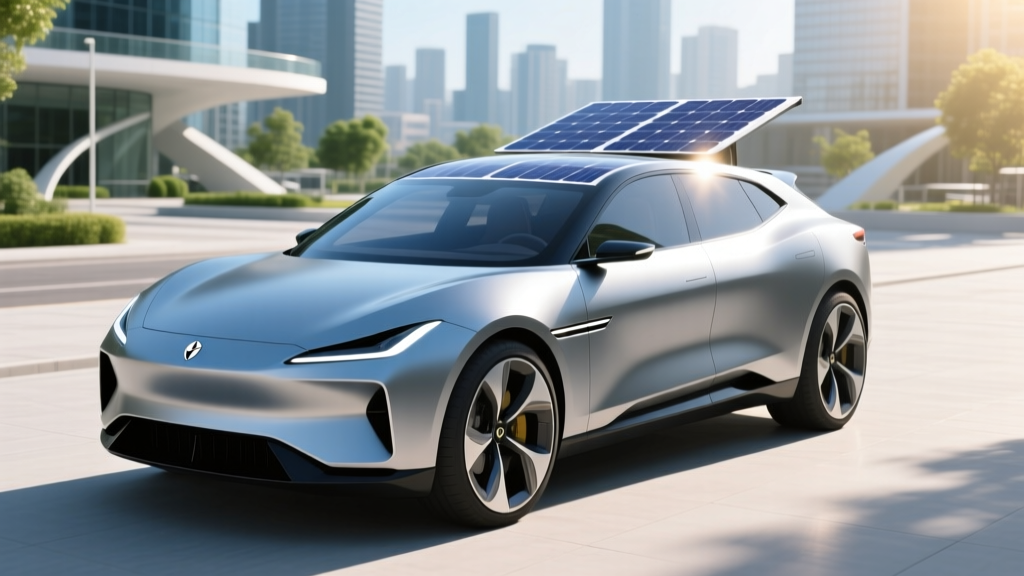
Fisker's solar roof was a headline feature, but the physics are limiting. A roof-mounted solar array on a compact SUV generates roughly 200-400 watts under peak sun — translating to maybe 1-2 miles of added range per day of full sun exposure. It's a useful trickle-charge for offsetting vampire drain, not a substitute for plugging in.
For comparison, the Tesla Model Y Long Range achieves an EPA-estimated 310 miles and delivers roughly 260-280 miles in real-world highway driving. The Hyundai Ioniq 5 (Long Range RWD) posts 303 miles EPA and similar real-world figures. The Kar.A's targets were competitive, but unproven in production validation.
Charging Speed and Infrastructure
| Charging Level | Power | Miles Added per Hour | Notes |
|---|---|---|---|
| Level 1 (120V) | ~1.4 kW | ~4-5 mi/hr | Emergency/trickle only |
| Level 2 (240V, 48A) | ~11 kW | ~35 mi/hr | Full charge in ~8-9 hours |
| DC Fast Charge | ~200 kW peak | ~150-180 mi in 15 min | 10-80% in ~25 min; tapers above 80% |
The announced 200 kW peak DC charge rate would have placed the Kar.A in the middle of the pack — behind the Hyundai Ioniq 5's 240 kW peak (10-80% in ~18 minutes) and the Tesla Model Y's ~250 kW peak, but ahead of older platforms like the Nissan Ariya (~130 kW).
A critical nuance: peak charge rate is not sustained charge rate. Most EVs hold peak kW only between 10-40% state of charge, then taper progressively. A 200 kW peak typically averages 120-140 kW across a 10-80% session. Without production testing, the Kar.A's actual charge curve remained unknown.
Fisker announced CCS1 compatibility for North America, with no confirmed NACS (Tesla connector) adoption before the company's collapse. Had it launched in 2025-2026, NACS access to the Tesla Supercharger network would have been a significant competitive factor.
Performance and Drivetrain
The single-motor RWD variant targeted ~275 hp with a 0-60 mph time around 5.5 seconds — adequate for daily driving and highway merging, similar to the base Tesla Model Y. The dual-motor AWD version aimed for ~540 hp and a 3.8-second 0-60, placing it in performance-SUV territory comparable to the Ford Mustang Mach-E GT.
Without production vehicles, real-world performance metrics — including sustained power delivery, thermal management under repeated hard acceleration, and regenerative braking calibration — were never independently verified.
Pricing, Tax Credits, and What Could Have Been
| Trim | Announced MSRP | Est. Price After §30D Credit |
|---|---|---|
| Base RWD | $38,999 | ~$31,499 (if eligible) |
| AWD Long Range | $45,999 | ~$38,499 (if eligible) |
| Performance AWD | $52,999 | ~$45,499 (if eligible) |
The sub-$40,000 base price was central to Fisker's marketing. Under IRS §30D rules, a $38,999 SUV would fall under the $80,000 MSRP cap for SUVs. However, the $7,500 federal tax credit also requires:
- Battery sourcing: Critical minerals and battery components must meet escalating domestic-content thresholds (increasing yearly through 2029).
- Buyer income caps: $150,000 single / $225,000 head of household / $300,000 joint AGI.
- Final assembly: Must occur in North America.
Fisker planned to manufacture the Kar.A at the Magna Steyr facility in Austria — which would have disqualified it from the §30D credit entirely due to the North American final-assembly requirement. This was a significant competitive disadvantage against the US-built Model Y and Mach-E.
Interior, Tech, and Standout Features
Fisker emphasized sustainability in the Kar.A's interior, with recycled materials, vegan upholstery, and a minimalist dashboard dominated by a 17-inch central touchscreen. Announced features included:
- Solar roof with integrated photovoltaic cells
- Over-the-air software updates
- Level 2 driver assistance (adaptive cruise, lane centering, automated parking)
- Vehicle-to-load (V2L) capability for powering external devices
- "California Mode" — all windows and roof open simultaneously for open-air driving
Notable concerns from early previews included a reliance on touchscreen controls with minimal physical buttons, a trend that draws criticism from usability advocates. Cargo space at ~30 cu ft (rear seats up) would have been competitive with the Model Y (~30 cu ft) but slightly behind the Ioniq 5 (~36 cu ft behind the second row in some configurations).
Warranty and Long-Term Ownership
Fisker announced an 8-year/100,000-mile battery and powertrain warranty, matching the industry standard set by most mainstream EV makers. However, warranty coverage is only as reliable as the company backing it. With Fisker Inc.'s bankruptcy in 2024, any prospective warranty became void — a cautionary tale for buyers considering EV startups without the financial backing of legacy automakers.
For comparison, Hyundai backs the Ioniq 5 with a 10-year/100,000-mile powertrain warranty, and Tesla provides 8 years/120,000 miles on the Model Y battery and drive units.
Who the Kar.A Was Designed For
- Eco-conscious urban commuters wanting a distinctive, solar-equipped compact SUV
- Buyers priced out of the Model Y seeking a sub-$40K alternative
- Design-focused shoppers willing to bet on a startup for unique styling
- Buyers needing proven reliability and long-term warranty support
- Those in regions with limited charging infrastructure (no confirmed NACS access)
- Towing — no tow rating was ever published
Pros and Cons
Pros (Announced)
- Solar roof for passive trickle charging
- Competitive target range (300+ miles)
- Aggressive base pricing under $40K
- Distinctive design and sustainable materials
- V2L capability
Cons
- Never reached production — company bankrupt as of 2024
- Planned Austria assembly disqualified it from §30D tax credit
- No real-world testing data exists
- Unknown long-term reliability or software maturity
- No confirmed NACS/Supercharger access
- Solar roof adds minimal real range (~1-2 mi/day)
Is It Worth Buying vs. Competitors?
The Fisker Kar.A is not available for purchase and will not be produced. For buyers who were interested in what it represented, here are proven alternatives available in 2026:
- Tesla Model Y: 310-mile EPA range, NACS native, Supercharger access, $44,990 base, US-built, §30D eligible (verify current sourcing rules).
- Hyundai Ioniq 5: 303-mile EPA range (Long Range RWD), 240 kW peak DC charging, 10-80% in ~18 min, $42,600 base, strong warranty.
- Ford Mustang Mach-E: 320-mile EPA range (Extended Range RWD), US-built, §30D eligible, $42,995 base.
Frequently Asked Questions
What happened to the Fisker Kar.A?
Fisker Inc. filed for bankruptcy in June 2024. The Kar.A, along with the Fisker Pear and Ronin concepts, never entered production. The company's only production vehicle, the Fisker Ocean SUV, was discontinued with fewer than 12,000 units delivered.
Can I still buy a Fisker Kar.A?
No. The vehicle was never produced. No pre-orders are being fulfilled, and no production timeline exists.
Would the Kar.A have qualified for the $7,500 federal tax credit?
Almost certainly not. Fisker planned to build the Kar.A at Magna Steyr in Graz, Austria. Under IRS §30D rules, final assembly must occur in North America to qualify for the credit.
How much range would the solar roof actually add?
Under ideal conditions (full sun, clean panels, optimal angle), approximately 1-2 miles per day. Over a year of daily outdoor parking, that's roughly 365-730 miles of free range — a modest supplement, not a primary charging method.
What should I buy instead?
The Tesla Model Y, Hyundai Ioniq 5, and Ford Mustang Mach-E all deliver proven range, fast charging, established service networks, and (depending on trim and sourcing) federal tax credit eligibility. All three are in production and widely available in 2026.