Quick Verdict: The SUV That Redefines Cargo Efficiency
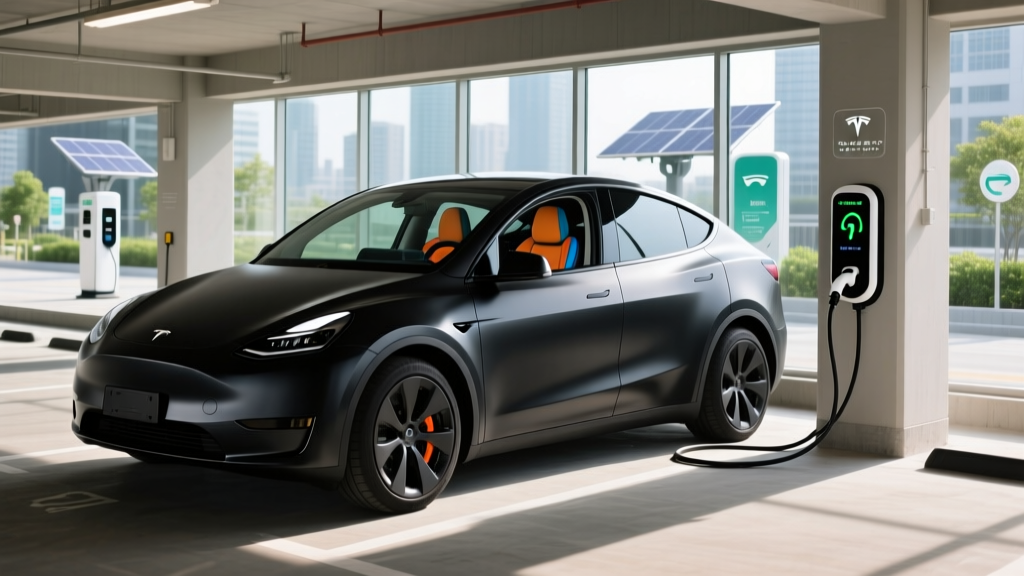
The Tesla Model Y remains the benchmark electric compact SUV in 2026 — not just because of its Supercharger network advantage, but because its hatchback design and optional third row deliver class-leading utility. With 76 cubic feet of maximum cargo volume (seats folded) and a usable frunk, the Model Y out-hauls rivals like the Ford Mustang Mach-E (59.7 cu ft) and Hyundai Ioniq 5 (53 cu ft) by a wide margin. Add a 330-mile EPA range, 250 kW DC fast-charging, and potential eligibility for the $7,500 federal tax credit, and the value proposition stays sharp.
But cargo numbers alone don't tell the whole story. Real-world usability depends on load-floor height, seat-folding mechanics, and whether the optional third row eats into your everyday storage. This review breaks down every dimension, every charging curve, and every tax-credit caveat you need before signing.
Tesla Model Y Storage Space: Cargo, Frunk & Passenger Dimensions
The Model Y's liftback design is its secret weapon. Unlike traditional SUV liftgates, the entire rear glass opens, creating a massive aperture for loading bulky items like furniture, bikes, or camping gear.
| Measurement | Specification |
|---|---|
| Cargo (behind 2nd row) | 30.2 cu ft |
| Cargo (2nd row folded) | 76.0 cu ft |
| Front trunk (frunk) | 4.1 cu ft |
| Sub-trunk (under load floor) | ~2.0 cu ft (included in total) |
| Front headroom | 41.0 in |
| Rear headroom | 39.4 in |
| Front legroom | 41.8 in |
| Rear legroom | 41.6 in |
| Max towing capacity | 3,500 lbs |
The 30.2 cu ft behind the second row is enough for roughly eight carry-on suitcases stacked normally, or a full Costco run without folding a single seat. The sub-trunk compartment beneath the load floor adds hidden storage for charging cables, a tire-repair kit, or groceries you don't want sliding around.
The 4.1 cu ft frunk is best suited for a charging cable bag, a small cooler, or a backpack. It's not the deepest frunk on the market (the Ford F-150 Lightning offers 14.1 cu ft), but it's weather-sealed and lockable — ideal for items you'd rather not leave in the main cabin.
EPA Range & Real-World Expectations
EPA Estimated: 330 miles (Long Range AWD, 19" wheels)
Real-World Highway (70 mph): ~265–285 miles
Real-World Cold Weather (30°F, highway): ~220–250 miles
City / Mixed Commute: ~300–320 miles
The Model Y Long Range AWD carries a 78.1 kWh usable battery (NMC chemistry, nickel-manganese-cobalt) built on Tesla's structural battery pack. On the EPA combined cycle, it achieves 122 MPGe (28 kWh/100 mi), making it one of the most efficient electric SUVs in its class.
But EPA tests are conducted at moderate temperatures with mixed driving. In sustained highway driving at 70–75 mph, expect to use roughly 30–32 kWh/100 mi, which drops effective range to around 265–285 miles. Cold weather compounds this: battery internal resistance increases, cabin heating draws 3–5 kW continuously, and regenerative braking is limited until the pack warms up. A 30°F winter road trip can shave 25–30% off your sticker range.
The RWD Standard Range variant (estimated 60 kWh LFP battery) carries a lower EPA rating of 260 miles and is better suited for warm-climate commuters who charge at home nightly. LFP chemistry tolerates daily 100% charging without accelerated degradation, unlike the NMC Long Range pack, which Tesla recommends charging to 80% for daily use.
Charging Speed: DC Fast, Level 2 & Home Setup
| Charging Level | Power / Rate | Speed |
|---|---|---|
| DC Fast Charge (peak) | 250 kW (Supercharger V3/V4) | 10–80% in ~25 minutes |
| DC Fast Charge (sustained avg.) | ~130–150 kW average | ~170 miles added in 15 min |
| Level 2 (Tesla Wall Connector, 48A) | 11.5 kW | ~44 miles per hour |
| Level 2 (generic J1772 w/ adapter, 32A) | 7.7 kW | ~30 miles per hour |
| Level 1 (120V household outlet) | 1.4 kW | ~4–5 miles per hour |
The Model Y's charge curve peaks at 250 kW on a V3 or V4 Supercharger but sustains that rate only between roughly 10–30% state of charge. From 30–60%, the rate tapers to ~150 kW, and from 60–80%, it drops to ~90–100 kW. This means the published 25-minute 10–80% time is realistic, but a 10–90% session will take closer to 40 minutes.
For home charging, the Tesla Wall Connector at 48 amps (requiring a 60-amp dedicated circuit) delivers 11.5 kW, adding roughly 44 miles of range per hour. A full overnight charge from 20% to 80% takes about 5 hours. If your electrical panel supports only a 40-amp circuit (32 amps to the car), expect ~30 mi/hr — still adequate for most daily driving.
The Model Y uses the NACS (North American Charging Standard) connector natively. For non-Tesla Level 2 public chargers using J1772, Tesla includes a J1772-to-NACS adapter in the glovebox. CCS adapters are available for legacy DC fast chargers, though Tesla's Supercharger network now exceeds 6,000 U.S. stations, making adapters mostly a backup option.
Performance, Drivetrain & Efficiency
| Trim | Drivetrain | Horsepower | 0–60 mph | EPA Range | MPGe (combined) |
|---|---|---|---|---|---|
| Long Range AWD | Dual-Motor AWD | 384 hp | 4.8 sec | 330 mi | 122 MPGe |
| Performance AWD | Dual-Motor AWD | 510 hp | 3.5 sec | 285 mi | 111 MPGe |
| Standard Range RWD | Rear-Wheel Drive | 295 hp | 6.6 sec | 260 mi | 128 MPGe |
The Long Range AWD strikes the best balance for most buyers: 384 hp is more than enough for highway merging and mountain passes, the dual-motor setup provides confident all-weather traction, and the 4.8-second 0–60 time outpaces most gas-powered compact SUVs. The Performance trim adds track-mode tuning, larger brakes, and 21" wheels, but the range penalty (285 mi EPA) and stiffer ride make it a niche pick.
All trims feature one-pedal driving via aggressive regenerative braking, a heat pump for efficient cabin heating (reducing cold-weather range loss by ~10% compared to resistive heaters), and a low center of gravity thanks to the skateboard battery pack.
Pricing, Trims & Federal Tax Credit Eligibility
| Trim | Base MSRP | Federal Credit (§30D) | Effective Price |
|---|---|---|---|
| Long Range AWD | $44,990 | Up to $7,500 | ~$37,490 |
| Performance AWD | $48,990 | Up to $7,500 | ~$41,490 |
| Standard Range RWD | $39,990 | Up to $7,500 | ~$32,490 |
All 2026 Model Y trims fall under the $80,000 MSRP cap for SUVs under IRS §30D rules. However, qualifying for the full $7,500 credit depends on three factors that change frequently:
- Battery sourcing: At least 60% of critical minerals must be sourced from the U.S. or a free-trade-agreement country, and 50% of battery components must be manufactured or assembled in North America. Tesla's Austin-built packs have increasingly met these thresholds, but verify current-year compliance on IRS.gov.
- Buyer income caps: Modified adjusted gross income must not exceed $150,000 (single), $225,000 (head of household), or $300,000 (joint filers).
- Point-of-sale transfer: As of 2024, you can transfer the credit to the dealer at purchase, reducing your out-of-pocket cost immediately rather than waiting for tax filing.
Technology, Driver Assistance & Interior
The Model Y's interior remains minimalist: a single 15.4-inch center touchscreen handles navigation, climate, media, and vehicle settings. There is no instrument cluster — speed and range data appear in the top-left corner of the main display. The 2026 refresh added ventilated front seats, ambient lighting, a rear-seat touchscreen for climate/media, and power-folding second-row seats.
Autopilot comes standard and includes adaptive cruise control, lane-centering, and automatic emergency braking. Full Self-Driving (Supervised) is a $8,000 add-on (or $99/month subscription) that adds city-street navigation, traffic-light recognition, and parking maneuvers. However, FSD is an SAE Level 2 system — you must keep your hands on the wheel and eyes on the road at all times. It does not make the car autonomous.
Notable tech features include Sentry Mode (360° parking surveillance), Dog Mode (climate control for pets), over-the-air software updates that add features post-purchase, and the Tesla app for remote preconditioning, location tracking, and charging management.
Pros, Cons & Who Should Buy
- Class-leading 76 cu ft cargo volume
- Supercharger network reliability (6,000+ U.S. stations)
- 250 kW DC fast-charging, 10–80% in ~25 min
- 330-mile EPA range (Long Range AWD)
- Strong resale value and OTA updates
- Heat pump for cold-weather efficiency
- Minimalist interior lacks physical buttons
- FSD ($8K) is Level 2, not self-driving
- Rear visibility compromised by sloping roofline
- No Apple CarPlay / Android Auto
- Insurance premiums 20–40% above class average
- Optional 3rd row usable only for small children
Best for: Families needing maximum cargo flexibility, road-trippers who rely on Supercharger infrastructure, and commuters with home Level 2 charging. The 330-mile range covers most daily driving plus weekend trips without en-route charging.
Consider alternatives if: You prefer physical controls, need a usable adult-sized third row (look at the Kia EV9), want Apple CarPlay integration (Hyundai Ioniq 5, Ford Mach-E), or live in an area with sparse Supercharger coverage.
Warranty, Ownership Costs & Competitor Comparison
Tesla covers the Model Y with a 4-year/50,000-mile basic warranty and an 8-year/120,000-mile battery and drive-unit warranty (Long Range/Performance). The battery warranty guarantees retention of at least 70% capacity during the coverage period. Real-world degradation data from fleet operators suggests NMC packs lose roughly 8–12% over 100,000 miles, well within warranty thresholds.
| Spec | Tesla Model Y LR AWD | Ford Mustang Mach-E ER AWD | Hyundai Ioniq 5 AWD |
|---|---|---|---|
| EPA Range | 330 mi | 312 mi | 290 mi |
| Cargo (max) | 76.0 cu ft | 59.7 cu ft | 53.0 cu ft |
| DC Fast Charge | 250 kW | 150 kW | 235 kW |
| 10–80% Time | ~25 min | ~38 min | ~18 min |
| 0–60 mph | 4.8 sec | 5.1 sec | 5.0 sec |
| Base MSRP (AWD) | $44,990 | $48,995 | $50,150 |
| MPGe (combined) | 122 | 101 | 110 |
The Model Y's cargo advantage is decisive: 76 cu ft dwarfs the Mach-E and Ioniq 5. On charging speed, the Ioniq 5's 800V architecture delivers a faster 10–80% time (~18 min vs. ~25 min), but Tesla's Supercharger network remains more reliable and widespread than third-party networks like Electrify America or EVgo. The Mach-E offers a more traditional interior with physical knobs and CarPlay, but trails on range and efficiency.
Frequently Asked Questions
What is the real-world range of the Tesla Model Y?
The EPA rates the Long Range AWD at 330 miles, but expect roughly 265–285 miles on the highway at 70 mph, and 220–250 miles in cold weather (30°F or below) due to increased battery resistance and cabin-heating energy draw. City driving with regenerative braking recovers more energy, yielding closer to 300–320 miles.
How fast does the Model Y charge at home and on the road?
On a Tesla Wall Connector (48 amps, 11.5 kW), the Model Y adds about 44 miles of range per hour — a full 20–80% charge takes roughly 5 hours overnight. On a 250 kW Supercharger, 10–80% takes approximately 25 minutes, though the charge rate tapers significantly above 60% SoC.
Does the 2026 Model Y qualify for the $7,500 federal tax credit?
All trims are under the $80,000 MSRP cap for SUVs. However, the full $7,500 credit depends on current-year battery-sourcing requirements (critical minerals and component manufacturing), your income (≤$150K single / ≤$300K joint), and VIN-specific compliance. Check IRS §30D guidelines and confirm with your tax advisor before purchasing.
Is the Model Y worth buying over the Mach-E or Ioniq 5?
If cargo space and Supercharger access are priorities, the Model Y wins decisively. If you prefer physical controls, Apple CarPlay, or faster 10–80% DC charging, the Ioniq 5 is a strong alternative at a similar price point. The Mach-E offers a more conventional SUV feel but trails on range and efficiency.
How much does insurance cost for the Model Y?
Model Y insurance premiums run 20–40% above the compact SUV average due to high repair costs for the aluminum/steel mixed body and integrated battery structure. National averages range from $2,400–$3,600 annually depending on age, location, and driving record. Tesla Insurance is available in select states and may offer competitive rates based on real-time driving data.
Can I tow with the Model Y?
Yes — the Model Y is rated for 3,500 lbs of towing capacity with the factory tow hitch. This handles small boat trailers, bike racks, and light utility trailers. Towing reduces range by approximately 30–50% depending on trailer weight and aerodynamics.