Quick Verdict: The Fisker Karma's 0-60 Story in Context
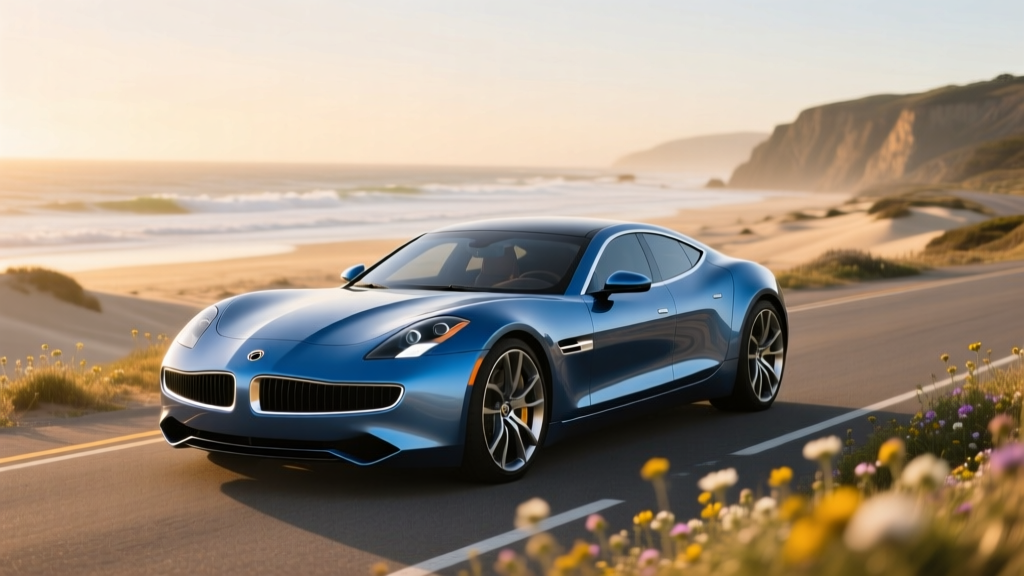
The Fisker Karma occupies a rare position in electrified automotive history: a luxury plug-in hybrid sports sedan that debuted in 2011, ceased production in 2012, and was later reborn as the Karma Revero under new ownership. If you're researching the Fisker Karma 0-60 time, you're likely looking at the used market or evaluating how this early PHEV stacks up against modern electrified alternatives. The original Fisker Karma delivered a 0-60 mph time of approximately 5.8 seconds in Sport mode (using the combined gas-electric powertrain) and roughly 7.9 seconds in all-electric Stealth mode. Those figures placed it firmly behind contemporary competitors like the Tesla Model S, but the Karma was never purely about straight-line speed — it was a design statement with an electrified powertrain.
This review covers the original 2011–2012 Fisker Karma (the model bearing Henrik Fisker's name), with notes on its successor, the Karma Revero GT, for buyers cross-shopping the used luxury PHEV market. We'll break down real-world range, charging capability, ownership economics, and whether this car still makes sense in 2026.
Fisker Karma Powertrain and 0-60 Performance Breakdown
The Fisker Karma uses a series-hybrid powertrain configuration, meaning the gasoline engine never directly drives the wheels. Instead, a 2.0-liter turbocharged GM Ecotec four-cylinder acts as a generator to charge the battery or power the electric motors when the battery is depleted.
| Specification | Value |
|---|---|
| Powertrain Type | Series Plug-in Hybrid (EREV) |
| Electric Motors | Dual rear-mounted (RWD) |
| Combined Electric Output | 403 hp / 959 lb-ft torque |
| Gas Engine (Generator) | 2.0L Turbo I4, 260 hp |
| 0-60 mph (Sport Mode) | 5.8 seconds |
| 0-60 mph (Stealth/EV Mode) | 7.9 seconds |
| Top Speed | 125 mph (Sport) / 95 mph (Stealth) |
| Drivetrain | Rear-Wheel Drive |
| Curb Weight | 5,300 lbs |
The 5.8-second Sport-mode time is the figure most commonly cited for the Fisker Karma 0-60 benchmark. It's important to understand the physics at play: the Karma's 5,300-pound curb weight — largely due to its 20.1 kWh A123Systems lithium-ion battery pack and steel-aluminum construction — significantly limits acceleration compared to lighter EVs and PHEVs. The massive 959 lb-ft of torque is available instantly from the electric motors, but that weight penalty is substantial. For comparison, the 2012 Tesla Model S Performance achieved 0-60 in 4.2 seconds with a similar dual-motor RWD layout but far less mass.
Electric Range, Efficiency, and Real-World Expectations
The Fisker Karma was rated by the EPA at 32 miles of all-electric range when new. Combined with the range extender, total range reached approximately 230 miles. However, decade-old battery degradation fundamentally changes this picture for used buyers in 2026.
- EPA Rated EV Range (New): 32 miles
- Expected EV Range Today (Healthy Battery): 18–26 miles depending on battery condition
- Highway EV Range: ~15–20 miles (the Karma is aerodynamically challenged at speed)
- Cold-Weather EV Range: ~12–18 miles (lithium-ion capacity drops 20-30% in freezing temps; the Karma has no battery thermal preconditioning for cold)
- Total Range with Generator: ~180–210 miles (combined EV + fuel tank)
The Karma's 20.1 kWh battery pack uses NMC (nickel manganese cobalt) chemistry supplied by A123Systems. Notably, A123Systems filed for bankruptcy in late 2012, which created parts scarcity for early Karma owners. Battery replacement or refurbishment remains possible through third-party EV battery specialists, but it is neither cheap nor straightforward.
| Metric | Value |
|---|---|
| Battery Capacity (Usable) | ~18 kWh usable (of 20.1 kWh total) |
| Battery Chemistry | NMC (A123Systems) |
| EPA EV Range | 32 miles |
| EPA MPGe (EV Mode) | 54 MPGe |
| EPA MPG (Gas Generator Mode) | 20 MPG combined |
| Fuel Tank | 9.5 gallons (premium required) |
| kWh/100mi (EV Mode) | 62 kWh/100mi |
At 54 MPGe in electric mode, the Karma was inefficient even by 2012 standards. For context, the 2012 Nissan Leaf achieved 99 MPGe, and the 2012 Chevrolet Volt posted 94 MPGe. The Karma's heavy weight and performance-oriented drivetrain exacted a steep efficiency penalty. Source: fueleconomy.gov — 2012 Fisker Karma.
Charging Speed: DC Fast Charge and Level 2 Home Charging
Charging is where the Fisker Karma shows its age most clearly. The vehicle supports only Level 2 AC charging via a J1772 connector — there is no DC fast-charging capability whatsoever.
| Charging Level | Power | Time (Empty to Full) | Notes |
|---|---|---|---|
| Level 1 (120V Household) | ~1.4 kW | ~14 hours | Emergency/trickle only |
| Level 2 (240V / 32A) | 3.3 kW onboard charger | ~6 hours | Standard home charging |
| DC Fast Charge | Not supported | N/A | No CCS, CHAdeMO, or NACS port |
The 3.3 kW onboard charger was modest even for 2012. Most modern PHEVs accept 6.6–7.2 kW on Level 2, and many BEVs accept 7–22 kW AC. At 3.3 kW, the Karma adds roughly 10–12 miles of EV range per hour of Level 2 charging. For daily commuters who can charge overnight at home, this is manageable — a full replenishment of the ~18 kWh usable battery takes about 6 hours. But the absence of any DC fast-charging means road trips rely entirely on the gasoline generator.
Pricing, Tax Credit Eligibility, and Used Market Costs
The original Fisker Karma carried an MSRP of $96,850 to $109,850 depending on trim (EcoStandard, EcoSport, EcoChic) when new in 2011–2012. Today, used examples trade between roughly $25,000 and $55,000 depending on mileage, condition, and critically, battery health.
| Trim (2012) | Original MSRP | 2026 Used Range |
|---|---|---|
| EcoStandard | $96,850 | $25,000–$35,000 |
| EcoSport | $102,850 | $30,000–$42,000 |
| EcoChic | $109,850 | $38,000–$55,000 |
Federal Tax Credit Eligibility
When sold new, the Fisker Karma qualified for a $7,500 federal tax credit under the pre-2023 IRS §30D rules (based on battery capacity exceeding 16 kWh). However, for anyone purchasing a used Karma in 2026, the relevant credit is the Used Clean Vehicle Credit (§25E), which offers up to $4,000 or 30% of the sale price (whichever is lower) for qualifying pre-owned EVs and PHEVs.
- Sale price must be $25,000 or below to qualify (this eliminates most Karma listings)
- Buyer income cap: $75,000 single / $112,500 head of household / $150,000 joint
- Vehicle must be at least 2 model years old (Karma qualifies — 2011/2012)
- Must purchase from a licensed dealer (private-party sales do not qualify)
- Buyer cannot have claimed the used-EV credit in the prior 3 years
- Credit is non-refundable (you must have tax liability to benefit)
Source: IRS.gov — Used Clean Vehicle Credit. Consult a tax professional for personal eligibility.
In practice, most Fisker Karma listings exceed the $25,000 sale-price cap, making the used-EV credit inaccessible for the majority of buyers. If you find a project-condition Karma listed at or below $25,000 from a dealer, the credit becomes viable.
Interior, Cargo Space, and Technology
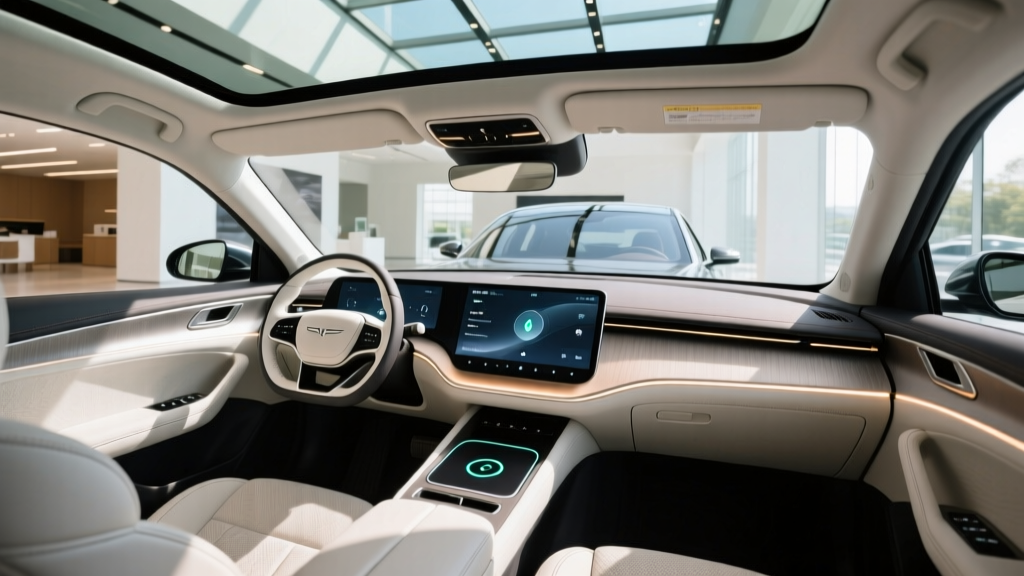
The Karma's interior was a design triumph — and a packaging disaster. Henrik Fisker's vision produced one of the most visually striking cabins in automotive history, with available reclaimed wood trim, recycled materials (EcoChic), and a dramatic center console. But the large battery tunnel running through the center of the car severely compromises practicality.
| Dimension | Measurement |
|---|---|
| Seating Capacity | 4 passengers |
| Front Legroom | 42.7 inches |
| Rear Legroom | 29.5 inches |
| Cargo Volume (Trunk) | 6.9 cu ft |
| Front Headroom | 38.3 inches |
| Rear Headroom | 35.7 inches |
At just 6.9 cubic feet, the Karma's trunk is smaller than a Mazda MX-5 Miata's. The battery tunnel eliminates any pass-through or fold-flat cargo option. This is strictly a two-person grand-tourer in practice, despite having four seats — rear passengers face tight legroom and a high floor position that forces a knees-up seating posture.
Technology and Driver Assists
By 2026 standards, the Karma's technology is thoroughly dated:
- Infotainment: 10.2-inch touchscreen with a custom Fisker interface (no Apple CarPlay, no Android Auto)
- Navigation: Built-in GPS with 2011-era map data (updates are essentially unavailable)
- Audio: Fisker Premium Audio (adequate but not competitive with modern systems)
- Driver Assists: Basic stability control and ABS — no adaptive cruise control, no lane-keeping, no automatic emergency braking
- Solar Roof Panel: A distinctive feature that powers cabin ventilation and auxiliary systems — it does not meaningfully extend driving range
Warranty, Reliability, and Battery Replacement Costs
The original Fisker Karma warranty is long expired. Fisker Automotive's 2013 bankruptcy left early owners without factory support. Karma Automotive (the successor company that purchased the assets) does not honor original Fisker warranties.
| Category | Status |
|---|---|
| Original Powertrain Warranty | Expired (was 5yr/50,000 mi) |
| Original Battery Warranty | Expired (was 5yr/50,000 mi) |
| Karma Automotive Support | Limited; does not cover Fisker-era vehicles |
| Battery Replacement Cost | $8,000–$15,000+ (third-party refurbishment) |
| Parts Availability | Limited; A123 battery cells and proprietary components are scarce |
Battery degradation is the single largest financial risk. A123Systems' NMC cells from this era typically show 25–40% capacity loss after 10+ years, depending on climate and charging history. Expect 18–26 miles of EV range on a "good" battery. A full battery replacement or cell-level refurbishment through an EV specialist typically costs $8,000 to $15,000, which can approach or exceed the car's market value.
Who Should (and Shouldn't) Buy the Fisker Karma in 2026
- You want a rare, head-turning design statement and accept it as a collector-grade vehicle
- Your daily commute is under 20 miles and you can charge at home every night
- You have a trusted independent mechanic familiar with series-hybrid systems
- You budget $5,000–$10,000 beyond the purchase price for battery and drivetrain contingencies
- You need reliable daily transportation with modern safety features (AEB, blind-spot monitoring)
- You want DC fast-charging for road trips
- You need cargo space for more than a briefcase
- You want warranty coverage and dealer service support
- Efficiency matters — the Karma's 54 MPGe and 20 MPG are poor by any modern standard
Key Competitors to Cross-Shop
For buyers considering the Karma, these alternatives offer dramatically better practicality and lower ownership risk:
- Used Tesla Model S (2014–2018): 200+ mile range, Supercharger access, vastly superior tech, similar luxury-sedan pricing in the used market
- BMW i3 REx (2014–2021): Similar EREV architecture, far lighter, better efficiency, more parts availability
- Chevrolet Volt (2016–2019): 53 miles EV range, modern safety features, affordable, excellent reliability record
- Karma Revero GT (2020–2023): The Karma's direct successor with 61 miles EV range, 536 hp, updated tech — but $80,000+ used
Pros and Cons
- Stunning, timeless exterior design — still a head-turner
- Instant electric torque (959 lb-ft) for satisfying city driving
- Series-hybrid architecture means pure EV driving for short commutes
- Exotic-car presence at a fraction of exotic-car prices (used)
- Solar roof panel is a genuine conversation starter
- No DC fast-charging — road trips burn premium fuel at 20 MPG
- Extremely limited cargo space (6.9 cu ft) and cramped rear seats
- A123 battery degradation and scarce replacement parts
- No modern driver-assistance features (no AEB, no lane-keep)
- 5.8-second 0-60 is unremarkable for the price and weight
- Outdated infotainment with no smartphone integration
- Expired warranties with no manufacturer support network
Frequently Asked Questions
What is the real-world range of the Fisker Karma?
The EPA rated the Karma at 32 miles of electric range when new. In 2026, expect 18–26 miles of EV range from a well-maintained battery, dropping to 12–18 miles in freezing weather. With the gasoline generator, total range is approximately 180–210 miles. The Karma is best suited to short commutes where nightly home charging covers your daily miles.
How fast does the Fisker Karma charge?
The Karma accepts a maximum of 3.3 kW on Level 2 (240V), taking about 6 hours for a full charge. It adds roughly 10–12 miles of EV range per hour. There is no DC fast-charging capability — the car cannot use Tesla Superchargers, Electrify America, or any other fast-charging network.
Does the Fisker Karma qualify for the federal EV tax credit?
Not the new-vehicle credit — the car is long out of production. The Used Clean Vehicle Credit (§25E) offers up to $4,000, but only if the sale price is $25,000 or less and the buyer meets income caps ($75K single / $150K joint). Most Karma listings exceed this price threshold. See IRS guidelines and consult a tax professional.
Is the Fisker Karma worth buying vs. competitors?
As a daily driver, no — modern PHEVs and EVs offer vastly superior range, efficiency, safety, technology, and support. As a collector piece or weekend car for someone who values design above all else, it can be a rewarding ownership experience if you budget for battery contingencies and accept the practical limitations.
What is the Fisker Karma's 0-60 time?
The Fisker Karma achieves 0-60 mph in approximately 5.8 seconds in Sport mode (combined gas-generator and electric power) and 7.9 seconds in Stealth (all-electric) mode. The 5,300-pound curb weight is the primary limiting factor despite 959 lb-ft of instant electric torque.
What happened to Fisker Automotive?
Fisker Automotive filed for bankruptcy in 2013 after a series of battery recalls (A123Systems cells were prone to failure) and the destruction of hundreds of vehicles during Hurricane Sandy. The company's assets were purchased by Wanxiang Group, which later sold the brand to Karma Automotive. Henrik Fisker went on to found Fisker Inc. (the Fisker Ocean SUV company), which itself filed for bankruptcy in 2024. The Karma nameplate continues under Karma Automotive, which is a separate entity.