The Rise and Fall of Fisker Inc: A 2026 Post-Mortem
Fisker Inc — the Henrik Fisker–led EV startup behind the Fisker Ocean SUV — filed for Chapter 11 bankruptcy in June 2024 and ceased operations shortly after. By early 2025, the company's remaining assets, including unsold Ocean inventory and intellectual property, had been liquidated or sold off. As of 2026, Fisker Inc no longer manufactures vehicles, operates service centers, or provides over-the-air software updates.
Yet the search volume for "Fisker Inc" persists. Current and prospective owners still need answers about the Ocean's capabilities, long-term ownership viability, battery health, and parts availability. This article provides a comprehensive technical profile of the Fisker Ocean as it was sold, paired with an honest assessment of what owning one looks like in 2026 — and who should (or absolutely should not) consider buying a used example.
Fisker Ocean: Complete Spec Sheet (Final 2024 Production)
| Specification | Ocean Sport (FWD) | Ocean Ultra / Extreme (AWD) |
|---|---|---|
| EPA Range | 250 mi (est.)* | 360 mi (Extreme w/ Hyper Range) |
| Battery Capacity | ~80 kWh usable (LFP) | ~113 kWh usable (NMC) |
| Battery Chemistry | LFP (CATL) | NMC (CATL) |
| Drivetrain | Single-motor FWD | Dual-motor AWD |
| Horsepower | 275 hp | 540 hp |
| 0–60 mph | 6.9 sec | 3.7 sec |
| Max DC Fast Charge | ~170 kW (peak) | ~250 kW (peak) |
| 10–80% DC Time | ~35 min (est.) | ~30 min (est.) |
| Level 2 Home Charging | 10.5 kW (~35 mi/hr) | 10.5 kW (~35 mi/hr) |
| Efficiency (MPGe) | ~95 MPGe combined | ~86 MPGe combined |
| Cargo Volume | 32.5 cu ft (rear up) / 67 cu ft (folded) | 32.5 cu ft / 67 cu ft |
| Frunk | No | No |
| Towing Capacity | Not rated | 4,000 lbs |
| Base MSRP (2024) | $37,499 | $61,499 (Ultra) / $68,999 (Extreme) |
| Federal Tax Credit | Eligible at launch; sourcing rules changed | Eligible at launch; sourcing rules changed |
| Battery Warranty | 10 yr / 100,000 mi (at launch; now void) | 10 yr / 100,000 mi (at launch; now void) |
*The FWD Sport trim's EPA range was never officially published on fueleconomy.gov before Fisker's collapse. The 250-mile figure is a manufacturer pre-certification estimate.
Real-World Range: What Owners Actually Experienced
Range Reality Check
EPA Sticker: 360 miles (Extreme, dual-motor, Hyper Range battery)
Real-World Highway (70 mph, 72°F): ~280–310 miles
Real-World Cold Weather (30°F, highway): ~220–260 miles
Real-World City/Mixed: ~320–345 miles
The Fisker Ocean Extreme's 360-mile EPA rating was among the highest of any production SUV when announced. Independent testing by Edmunds and owner forums documented real-world highway range between 280 and 310 miles in mild conditions — a meaningful but not unusual drop from the sticker.
The Ocean's boxy SUV profile created substantial aerodynamic drag at highway speeds, which is the primary range killer for any EV above 65 mph. Cold-weather testing showed the expected 25–35% range reduction common to NMC packs without a dedicated heat pump preconditioning system optimized for extreme cold. The Ocean did include a heat pump, but owners reported that cabin heating demands in sub-freezing conditions still pulled significantly from the 113 kWh pack.
The LFP-equipped Sport trim, with its smaller ~80 kWh pack, was far more range-limited. Owners reported 200–220 miles in mixed driving — adequate for commuting but requiring careful planning on road trips. LFP chemistry does offer superior cycle life and can be charged to 100% daily without degradation concerns, a meaningful advantage for high-mileage commuters.
Charging Speed and Infrastructure Reality
The Ocean's charging hardware was competitive on paper, but real-world charging-curve behavior told a more nuanced story.
Fisker Ocean Charging Speeds
| Charging Level | Power / Rate | Miles Added | Notes |
|---|---|---|---|
| Level 1 (120V) | 1.4 kW | ~4 mi/hr | Emergency/trickle only |
| Level 2 (240V, 48A) | 10.5 kW | ~35 mi/hr | Full charge overnight (~10 hr for Extreme) |
| DC Fast (Sport, LFP) | ~170 kW peak | ~180 mi in 30 min | Tapers sharply above 80% |
| DC Fast (Extreme, NMC) | ~250 kW peak | ~230 mi in 30 min | Peak sustained 10–40% SoC only; drops to ~100 kW by 60% |
The Ocean's peak 250 kW DC fast-charge rate on the Extreme trim was impressive, but like most EVs, that peak was sustained only briefly — typically between 10% and 35% state of charge. By 60% SoC, the charge rate tapered to roughly 100 kW, and above 80%, it slowed to under 50 kW to protect battery health. A 10–80% session took approximately 30 minutes under ideal battery-preconditioned conditions at a 350 kW-capable charger.
The critical 2026 issue: Fisker's proprietary app and charging-network integrations are defunct. The Ocean used a standard CCS1 connector, so it remains physically compatible with Electrify America, EVgo, and ChargePoint stations. However, the vehicle's navigation-based battery preconditioning — which warms the pack before a fast-charge stop — relied on OTA-connected routing that is no longer functional. Owners must manually precondition or accept slower initial charge rates at DC stations.
NACS (Tesla Supercharger) access is not available on the Ocean without a CCS-to-NACS adapter. As of 2026, third-party adapters from brands like Lectron are available, but they cap at roughly 150 kW and are not universally reliable at V3/V4 Superchargers.
Technology, Interior, and the Features That Defined Fisker Inc
The Ocean was designed to stand out, and several features remain distinctive even in the crowded 2026 EV market:
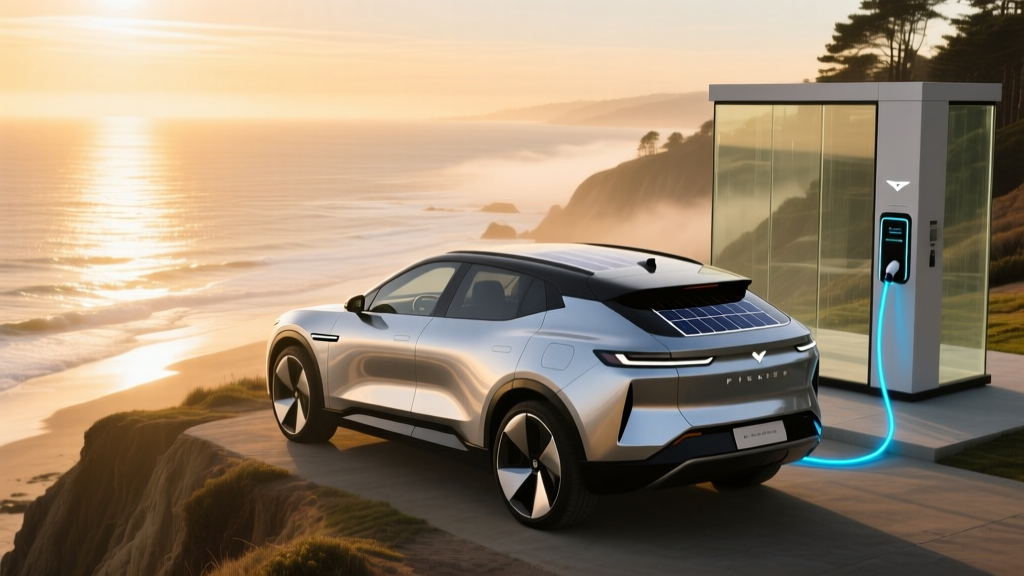
- SolarSky Roof: A full-length solar panel roof that Fisker claimed could add up to 1,500 miles of range per year under ideal conditions. Real-world owner data suggested 500–800 miles annually — roughly 1–2 miles per day of supplemental charge. Useful for offsetting phantom drain, not a primary range source.
- California Mode: A one-touch feature that simultaneously lowered all windows, opened the rear hatch glass, and retracted the rear cargo cover for an open-air experience. Unique and popular among owners.
- Revolve Screen: The 17.1-inch center display rotated from a landscape "Control" mode to a portrait "Hollywood" mode for media viewing while parked. Visually striking, though some owners reported the rotation mechanism developing squeaks over time.
- Recycled Materials Interior: Fisker emphasized sustainability with fully vegan, recycled-material cabin surfaces. Quality was generally well-received, though some reviewers noted hard plastics in lower door panels.
The Ocean shipped with a suite of ADAS features branded as Fisker Intelligent Pilot, which included adaptive cruise control, lane-keeping assist, and automatic emergency braking. This was a standard SAE Level 2 driver-assistance system — the driver must remain fully engaged at all times. It was not and never became an autonomous or "self-driving" system. By 2026 standards, the Ocean's ADAS is a generation behind the latest versions of Tesla Autopilot, GM Super Cruise, and Ford BlueCruise, and it will receive no further software updates.
Pricing, Tax Credits, and What Used Oceans Cost in 2026
Fisker Ocean Pricing: Then vs. Now
| Trim | Original MSRP (2023–2024) | Avg. Used Price (2026) | Depreciation |
|---|---|---|---|
| Sport (FWD) | $37,499 | $14,000–$18,000 | ~55–63% |
| Ultra (AWD) | $61,499 | $22,000–$28,000 | ~54–64% |
| Extreme (AWD) | $68,999 | $25,000–$32,000 | ~54–64% |
The Fisker Ocean has experienced some of the steepest depreciation in the EV market. A combination of the company's bankruptcy, orphaned-vehicle status (no warranty support, no OTA updates, limited parts), and general EV market price compression drove used values down 55–65% from original MSRP.
Federal Tax Credit Status
At launch, the Ocean was positioned to qualify for the IRS §30D Clean Vehicle Credit. However, evolving battery-sourcing and critical-mineral requirements under the Inflation Reduction Act meant that eligibility was uncertain even during the company's active sales period.
For 2026 used-EV buyers: the Used Clean Vehicle Credit (up to $4,000 or 30% of sale price, whichever is lower) may apply to a Fisker Ocean purchased from a dealer, subject to these requirements:
- Sale price must be $25,000 or below (this eliminates most Extreme trims and higher-mileage Ultra examples)
- Buyer AGI must not exceed $75,000 (single), $112,500 (head of household), or $150,000 (joint)
- Vehicle must be at least two model years old (the Ocean qualifies)
- The credit can be transferred to the dealer at point of sale
- Vehicle must be purchased from a licensed dealer, not a private party
A Sport or Ultra trim priced under $25,000 from a dealer could yield a $4,000 credit, bringing effective cost as low as $10,000–$14,000. Consult a tax professional to confirm eligibility based on your specific circumstances.
The Ownership Risk: What Buying a Fisker Ocean Means in 2026
Pros
- 360-mile EPA range (Extreme) remains competitive with 2026 SUVs
- Unique features: solar roof, California Mode, rotating screen
- Massive depreciation creates bargain entry price
- LFP Sport trim offers excellent battery longevity for commuters
- Standard CCS1 charging connector ensures public-charging compatibility
- Spacious interior with 67 cu ft cargo capacity
Cons
- No warranty coverage: Fisker's 10-yr/100,000-mi battery warranty is void
- No OTA updates: Software is frozen; bugs will never be fixed
- Parts scarcity: Body panels, trim pieces, and proprietary components are extremely limited
- No authorized service network: Owners rely on independent EV shops
- Insurance challenges: Some carriers refuse to insure orphaned EVs or charge steep premiums
- Resale value uncertainty: Further depreciation likely
- Preconditioning for DC charging is degraded without connected navigation
- No frunk despite being a dedicated EV platform
The single biggest risk of owning a Fisker Ocean in 2026 is collision repair. If the vehicle is damaged, sourcing body panels, headlight assemblies, or structural components specific to the Ocean is extraordinarily difficult. Several owner-community parts exchanges have formed, and some salvage yards have inventory, but there is no supply chain to speak of. A fender-bender that would be a minor inconvenience in a Tesla Model Y or Hyundai Ioniq 5 could total a Fisker Ocean simply because replacement parts do not exist.
Mechanically, the Ocean uses a Magna Steyr–engineered platform (shared in concept with the Fisker's contract manufacturing arrangement). Some drivetrain and suspension components are shared with other Magna-built vehicles, which helps with basic mechanical service. But the battery pack, power electronics, and proprietary electrical architecture are Fisker-specific. If a module fails in the 113 kWh NMC pack, no dealer or certified technician network exists to perform a warranty replacement — and a full out-of-warranty pack replacement would likely cost $20,000–$30,000, exceeding the car's value.
Fisker Ocean vs. the 2026 Competition
To contextualize the Ocean's position, here's how its key specs compare against current-production midsize electric SUVs available in 2026:
| Spec | Fisker Ocean Extreme | Hyundai Ioniq 5 (2026) | Tesla Model Y LR (2026) | Ford Mustang Mach-E ER (2026) |
|---|---|---|---|---|
| EPA Range | 360 mi | 318 mi | 320 mi | 312 mi |
| Battery | 113 kWh NMC | 84 kWh NMC | 78.1 kWh NMC | 91 kWh NMC |
| Peak DC Charge | 250 kW | 240 kW | 250 kW | 150 kW |
| 10–80% Time | ~30 min | ~18 min | ~25 min | ~38 min |
| 0–60 mph | 3.7 sec | 5.1 sec | 4.8 sec | 5.1 sec |
| Starting Price | Defunct (used ~$25K) | $47,500 | $44,990 | $48,995 |
| Warranty | None | 10yr/100K mi battery | 8yr/120K mi battery | 8yr/100K mi battery |
| OTA Updates | None | Active | Active | Active |
The Ocean's range and power numbers still compete. But its 10–80% charge time lags the Ioniq 5's 800V architecture, and the complete absence of warranty, software updates, and service infrastructure makes it an inherently riskier proposition. A 2026 Ioniq 5 or Model Y costs roughly double what a used Ocean Extreme commands, but it comes with an active support ecosystem that the Fisker simply cannot match.
Who Should (and Shouldn't) Buy a Used Fisker Ocean in 2026
Decision Framework
Consider a used Fisker Ocean if:
- You are mechanically inclined or have access to an independent EV technician
- You want maximum range per dollar and accept the orphan-vehicle risk
- You plan to drive the car for 5+ years and absorb full depreciation
- You have a second vehicle as a backup for extended repair downtime
- You can self-insure or find a carrier willing to cover an orphaned brand
- You're buying a Sport trim with LFP chemistry for its superior battery cycle life
Avoid the Fisker Ocean if:
- This will be your only vehicle
- You rely on a warranty for peace of mind
- You live in an area with limited independent EV repair options
- You want current ADAS features and ongoing software improvements
- Collision repair cost and parts availability concern you
- You plan to sell within 2–3 years (further depreciation is likely)
Frequently Asked Questions
Is Fisker Inc still in business?
No. Fisker Inc filed for Chapter 11 bankruptcy in June 2024 and subsequently liquidated its assets. The company does not manufacture vehicles, provide service, or issue software updates as of 2026. Henrik Fisker's earlier venture, Fisker Automotive (maker of the 2011–2012 Karma), was a separate company that also went bankrupt in 2013.
What is the real-world range of the Fisker Ocean?
The Ocean Extreme (dual-motor, 113 kWh NMC) carries a 360-mile EPA rating. In real-world highway driving at 70 mph in moderate temperatures, owners report 280–310 miles. In cold weather (below 32°F), expect 220–260 miles. The Sport trim with its ~80 kWh LFP pack delivers roughly 200–220 miles in mixed driving.
How fast does the Fisker Ocean charge?
On a Level 2 home charger (240V, 48A), the Ocean charges at 10.5 kW, adding roughly 35 miles per hour — sufficient for overnight charging. On DC fast chargers, the Extreme peaks at approximately 250 kW (10–80% in ~30 minutes under ideal conditions), while the Sport peaks around 170 kW. Real-world DC sessions are often longer due to tapering above 60% SoC and the loss of navigation-based battery preconditioning.
Does the Fisker Ocean qualify for the federal EV tax credit?
The new-vehicle §30D credit is no longer relevant since Fisker is defunct. For used purchases in 2026, the Used Clean Vehicle Credit (up to $4,000) may apply if the sale price is $25,000 or less, the buyer meets income caps ($75K single / $150K joint), and the vehicle is purchased from a licensed dealer. Always verify current IRS rules and consult a tax professional before relying on credit eligibility.
Can I still get a Fisker Ocean serviced?
There is no authorized Fisker service network. Owners rely on independent EV mechanics, mobile technicians, and community-organized parts exchanges. Basic maintenance (tire rotation, cabin filter, brake fluid) can be done at any shop. Drivetrain, battery, and proprietary electrical work requires specialized knowledge, and parts availability is the primary bottleneck.
Is a used Fisker Ocean worth buying vs. a new Hyundai Ioniq 5 or Tesla Model Y?
It depends entirely on risk tolerance. The Ocean offers more range and comparable performance at a fraction of the price. But a new Ioniq 5 or Model Y provides warranty coverage, active OTA updates, an established service network, insurance availability, and predictable depreciation. For most buyers, the certified, supported vehicle is the rational choice. The Ocean is a calculated gamble for enthusiasts and value-seekers who can absorb the orphan-vehicle risks.
What happened to Fisker's solar roof technology?
The SolarSky roof remains functional on existing vehicles — it continues to generate supplemental charge from sunlight. However, Fisker claimed up to 1,500 miles of annual range from solar; real-world results averaged 500–800 miles. The technology was not licensed to or adopted by other manufacturers after Fisker's bankruptcy. Aptera, a separate solar-EV startup, continues developing its own solar integration independently.
Sources: EPA fueleconomy.gov, IRS §30D and Used Clean Vehicle Credit guidance (irs.gov), Fisker Inc. bankruptcy filings (U.S. Bankruptcy Court, District of Delaware), NHTSA vehicle records. Used pricing reflects aggregated marketplace data from major listing platforms as of early 2026.